


Thematic Analysis 1st edition by Virginia Braun, Victoria Clarke – Ebook PDF Instant Download/Delivery: 1526417294, 9781526417299
Full download Thematic Analysis 1st edition after payment
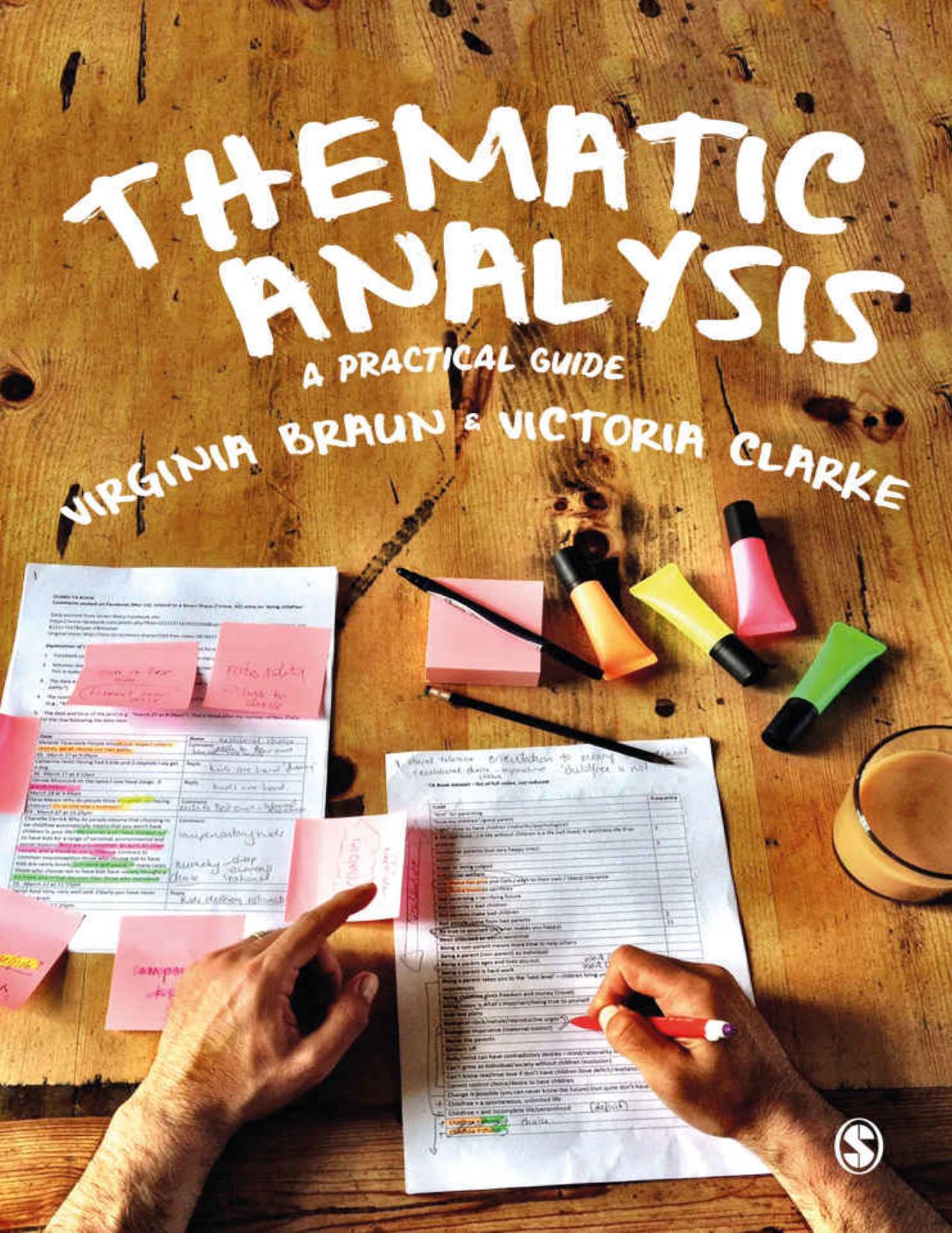
Product details:
ISBN 10: 1526417294
ISBN 13: 9781526417299
Author: Virginia Braun, Victoria Clarke
**Winner of the 2022 British Psychological Society Book Award – Textbook Category** Developed and adapted by the authors of this book, thematic analysis (TA) is one of the most popular qualitative data analytic techniques in psychology and the social and health sciences. Building on the success of Braun & Clarke′s 2006 paper first outlining their approach – which has over 100,000 citations on Google Scholar – this book is the definitive guide to TA, covering: – Contextualisation of TA – Developing themes – Writing TA reports – Reflexive TA It addresses the common questions surrounding TA as well as developments in the field, offering a highly accessible and practical discussion of doing TA situated within a clear understanding of the wider terrain of qualitative research. Virginia Braun is a Professor in the School of Psychology at The University of Auckland, Aotearoa New Zealand. Victoria Clarke is an Associate Professor in Qualitative and Critical Psychology in the Department of Social Sciences at the University of the West of England (UWE), Bristol.
Thematic Analysis 1st Table of contents:
Section I: Venturing Forth! Doing Reflexive Thematic Analysis
Chapter 1: It’s Almost Time to Depart: Getting Ready for Your Thematic Analysis Adventure
- Chapter One Overview
- Let Us Introduce You to Thematic Analysis
- What is Reflexive TA?
- Table 1.1: Overview of Some Key Differences Between Qualitative and Quantitative Research Paradigms
- Can We Provide a Simple Overview of Reflexive TA?
- A Qualitative Sensibility for Reflexive TA
- Box 1.1: Ten Core Assumptions of Reflexive TA
- But Wait, There’s More: Variation Within Reflexive TA
- Table 1.2: The Variations of Reflexive TA
- Reflexive TA Offers Guidelines, Not Rules, But a Clear Process
- Mentally Preparing Yourself to Tackle Your TA Journey: Becoming Comfortable with Uncertainty and Discomfort
- Subjectivity is at the Heart of Reflexive TA Practice
- Reflexivity: The Most Important Companion for Your Adventure
- Doing Reflexivity for Reflexive TA
- Box 1.2: Your Values and Politics in Qualitative Research
- The Time to Start Reflexivity is … NOW
- Activity Pause: A Task to Get Reflexivity Started…
- Reflective and Reflexive Journals
- Box 1.3: What Might Reflexive Journal Entries Look Like?
- Chapter Summary
- Want to Learn More About …?
- Activities for Student Readers
- Before Analysis: A Brief Design Interlude
- Getting into Design Thinking… A Guided Activity
- Some Readings to Take You Further into Design Thinking
Chapter 2: Taking an Initial Lay of the Land: Introducing Our Worked Example Dataset and Doing Familiarisation
- Chapter Two Overview
- Today’s the Day!
- The Process of Reflexive TA
- Box 2.1: Introducing Six Phases of Reflexive Thematic Analysis
- Introducing and Contextualising Our Worked Example Dataset
- Researcher Reflection – Box 2.2: Situating Myself in Relation to These Data (Ginny)
- Researcher Reflection – Box 2.3: Situating Myself in Relation to These Data (Victoria)
- Table 2.1: Anonymised but Otherwise Unedited Comments from Seven Sharp Facebook Post About “Being Childfree”
- What’s My Purpose Here? Settling on a Research Question
- Familiarisation (Phase One)
- Activity Pause: Familiarisation
- Meaning, the Dataset and the Analytic Process: A Brief Note on Language
- Note-making for Familiarisation
- Figure 2.1: Familiarisation Doodle for Participant ‘Franz’
- Figure 2.2: Familiarisation Doodle for Participant ‘Frank’
- Box 2.4: Ginny’s Overall Dataset Familiarisation Notes
- Chapter Summary
- Want to Learn More About …?
- Activities for Student Readers
Chapter 3: Exploring This World in Detail: Doing Coding
- Chapter Three Overview
- Preparing for Coding
- Box 3.1: Coding, Codes and Code Labels in Reflexive TA – A Quick Guide
- Coding is a Systematic Process
- Coding is Organic, Evolving and Subjective
- Inductive and Deductive Orientations to Data Coding
- Semantic to Latent Coding
- Table 3.1: Dispelling Some Misconceptions About Semantic and Latent Coding
- General Guidelines for Codes and Code Labels in Reflexive TA
- Doing Coding (Phase Two)
- Activity Pause: Before Coding
- Box 3.2: A Selection of Six Extracts from Childfree Dataset
- Table 3.3: A Selection of Childfree Comments Data with Code Labels
- Actually Wrangling Data and Codes: Technologies of Coding
- Box 3.3: Is Using QDAS Better Than Coding in Other Ways?
- Researcher Reflection – Box 3.4: Thematic Analysis and QDAS
- Researcher Reflection – Box 3.5: On Using NVivo
- Evolving Your Coding
- Box 3.6: Codes as Building Blocks for Analysis
- Refining Your Coding Through Multiple Rounds
- Can I Stop Coding Yet?
- Chapter Summary
- Want to Learn More About …?
- Activities for Student Readers
Chapter 4: Finding, Losing, Then Finding Your Way Again: Developing Your Themes
- Chapter Four Overview
- Understanding the Key Concept: What is This Thing Called a Theme?
- In Reflexive TA, a Topic Summary is Not a Theme
- In Reflexive TA, a Theme Captures Shared Meaning, United by a Central Organising Concept
- Generating Initial Themes (Phase Three)
- Developing Initial Themes from Your Codes
- Figure 4.1: Coding and Initial Theme Development with a Cup of Coffee
- Table 4.1: A Selection of Code Labels and Collated Data Extracts
- Using Visual Mapping for Theme Generation, Development and Review
- Figure 4.2: An Initial Mapping of Patterns Across Childfree Dataset
- Box 4.1: Theme Levels in Reflexive TA
- Five Key Things to Keep in Mind in the Early Stages of Theme Development
- Figure 4.3a & 4.3b: A Dandelion Head – Fully Connected Seeds (4.3a) and Partially Dispersed Seeds (4.3b)
- Box 4.2: How Many Themes? Some Guiding Considerations for Theme Development and Review
- I Quite Like It Here, Should I Stay Longer? Tackling Time Management in (Initial) Theme Development
- I’m Struggling a Bit, To Be Honest: Managing Anxiety in the TA Process
- Researcher Reflection – Box 4.3: Facing the Battle of Anxiety and OCD When Undertaking TA for the First Time
- Researcher Reflection – Box 4.4: Doing TA When You’ve Got ADHD and Anxiety: Reflections and Strategies
- Developing and Reviewing Themes (Phase Four)
- Figure 4.4: “Data Says No”
- Theme Development and Revision with Coded Extracts
- Figure 4.5: Theme Development as Wrestling a Sea-Monster?
- Theme Development and Revision with the Full Dataset
- Box 4.5: Can My Analysis Be Based on Part of the Dataset?
- What’s the Point of This Part of My Adventure?
- Figure 4.6: Refined Thematic Map for ‘Gains and Losses’ Analysis
- Figure 4.7: Refined (Finalised) Thematic Map for ‘Choice Matters’ Analysis
- Okay, So How Would a Topic Summary Be Different from a Shared Meaning Theme?
- Box 4.6: Illustrative ‘Topic Summary’: Reasons for Being Childfree
- But What About Contradiction?
- Precision Matters: Refining, Defining and Naming Themes (Phase Five)
- Box 4.8: Definition of the Theme ‘Deficient Personhood’
- Naming Themes
- Box 4.9: Naming Themes Related to ‘Choice’ in the Childfree Dataset
- Chapter Summary
- Want to Learn More About …?
- Activities for Student Readers
Chapter 5: Arriving Home and Telling a Story About Your Adventure: Writing Your Thematic Analysis Report
- Chapter Five Overview
- Writing Matters for Analysis (Phase Six)
- Setting the Scene of Your Story (The Introduction or Literature Review)
- Describing How You Approached Your Adventure (The Method/ology Section)
- Explaining Your Choice of TA and What It Offers
- Table 5.1: Is My Rationale for TA Strong Enough?
- Table 5.2: Examples of Rationales for (Reflexive) TA from Published Research
- Describing What You Actually Did During Analysis
- Box 5.2: An Example of a Student Analysis Process Write-Up
- Telling Your Analytic Story (The Results and Discussion Section)
- Introducing the Analysis
- Table 5.3: Example of a Theme Summary Table
- Structuring the Analysis Section
- Box 5.4: Writing Separate Results and Discussion Sections
- Selecting Data Extracts
- Data Extracts and Your Analytic Narrative
- Box 5.5: Illustrative and Analytic Treatment of Data Extracts in Reporting a Theme
- Traps to Easily Avoid When Reporting Your Analysis in Reflexive TA
- Box 5.6: Don’t Try This at Home – Paraphrasing Your Data
- Is ‘Thick Description’ Something I Should Be Aiming For?
- The Flow of the Story
- Should I Use Numbers to Report Theme ‘Frequency’?
- Should I Claim Generalisability in Reporting My TA?
- Table 5.4: Different Types of Qualitative Generalisability
- Drawing Conclusions
- Reflection and Evaluation in Your Write-Up
- Telling Your Story Well: The Value of the Edit
- Chapter Summary
- Want to Learn More About …?
- Activities for Student Readers
People also search for Thematic Analysis 1st:
reflecting on reflexive thematic analysis virginia braun &victoria clarke
thematic analysis a practical guide virginia braun and victoria clarke
using thematic analysis in psychology virginia braun &victoria clarke
chapter 4 thematic analysis virginia braun and victoria clarke
braun virginia & clarke victoria 2012 thematic analysis
Tags:
Virginia Braun,Victoria Clarke,Thematic Analysis