


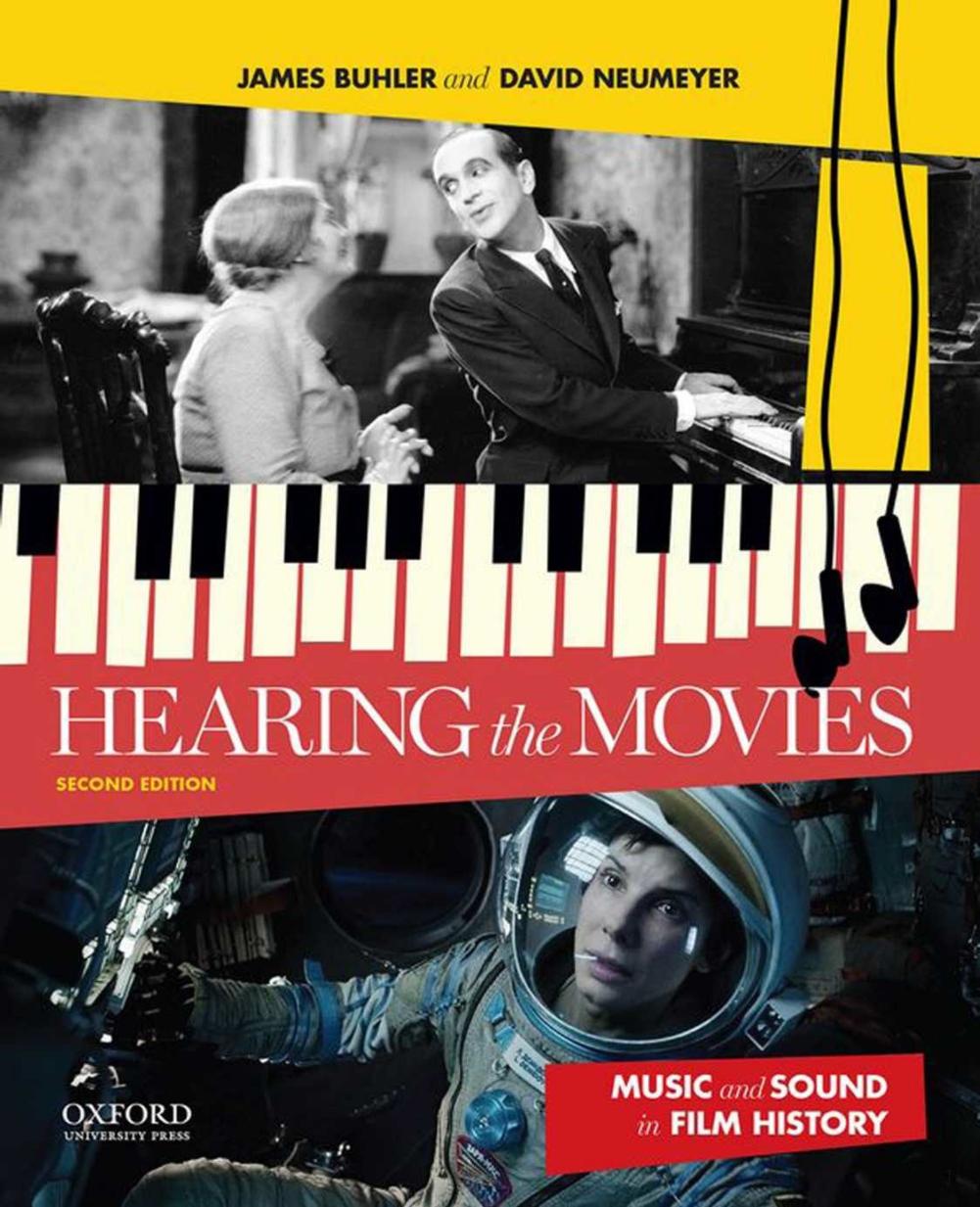
Hearing the Movies Music and Sound in Film History 2nd Edition by James Buhler, David Neumeyer – Ebook PDF Instant Download/Delivery: 0190643447, 9780190643447
Full download Hearing the Movies Music and Sound in Film History 2nd edition after payment
Product details:
ISBN 10: 0190643447
ISBN 13: 9780190643447
Author: James Buhler, David Neumeyer
Hearing the Movies, Second Edition, combines a historical and chronological approach to the study of film music and sound with an emphasis on building listening skills. Through engaging, accessible analyses and exercises, the book covers all aspects of the subject, including how a soundtrack is assembled to accompany the visual content, how music enhances the form and style of key film genres, and how technology has influenced the changing landscape of film music.
Hearing the Movies Music and Sound in Film History 2nd Table of contents:
Introduction
PART I: The Sound Track and Film Narrative: Basic Terms and Concepts
Introduction to Part I
Chapter 1: The Sound Track and Narrative
-
Introduction
-
Basics: Image Track, Sound Track, Narrative
-
Sound Track Components and Narrative
-
Speech
-
Sound Effects
-
Music
-
-
Examples:
-
Sleepless in Seattle – Second Botched Meeting
-
Good Will Hunting – Boston Common Scene
-
-
Hearing the Sound Track as Music: Masking
-
Experimenting with Music and Image: The Commutation Test
-
Summary
Chapter 2: The Musicality of the Sound Track: Concepts and Terminology
-
Introduction
-
Music and Sound
-
Tempo
-
Rhythm and Meter
-
Volume
-
Timbre
-
Filters and “Distortion”
-
Pitch
-
Orchestration
-
-
Timbre and Sound
-
Texture
-
Density and Liveliness
-
Monophony
-
Homophony
-
Melody and Accompaniment
-
Polyphony
-
A-Melodic (Accompaniment without Melody)
-
-
Texture and Foreground/Background Functions
-
Example: Atonement – Main Title and First Scene
-
Summary
Chapter 3: Music, Sound, Space, and Time: Concepts and Terminology
-
Introduction
-
Space:
-
(1) Diegetic/Nondiegetic Sound and Narrative
-
Example: Glory – Boston Party Scene
-
-
(2) Onscreen/Offscreen Sound and Music
-
Offscreen Sound
-
Onscreen/Offscreen Interaction: The Apartment
-
Ambiguity of Offscreen Sound
-
Point-of-View Sound
-
-
(3) Offscreen Sound and Music in Relation to the Diegesis
-
Voice-Over
-
Audio Dissolve
-
Mickey-Mousing
-
The Acousmêtre
-
-
-
Time:
-
(1) Scene Transitions
-
Sound Advance
-
Sound Lag
-
Sound Link and Match
-
-
(2) Synchronization
-
(3) Counterpoint
-
-
Writing Task #1: How to Write a Synopsis
-
A Note on Writing about the Sound Track
-
Summary
PART II: Music and the Sound Track: From the Beginning to 1975
Introduction to Part II
Chapter 4: From 1895 to 1929: Music and Sound in Early Film
-
Introduction
-
The Early Years
-
The Nickelodeon
-
“Playing the Picture”
-
Special Scores
-
-
The Picture Palace
-
Stratification of Exhibition
-
The Show
-
Music and Sound Production
-
Fitting the Picture
-
Special Scores of the 1920s
-
Road Shows
-
Music on the Set
-
-
Characteristic Practices of the Silent Era
-
Theme, Motif, and Motive
-
The Leitmotif
-
Musical Topics
-
Location and Stereotype
-
-
Analysis: Lady Windermere’s Fan
-
Summary
-
Note on Silent-Film Releases to VHS/DVD
Chapter 5: From 1926 to 1932: The Transition to Sound Film
-
Introduction
-
Technology and Economics
-
Sound Research in the 1920s
-
Standardization of Exhibition
-
The Jazz Singer
-
-
Types of Early Sound Film
-
Musicals
-
-
Production
-
Production Phases
-
Music Department
-
Sound Department
-
-
Mastering the Sound Track
-
Principle of Clarity
-
Foreground and Background
-
Scoring Practices and Music Placement
-
Establishing Sequence
-
End Credits
-
Performance Scene
-
Montage or Fantasy Scene
-
Dialogue Scene
-
Action Scene
-
Love Scene
-
-
-
Summary
Chapter 6: The Broadway Melody, Gold Diggers of 1933, and Le Million
-
Introduction
-
Music in Film Form: Runtime Segmentation
-
Formal Screening Notes
-
Dialogue, Music, Effects, Transitions
-
-
Scene Analysis
-
The Broadway Melody – Dress Rehearsal Scene
-
Gold Diggers of 1933 – “My Forgotten Man”
-
Le Million – Leaving the Opera House
-
-
Writing a Scene Analysis Paper
-
Summary
Chapter 7: From 1932 to 1950: Music and the Sound Track in the Classical Studio Era
-
Introduction
-
Technology and Economics
-
Recording Improvements
-
Rerecording
-
Sound in Theaters
-
-
The Depression and Genre Consolidation
-
Production
-
Music and Sound Departments
-
-
Sound Track and Style
-
Classical System
-
Background Music
-
Scoring Practices
-
Rebecca – Opening
-
Critiques of Underscoring
-
-
Film Form and Sound Track
-
Establishing Sequences
-
End Credits
-
Performance Scenes: To Have and Have Not, Casablanca, Laura
-
Montage/Fantasy Scenes: Gone with the Wind
-
Dialogue Scenes: Rebecca
-
Action and Love Scenes
-
-
Summary
Chapter 8: Mildred Pierce: Writing about Film Sound and Music
-
Introduction
-
Screening Report
-
Alternate Approaches
-
Conclusion
Chapter 9: From 1950 to 1975: The Stereo Sound Track and the Post-Classical Era
-
Introduction
-
Technology and Economics
-
High-Fidelity and Stereo
-
Magnetic Tape
-
Legal Challenges
-
-
Analysis: The Robe
-
Stereo and Spatial Concepts
-
Silence
-
-
Production
-
Music and Sound Departments
-
-
Elements of Style
-
Aesthetic Issues
-
Scoring Practices
-
High Noon – Main Theme
-
Popular Song, Underscore, and Albums
-
-
Summary
Chapter 10: Music and Film Form in the Post-Classical Era
-
Introduction
-
Hollywood Studio Films
-
The Sound of Music
-
Overture, Title, Dance/Love Scenes, End Credits
-
-
The Graduate
-
-
War Films
-
D-Day the Sixth of June, The Longest Day, Patton, A Bridge Too Far
-
-
Nonconventional Hollywood: Psycho
-
Japanese and Cross-Cultural Influence: Rashômon, Yojimbo, A Fistful of Dollars
-
Writing a Compare-Contrast Paper
PART III: Music and the Sound Track: 1975 to the Present
Introduction to Part III
Chapter 11: From 1975 to 2000: The New Hollywood, Dolby Stereo, and Sound Design
-
Introduction
-
Technology and Economics
-
Dolby Stereo, Multiplexes, Home Video
-
Marketing and Cross-Promotion
-
-
Production
-
Music and Sound Departments
-
-
Elements of Style
-
Sound Design Aesthetics
-
Minimalist Underscore
-
Music Video Style
-
Rise of Rap
-
-
Summary
Chapter 12: Music and Film Form in the New Hollywood
-
Introduction
-
Mainstream Drama: Out of Africa
-
Romantic Comedy: When Harry Met Sally
-
War Films: Apocalypse Now, Platoon, Gallipoli, Glory, Saving Private Ryan
-
Action Films: Bond, Raiders, T2, The Matrix
-
French Film & Remake: La Cage aux Folles / The Birdcage
-
Historical Argument through Scene Comparison
Chapter 13: Music and Film Sound Since 2000
-
Introduction: The Digital Era
-
Technology and Economics
-
Digital Sound and Formats
-
Franchise Media
-
-
Production and Postproduction
-
Music and Sound Departments
-
Dialogue, Foley, Sound Effects
-
-
Style and Aesthetics
-
Scoring Practices
-
Instrumentation
-
Trends in Action Films
-
Compilation Scores
-
-
Summary
Chapter 14: Music and Film Form Since 2000
-
Introduction
-
Mainstream Drama: The Hours
-
Action Films:
-
Crouching Tiger, Hidden Dragon, Batman, Casino Royale, The Bourne Ultimatum, The Good, the Bad, the Weird, Gravity
-
-
Literary Adaptation: Bridget Jones’s Diary, Pride & Prejudice
Chapter 15: Writing about Film Music: Interpretation
-
Introduction
-
Case Study: Catch Me If You Can
-
Synopsis
-
Runtime Segmentation
-
Sound Track Analysis
-
-
Compare/Contrast: Casablanca
-
Developing a Thesis and Reading Against the Grain
-
Conclusion
Glossary
Credits
Notes
Index
People also search for Hearing the Movies Music and Sound in Film History 2nd:
history of sound in film
what is sound in film
hearing the movies
hearing the movies 2nd edition pdf
the history of sound at the movies
Tags: James Buhler, David Neumeyer, the Movies, Film History