


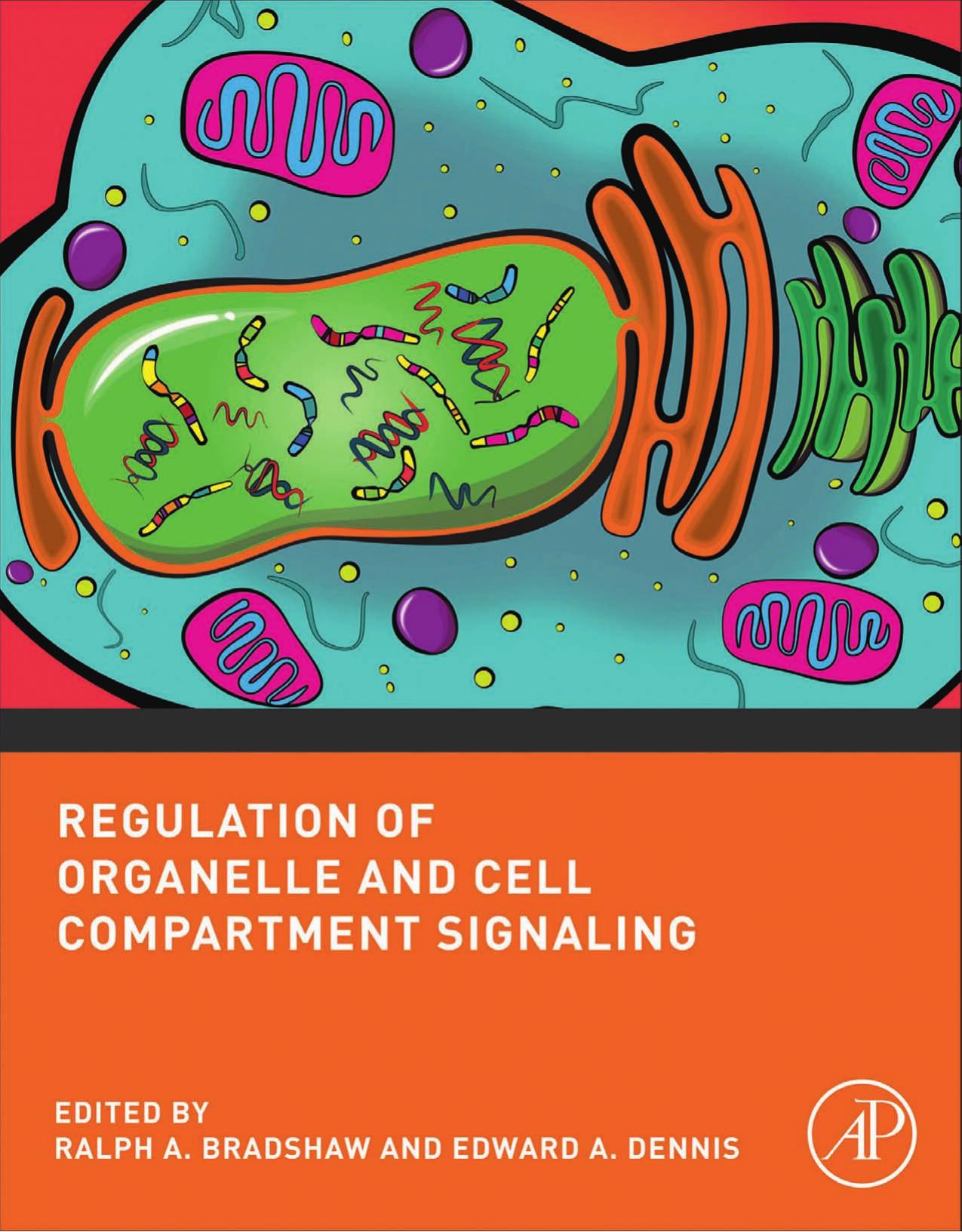
Regulation of Organelle and Cell Compartment Signaling Cell Signaling Collection 1st edition by Ralph Bradshaw, Edward Dennis ISBN 0123822147 9780123822147
Original price was: $70.00.$35.00Current price is: $35.00.
Instant download Regulation of Organelle and Cell Compartment Signaling Cell Signaling Collection after payment
Regulation of Organelle and Cell Compartment Signaling Cell Signaling Collection 1st edition by Ralph Bradshaw, Edward Dennis – Ebook PDF Instant Download/Delivery: 0123822147, 9780123822147
Full download Regulation of Organelle and Cell Compartment Signaling Cell Signaling Collection 1st edition after payment
Product details:
ISBN 10: 0123822147
ISBN 13: 9780123822147
Author: Ralph Bradshaw, Edward Dennis
This must-have cell signaling title will appeal to researchers across molecular biology, biochemistry, cell biology and genetics. The articles are written and edited by experts in the field and emphasize signaling to and from intracellular compartments including transcriptional responses to cytoplasmic and nuclear signaling events, chromatin remodeling and stress responses, the regulation of endoplasmic reticulum function, control of cell cycle progression and apoptosis and the modulation of the activities of mitochondria and other organelles.
Regulation of Organelle and Cell Compartment Signaling Cell Signaling Collection 1st Table of contents:
Section A: Overview
Chapter 1: Organelle Signaling
-
Origins of Cell Signaling Research
-
Receptors and Intracellular Signaling
-
Transcriptional Responses
-
Organelle Signaling
-
Focus and Scope of this Volume
-
References
Section B: Nuclear Signaling
Part 1: Transcription
Chapter 2: Signaling at the Nuclear Envelope
-
Introduction
-
Lamins and Lamin Associated Proteins in Cell Signaling
-
The NPC in Cell Signaling
-
Conclusions
-
Acknowledgements
-
References
Chapter 3: Nuclear Receptor Coactivators
-
Introduction
-
Ligand-Dependent Interaction between Nuclear Receptors and Coactivators
-
Posttranslational Modifications Performed by Coactivator Complexes
-
Conclusions
-
References
Chapter 4: Corepressors in Mediating Repression by Nuclear Receptors
-
Introduction
-
Corepressors Bound to Unliganded Receptor
-
Transrepression Strategies
-
Corepressors as Metabolic Sensors
-
Disease Mechanisms of Nuclear Receptor Dependent Transrepression
-
Future Directions
-
References
Chapter 5: Steroid Hormone Receptor Signaling
-
Introduction
-
Activation by the Hormone
-
Hormone Independent Activation
-
Cross-Talk with Other Transcription Factors
-
Non-Genomic Action of Steroid Hormones
-
The ERRs
-
Selective Steroid Hormone Receptor Modulators
-
Acknowledgements
-
References
Chapter 6: FOXO Transcription Factors: Key Targets of the PI3K-Akt Pathway that Regulate Cell Proliferation
-
Introduction
-
Identification of the Foxo Subfamily of Transcription Factors
-
Regulation of Foxo Transcription Factors by the PI3K-Akt Pathway
-
Other Regulatory Phosphorylation Sites in Foxos
-
Mechanism of the Exclusion of Foxos from the Nucleus in Response to Growth Factor Stimulation
-
Transcriptional Activator Properties of Foxos
-
Foxos and the Regulation of Apoptosis
-
Foxos as Key Regulators of Several Phases of the Cell Cycle
-
Foxos in Cancer Development: Potential Tumor Suppressors
-
Role of Foxos in the Response to Stress and Organismal Aging
-
Foxos and the Regulation of Metabolism in Relation to Organismal Aging
-
Conclusion
-
Acknowledgements
-
References
Chapter 7: The Multi-Gene Family of Transcription Factor AP-1
-
Introduction
-
General Structure of the AP-1 Subunits
-
Transcriptional and Posttranslational Control of AP-1 Activity
-
Function of Mammalian AP-1 Subunits During Embryogenesis and Tissue Homeostasis: Lessons From Loss-of-Function Models
-
Function of Mammalian AP-1 Subunits During Cancer Development and Progression
-
Conclusion
-
Acknowledgements
-
References
Chapter 8: NFκB: A Key Integrator of Cell Signaling
-
References
Chapter 9: Ubiquitin-mediated Regulation of Protein Kinases in NFκB Signaling
-
Introduction
-
The Ubiquitin Pathway
-
NFκB Signaling
-
Ubiquitin-Mediated Activation of Protein Kinases in the IL-1R and TLR Pathways
-
Ubiquitin-Mediated Regulation of NFκB and Apoptosis in the TNFα Pathway
-
De-Ubiquitination Enzymes Prevent Protein Kinases Activation in the NFκB Pathway
-
Polyubiquitination Regulates Protein Kinase Activation in Diverse NFκB Pathways
-
Conclusions and Perspectives
-
Acknowledgements
-
References
Chapter 10: Transcriptional Regulation via the cAMP Responsive Activator CREB
-
The CREB Family of Transcription Factors
-
Domain Structure and Function
-
Overview of CREB Activation
-
Key Phosphorylation Events
-
CREB Target Genes
-
CBP and P300
-
TORC
-
Other Coactivators and Interacting Proteins
-
Questions to be Addressed
-
Acknowledgements
-
References
Chapter 11: The NFAT Family: Structure, Regulation, and Biological Functions
-
Introduction
-
Structure and DNA Binding
-
Regulation
-
Transcriptional Functions
-
Biological Programs Regulated By NFAT
-
The Primordial Family Member: NFAT5
-
Perspectives
-
References
Chapter 12: JAK-STAT Signaling
-
Abbreviations
-
Introduction
-
The JAK-STAT Paradigm
-
The JAK Family
-
The STAT Family
-
A Bright Future
-
References
Part 2: Chromatin Remodeling
Chapter 13: Histone Acetylation Complexes
-
Introduction
-
KAT Classification and Diversity
-
Bromodomains and Other Interpreters of Histone Modifications
-
KATs and Disease
-
Conclusion and Future Directions
-
Acknowledgements
-
References
Chapter 14: Regulation of Histone Deacetylase Activities and Functions by Phosphorylation and Dephosphorylation
-
Introduction
-
Reversible Phosphorylation of Mammalian Class I HDACs
-
Reversible Phosphorylation of Mammalian Class II HDACs
-
Conclusion and Perspectives
-
References
Chapter 15: Histone Methylation: Chemically Inert but Chromatin Dynamic
-
Introduction
-
Historical Perspective of Chromatin and Histone Methylation
-
Enzymes Regulating Arginine and Lysine Methylation States
-
Histone Lysine Methyltransferases
-
Histone Demethylase Enzymes
-
Degree and Location Matter
-
References
Chapter 16: Histone Phosphorylation: Chromatin Modifications that Link Cell Signaling Pathways to Nuclear Function
-
Introduction
-
Histone Phosphorylation and Transcriptional Regulation
-
Downstream Effects of Transcription Associated H3 Phosphorylation
-
Histone Phosphorylation in Response to DNA Damage
-
Histone Phosphorylation and Mitosis
-
Histone Phosphorylation During Apoptosis
-
Histone Phosphorylation and Human Diseases
-
Conclusions and Perspectives
-
References
Chapter 17: Histone Variants: Signaling or Structural Modules?
-
Introduction
-
H2A.Bbd in Search of a Function
-
H2A.X: DNA Damage and Beyond
-
H2A.Z Function at a Flip of a Coin
-
Macro H2A: Phosphorylation Matters
-
H2B Variance and Unknown Partners
-
H3.3 Providing Transcriptional Memory
-
CENP-A: Splitting Nucleosomes in Drosophila
-
Histone H1: The Microheterogeneity of Specialized Function
-
Concluding Remarks
-
Acknowledgements
-
References
Chapter 18: Histone Ubiquitination
-
The Mechanism of Ubiquitination
-
Histone Ubiquitination
-
Mono-Ubiquitination of H2A
-
Ubiquitination of Histone H2A Variants
-
De-Ubiquitination of UbH2A
-
How does UbH2A Repress Transcription?
-
The Role of UbH2A in DNA Repair
-
Mono-Ubiquitination of H2B
-
H2B Ubiquitination Requires Factors Involved in Transcription Initiation and Elongation
-
H2B Ubiquitination is Required for Processive Lys-4 H3 and Lys-79 H3 Methylation
-
The 19S Proteasome and the CCR4-NOT Complex Link H2B Ubiquitination to Lys-4 and Lys-79 H3 Methylation
-
De-Ubiquitination of UbH2B
-
De-Ubiquitination of UbH2B is Required for Later Stages of Transcription Elongation
-
Conclusion
-
Acknowledgements
-
References
Chapter 19: Chromatin Mediated Control of Gene Expression in Innate Immunity and Inflammation
-
Introduction
-
Inflammation as a Kinetically Complex Transcriptional Response
-
Chromatin and the Kinetic Control of Inflammatory Responses
-
Genetic Dissection of Chromatin Remodeling at Inflammatory Genes
-
Binding of Inflammatory Transcription Factors to Nucleosomal DNA
-
Conclusions
-
References
Section C: Signaling to/from Intracellular Compartments
Chapter 32: Regulation of mRNA Turnover
-
Introduction
-
Current Model for mRNA Decay in Mammalian Cells
-
Deadenylation: The First Major Step Triggering mRNA Decay
-
Regulation of Deadenylation by a Protein that Interacts with Both Poly(A) Nuclease(S) and PABP
-
A Mechanism for Translationally Coupled mRNA Turnover
-
The Involvement of RNA Processing Bodies (P-Bodies) in Regulation of mRNA Turnover
-
Concluding Remarks
-
References
Chapter 33: Signaling to Cytoplasmic Polyadenylation and Translation
-
Introduction
-
The Biochemistry of Cytoplasmic Polyadenylation
-
Signaling to Polyadenylation
-
A Hierarchy of Translation Control
-
Polyadenylation in Mammalian Oocytes
-
Signaling to Polyadenylation in the Brain
-
Conclusions
-
References
Chapter 34: Translation Control and Insulin Signaling
-
Introduction
-
The Insulin Signaling Pathway
-
Insulin Signaling and Regulation of Translation Initiation
-
Insulin Signaling and Regulation of Translation Elongation
-
Insulin Signaling and Ribosome Biogenesis
-
Concluding Remarks
-
Acknowledgements
-
References
People also search Regulation of Organelle and Cell Compartment Signaling Cell Signaling Collection 1st :
regulation cell organelle
regulation organelles
what organelles compartmentalize
organelles compartmentalize a cell much as a department
a organelle is
Tags: Ralph Bradshaw, Edward Dennis, Regulation of Organelle, Cell Compartment, Signaling Collection