


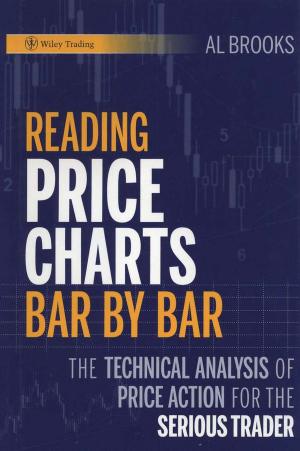
Reading Price Charts Bar by Bar The Technical Analysis of Price Action for the Serious Trader 1st Edition by Al Brooks ISBN 978-0470443958 0470443952
Original price was: $70.00.$35.00Current price is: $35.00.
Instant download Reading Price Charts Bar by Bar The Technical Analysis of Price Action for the Serious Trader after payment
Reading Price Charts Bar by Bar The Technical Analysis of Price Action for the Serious Trader 1st Edition by Al Brooks – Ebook PDF Instant Download/Delivery: 978-0470443958, 0470443952
Full download Reading Price Charts Bar by Bar The Technical Analysis of Price Action for the Serious Trader 1st Edition after payment
Product details:
ISBN 10: 0470443952
ISBN 13: 978-0470443958
Author: Al Brooks
A completely original approach to trading using price bar charts
While complex strategies and systems may work for some traders, understanding price action is all you really need to succeed in this arena. Price action analysis is an effective approach to trading today’s markets―whether you’re involved in stocks, futures, or options. It allows you to focus on the process of trading without being overwhelmed by a complicated collection of trading techniques. And while this method may appear elementary, it can significantly enhance returns as well as minimize downside risk.
One way to apply price action analysis to your trading endeavors is with chart patterns. Nobody understands this better than author Al Brooks, a technical analyst for Futures magazine and an independent trader for more than twenty years. Brooks discovered ten years ago that reading price charts without indicators proved to be the most simple, reliable, and profitable way for him to trade. Mastering that discipline is what made him consistently successful in trading. Now, with Reading Price Charts Bar by Bar, Brooks shares his extensive experience on how to read price action.
At the end of the day, anyone can look at a chart, whether it is a candle chart for E-mini S&P 500 futures trading or a bar chart for stock trading, and see very clear entry and exit points. But doing this in real time is much more difficult. Reading Price Charts Bar by Bar will help you become proficient in the practice of reading price action―through the use of trendlines and trend channel lines, prior highs and lows, breakouts and failed breakouts, and other tools―and show you how this approach can improve the overall risk-reward ratio of your trades.
Written with the serious trader in mind, this reliable resource addresses the essential elements of this discipline, including the importance of understanding every bar on a price chart, why particular patterns are reliable setups for trades, and how to locate entry and exit points as markets are trading in real time. Brooks focuses on five-minute candle charts to illustrate basic principles, but discusses daily and weekly charts as well. Along the way, he also explores intraday swing trades on several stocks and details option purchases based on daily charts―revealing how using price action alone can be the basis for this type of trading.
There’s no easy way to trade, but if you learn to read price charts, find reliable patterns, and get a feel for the market and time frame that suits your situation, you can make money. While price action trading doesn’t require sophisticated software or an abundance of indicators, this straightforward approach can still put you in a better position to profit in almost any market. Reading Price Charts Bar by Bar will show you how.
Table of contents:
CHAPTER 1: Price Action
-
Trend Bars and Doji Bars
-
Bar Basics: Signal Bars, Entry Bars, Setups, and Candle Patterns
-
Signal Bars: Reversal Bars
-
Signal Bars: Other Types
-
Outside Bars
-
The Importance of the Close of the Bar
-
Exchange Traded Funds (ETFs) and Inverse Charts
-
Second Entries
-
Late and Missed Entries
CHAPTER 2: Trendlines and Trend Channels
10. Trendlines
11. Micro Trendlines: Small, Steep Trendlines in Strong Trends
12. Horizontal Lines: Swing Points and Other Key Price Levels
13. Trend Channel Lines
14. Dueling Lines: Intersecting Trendline and Trend Channel Line
CHAPTER 3: Trends
15. Two Legs
16. Signs of Strength
17. Common Trend Patterns
18. Trend from the Open
19. Reversal Day
20. Trend Resumption Day
21. Trending Trading Range Days
22. Tight Channels and Spike and Channel Bull or Bear
23. Stairs: Broad Channel Trend
CHAPTER 4: Pullbacks
24. First Pullback Sequence: Bar, Minor Trendline, EMA, EMA Gap, Major Trendline
25. Double Top Bear Flags and Double Bottom Bull Flags
26. EMA and Gap EMA Pullbacks
27. 2 HM: If Away from EMA for Two or More Hours, Then Fade EMA and First EMA Gap Bar
28. Trend Day 11:30 Stop Run Pullback to Trap You Out
29. Counting the Legs of a Trend
30. High/Low 1, 2, 3, and 4
31. Variations of High/Low 2 Setups
32. Three Push Pullbacks
CHAPTER 5: Trading Ranges
33. Tight Trading Ranges
34. Barb Wire
35. Middle of the Day, Middle of the Range
36. Big Up, Big Down
37. Trading Ranges Setting Up Trend Reversals
CHAPTER 6: Breakouts
38. Breakout Entries in Strong Trend
39. Breakout Pullbacks and Breakout Tests
CHAPTER 7: Magnets
40. Measured Moves Based on the First Pullback (AB = CD)
41. Measured Moves on Breakouts Based on Thin Areas and on Flags
42. Reversals Often End at Signal Bars from Prior Failed Reversals
43. Other Price Magnets
CHAPTER 8: Trend Reversals
44. Trendline Break
45. Trend Channel Line Failed Breakouts: Climaxes, Parabolas, and V Tops and Bottoms
46. Signs of Strength in the First Leg of a Reversal
47. Trends Reverse with a Test: Either an Undershoot or an Overshoot
48. Double Top and Bottom Pullbacks
49. Climax: Spike and Trading Range Reversals
50. Climax: Three Pushes and Wedges (Trend Channel Line Overshoots and Reversals)
51. Expanding Triangles
CHAPTER 9: Minor Reversals – Failures
52. Failed Signal and Entry Bars and One-Tick Failed Breakouts
53. Failed High/Low 2
54. Failed Higher High and Lower Low Breakouts
55. Failed Trendlines and Trend Channel Lines
56. Failed Reversals
57. Failed Final Flags: Tight Trading Range
58. Failed Final Flags: Huge Trend Bar
59. Failed Wedges
60. Failed Scalps: Five-Tick Failed Breakouts and Failure to Reach a Scalper’s Profit Target
CHAPTER 10: Day Trading
61. Selecting a Market
62. Time Frames and Chart Types
63. Globex, Pre-Market, Post-Market, and Overnight Market
64. Scalping, Swinging, Trading, and Investing
65. Always in the Market
66. Have at Least Two Reasons to Enter a Trade
67. Entering on Stops
68. Protective Stops and Getting Trapped In or Out of a Trade
CHAPTER 11: The First Hour
69. Patterns Related to the Premarket
70. Patterns Related to Yesterday
71. Trend Bar on Gap Open: First or Second Bar
72. Gap Openings: Reversals and Continuations
73. Trend from the Open or Trend from the First Bar
74. Third Bar of the Day and the 15-Minute Close
75. Strong Trend Bars in the First Hour Often Predict Strength Later in the Day in the Same Direction
76. Opening Patterns and Reversals
77. Double Bottom and Double Top Flags
78. Trading Range Breakouts
79. First Pullback
CHAPTER 12: Detailed Day Trading Examples
80. (To be detailed from examples)
CHAPTER 13: Daily, Weekly, and Monthly Charts
81. Huge Volume Reversals
CHAPTER 14: Options
82. (Options trading content)
CHAPTER 15: Best Trades
83. Major Reversals
84. Minor Reversal Scalps during Trading Range Days
85. Pullbacks in a Strong Trend
86. Intraday Stocks
87. Trading Guidelines
People also search for:
reading price charts bar by bar pdf free download telegram
reading price charts bar by bar book
reading price charts bar by bar review
reading price charts bar by bar audiobook
reading price charts bar by bar epub