


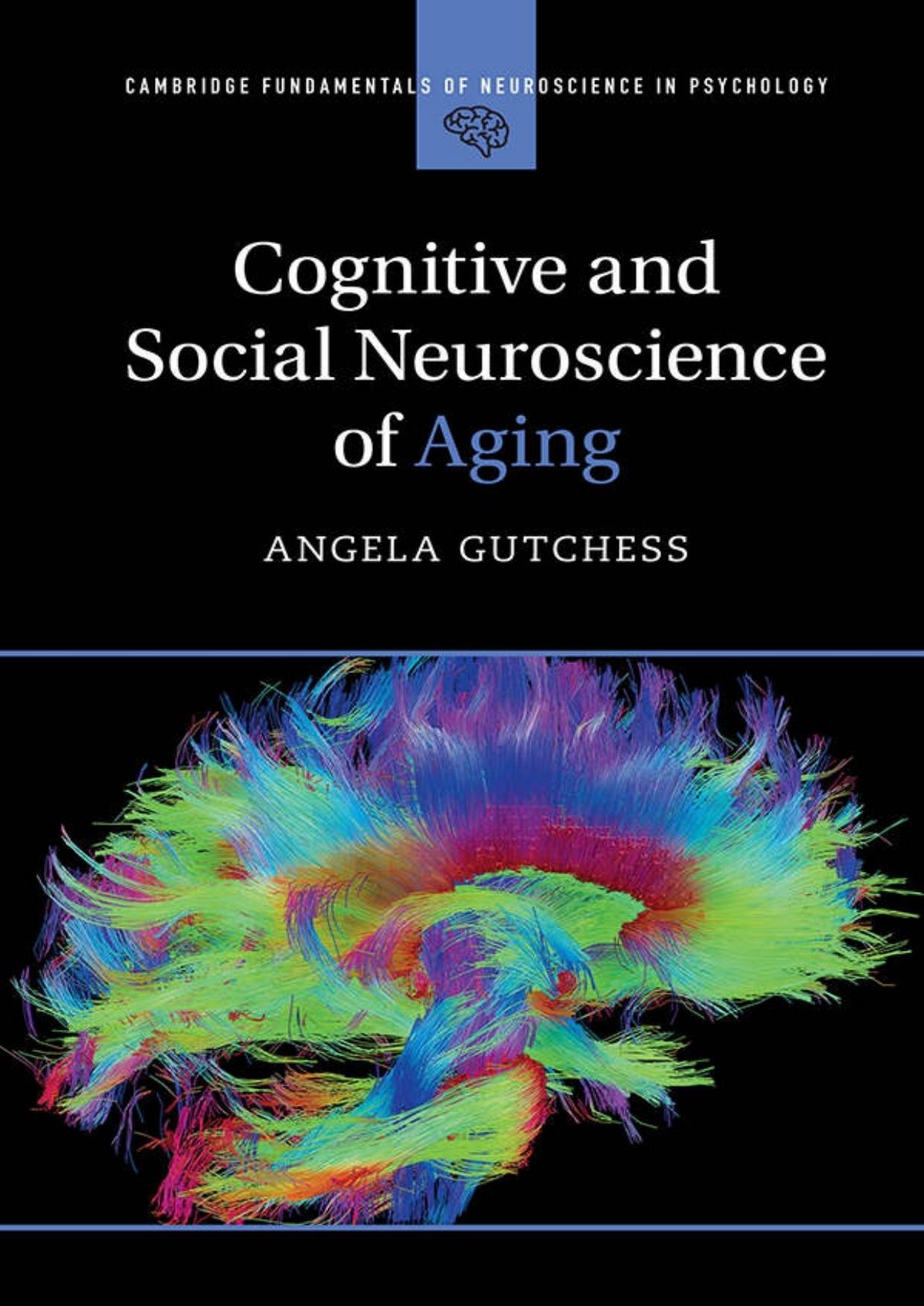
Cognitive and Social Neuroscience of Aging Cambridge Fundamentals of Neuroscience in Psychology 1st edition by Angela Gutchess ISBN 1316028940 9781316028940
Original price was: $70.00.$35.00Current price is: $35.00.
Instant download Cognitive and Social Neuroscience of Aging (Cambridge Fundamentals of Neuroscience in Psychology) after payment
Cognitive and Social Neuroscience of Aging (Cambridge Fundamentals of Neuroscience in Psychology) 1st edition by Angela Gutchess- Ebook PDF Instant Download/Delivery: 1316028940, 9781316028940
Full download Cognitive and Social Neuroscience of Aging (Cambridge Fundamentals of Neuroscience in Psychology) 1st edition after payment
Product details:
ISBN 10: 1316028940
ISBN 13: 9781316028940
Author: Angela Gutchess
Cognitive and Social Neuroscience of Aging (Cambridge Fundamentals of Neuroscience in Psychology) 1st Table of contents:
Chapter One Introduction to Cognitive and Social Neuroscience of Aging
Learning Objectives
1.1 Introduction
1.2 Theories of Cognitive Aging
1.3 Cognitive Neuroscience of Aging Theories
1.3.1 Increased Activity and Compensation with Age
1.3.2 Changing Neural Responses to Task Demands
1.3.3 Reduced Specificity of Neural Responses with Age
1.4 Cognitive Neuroscience Methods
1.4.1 Measures of Structural Integrity of the Brain
Magnetic Resonance Imaging (MRI)
Diffusion Tensor Imaging (DTI)
1.4.2 Measures of Brain Function
1.5 Recent Methodological Advances
1.5.1 Structure-Behavior Relationships
1.5.2 Structure-Function Relationships
1.5.3 Resting State fMRI (rs-fMRI)
1.5.4 Beta-Amyloid (Aβ)
1.5.5 Neurotransmitters
1.5.6 Future Directions
1.6 Introduction to the Rest of the Book
Chapter Summary
Discussion Questions
For Further Reading
Key Terms
Chapter Two Brain Mechanisms of Aging
Learning Objectives
2.1 Introduction
2.2 Structural Changes in the Brain: Gray Matter
2.2.1 Relationships between Gray Matter and Behavior
2.3 Structural Changes in the Brain: White Matter
2.3.1 Relationships between White Matter and Behavior
2.4 Connectivity
2.5 Default Mode Network
2.6 Perception and Sensation
2.7 Neurotransmitters
2.8 Individual Differences
2.8.1 Genes
2.8.2 Intelligence
2.8.3 Sex Differences
2.8.4 Personality
2.8.5 Stress
2.8.6 Bilingualism
2.8.7 Culture
2.8.8 Summary
Chapter Summary
Discussion Questions
For Further Reading
Key Terms
Chapter Three Cognition and Aging
Learning Objectives
3.1 Introduction
3.2 Attention
3.3 Executive Function
3.4 Motor Control
3.5 Language
3.5.1 Language and Hearing Loss
3.6 Training Cognitive Ability
3.6.1 Physical Activity
3.6.2 Meditation
3.6.3 Cognitive Interventions
3.6.4 Memory Training
Chapter Summary
Discussion Questions
For Further Reading
Key Terms
Chapter Four Memory and Aging
Learning Objectives
4.1 Introduction
4.2 Working Memory
4.2.1 Inhibition in Working Memory
4.3 Explicit Long-Term Memory
4.3.1 Levels of Processing and Intentionality
4.3.2 Subsequent Memory
4.3.3 Recollection
4.3.4 Source Memory
4.3.5 Associative Memory and Binding
4.3.6 Semantic Memory
4.3.7 False Memory
4.3.8 Autobiographical Memory
4.3.9 Memory and Future Thinking
4.3.10 Reactivation
4.3.11 Controlled Processes in Long-Term Memory
4.3.12 Pattern Separation
4.4 Implicit Long-Term Memory
Chapter Summary
Discussion Questions
For Further Reading
Key Terms
Chapter Five Emotion and Aging
Learning Objectives
5.1 Introduction
5.2 Neural Regions Involved in Emotion
5.3 Emotion Identification
5.4 Emotion Regulation
5.4.1 Life Satisfaction and Neural Activity with Age
5.5 Socioemotional Selectivity Theory and Age
5.6 Emotion and Memory
5.6.1 fMRI Research
5.6.2 ERP Research
Chapter Summary
Discussion Questions
For Further Reading
Key Terms
Chapter Six Social Cognition and Aging
Learning Objectives
6.1 Introduction
Color Plate
6.2 Self-Focused Processes
6.3 Self-Referencing and Memory
6.4 Own-Age Bias
6.5 Stereotype Threat and Stigma
6.6 Empathy and Theory of Mind
6.7 Social Interactions
6.8 Impression Formation
6.9 Impression Formation and Memory
6.10 Trust
6.11 Conclusions
Chapter Summary
Discussion Questions
For Further Reading
Key Terms
Chapter Seven Alzheimer’s Disease and Other Age-Related Disorders
Learning Objectives
7.1 Introduction
7.2 AD
7.2.1 Structural Changes in AD and aMCI
7.2.2 Functional Changes in AD and aMCI
7.2.3 Amyloid and Tau Imaging
7.2.4 Genes
7.2.5 Concluding Thoughts on AD
7.3 Other Age-Related Neurodegenerative Diseases
7.4 Social Cognition across Neurodegenerative Disorders
7.5 Depression
Chapter Summary
Discussion Questions
For Further Reading
Key Terms
Chapter Eight Current and Future Directions
Learning Objectives
8.1 Introduction
8.2 Decision Making and Reward
8.2.1 Reward and Economic Tasks
8.2.2 Gambling Tasks
8.2.3 Economic Decision Making in a Social Context
8.2.4 Future Directions in Decision Making and Reward
8.3 Neuromodulation
8.3.1 Overview
8.3.2 Neuromodulation Studies of Normal Aging
8.3.3 Neuromodulation Studies of Age-Related Disorders
8.4 Emerging Directions
8.4.1 Studying Aging across the Life Span
8.4.2 Exploring the Distinction of Socioemotional and Cognitive Domains
8.4.3 Contribution of Context to Aging
Chapter Summary
Discussion Questions
For Further Reading
Key Terms
Bibliography
Index
People also search for Cognitive and Social Neuroscience of Aging (Cambridge Fundamentals of Neuroscience in Psychology) 1st :
cognitive and social neuroscience of aging pdf
cognitive theory of aging
cognitive neuroscience of aging linking cognitive and cerebral aging
what is social cognitive neuroscience
social theories of aging
Tags: Angela Gutchess, Social Neuroscience, Cambridge Fundamentals 9781316028940