


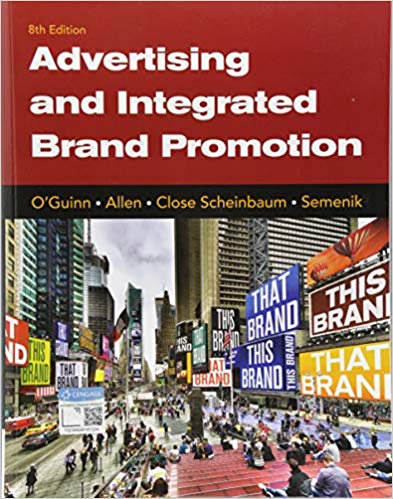
Instruction Manual for Advertising and Integrated Brand Promotion 8th edition by Thomas O’Guinn, Chris Allen, Angeline Close Scheinbaum, Richard Semenik ISBN 1337110213 978-1337110211
Original price was: $70.00.$35.00Current price is: $35.00.
Instant download (Instruction Manual) Advertising and Integrated Brand Promotion 8th by Thomas O’Guinn after payment
Instruction Manual for Advertising and Integrated Brand Promotion 8th edition by Thomas O’Guinn, Chris Allen, Angeline Close Scheinbaum, Richard Semenik – Ebook PDF Instant Download/Delivery: 1337110213, 978-1337110211
Full download Advertising and Integrated Brand Promotion 8th edition after payment
Product details:
ISBN 10: 1337110213
ISBN 13: 978-1337110211
Author: Thomas O’Guinn, Chris Allen, Angeline Close Scheinbaum, Richard Semenik
Place yourself in the midst of today’s fast-paced exhilarating world of advertising with ADVERTISING AND INTEGRATED BRAND PROMOTION, 8E. This cutting-edge approach provides intriguing insights into advertising in today’s world. You see how strong advertising is the result of hard work and careful planning. A leader for its emphasis on integrated brand promotion, this edition combines a solid understanding of advertising strategy and important theory with hands-on practice. Advertising strategy comes to life with dynamic visuals and examples from today’s most contemporary ads. Coverage of the latest practices and industry developments highlights social media, design thinking, and globalization. The book focuses on real advertising practice with content that follows the same process as an advertising agency. Accompanying MindTap provides integrated discussion of video and other medium.
Advertising and Integrated Brand Promotion 8th Table of contents:
Part 1. Advertising and Integrated Brand Promotion in Business and Society
Chapter 1. The World of Advertising and Integrated Brand Promotion
1-1. The New World of Advertising and Integrated Brand Promotion
1-1a. Old Media/New Digital Media—It’s All about the Brand
1-2. What Are Advertising and Integrated Brand Promotion?
1-2a. Advertising Defined
1-2b. Integrated Brand Promotion Defined
1-2c. Advertisements, Advertising Campaigns, and Integrated Brand Promotion
1-2d. A Focus on Advertising
1-3. Advertising as a Communication Process
1-3a. A Model of Mass-Mediated Communication
1-4. The Audiences for Advertising
1-4a. Audience Categories
1-4b. Audience Geography
1-5. Advertising as a Business Process
1-5a. The Role of Advertising in the Marketing Mix
1-5b. Types of Advertising
1-5c. The Economic Effects of Advertising
1-6. From Advertising to Integrated Marketing Communications to Integrated Brand Promotion
Summary
Key Terms
Chapter 2. The Structure of the Advertising and Promotion Industry: Advertisers, Agencies, Media, and Support Organizations
2-1. The Advertising Industry in Constant Transition
2-2. Trends Affecting the Advertising and Promotion Industry
2-2a. Consumer Control: Social Media, On-Demand Streaming, and Cutting the Cord
2-2b. Media Proliferation, Consolidation, and “Multiplatform” Media Organizations
2-2c. Media Clutter and Fragmentation Means More IBP
2-2d. Crowdsourcing
2-2e. Mobile Marketing/Mobile Media
2-3. The Scope and Structure of the Advertising and Promotion Industry
2-3a. Structure of the Advertising and Promotion Industry
2-3b. Advertisers
2-3c. The Role of the Advertiser in IBP
2-3d. Advertising and Promotion Agencies
2-3e. Agency Services
2-3f. Agency Compensation
2-3g. External Facilitators
2-3h. Media Organizations
2-3i. Target Audiences and Content Marketing
Summary
Key Terms
Chapter 3. The History of Advertising and Brand Promotion
3-1. The Rise of Advertising
3-1a. The Rise of Capitalism
3-1b. The Industrial Revolution
3-1c. The Emergence of Modern Branding
3-1d. The Rise of Modern Mass Media
3-2. The Eras of Advertising
3-2a. The Preindustrialization Era (Pre-1800)
3-2b. The Era of Industrialization (1800 to 1875)
3-2c. The “P. T. Barnum Era” (1875 to 1918)
3-2d. The 1920s (1918 to 1929)
3-2e. The Depression (1929 to 1941)
3-2f. World War II and the 1950s (1942 to 1960)
3-2g. Peace, Love, and the Creative Revolution (1960 to 1972)
3-2h. The 1970s (1973 to 1980)
3-2i. The Designer Era (1980 to 1992)
3-2j. The E-Revolution Begins (1993 to 2000)
3-3. Consumer Access, Connections, Branded Entertainment, and the Rise of Ad Blockers (2000 to Present)
3-4. Branded Entertainment
3-5. The Value of History
Summary
Key Terms
Chapter 4. Social, Ethical, and Regulatory Aspects of Advertising and Promotion
4-1. The Social Aspects of Advertising
4-1a. Advertising Educates Consumers
4-1b. Advertising Improves the Standard of Living
4-1c. Advertising Affects Happiness and General Well-Being
4-1d. Advertising: Demeaning and Deceitful or Liberating and Artful?
4-1e. Advertising Has a Powerful Effect on the Mass Media
4-2. The Ethical Aspects of Advertising
4-2a. Truth in Advertising
4-2b. Advertising to Children
4-2c. Advertising Controversial Products
4-3. The Regulatory Aspects of Advertising
4-3a. Areas of Advertising Regulation
4-3b. Regulatory Agents
4-4. The Regulation of Other Promotional Tools
4-4a. Regulatory Issues in Direct Marketing and the Internet
4-4b. Regulatory Issues in Sales Promotion
4-4c. Regulatory Issues in Public Relations
Summary
Key Terms
Part 2. Analyzing the Environment for Advertising and Integrated Brand Promotion
Chapter 5. Advertising, Integrated Brand Promotion, and Consumer Behavior
5-1. Perspective One: The Consumer as Decision Maker
5-1a. The Consumer Decision-Making Process
5-1b. Four Modes of Consumer Decision Making
5-1c. Advertising, Consumer Behavior, and Memory
5-2. Perspective Two: The Consumer as Social Being
5-2a. Consuming in the Real World
5-2b. Cultural Branding and Advertising
5-2c. How Ads Transmit Meaning
Summary
Key Terms
Chapter 6. Market Segmentation, Positioning, and the Value Proposition
6-1. STP Marketing and Advertising
6-2. Segmenting Markets
6-2a. Usage and Commitment Level
6-2b. Switchers and Variety Seekers
6-2c. Emergent Consumers
6-2d. Demographics
6-2e. Geographic Location
6-2f. Psychographics and Lifestyle
6-2g. Benefits Sought
6-2h. Segmenting Business-to-Business Markets
6-3. Prioritizing Segments
6-4. Targeting
6-4a. Positioning and Repositioning
6-4b. Positioning Opportunity
6-4c. Essentials for Effective Positioning Strategies
6-5. Working with a Value Proposition and a Brand Platform
6-5a. Now, Making It Happen
Summary
Key Terms
Chapter 7. Advertising Research
7-1. Stage One: Developmental Advertising and IBP Research
7-1a. Design Thinking
7-1b. Concept Testing
7-1c. Audience Profiling
7-1d. Focus Groups
7-1e. Projective Techniques
7-1f. Method: Fieldwork/Long Interviews
7-2. Sources of Secondary Data
7-2a. Netnography and Big Data
7-2b. Internal Company Sources
7-2c. Government Sources
7-2d. Commercial, Industry, and Nonprofit Sources
7-3. Stage Two: Copy Research
7-3a. Evaluative Criteria and Methods
7-3b. Common Methods for Assessing Cognitive Impact
7-4. Stage Three: Results Research
7-4a. Method: Tracking Studies
7-4b. Method: Direct Response
7-4c. Method: Estimating Sales Derived from Advertising
7-4d. Method: All-in-One Single-Source Data
7-5. Account Planning versus Advertising Research
7-6. Where Is Advertising Research Going?
Summary
Key Terms
Chapter 8. Planning Advertising and Integrated Brand Promotion
8.1. The Advertising Plan and Marketing Context
8-2. Introduction
8-3. Situation Analysis
8-3a. Cultural Context
8-3b. Historical Context
8-3c. Industry Analysis
8-3d. Market Analysis
8-3e. Competitor Analysis
8-4. Objectives
8-4a. Communications versus Sales Objectives
8-5. Budgeting
8-5a. Percentage of Sales
8-5b. Share of Market/Share of Voice
8-5c. Response Models
8-5d. Objective and Task
8-5e. Implementing the Objective-and-Task Budgeting Method
8-6. Strategy
8-7. Execution
8-7a. Copy Strategy
8-7b. Media Plan
8-7c. Integrated Brand Promotion
8-8. Evaluation
The Role of the Agency in Planning Advertising and IBP
Summary
Key Terms
Part 3. The Creative Process
Chapter 9. Managing Creativity in Advertising and IBP
9-1. Why Does Advertising Thrive on Creativity?
9-2. Creativity across Domains
9-2a. Creative Genius in the Advertising Business
9-2b. Creativity in the Business World
9-2c. Can You Become Creative?
9-2d. Notes of Caution
9-3. Agencies, Clients, and the Creative Process
9-3a. Oil and Water: Conflicts and Tensions in the Creative/Management Interface
9-4. Making Beautiful Music Together: Coordination, Collaboration, and Creativity
9-4a. What We Know about Teams
9-4b. When Sparks Fly: Igniting Creativity through Teams
9-4c. Final Thoughts on Teams and Creativity
9-5. Have You Decided to Become More Creative?
Summary
Key Terms
Chapter 10. Creative Message Strategy
10-1. Message Strategy
10-2. Essential Message Objectives and Strategies
10-2a. Objective #1: Promote Brand Recall
10-2b. Objective #2: Link Key Attribute(s) to the Brand Name
10-2c. Objective #3: Persuade the Consumer
10-2d. Objective #4: Affective Association: Get the Consumer to Feel Good about the Brand
10-2e. Objective #5: Scare the Consumer into Action
10-2f. Objective #6: Change Behavior by Inducing Anxiety
10-2g. Objective #7: Define the Brand Image
10-2h. Objective #8: Give the Brand the Desired Social Meaning
10-2i. Objective #9: Leverage Social Disruption and Cultural Contradictions
10-2j. Objective #10: Transform Consumption Experiences
10-3. In the End
Summary
Key Terms
Chapter 11. Executing the Creative
11-1. The Creative Team and the Creative Brief
11-2. Copywriters and Art Directors
11-3. Copywriting
11-3a. Copywriting for Print Advertising
11-3b. Copywriting for Television and Video
11-3c. Writing Copy for Radio and Podcast Advertising
11-3d. Copywriting for Digital/Interactive Media
11-3e. Slogans/Taglines
11-3f. The Copy Approval Process
11-4. Art Direction
11-4a. Illustration, Design, And Layout
11-4b. Art Direction and Production in Digital/Interactive/Mobile Media
11-4c. Art Direction and Production in Television Advertising
11-5. The Production Process in Television Advertising
11-5a. Preproduction
Summary
Key Terms
Part 4. The Media Process
Chapter 12. Media Planning Essentials
12-1. Measured and Unmeasured Media
12-1a. Where the Money Goes: The Big Pie
12-2. The Basic Ideas and Terms
12-2a. Media Strategies, Objectives, and Data
12-2b. Continuity and the Forgetting
12-2c. Length or Size of Advertisements
12-3. Competitive Media Assessment
12-4. Media Efficiency
12-4a. Internet Media
12-5. Social Media: What Is Different
12-5a. Social Networking
12-6. Media Choice and Integrated Brand Promotions
12-6a. Branded Entertainment
12-7. Planning Models
12-8. Making the Buy & Programmatic Media Buying
Summary
Key Terms
Chapter 13. Media Planning: Newspapers, Magazines, TV, and Radio
13-1. The Present and Future of Traditional Mass Media
13-2. Print Media—Strategic Planning Considerations
13-2a. Newspapers and Digital Newspapers
13-2b. Magazines
13-3. Television and Radio: Strategic Planning Considerations
13-3a. Television
13-2b. Radio
Summary
Key Terms
Chapter 14. Media Planning: Advertising and IBP in Digital, Social, and Mobile Media
14-1. The Role of Digital, Social, and Mobile Media for IBP Synergy
14-1a. Social Media and Web 2.0
14-1b. Media Types in Social Media
14-1c. Options Via Digital or Social Media: Definitions and Categories
14-2. Consumer and Brand Virtual Identity
14-2a. Consumer Virtual Identity
14-2b. Social Media as a Brand Management Tool: Brand Image and Visibility
14-3. Basics of Digital Advertising and Online Search
14-3a. Digital Advertising Investments
14-3b. E-Search
14-4. Importance of IBP in E-Tail: Emergence of Social E-Commerce and Big Data
14-5. Advantages of Digital, Social, and Mobile Media for Implementing Advertising and IBP Campaigns, as Well as the Dark Side
14-5a. Advantages of Digital, Social, and Mobile Media
14-5b. Privacy Issues and the Dark Side of Digital, Social, and Mobile Media
14-6. Synergizing with Other IBP Tools
14-6a. Video Games and Advergaming
14-6b. Sales Promotion
14-6c. Public Relations and Publicity
14-6d. Direct Marketing and E-Commerce
14-6e. Mobile Marketing and M-Commerce
Summary
Key Terms
Part 5. Integrated Brand Promotion
Chapter 15. Sales Promotion, Point-of-Purchase Advertising, and Support Media
15-1. The Role of Sales Promotion, Point-Of-Purchase Advertising, and Support Media
15-2. Sales Promotion Defined
15-3. The Importance and Growth of Sales Promotion
15-3a. The Importance of Sales Promotion
15-3b. Growth in the Use of Sales Promotion
15-4. Sales Promotion Directed at Consumers
15-4a. Objectives for Consumer-Market Sales Promotion
15-4b. Consumer-Market Sales Promotion Techniques
15-5. Sales Promotion Directed at the Trade Channel and Business Markets
15-5a. Objectives for Promotions in the Trade Channel
15-5b. Trade-Market Sales Promotion Techniques
15-5c. Business-Market Sales Promotion Techniques
15-6. The Risks of Sales Promotion
15-6a. Creating a Price Orientation
15-6b. Borrowing from Future Sales
15-6c. Alienating Customers
15-6d. Managerial Time and Expense
15-6e. Legal Considerations
15-7. Point-Of-Purchase Advertising
15-7a. Point-of-Purchase Advertising Defined
15-7b. Objectives for Point-of-Purchase Advertising
15-7c. Types of Point-of-Purchase Advertising and Displays
15-7d. P-O-P Advertising and Mobile or Location Marketing
15-7e. P-O-P Advertising and the Trade and Business Markets
15-8. Support Media
15-8a. Outdoor Signage and Billboard Advertising
15-8b. Out-of-Home Media Advertising: Transit, Aerial, Cinema
15-8c. Directory Advertising
15-8d. Packaging
Summary
Key Terms
Chapter 16. Event Sponsorship, Product Placements, and Branded Entertainment
16-1. The Role of Event Sponsorship, Product Placements, and Branded Entertainment in IBP
16-2. Brand-Building and the Convergence of Advertising and Entertainment
16-3. Event Sponsorship: Measurement and Consumer Psychology
16-3a. Who Uses Event Sponsorship?
16-3b. Finding the Sweet Spot for Event Sponsorship
16-3c. Assessing the Benefits of Event Sponsorship
16-3d. Leveraging Event Sponsorship
16-4. Product Placements
16-4a. On Television
16-4b. At the Movies
16-4c. In Video Games
16-4d. What We Know about Product Placement
16-5. Branded Entertainment
16-5a. Where Are Product Placement and Branded Entertainment Headed?
16-5b. What’s Old Is New Again
16-6. The Coordination Challenge
Summary
Key Terms
Chapter 17. Integrating Direct Marketing and Personal Selling
17-1. The Evolution of Direct Marketing
17-1a. The Evolution of Direct Marketing
17-1b. Direct Marketing Today
17-1c. Advantages of Direct Marketing
17-2. Database Marketing
17-2a. Mailing Lists/E-Mail Lists
17-2b. List Enhancement
17-2c. The Marketing Database
17-2d. Marketing Database Applications
17-2e. The Privacy Concern
17-3. Media Applications in Direct Marketing
17-3a. Direct Mail
17-3b. Email
17-3c. Telemarketing
17-3d. Direct Response Advertising in Other Media
17-3e. Infomercials
17-4. Closing the Sale with Direct Marketing and/or Personal Selling
17-4a. The Critical Role of Personal Selling
17-4b. Customer Relationship Management
17-4c. A Case in Point
Summary
Key Terms
Chapter 18. Public Relations, Influencer Marketing, and Corporate Advertising
Public Relations
18-1a. A New Era for Public Relations?
18-1b. Objectives for Public Relations
18-1c. The Tools of Public Relations
18-1d. Basic Public Relations Strategies
18-1e. A Final Word on Public Relations
Influencer Marketing
18-2a. Professional Influencer Programs
18-2b. Peer-to-Peer Programs
Corporate Advertising
18-3a. The Scope and Objectives of Corporate Advertising
18-3b. Types of Corporate Advertising
Summary
People also search for Advertising and Integrated Brand Promotion 8th :
the world of advertising and integrated brand promotion
advertising and integrated brand promotion 9th edition pdf
planning advertising and integrated brand promotion
advertising and integrated brand promotion 8th edition pdf
advertising and integrated brand promotion 9th edition free
Tags: Thomas O’Guinn, Chris Allen, Angeline Close Scheinbaum, Richard Semenik, Integrated Brand