


Effective Teaching Methods Research Based Practice 9th Edition by Gary Borich – Ebook PDF Instant Download/Delivery: 0134054873, 978-0134054872
Full download Effective Teaching Methods Research Based Practice 9th edition after payment
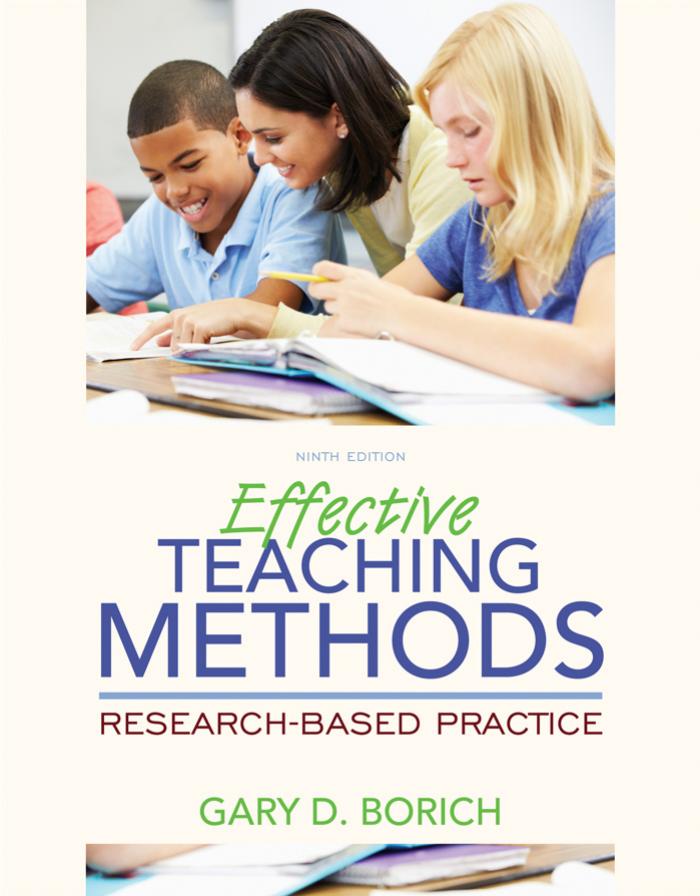
Product details:
ISBN 10: 0134054873
ISBN 13: 978-0134054872
Author: Gary Borich
If purchasing or renting from companies other than Pearson, the access codes for the Enhanced Pearson eText may not be included, may be incorrect, or may be previously redeemed. Check with the seller before completing your purchase.
This package includes the Enhanced Pearson eText and the loose-leaf version.
Prepare to meet the challenges of today’s diverse classrooms–and discover the opportunities for professional growth and advancement they provide–with this widely popular, market-leading text.
In an accessible, conversational style, this book shows new and future teachers how to apply success-proven, research-based teaching practices that are up to date, practical and realistic for use in today’s diverse classrooms. The material and teaching practices presented are supplemented with examples from classroom videos, written classroom dialogues, and case studies, many taken from years of research and observation of effective teaching practices in actual classrooms. Readers see clearly how to engage students in the learning process, manage the classroom effectively, and increase student achievement. The new edition of Borich’s Effective Teaching Methods helps prepare teachers for the challenges of today’s diverse classrooms through coverage of such topics as Common Core curriculum standards, differentiated instruction, new educational technologies, special populations in the general education classroom, cognitive and academic language proficiency, and new legislative initiatives such as Race to the Top and Response to Intervention. The Enhanced Pearson eText features embedded video and assessments.
Effective Teaching Methods Research Based Practice 9th Table of contents:
1 The Effective Teacher
Learning Outcomes
InTASC
What Is an Effective Teacher?
A New Direction
Linking Teacher Behavior with Student Performance.
Patterns of Classroom Interaction.
Key Behaviors Contributing to Effective Teaching
Lesson Clarity
Instructional Variety
Teacher Task Orientation
Engagement in the Learning Process
Student Success Rate
Summary of Five Key Behaviors
Helping Behaviors Related to Effective Teaching
Using Student Ideas and Contributions
Structuring Lesson Content
Questioning
Content Questions.
Process Questions.
Probing
Teacher Affect
Effectively Teaching Learners at all Socioeconomic Levels
The Complexity of Teaching: Drawing on 30 Years of Professional Teaching Standards
Professional Teaching Standards
Your Transition to the Real World of Teaching
For Further Information
Summing Up
Learning Outcome 1.1
Learning Outcome 1.2
Learning Outcome 1.3
Learning Outcome 1.4
Learning Outcome 1.5
Key Terms
Discussion and Practice Questions
Professional Practice
Field Experience and Practice Activities
Digital Portfolio Activities
2 Understanding Your Students
Learning Outcomes
InTASC
Not All Learners Are Alike
Adaptive Teaching
The Remediation Approach.
The Compensatory Approach.
Benefits of Adaptive Teaching.
Differentiated Instruction
The Effects of General Ability on Learning
Misconceptions about Intelligence
General versus Specific Abilities
The Effects of Specific Abilities on Learning
Multiple Intelligences
Social-Emotional Intelligence
Characteristics of Intelligence That You Can Teach, Encourage, and Nurture in Your Classroom
The Effects of Culture, Socioeconomic Status, and Language Proficiency on Learning
The Effects of Culture on Learning
The Effects of Socioeconomic Status on Learning
The Effects of Language Proficiency on Learning
The Effects of Personality and Learning Style on Learning
Erikson’s Crises of the School Years
Learning Style
Cultural Differences in Learning Styles: Some Cautions
The Effects of the Peer Group on Learning
The Effects of Home Life and Social Context on Learning
Your Role in Improving the Academic Success of All Learners
The Teacher and Cultural, Linguistic, and Socioeconomic Bias in the Classroom
A Final Word
Summing Up
Learning Outcome 2.1
Learning Outcome 2.2
Learning Outcome 2.3
Learning Outcome 2.4
Learning Outcome 2.5
Learning Outcome 2.6
Learning Outcome 2.7
Learning Outcome 2.8
Learning Outcome 2.9
Key Terms
Discussion and Practice Questions
Professional Practice
Field Experience and Practice Activities
Digital Portfolio Activities
3 Classroom Management I Establishing the Learning Climate
Learning Outcomes
InTASC
Connecting with Students
Mutual Trust and Confidence
Unconditional Acceptance of Every Learner’s Potential to Learn
Opportunity for Exploration and Discovery
Earning Trust and Becoming a Leader the Old-Fashioned Way
Expert Leadership
Referent Leadership
Legitimate Leadership
Reward Leadership
Stages of Group Development
Stage 1: Forming
Stage 2: Storming
Stage 3: Norming
Stage 4: Performing
Establishing an Effective Classroom Climate
The Social Environment
Competitive, Cooperative, or Individualistic.
Applying the Three Climates.
The Organizational Environment
Establishing Rules and Procedures
Problem Areas in Classroom Management
Monitoring Students
Making Transitions
Giving Assignments
Bringing Closure
Combining or Consolidating Key Points.
Summarizing or Reviewing Key Content.
Providing a Structure.
Culturally Responsive Classroom Management
Planning Your First Day
Before the Bell
Introducing Yourself
Preparing an Introductory Activity
Rules and Expectations
Introducing Your Subject
Closure
Making Your Classroom and School a Professional Learning Community
Summing Up
Learning Outcome 3.1
Learning Outcome 3.2
Learning Outcome 3.3
Learning Outcome 3.4
Learning Outcome 3.5
Learning Outcome 3.6
Learning Outcome 3.7
Learning Outcome 3.8
Key Terms
Discussion and Practice Questions
Professional Practice
Field Experience and Practice Activities
Digital Portfolio Activity
4 Classroom Management II Promoting Student Engagement
Learning Outcomes
InTASC
The Humanist Tradition in Classroom Management
Congruent Communication
Cooperative Learning
The Applied Behavior Analysis Tradition in Classroom Management
Behavior Modification
Positive Behavioral Intervention in Schools (PBIS)
The Classroom Management Tradition
An Integrated Approach to Classroom Management
Low-Profile Classroom Management
Anticipation.
Deflection.
Reaction.
Dealing with Persistent Disruptive Behavior
Responding to Misbehavior
Rewards and Reinforcement
Incentives versus Punishment
Warnings.
Corporal Punishment.
The Influence of Home and Family on Classroom Behavior
Establishing the Need for a Teacher–Family Conference
Preparing for the Teacher–Family Conference
Conducting the Teacher–Family Conference
Plain Talk.
Listen.
Use “I” Messages to Express Your Feelings.
Evaluating the Teacher–Family Conference
Some Teacher–Family Conference Topics: Be Prepared
Academic and Social/Behavioral Problems
Child Neglect or Abuse
Bullying
School Crises
Culturally Responsive Classroom Management
Summing Up
Learning Outcome 4.1
Learning Outcome 4.2
Learning Outcome 4.3
Learning Outcome 4.4
Learning Outcome 4.5
Learning Outcome 4.6
Learning Outcome 4.7
Learning Outcome 4.8
Key Terms
Discussion and Practice Questions
Professional Practice
Field Experience and Practice Activities
Digital Portfolio Activities
5 Goals, Standards, and Objectives
Learning Outcomes
InTASC
Goals, Standards, and Objectives
Tyler’s Goal Development Approach
The Origin of Educational Standards
Examples of Curriculum Standards and Essential Skills
Third-Grade Reading.
Eighth-Grade Science.
High School History.
Common Core State Standards
Frames of Understanding
The Purpose of Objectives
What Does Behavioral Mean?
Steps in Preparing Behavioral Objectives
Specifying the Learning Outcomes
Identifying the Conditions
Stating Criterion Levels
Keeping Objectives Simple
The Cognitive, Affective, and Psychomotor Domains
The Cognitive Domain
Knowledge.
Comprehension.
Application.
Analysis.
Synthesis.
Evaluation.
The Affective Domain
Receiving.
Responding.
Valuing.
Organization.
Characterization.
The Psychomotor Domain
Imitation.
Manipulation.
Precision.
Articulation.
Naturalization.
The Rigor and Relevance Framework
Some Misunderstandings about Behavioral Objectives
Are Some Behaviors More Desirable Than Others?
What is an Authentic Behavior?
Are Less Complex Behaviors Easier to Teach?
Are Cognitive, Affective, and Psychomotor Behaviors Mutually Exclusive?
The Cultural Roots of Objectives
Summing Up
Learning Outcome 5.1
Learning Outcome 5.2
Learning Outcome 5.3
Learning Outcome 5.4
Learning Outcome 5.5
Learning Outcome 5.6
Learning Outcome 5.7
Key Terms
Discussion and Practice Questions
Group A: Objectives
Group B: Levels of Cognitive Behavior
Professional Practice
Field Experience and Practice Activities
Digital Portfolio Activities
6 Unit and Lesson Planning
Learning Outcomes
InTASC
Teacher as Decision Maker
Knowledge of Instructional Goals and Objectives
Knowledge of Learners
Knowledge of Subject Matter
Knowledge of Teaching Methods
Pedagogical Content Knowledge
Reflective Practice and Tacit Knowledge
Unit and Lesson Plans
The System Perspective
Making Planning Decisions
Standards and Objectives.
Learners.
Content.
Outcomes.
Disciplinary and Interdisciplinary Unit Planning
Disciplinary (Vertical) Unit Plans
Visualizing Specific Teaching Activities.
Visualizing the Sequence of Activities.
The Written Unit Plan.
Interdisciplinary (Lateral) Unit Plans
The Spectrum of Integrated Curricula.
Level 1.
Level 2.
Level 3.
Level 4.
Visualizing Your Interdisciplinary Unit.
The Written Unit Plan.
Making Lesson Plans
Determining Where to Start
Providing for Learning Diversity
Task-Ability Grouping.
Learning Centers.
Review and Follow-Up Materials.
Tutoring.
Interactive Instructional CD-ROMs.
Events of Instruction
Getting Started: Some Lesson-Planning Questions
1. Gaining Attention (Anticipatory Set)
2. Informing Learners of the Objective (Anticipatory Set, Objectives, and Purpose)
3. Stimulating Recall of Prerequisite Learning (Review)
4. Presenting the Content (Input, Modeling)
Authenticity.
Selectivity.
Variety.
5. Eliciting the Desired Behavior (Checking for Understanding, Guided Practice)
6. Providing Feedback (Guided Practice, Closure)
7. Assessing the Lesson Outcome (Independent Practice)
Example Lesson Plans
1 Gaining attention.
2 Informing the learner of the objective.
3 Stimulating recall of prerequisite learning.
4 Presenting the content.
5 Eliciting the desired behavior.
6 Providing feedback.
7 Assessing the lesson outcome.
1 Gaining attention.
2 Informing the learner of the objective.
3 Stimulating recall of prerequisite learning.
4 Presenting the content.
5 Eliciting the desired behavior.
6 Providing feedback.
7 Assessing the lesson outcome.
Key Terms
Discussion and Practice Questions
Professional Practice
Field Experience and Practice Activities
Digital Portfolio Activities
Appendix A Teacher Concerns Checklist
Appendix B Answers to Chapter Questions and Activities
Appendix C Higher Order Thinking and Problem-Solving Checklist
Glossary
References
Name Index
Subject Index
People also search for Effective Teaching Methods Research Based Practice 9th :
effective teaching methods research-based practice 1e borich
borrow effective teaching methods research based practice
borich gd 2016 effective teaching methods research based practice pearson
borich gd 2017 effective teaching methods research based practice
effective teaching methods research based practice 10th edition