


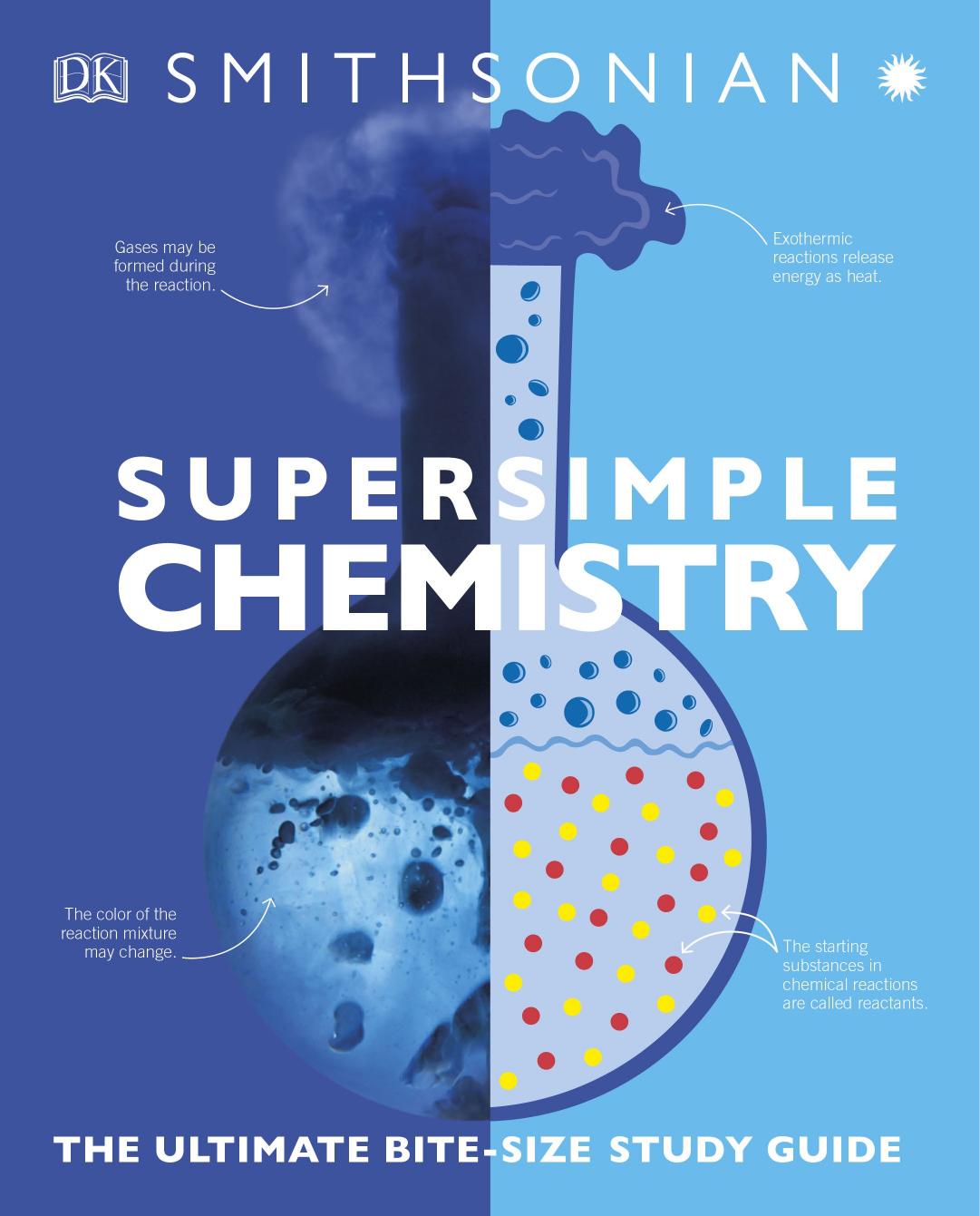
SuperSimple Chemistry The Ultimate Bitesize Study Guide 1st edition by DK – Ebook PDF Instant Download/Delivery: 1465493239 , 978-1465493231
Full download SuperSimple Chemistry The Ultimate Bitesize Study Guide 1st edition after payment
Product details:
ISBN 10: 1465493239
ISBN 13: 978-1465493231
Author: DK
A fantastic aid for coursework, homework, and studying for tests, this comprehensive guide covers Next Generation Science Standards, for grades 6-10 and will have you ready for tests and exams in no time.
Each topic is fully illustrated to support the information, make the facts crystal clear, and bring the science to life. A large central image explains the idea visually and each topic is summed up on a single page, helping children to quickly get up to speed and really understand how chemistry works.
Information boxes explain the theory with the help of simple graphics and for further studying, a handy “Key Facts” box provides a simple summary you can check back on later.
With clear, concise coverage of all the core topics, Super Simple Chemistry is the perfect accessible guide to chemistry for children, supporting classwork, and making studying for exams the easiest it’s ever been.
SuperSimple Chemistry The Ultimate Bitesize Study Guide 1st Table of contents:
- The Scientific Method
- How Science Works
- Scientific Issues
- Scientific Risk
- Validity
- Experiment Variables
- Safe Experiments
- Equipment
- Planning Experiments
- Organizing Data
- Math and Science
- Units of Measurement
- Charts and Graphs
- Conclusions
- Errors and Uncertainty
- Evaluations
- Basic Chemistry
- Atoms
- History of the Atom
- Electron Shells
- Electronic Structure
- Elements
- Isotopes
- Mixtures
- Compounds
- Formulas
- Deducing Formulas
- Equations
- Balancing Equations
- Purity
- Formulations
- Dissolving
- Grinding
- Solubility
- Calculating solubility
- Chromatography
- Filtration
- Evaporation
- Crystallization
- Simple Distillation
- Fractional Distillation In the Laboratory
- Elements
- The Periodic Table
- History of the Periodic Table
- Hydrogen
- Metals
- Group 1 Physical Properties
- Group 1 Chemical Properties
- Group 2
- Group 3
- Transition Metals
- Lanthanides
- Actinides
- Carbon
- Group 4
- Group 5
- Group 6
- Group 7
- Group 0
- Structure and Bonding
- Ions
- Ionic Bonding
- Ions and the Periodic Table
- Dot and Cross Diagrams
- Ionic Structures
- Ionic Properties
- Covalent Bonding
- Representing Covalent Bonds
- Simple Molecules
- Properties of Simple Molecules
- Polymers
- Covalent Network Solids
- Allotropes of Carbon
- Fullerenes
- Metallic Bonding
- Pure Metals and Alloys
- States of Matter
- Solids
- Liquids
- Gases
- Diffusion in Liquids
- Diffusion in Gases
- Changes of State
- Heating and Cooling Curves
- State Symbols and Predicting States
- Nanoscience and Smart Materials
- Nanoparticles
- Properties of Nanoparticles
- Uses and Risks of Nanoparticles
- Thermochromic and Photochromic Pigments
- Shape Memory Materials
- Hydrogels
- Quantitative Chemistry
- Relative Formula Mass
- Using the Percentage Mass Formula
- Moles
- Mole Calculations
- Conservation of Mass
- Changing Mass
- Moles and Equations
- Balancing Equations Using Masses
- Limiting Reactants
- Calculating Masses in Reactions
- The Volume of Gas
- Empirical Formulas
- A Reacting Masses Experiment
- Calculating the Reacting Mass
- Water of Crystallization
- Calculating Water of Crystallization
- Concentration
- Titration Calculations
- Atom Economy
- The Advantages of Atom Economy
- Percentage Yield
- 100% Yield
- The Chemistry of Acids
- The pH Scale
- Acids
- Bases
- Indicators
- Neutralization
- Titrations
- Strong and Weak Acids
- Dilute and Concentrated Acids
- Reactions with Bases
- Reactions with Metal Carbonates
- Making Insoluble Salts
- Making Soluble Salts
- Metals and Their Reactivity
- The Reactivity Series
- Reactions with Acids
- Reactions with Water
- Reactions with Steam
- Extracting Metals with Carbon
- Redox Reactions
- Group 7 Displacement Reactions
- Ionic Equations
- Metal Displacement Reactions
- Electrolysis
- Extracting Metals with Electrolysis
- Half Equations
- Extracting Aluminum in Industry
- Electrolysis of Water
- Electrolysis Experiments
- Electrolysis of Aqueous Solutions
- Electroplating
- Energy Changes
- Chemical Reactions
- Combustion
- Oxidation
- Thermal Decomposition
- Exothermic Reactions
- Endothermic Reactions
- Energy Transfer: Solutions
- Energy Transfer: Combustion
- Exothermic Reaction Profiles
- Endothermic Reaction Profiles
- Calculating Energy Changes
- Simple Voltaic Cells
- Voltaic Cells
- Batteries
- Fuel Cells
- Inside a Fuel Cell
- The Rate and Extent of Chemical Change
- Rates of Reaction
- Collision Theory
- Reaction Rates and Temperature
- Reaction Rates and Concentration
- Reaction Rates and Surface Area
- Reaction Rates and Catalysts
- Rate of Reaction Graphs
- Reaction Rates and the Volume of Gas
- Reaction Rates and Changes in Mass
- Reaction Rates and Precipitation
- Reaction Rates and Acid Concentration
- Calculating Reaction Rates
- Reversible Reactions
- Equilibrium
- Energy Transfer in Reversible Reactions
- Equilibrium and Temperature
- Equilibrium and Pressure
- Equilibrium and Concentration
- Organic Chemistry
- Organic Compounds
- Naming Organic Compounds
- Hydrocarbons
- Alkane Properties
- Hydrocarbon Combustion
- Crude Oil
- Fractional Distillation
- Cracking
- Cracking Paraffin
- Alkenes
- Addition Reactions
- Isomers
- Combustion of Alkenes
- Testing for Alkenes
- Addition Polymers
- Representing Addition Polymers
- Alcohols
- Properties of Alcohols
- Uses of Ethanol
- The Production of Ethanol
- Carboxylic Acids
- Carboxylic Acid Reactions
- Esters
- Condensation Polymers
- Polyesters and Polyamides
- DNA
- Proteins
- Carbohydrates
- Hydrolysis of Polymers
- Chemical Analysis
- Testing for Oxygen
- Testing for Carbon Dioxide
- Testing for Hydrogen
- Testing for Cations Flame Tests
- Testing for Cations Precipitation Reactions
- Testing for Anions Carbonates and Sulfates
- Testing for Anions Halides and Nitrates
- Testing for Chlorine
- Testing for Water
- Flame Emission Spectroscopy
- Interpreting Spectroscopy Charts
- Chemistry of the Earth
- Earth’s Structure
- Tectonic Plates
- Rocks
- The Rock Cycle
- The Atmosphere
- Measuring Oxygen
- The Carbon Cycle
- The Greenhouse Effect
- Human Activity
- Global Warming
- Carbon Footprints
- Carbon Capture
- Nuclear Energy
- Air Pollution
- Pollution Problems
- Acid Rain
- Using Resources
- Ceramics
- Composites
- Synthetic Polymers
- Making Polymers
- Alloys
- Sustainability
- Corrosion
- Preventing Corrosion
- Finite Resources
- Renewable Resources
- Recycling
- Life Cycle Assessment
- Potable Water
- Seawater
- Wastewater
- Treating Wastewater
- The Haber Process
- Reaction Conditions
- Fertilizers
- Producing Fertilizers
- Glossary
- Index
People also search for SuperSimple Chemistry The Ultimate Bitesize Study Guide 1st :
super simple chemistry
super simple chemistry book
dk super simple chemistry
super simple chemistry pdf
super simple chemistry the ultimate bitesize study guide pdf
Tags: DK, SuperSimple Chemistry, Bitesize Study