


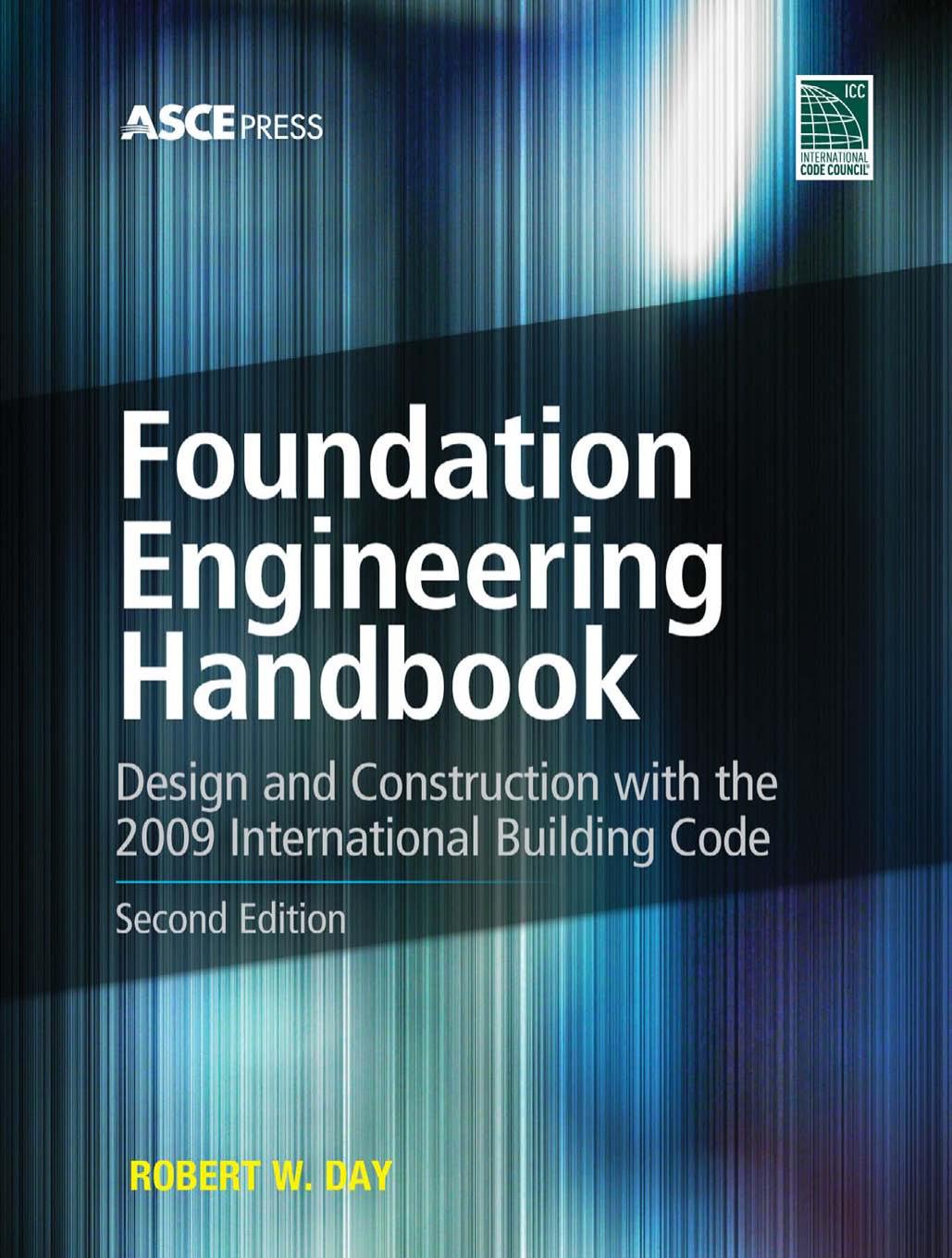
Foundation Engineering Handbook 2nd Edition by Robert Day – Ebook PDF Instant Download/Delivery: B000TIF8EQ , 978-0071740104
Full download Foundation Engineering Handbook 2nd edition after payment
Product details:
ISBN 10: B000TIF8EQ
ISBN 13: 978-0071740104
Author: Robert Day
Revised to cover the 2009 International Building Code, Foundation Engineering Handbook, Second Edition presents basic geotechnical field and laboratory studies, such as subsurface exploration and laboratory testing of soil, rock, and groundwater samples. The book then discusses the geotechnical aspects of foundation engineering, including conditions commonly encountered by design engineers–settlement, expansive soil, and slope stability. Details on the performance or engineering evaluation of foundation construction and the application of the 2009 International Building Code are included in this valuable resource.
Foundation Engineering Handbook 2nd Table of contents:
Chapter 1. Introduction
1.1. Definitions
1.2. Project Requirements
1.3. Preliminary Information and Planning the Work
1.4. Engineering Geologist
1.5. Outline of Chapters
Part 1 Geotechnical Engineering
Chapter 2. Subsurface Exploration
2.1. Introduction
2.2. Document Review
2.3. Purpose of Subsurface Exploration
2.4. Borings
2.5. Test Pits and Trenches
2.6. Preparation of Logs
2.7. Geophysical Techniques
2.8. Geotechnical Earthquake Engineering
2.9. Subsoil Profile
Notation
Problems
Chapter 3. Laboratory Testing
3.1. Introduction
3.2. Index Tests
3.3. Oedometer Test
3.4. Shear Strength of Cohesionless Soil
3.5. Shear Strength of Cohesive Soil
3.6. Laboratory Compaction Tests
3.7. Permeability Tests
Notation
Problems
Chapter 4. Soil Mechanics
4.1. Introduction
4.2. Soil Classification
4.3. Phase Relationships
4.4. Effective Stress
4.5. Stress Distribution
4.6. Total Stress and Effective Stress Analyses
4.7. Permeability and Seepage
Notation
Problems
Part 2 Foundation Design
Chapter 5. Shallow and Deep Foundations
5.1. Introduction
5.2. Selection of Foundation Type
5.3. Shallow Foundations
5.4. Deep Foundations
Problems
Chapter 6. Bearing Capacity of Foundations
6.1. Introduction
6.2. Bearing Capacity for Shallow Foundations
6.3. Bearing Capacity for Deep Foundations
6.4. Lateral Load Capacity of Deep Foundations
6.5. Geotechnical Earthquake Engineering
Notation
Problems
Chapter 7. Settlement of Foundations
7.1. Introduction
7.2. Collapsible Soil
7.3. Settlement of Cohesionless Soil
7.4. Other Common Causes of Settlement
7.5. Foundations on Rock
7.6. Allowable Settlement
Notation
Problems
Chapter 8. Consolidation
8.1. Introduction
8.2. Laboratory Consolidation Test
8.3. Immediate Settlement
8.4. Primary Consolidation
8.5. Rate of Primary Consolidation
8.6. Secondary Compression
8.7. Consolidation of Soil beneath Shallow Foundations
8.8. Consolidation of Soil beneath Deep Foundations
8.9. Settlement of Unsaturated Cohesive Soil
Notation
Problems
Chapter 9. Foundations on Expansive Soil
9.1. Introduction
9.2. Expansion Potential
9.3. Basic Expansive Soil Principles
9.4. Methods Used to Predict Foundation Movement
9.5. Foundation Design for Expansive Soil
9.6. Flatwork
9.7. Expansive Rock
Notations
Problems
Chapter 10. Slope Stability
10.1. Introduction
10.2. Rockfall
10.3. Surficial Slope Stability
10.4. Gross Slope Stability
10.5. Landslides
10.6. Debris Flow
10.7. Slope Softening and Creep
Notations
Problems
Chapter 11. Retaining Walls
11.1. Introduction
11.2. Simple Retaining Wall without Wall Friction
11.3. Simple Retaining Wall with Wall Friction
11.4. Design and Construction of Retaining Walls
11.5. Restrained Retaining Walls
11.6. Mechanically Stabilized Earth Retaining Walls
11.7. Sheet Pile Walls
11.8. Temporary Retaining Walls
11.9. Moisture Migration through Basement Walls
Notation
Problems
Chapter 12. Foundation Deterioration and Cracking
12.1. Introduction
12.2. Timber Decay
12.3. Sulfate Attack of Concrete
12.4. Frost
12.5. Historic Structures
12.6. Shrinkage Cracking
12.7. Moisture Migration through Slab-on-Grade Foundations
Chapter 13. Geotechnical Earthquake Engineering for Soils
13.1. Introduction
13.2. Basic Earthquake Principles
13.3. Peak Ground Acceleration
13.4. Liquefaction
13.5. Slope Stability
Notation
Problems
Chapter 14. Geotechnical Earthquake Engineering for Foundations and Retaining Walls
14.1. Introduction
14.2. Earthquake Structural Damage
14.3. Foundation Settlement
14.4. Retaining Walls
14.5. Foundation Alternatives to Mitigate Earthquake Effects
Notation
Problems
Part 3 Foundation Construction
Chapter 15. Grading and Other Soil Improvement Methods
15.1. Grading
15.2. Compaction
15.3. Soil Improvement Methods
Notation
Problems
Chapter 16. Foundation Excavation, Underpinning, and Field Load Tests
16.1. Introduction
16.2. Foundation Excavation and Construction
16.3. Field Load Tests
16.4. Foundation Underpinning
16.5. Observational Method
Chapter 17. Geosynthetics and Instrumentation
17.1. Introduction
17.2. Geosynthetics
17.3. Instrumentation
Part 4 2009 International Building Code
Chapter 18. International Building Code Regulations for Soils
18.1. Introduction
18.2. Soils Investigation
18.3. Excavation, Grading, and Fill
18.4. Presumptive Load-Bearing Values of Soils
18.5. Expansive Soil
Chapter 19. International Building Code Regulations for Foundations
19.1. Introduction
19.2. General Regulations for Footings and Foundations
19.3. Foundations Adjacent Slopes
19.4. Retaining Walls
19.5. Geotechnical Earthquake Engineering
People also search for Foundation Engineering Handbook 2nd:
foundation engineering handbook by robert w day
foundation engineering handbook by winterkorn and fang pdf
foundation engineering handbook by winterkorn and fang
geotechnical engineering handbook by ulrich smoltczyk
foundation engineering handbook by fang
Tags: Robert Day, Foundation Engineering