

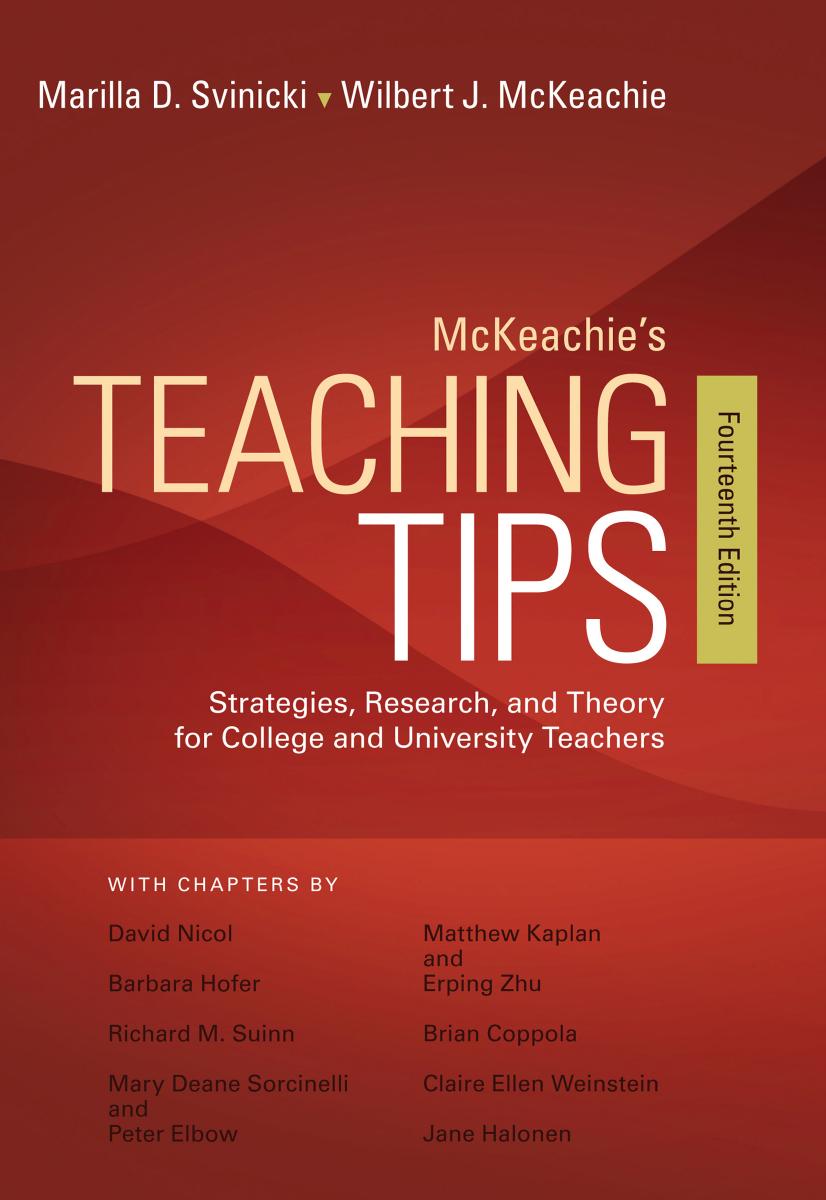
McKeachie’s Teaching Tips 14th edition by Wilbert McKeachie, Marilla Svinicki – Ebook PDF Instant Download/Delivery: 1133936792, 978-1133936794
Full download McKeachie’s Teaching Tips 14th edition after payment
Product details:
ISBN 10: 1133936792
ISBN 13: 978-1133936794
Author: Wilbert McKeachie, Marilla Svinicki
This indispensable handbook provides helpful strategies for dealing with both the everyday challenges of university teaching and those that arise in efforts to maximize learning for every student. The suggested strategies are supported by research and adaptable to specific classroom situations. Rather than suggest a “set of recipes” to be followed mechanically, the book gives instructors the tools they need to deal with the ever-changing dynamics of teaching and learning. Available with InfoTrac Student Collections http://gocengage.com/infotrac.
McKeachie’s Teaching Tips 14th Table of contents:
Part 1: Getting Started
Ch 1: Introduction
Introduction
The College or University Culture
In Conclusion
Ch 2: Countdown for Course Preparation
Introduction
Time: Three Months Before the First Class
Time: Two Months Before the First Class
Time: One Month Before the First Class
Time: Two Weeks Before the First Class
Time: One Week Before the First Class
Supplementary Reading
Ch 3: Meeting a Class for the First Time
Introduction
Setting the Stage
Breaking the Ice
Alleviating Anxiety
Building Community
Questions and Reactions
What about Subject Matter?
Supplementary Reading
Part 2: Basic Skills for Facilitating Student Learning
Ch 4: Reading as Active Learning
Introduction
Textbooks or Texts?
Research on Learning from Reading
How Do You Get the Students to Read the Assigned Readings in the First Place?
Supplementary Reading
Ch 5: Facilitating Discussion
Introduction
Tasks in Teaching by Discussion
Helping Students Prepare for Discussion
Conducting a Discussion: Getting Started
Conducting the Discussion: Moving Things Along
Conducting the Discussion: Common Problems
Conducting the Discussion: Teaching Students to Learn Through Discussion
Conducting the Discussion: Minutes, Summaries, and Drawing to a Close
Student-Led Discussions
Online Discussions
In Conclusion
Supplementary Reading
Ch 6: How to Make Lectures More Effective
Introduction
Research on the Effectiveness of Lectures
What are Lectures Good For?
Planning Lectures
Preparing Your Lecture Notes
Organization of Lectures
How Can Lectures Be Improved?
Teaching Students How to Be Better Listeners
How Do Students Proces the Content of a Lecture?
Should Students Take Notes?
In Conclusion
Supplementary Reading
Ch 7: Assessing, Testing, and Evaluating: Grading Is Not the Most Important Function
Introduction
Planning Methods of Assessment
Methods of Assessing Learning
In Conclusion
Supplementary Reading
Ch 8: Testing: The Details
Introduction
When to Test
Constructing the Test
Tests from the Student Perspective
Reducing Student Frustration and Aggresion
Helping Students Become Test-Wise
Administering the Test
Alternative Testing Models Gaining Favor
What to Do about Cheating
After the Test
In Conclusion
Supplementary Reading
Ch 9: Good Designs for Written Feedback for Students
Introduction
The Formulation of Written Feedback Comments
Fostering Feedback Dialogues
Making Teacher Feedback Contingent on Learners’ Needs
Supplementing Teacher Feedback with Peer Feedback
Activating and Strengthening Inner Feedback
In Conclusion
Supplementary Reading
Ch 10: Assigning Grades: What Do They Mean?
Introduction
Do Grades Provide Information Useful for Decision Making?
Can We Trust Grades?
Assigning Grades: On a “Curve” or Against a Standard?
Reducing Student Anxiety about Grades
What about the Student Who Wants a Grade Changed?
Grades Vs. Learning: Some Related Research
In Conclusion
Supplementary Reading
Part 3: Understanding Students
Ch 11: Motivation in the College Classroom
Introduction
Motivational Theories: An Overview
Putting Motivation Theory into Practice
Supplementary Reading
Ch 12: Teaching Culturally Diverse Students
Introduction
Culture and Communication
Motivation and Stress
Tailoring Your Teaching Methods
In Conclusion
Suggested Readings
Appendix
Ch 13: Different Students, Different Challenges
Introduction
Intellectual / Academic Challenges
Class Management Challenges
Emotional Challenges
In Conclusion
Supplementary Reading
Part 4: Adding to Your Repertoire of Skills and Strategies for Facilitating Active Learning
Ch 14: Active Learning: Group-Based Learning
The Value of Active Learning Itself
The Value of Active Learning in Groups
Why Does Peer Learning Work?
Group Learning: Variations on the Theme
Issues in Designing Group Work
In Conclusion
Supplementary Reading
Ch 15: Experiential Learning: Case-Based, Problem-Based, and Reality-Based
The Argument for Experiential Learning
The Essence of Experiential Learning
Types of Experiential Learning Representing Levels of Reality
In Conclusion
Supplementary Reading
Ch 16: Using High-Stakes and Low-Stakes Writing to Enhance Learning
A Liitle Theory: High Stakes and Low Stakes
Low-Stakes Writing
High-Stakes Writing
Middle-Stakes Assignments: Think Pieces
Peer Response
About Correctness: Spelling and Grammar
Technology and Writing
About Grading
Preventing—and Handling—Plagiarism
In Conclusion
Supplementary Reading
Ch 17: Technology and Teaching
Introduction
How Will Technology Enhance Teaching and Learning?
Teaching with Technology
Teaching Online or at a Distance
Handling the Technology Boom
What Is the Impact of Technology on Teaching and Learning?
In Conclusion
Supplementary Readings
Part 5: Skills for Use in Other Teaching Situations
Ch 18: Teaching Large Classes (You Can Still Get Active Learning!)
Introduction
Blended Learning as an Alternative Strategy
Facilitating Active Learning
Student Anonymity
Organization is the Key
Coordinating Multisection Courses
Training and Supervising Teaching Assistants
In Conclusion
Supplementary Reading
Ch 19: Laboratory Instruction: Ensuring an Active Learning Experience
Introduction
Styles of Laboratory Instruction
Studio Instruction Brings Together the Arts and Sciences
Turning Novice Researchers Into Practicing Scientists
Wet, Dry, and in Silico
What Research Says
In Conclusion
Supplementary Reading
Part 6: Teaching for Higher-Level Goals
Ch 20: Teaching Students How to Become More Strategic and Self-Regulated Learners
Introduction
What are the Characteristics of Strategic Learners?
The Importance of Goals and Self-Reflection
Increasing Students’ Self-Awareness
Using Existing Knowledge to Help Learn New Things
Teaching Domain-Specific and Course-Specific Strategies
Methods for Checking Understanding
Knowing How to Learn Is Not Enough—Students Must Also Want to Learn
Putting It All Together—Executive Control Processes in Strategic Learning
What Instructors Can Do to Help Their Students Succeed in Online or Blended Instructional Environmen
In Conclusion
Supplementary Reading
Ch 21: Teaching Thinking
Introduction
What Are We Up Against?
Thinking Pedagogy as a Confused Landscape
Frameworks That Support Teaching Thinking
Improving Thinking Quality
In Conclusion
Supplementary Reading
Ch 22: The Ethics of Teaching
Introduction
Responsibilities to Students
Making Ethical Choices
In Conclusion
Supplementary Reading
Part 7: Lifelong Learning as a Teacher
Ch 23: Vitality and Growth Throughout Your Teaching Career
Introduction
How Can You Develop Effective Skills and Strategies?
In Conclusion
Supplementary Reading
People also search for McKeachie’s Teaching Tips 14th:
mckeachie’s teaching tips 14th edition
mckeachie’s teaching tips 14th edition free pdf
mckeachie’s teaching tips pdf
tax tips for teachers
mckeachie’s teaching tips
Tags: Wilbert McKeachie, Marilla Svinicki, McKeachie’s Teaching Tips