


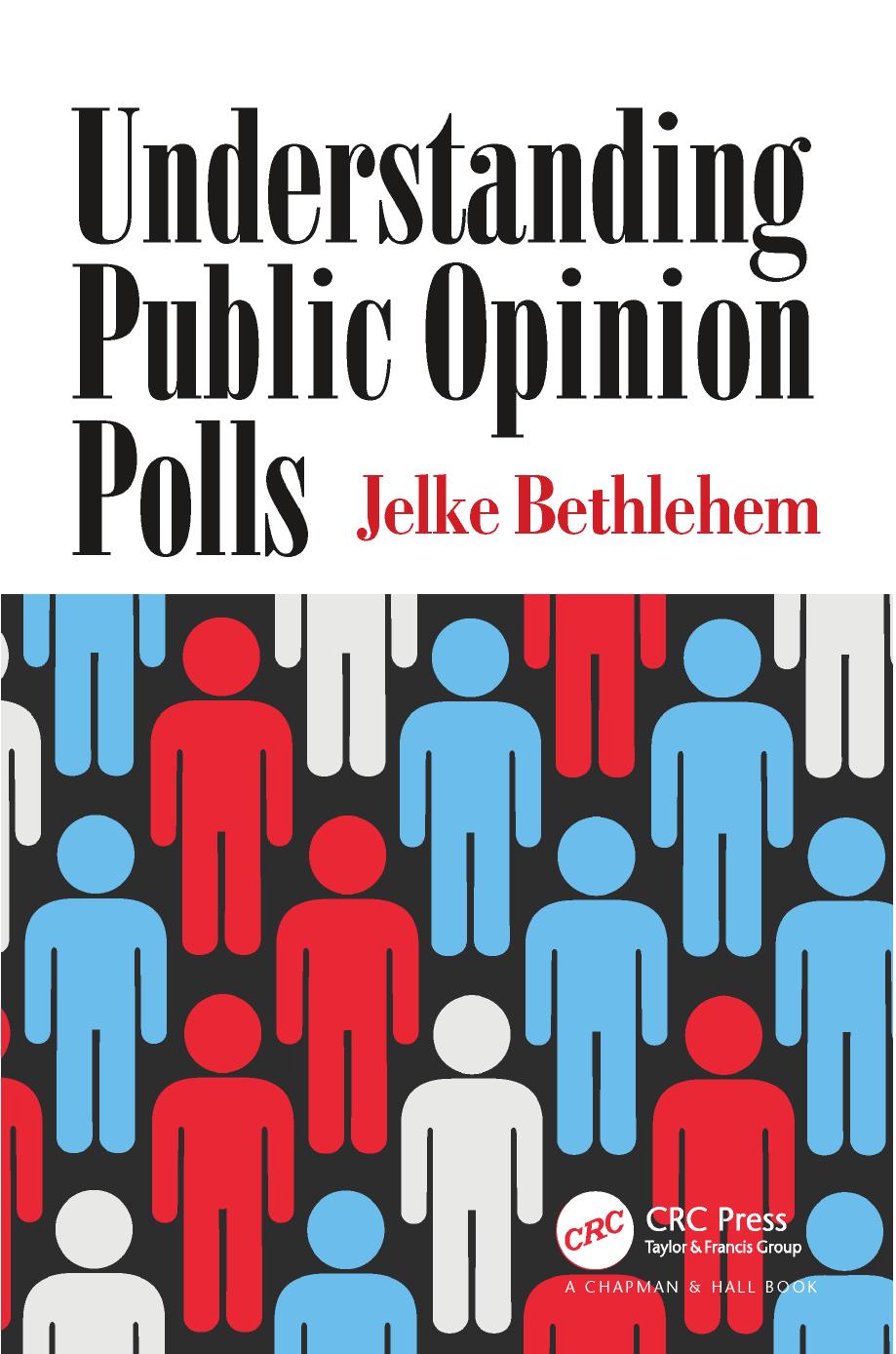
Understanding Public Opinion Polls 1st edition by Jelke Bethlehem – Ebook PDF Instant Download/Delivery: 1498769748 , 978-1498769747
Full download Understanding Public Opinion Polls 1st edition after payment
Product details:
ISBN 10: 1498769748
ISBN 13: 978-1498769747
Author: Jelke Bethlehem
Polls are conducted every day all around the world for almost everything (especially during elections). But not every poll is a good one. A lot depends on the type of questions asked, how they are asked and whether the sample used is truly representative. And these are not the only aspects of a poll that should be checked. So how does one separate the chaff from the wheat?
That’s whereUnderstanding Public Opinion Polls comes in. Written by a well-known author with over thirty years of experience, the book is built around a checklist for polls that describes the various aspects of polls to pay attention to if one intends to use its results. By comprehensively answering the questions in the checklist, a good idea of the quality of the poll is obtained.
Understanding Public Opinion Polls 1st Table of contents:
CHAPTER 1 ▪ About Polls
1.1 THE WHEAT AND THE CHAFF
1.2 WHAT IS A POLL?
1.3 CONDUCTING A POLL
1.3.1 The Target Population
1.3.2 The Variables
1.3.3 The Population Characteristics
1.3.4 The Questionnaire
1.3.5 The Mode of Data Collection
1.3.6 The Sampling Frame
1.3.7 The Sampling Design
1.3.8 The Sample Size
1.3.9 Data Collection
1.3.10 Analysis
1.3.11 Nonresponse Correction
1.3.12 Publication
1.4 EXAMPLES OF POLLS
1.4.1 The American Community Survey
1.4.2 The Eurobarometer
1.5 SUMMARY
CHAPTER 2 ▪ Some History
2.1 THE ORIGINS OF STATISTICAL DATA COLLECTION
2.2 THE CENSUS ERA
2.3 THE RISE OF SURVEY SAMPLING
2.4 OPINION POLLS
2.5 FROM TRADITIONAL TO COMPUTER-ASSISTED INTERVIEWING
2.6 ONLINE POLLS
2.7 SUMMARY
CHAPTER 3 ▪ The Questionnaire
3.1 ASKING QUESTIONS
3.2 ASKING FACTUAL AND NONFACTUAL QUESTIONS
3.3 THE TEXT OF THE QUESTION
3.3.1 Is Familiar Wording Used in the Text?
3.3.2 Is the Question Ambiguous?
3.3.3 Is the Question Text Too Long?
3.3.4 Is It a Recall Question?
3.3.5 Is It a Leading Question?
3.3.6 Does the Question Ask Things People Don’t Know?
3.3.7 Is It a Sensitive Question?
3.3.8 Is It a Double Question (Also Called a Double-Barreled Question)?
3.3.9 Is It a Negative Question?
3.3.10 Is It a Hypothetical Question?
3.4 QUESTION TYPES
3.4.1 Open Questions
3.4.2 Closed Question, One Answer
3.4.3 Closed Question, More Than One Answer
3.4.4 Numerical Question
3.4.5 Grid Question
3.5 THE ORDER OF THE QUESTIONS
3.6 TESTING THE QUESTIONNAIRE
3.7 SUMMARY
CHAPTER 4 ▪ Data Collection
4.1 MODES OF DATA COLLECTION
4.2 MAIL POLLS
4.3 FACE-TO-FACE POLLS
4.4 TELEPHONE POLLS
4.5 ONLINE POLLS
4.6 THE CHOICE OF THE MODE OF DATA COLLECTION
4.7 SUMMARY
CHAPTER 5 ▪ Sampling
5.1 BY A SAMPLE WE MAY JUDGE THE WHOLE PIECE
5.2 A REPRESENTATIVE SAMPLE?
5.3 THE SAMPLING FRAME
5.4 HOW NOT TO SELECT A SAMPLE
5.4.1 A Poll in a Shopping Mall
5.4.2 A Poll in a Magazine
5.4.3 A Poll about Singles
5.4.4 A Household Poll
5.5 RANDOM NUMBERS
5.6 SIMPLE RANDOM SAMPLING
5.7 SYSTEMATIC SAMPLING
5.8 TWO-STAGE SAMPLING
5.9 QUOTA SAMPLING
5.10 SELF-SELECTION
5.11 SUMMARY
CHAPTER 6 ▪ Estimation
6.1 ESTIMATOR AND ESTIMATE
6.2 AN EXAMPLE OF A POLL
6.3 ESTIMATING A POPULATION PERCENTAGE
6.4 ESTIMATING A POPULATION MEAN
6.5 HOW LARGE SHOULD THE SAMPLE BE?
6.5.1 The Sample Size for Estimating a Percentage
6.5.2 The Sample Size for Estimating a Mean
6.6 SUMMARY
CHAPTER 7 ▪ Nonresponse
7.1 THE NONRESPONSE PROBLEM
7.2 CONSEQUENCES OF NONRESPONSE
7.3 NONRESPONSE ANALYSIS
7.4 NONRESPONSE CORRECTION
7.5 SUMMARY
CHAPTER 8 ▪ Online Polls
8.1 THE RISE OF ONLINE POLLS
8.2 UNDERCOVERAGE IN ONLINE POLLS
8.3 SAMPLE SELECTION FOR AN ONLINE POLL
8.4 NONRESPONSE IN ONLINE POLLS
8.5 ADJUSTMENT WEIGHTING
8.6 MEASUREMENT ERRORS
8.6.1 Response Order Effects
8.6.2 Endorsing the Status Quo
8.6.3 Selecting the Middle Option
8.6.4 Straight-Lining
8.6.5 Don’t Know
8.6.6 Arbitrary Answer
8.6.7 Other Aspects
8.7 ONLINE PANELS
8.8 EXAMPLE: THE UK POLLING DISASTER
8.9 SUMMARY
CHAPTER 9 ▪ Election Polls
9.1 VOTING AND POLLING
9.2 PREELECTION POLLS
9.2.1 Asking for Voting Intentions
9.2.2 Data Collection
9.2.3 Representativity
9.2.4 Single-Question Polls
9.2.5 An Example: The U.S. Presidential Election in 2016
9.3 EXIT POLLS
9.3.1 The First Exit Poll
9.3.2 The Basics of Exit Polls
9.3.3 Examples of Exit Polls
9.4 SUMMARY
CHAPTER 10 ▪ Analysis
10.1 THE ANALYSIS OF POLL DATA
10.2 ANALYSIS OF THE DISTRIBUTION OF A QUANTITATIVE VARIABLE
10.3 ANALYSIS OF THE DISTRIBUTION OF A QUALITATIVE VARIABLE
10.4 ANALYSIS OF THE RELATIONSHIP BETWEEN TWO QUANTITATIVE VARIABLES
10.5 ANALYSIS OF THE RELATIONSHIP BETWEEN TWO QUALITATIVE VARIABLES
10.6 ANALYSIS OF THE RELATIONSHIP BETWEEN A QUANTITATIVE AND A QUALITATIVE VARIABLE
10.7 SUMMARY
CHAPTER 11 ▪ Publication
11.1 THE RESEARCH REPORT
11.2 THE STRUCTURE OF THE RESEARCH REPORT
11.2.1 The Executive Summary
11.2.2 The Methodological Account
11.2.3 The Outcomes of the Analysis
11.2.4 The Conclusions
11.2.5 Literature
11.2.6 Appendices
11.3 USE OF GRAPHS
11.3.1 Pie Chart
11.3.2 Bar Chart
11.3.3 Dot Plot
11.3.4 Grouped and Stacked Bar Chart
11.3.5 Showing Developments over Time
11.4 GUIDELINES FOR DESIGNING GRAPHS
11.4.1 Guideline 1: Do Not Mess with the Scales
11.4.2 Guideline 2: Put the Data in the Proper Context
11.4.3 Guideline 3: Be Careful with the Use of Symbols
11.4.4 Guideline 4: No Three-Dimensional Perspective
11.4.5 Guideline 5: No Chart Junk
11.5 SUMMARY
CHAPTER 12 ▪ A Checklist for Polls
12.1 SEPARATING THE CHAFF FROM THE WHEAT
12.2 THE NINE QUESTIONS
12.2.1 Is There a Research Report?
12.2.2 Is the Poll Commissioned or Sponsored by an Organization That Has No Interest in Its Outcomes?
12.2.3 Is the Target Population Clearly Defined?
12.2.4 Is the Questionnaire Available?
12.2.5 Is the Sample a Random Sample?
12.2.6 Are the Initial Sample Size and Realized Sample Size Reported?
12.2.7 Is the Response Rate Sufficiently High, Say Higher than 50%?
12.2.8 Have the Outcomes Been Corrected for Selective Nonresponse?
12.2.9 Are the Margins of Error Specified?
12.3 AN EXAMPLE: SOCIAL MEDIA STRESS
12.3.1 Is There a Research Report?
12.3.2 Is the Poll Commissioned or Sponsored by an Organization That Has No Interest in Its Outcomes?
12.3.3 Is the Target Population Clearly Defined?
12.3.4 Is the Questionnaire Included in the Research Report?
12.3.5 Is the Sample a Random Sample for Which Each Person in the Target Population Has a Positive Probability of Selection?
12.3.6 Are the Initial Sample Size and the Realized Sample Size (Number of Respondents) Reported?
12.3.7 Is the Response Rate Sufficiently High, Say Higher than 50%?
12.3.8 Have the Outcomes Been Corrected (By Adjustment Weighting) for Selective Nonresponse?
12.3.9 Are the Margins of Error Specified?
12.4 SUMMARY
People also search for Understanding Public Opinion Polls 1st :
understanding public opinion polls pdf
what is the purpose of public opinion polls
why are public opinion polls important
are public opinion polls reliable
understanding public opinion polls worksheet answers