


American Pageant 17th Edition by David Kennedy, Lizabeth Cohen – Ebook PDF Instant Download/Delivery: 1337616222, 978-1337616225
Full download American Pageant 17th edition after payment
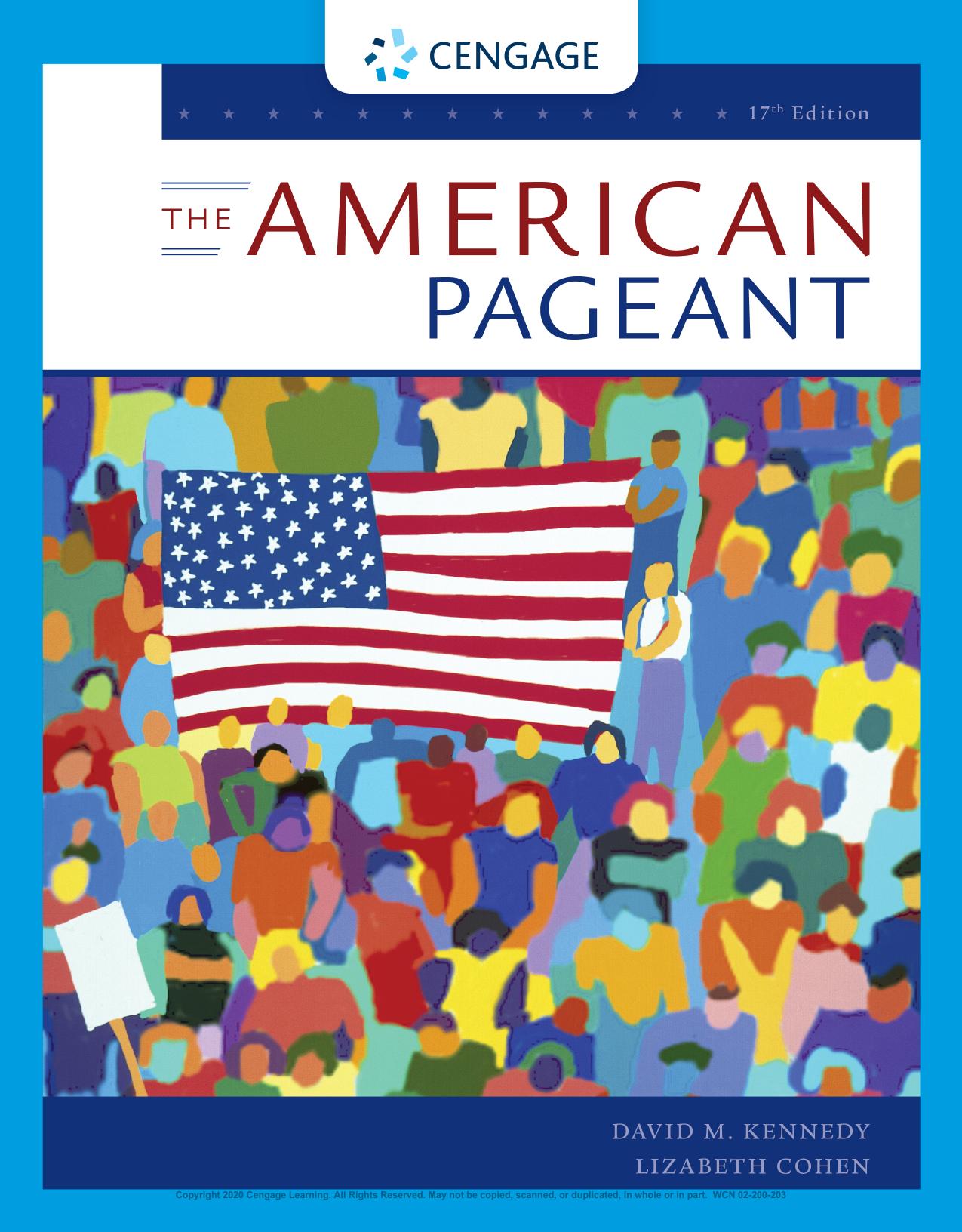
Product details:
ISBN 10: 1337616222
ISBN 13: 978-1337616225
Author: David Kennedy, Lizabeth Cohen
You may not think that a history book could make you laugh, but THE AMERICAN PAGEANT just might. It’s known for being one of the most popular, effective and entertaining texts on American history. Colorful anecdotes, first-person quotations and the authors’ trademark wit bring history to life. Learning aids make the book as accessible as it is enjoyable: part openers and chapter-ending chronologies provide a context for the major periods in American history, while primary sources and introductions to key historical figures give you a front row seat to the nation’s past.
American Pageant 17th Table of contents:
Part 1. Peopling a Continent c. 33,000 b.c.e.–1700 c.e.
Chapter 1. New World Beginnings 33,000 b.c.e.–1680 c.e.
1-1. The Shaping of North America
1-2. Peopling the Americas
1-3. The Earliest Americans
1-4. Indirect Discoverers of the New World
1-5. Europeans Enter Africa
1-6. Columbus Comes upon a New World
1-7. When Worlds Collide
1-8. The Conquest of Mexico and Peru
1-9. Exploration and Imperial Rivalry
Key Terms
People to Know
Chronology
To Learn More
Chapter 2. The Contest for North America 1500–1664
2-1. France Finds a Foothold in Canada
2-2. New France Fans Out
2-3. The Spanish in North America
2-4. England’s Imperial Stirrings
2-5. Elizabeth Energizes England
2-6. England on the Eve of Empire
2-7. England Plants the Jamestown Seedling
2-8. Cultural Clashes in the Chesapeake
2-9. Old Netherlanders at New Netherland
2-10. Friction with English and Swedish Neighbors
2-11. Dutch Residues in New York
2-12. The Indians’ New World
Key Terms
People to Know
Chronology
To Learn More
Chapter 3. Settling the English Colonies 1619–1700
3-1. Virginia: Child of Tobacco
3-2. Maryland: Catholic Haven
3-3. The West Indies: Way Station to Mainland America
3-4. Colonizing the Carolinas
3-5. The Emergence of North Carolina
3-6. Late-Coming Georgia: The Buffer Colony
3-7. The Plantation Colonies
3-8. The Protestant Reformation Produces Puritanism
3-9. The Pilgrims End Their Pilgrimage at Plymouth
3-10. The Bay Colony Bible Commonwealth
3-11. Building the Bay Colony
3-12. Trouble in the Bible Commonwealth
3-13. The Rhode Island “Sewer”
3-14. New England Spreads Out
3-15. Puritans and Indians
3-16. English Interference and Neglect
3-17. Penn’s Holy Experiment in Pennsylvania
3-18. Quaker Pennsylvania and Its Neighbors
3-19. The Middle Way in the Middle Colonies
Key Terms
People to Know
Chronology
To Learn More
Part 2. Building British North America 1607–1775
Chapter 4. American Life in the Seventeenth Century 1607–1692
4-1. The Unhealthy Chesapeake
4-2. The Tobacco Economy
4-3. Frustrated Freemen and Bacon’s Rebellion
4-4. Colonial Slavery
4-5. Southern Society
4-6. The New England Family
4-7. Life in the New England Towns
4-8. The Half-Way Covenant and the Salem Witch Trials
4-9. The New England Way of Life
4-10. The Early Settlers’ Days and Ways
Key Terms
People to Know
Chronology
To Learn More
Chapter 5. Colonial Society on the Eve of Revolution 1700–1775
5-1. A Continent in Flux
5-2. Conquest by the Cradle
5-3. A Mingling of Cultures
5-4. Africans in America
5-5. The Structure of Colonial Society
5-6. Workaday America
5-7. Clerics, Physicians, and Jurists
5-8. Horsepower and Sailpower
5-9. Dominant Denominations
5-10. The Great Awakening
5-11. Schools and Colleges
5-12. A Provincial Culture
5-13. Pioneer Presses
5-14. The Great Game of Politics
5-15. Colonial Folkways
Key Terms
People to Know
Chronology
To Learn More
Chapter 6. The Road to Revolution 1754–1775
6-1. The Clash of Empires
6-2. George Washington Inaugurates War with France
6-3. Global War and Colonial Disunity
6-4. Braddock’s Blundering and Its Aftermath
6-5. Pitt’s Palms of Victory
6-6. Restless Colonists
6-7. War’s Fateful Aftermath
6-8. The Deep Roots of Revolution
6-9. Mercantilism and Colonial Grievances
6-10. The Merits and Menace of Mercantilism
6-11. The Stamp Tax Uproar
6-12. Forced Repeal of the Stamp Act
6-13. The Townshend Tea Tax and the Boston “Massacre”
6-14. The Seditious Committees of Correspondence
6-15. Tea Brewing in Boston
6-16. Parliament Passes the “Intolerable Acts”
6-17. Bloodshed
6-18. Imperial Strength and Weakness
6-19. American Pluses and Minuses
6-20. A Thin Line of Heroes
Key Terms
People to Know
Chronology
To Learn More
Part 3. Founding a New Nation 1775–1800
Chapter 7. America Secedes from the Empire 1775–1783
7-1. Congress Drafts George Washington
7-2. Bunker Hill and Hessian Hirelings
7-3. The Abortive Conquest of Canada
7-4. Thomas Paine Preaches Common Sense
7-5. Paine and the Idea of “Republicanism”
7-6. Jefferson’s “Explanation” of Independence
7-7. Patriots and Loyalists
7-8. The Loyalist Exodus
7-9. General Washington at Bay
7-10. Burgoyne’s Blundering Invasion
7-11. Revolution in Diplomacy?
7-12. The Colonial War Becomes a Wider War
7-13. Blow and Counterblow
7-14. The Land Frontier and the Sea Frontier
7-15. Yorktown and the Final Curtain
7-16. Peace at Paris
7-17. A New Nation Legitimized
Key Terms
People to Know
Chronology
To Learn More
Chapter 8. The Confederation and the Constitution 1776–1790
8-1. A Shaky Start Toward Union
8-2. Constitution Making in the States
8-3. Economic Crosscurrents
8-4. Creating a Confederation
8-5. The Articles of Confederation: America’s First Constitution
8-6. Landmarks in Land Laws
8-7. The World’s Ugly Duckling
8-8. The Horrid Specter of Anarchy
8-9. A Convention of “Demigods”
8-10. Patriots in Philadelphia
8-11. Hammering Out a Bundle of Compromises
8-12. Safeguards for Conservatism
8-13. The Clash of Federalists and Antifederalists
8-14. The Great Debate in the States
8-15. The Four Laggard States
8-16. A Conservative Triumph
8-17. The Pursuit of Equality
Key Terms
People to Know
Chronology
To Learn More
Chapter 9. Launching the New Ship of State 1789–1800
9-1. Growing Pains
9-2. Washington for President
9-3. The Bill of Rights
9-4. Hamilton Revives the Corpse of Public Credit
9-5. Customs Duties and Excise Taxes
9-6. Hamilton Battles Jefferson for a Bank
9-7. The Edges of the Nation
9-8. Mutinous Moonshiners in Pennsylvania
9-9. The Emergence of Political Parties
9-10. The Impact of the French Revolution
9-11. Washington’s Neutrality Proclamation
9-12. Embroilments with Britain
9-13. Jay’s Treaty and Washington’s Farewell
9-14. John Adams Becomes President
9-15. Unofficial Fighting with France
9-16. Adams Puts Peace Above Party
9-17. The Federalist Witch Hunt
9-18. The Virginia (Madison) and Kentucky (Jefferson) Resolutions
9-19. Federalists Versus Democratic-Republicans
Key Terms
People to Know
Chronology
To Learn More
Part 4. Building the New Nation 1800–1860
Chapter 10. The Triumphs and Travails of the Jeffersonian Republic 1800–1812
10-1. Federalist and Republican Mudslingers
10-2. The Jeffersonian “Revolution of 1800”
10-3. Responsibility Breeds Moderation
10-4. Jeffersonian Restraint
10-5. The “Dead Clutch” of the Judiciary
10-6. Jefferson, a Reluctant Warrior
10-7. The Louisiana Godsend
10-8. Louisiana in the Long View
10-9. Changes in the West
10-10. A Precarious Neutrality
10-11. The Hated Embargo
10-12. Madison’s Gamble
10-13. Tecumseh and the Prophet
10-14. Mr. Madison’s War
Key Terms
People to Know
Chronology
To Learn More
Chapter 11. The War of 1812 and the Upsurge of Nationalism 1812–1824
11-1. On to Canada over Land and Lakes
11-2. Washington Burned and New Orleans Defended
11-3. The Treaty of Ghent
11-4. Federalist Grievances and the Hartford Convention
11-5. The Aftermath of War
11-6. Nascent Nationalism
11-7. “The American System”
11-8. The So-Called Era of Good Feelings
11-9. The Panic of 1819 and the Curse of Hard Times
11-10. Growing Pains of the West
11-11. Slavery and the Sectional Balance
11-12. The Uneasy Missouri Compromise
11-13. John Marshall and Judicial Nationalism
11-14. Judicial Dikes Against Democratic Excesses
11-15. Sharing Oregon and Acquiring Florida
11-16. The Menace of Monarchy in America
11-17. Monroe and His Doctrine
11-18. Monroe’s Doctrine Appraised
Key Terms
People to Know
Chronology
To Learn More
Chapter 12. The Rise of a Mass Democracy 1824–1840
12-1. The “Corrupt Bargain” of 1824
12-2. A Yankee Misfit in the White House
12-3. Land and the “Five Civilized Tribes”
12-4. Going “Whole Hog” for Jackson in 1828
12-5. “Old Hickory” as President
12-6. The Spoils System
12-7. The Tricky “Tariff of Abominations”
12-8. “Nullies” in South Carolina
12-9. Indian Removal
12-10. The Bank War
12-11. “Old Hickory” Wallops Clay in 1832
12-12. Burying Biddle’s Bank
12-13. The Birth of the Whigs
12-14. The Election of 1836
12-15. Big Woes for the “Little Magician”
12-16. Depression Doldrums and the Independent Treasury
12-17. Gone to Texas
12-18. The Lone Star Rebellion
12-19. Log Cabins and Hard Cider of 1840
12-20. Politics for the People
12-21. The Two-Party System
Key Terms
People to Know
Chronology
To Learn More
Chapter 13. Forging the National Economy 1790–1860
13-1. The Westward Movement
13-2. Shaping the Western Landscape
13-3. The March of the Millions
13-4. The Emerald Isle Moves West
13-5. The German Forty-Eighters
13-6. Flare-ups of Antiforeignism
13-7. Creeping Mechanization
13-8. Whitney Ends the Fiber Famine
13-9. Marvels in Manufacturing
13-10. Workers and “Wage Slaves”
13-11. Women and the Economy
13-12. Western Farmers Reap a Revolution in the Fields
13-13. Highways and Steamboats
13-14. “Clinton’s Big Ditch” in New York
13-15. The Iron Horse
13-16. Cables, Clippers, and Pony Riders
13-17. The Transport Web Binds the Union
13-18. The Market Revolution
Key Terms
People to Know
Chronology
To Learn More
Chapter 14. The Ferment of Reform and Culture 1790–1860
14-1. Reviving Religion
14-2. Denominational Diversity
14-3. A Desert Zion in Utah
14-4. Free Schools for a Free People
14-5. Higher Goals for Higher Learning
14-6. An Age of Reform
14-7. Demon Rum—The “Old Deluder”
14-8. Women in Revolt
14-9. Wilderness Utopias
14-10. The Dawn of Scientific Achievement
14-11. Artistic Achievements
14-12. The Blossoming of a National Literature
14-13. Trumpeters of Transcendentalism
14-14. Glowing Literary Lights
14-15. Literary Individualists and Dissenters
14-16. Portrayers of the Past
Key Terms
People to Know
Chronology
To Learn More
Chapter 15. The South and Slavery 1793–1860
15-1. “Cotton Is King!”
15-2. The Planter “Aristocracy”
15-3. Cotton Capitalism
15-4. The White Majority
15-5. Free Blacks: Slaves Without Masters
15-6. Plantation Slavery
15-7. Life Under the Lash
15-8. Resistance
15-9. Early Antislavery
15-10. Radical Abolitionism
15-11. The South Lashes Back
15-12. The Abolitionist Impact in the North
Key Terms
People to Know
Chronology
To Learn More
Part 5. Testing the New Nation 1841–1877
Chapter 16. Manifest Destiny and Its Legacy 1841–1848
16-1. The Accession of “Tyler Too”
16-2. John Tyler: A President Without a Party
16-3. A War of Words with Britain
16-4. Manipulating the Maine Maps
16-5. The Lone Star of Texas Shines Alone
16-6. The Annexation of Texas
16-7. Oregon Fever
16-8. A Mandate (?) for Manifest Destiny
16-9. Polk the Purposeful
16-10. Misunderstandings with Mexico
16-11. American Blood on American (?) Soil
16-12. The Invasion of Mexico
16-13. Fighting Mexico for Peace
16-14. Profit and Loss in Mexico
Key Terms
People to Know
Chronology
To Learn More
Chapter 17. Renewing the Sectional Struggle 1848–1854
17-1. The Popular Sovereignty Panacea
17-2. Political Triumphs for General Taylor
17-3. “Californy Gold”
17-4. Sectional Balance and the Underground Railroad
17-5. Twilight of the Senatorial Giants
17-6. Deadlock and Danger on Capitol Hill
17-7. Breaking the Congressional Logjam
17-8. Balancing the Compromise Scales
17-9. Defeat and Doom for the Whigs
17-10. Expansionist Stirrings South of the Border
17-11. The Allure of Asia
17-12. Pacific Railroad Promoters and the Gadsden Purchase
17-13. Douglas’s Kansas-Nebraska Scheme
17-14. Congress Legislates a Civil War
Key Terms
People to Know
Chronology
To Learn More
Chapter 18. Drifting Toward Disunion 1854–1861
18-1. Stowe and Helper: Literary Incendiaries
18-2. The North-South Contest for Kansas
18-3. Kansas in Convulsion
18-4. “Bully” Brooks and His Bludgeon
18-5. “Old Buck” Versus “The Pathfinder”
18-6. The Electoral Fruits of 1856
18-7. The Dred Scott Bombshell
18-8. The Financial Crash of 1857
18-9. An Illinois Rail-Splitter Emerges
18-10. The Great Debate: Lincoln Versus Douglas
18-11. John Brown: Murderer or Martyr?
18-12. The Disruption of the Democrats
18-13. A Rail-Splitter Splits the Union
18-14. The Electoral Upheaval of 1860
18-15. The Collapse of Compromise
18-16. The Secessionist Exodus
18-17. Farewell to Union
Key Terms
People to Know
Chronology
To Learn More
Chapter 19. Girding for War: The North and the South 1861–1865
19-1. The Menace of Secession
19-2. South Carolina Assails Fort Sumter
19-3. Brothers’ Blood and Border Blood
19-4. The Balance of Forces
19-5. Dethroning King Cotton
19-6. The Decisiveness of Diplomacy
19-7. Foreign Flare-ups
19-8. President Davis Versus President Lincoln
19-9. Limitations on Wartime Liberties
19-10. Volunteers and Draftees: North and South
19-11. The Economic Stresses of War
19-12. The North’s Economic Boom
19-13. A Crushed Cotton Kingdom
Key Terms
People to Know
Chronology
To Learn More
Chapter 20. The Furnace of Civil War 1861–1865
20-1. Bull Run Ends the “Ninety-Day War”
20-2. “Tardy George” McClellan and the Peninsula Campaign
20-3. The Western Theater
20-4. The War at Sea
20-5. The Pivotal Point: Antietam
20-6. A Proclamation Without Emancipation
20-7. Blacks Battle Bondage
20-8. Lee’s Last Lunge at Gettysburg
20-9. The Confederacy Divided
20-10. Sherman Scorches Georgia
20-11. The Politics of War
20-12. The Election of 1864
20-13. Grant Outlasts Lee
20-14. The Martyrdom of Lincoln
20-15. The Aftermath of the Nightmare
Key Terms
People to Know
Chronology
To Learn More
Chapter 21. The Ordeal of Reconstruction 1865–1877
21-1. The Problems of Peace
21-2. Freedmen Define Freedom
21-3. The Freedmen’s Bureau
21-4. Johnson: The Tailor President
21-5. Presidential Reconstruction
21-6. The Baleful Black Codes
21-7. Congressional Reconstruction
21-8. Johnson Clashes with Congress
21-9. Swinging ‘Round the Circle with Johnson
21-10. Republican Principles and Programs
21-11. Reconstruction by the Sword
21-12. No Women Voters
21-13. The Realities of Radical Reconstruction in the South
21-14. The Ku Klux Klan
21-15. Johnson Walks the Impeachment Plank
21-16. A Not-Guilty Verdict for Johnson
21-17. The Purchase of Alaska
21-18. The Legacy of Reconstruction
Key Terms
People to Know
Chronology
To Learn More
Part 6. Forging an Industrial Society 1865–1900
Chapter 22. The Industrial Era Dawns 1865–1900
22-1. The Iron Colt Becomes an Iron Horse
22-2. Spanning the Continent with Rails
22-3. Binding the Country with Railroad Ties
22-4. Railroad Consolidation and Mechanization
22-5. Revolution by Railways
22-6. Wrongdoing in Railroading
22-7. Government Bridles the Iron Horse
22-8. Miracles of Mechanization
22-9. The Trust Titan Emerges
22-10. The Supremacy of Steel
22-11. Carnegie and Other Sultans of Steel
22-12. Rockefeller Grows an American Beauty Rose
22-13. The Gospel of Wealth
22-14. Government Tackles the Trust Evil
22-15. The South in the Age of Industry
22-16. The Impact of the New Industrial Revolution on America
22-17. In Unions There Is Strength
22-18. Labor Limps Along
22-19. Unhorsing the Knights of Labor
22-20. The AF of L to the Fore
Key Terms
People to Know
Chronology
To Learn More
Chapter 23. Political Paralysis in the Gilded Age 1869–1896
23-1. The “Bloody Shirt” Elects Grant
23-2. The Era of Good Stealings
23-3. A Carnival of Corruption
23-4. The Liberal Republican Revolt of 1872
23-5. Depression, Deflation, and Inflation
23-6. Pallid Politics in the Gilded Age
23-7. The Hayes-Tilden Standoff, 1876
23-8. The Compromise of 1877 and the End of Reconstruction
23-9. The Birth of Jim Crow in the Post-Reconstruction South
23-10. Class Conflicts and Ethnic Clashes
23-11. Garfield and Arthur
23-12. The Blaine-Cleveland Mudslingers of 1884
23-13. “Old Grover” Takes Over
23-14. Cleveland Battles for a Lower Tariff
23-15. The Billion-Dollar Congress
Key Terms
People to Know
Chronology
To Learn More
Chapter 24. America Moves to the City 1865–1900
24-1. The Urban Frontier
24-2. The New Immigration
24-3. Machines and Reformers Compete and Clash
24-4. Narrowing the Welcome Mat
24-5. Churches Confront the Urban Challenge
24-6. Darwin Disrupts the Churches
24-7. The Lust for Learning
24-8. Booker T. Washington and Education for Black People
24-9. The Hallowed Halls of Ivy
24-10. The Appeal of the Press
24-11. Apostles of Reform
24-12. The New Morality
24-13. Families and Women in the City
24-14. Prohibiting Alcohol and Promoting Reform
24-15. Postwar Fiction, Lowbrow and High
24-16. Artistic Triumphs
24-17. The Business of Amusement
Key Terms
People to Know
Chronology
To Learn More
Chapter 25. The Conquest of the West 1865–1896
25-1. Indians and Whites on the Plains
25-2. The Indians Fight Back
25-3. Bellowing Herds of Bison
25-4. “Kill the Indian and Save the Man”
25-5. Mining: From Dishpan to Ore Breaker
25-6. Beef Bonanzas and the Long Drive
25-7. The Farmers’ Frontier
25-8. The Far West Comes of Age
25-9. The Fading Frontier
Key Terms
People to Know
Chronology
To Learn More
Chapter 26. Rumbles of Discontent 1865–1900
26-1. The Farm Becomes a Factory
26-2. Deflation Dooms the Debtor
26-3. Unhappy Farmers
26-4. The Farmers Take Their Stand
26-5. Prelude to Populism
26-6. Cleveland and Depression
26-7. Cleveland Breeds a Backlash
26-8. Coxey’s Army and the Pullman Strike
26-9. Golden McKinley and Silver Bryan
26-10. Class Conflict: Plowholders Versus Bondholders
26-11. Republican Stand-pattism Enthroned
Key Terms
People to Know
Chronology
To Learn More
Part 7. Struggling for Justice at Home and Abroad 1890–1945
Chapter 27. Empire and Expansion 1890–1909
27-1. America Turns Outward
27-2. Spurning the Hawaiian Pear
27-3. Cubans Rise in Revolt
27-4. Dewey’s May Day Victory at Manila
27-5. The Confused Invasion of Cuba
27-6. America’s Course (Curse?) of Empire
27-7. Perplexities in Puerto Rico and Cuba
27-8. New Horizons in Two Hemispheres
27-9. “Little Brown Brothers” in the Philippines
27-10. Hinging the Open Door in China
27-11. Imperialism or Bryanism in 1900?
27-12. TR: Brandisher of the Big Stick
27-13. Building the Panama Canal
27-14. TR’s Perversion of Monroe’s Doctrine
27-15. Roosevelt on the World Stage
27-16. Japanese Laborers in California
Key Terms
People to Know
Chronology
To Learn More
Chapter 28. Progressivism and the Republican Roosevelt 1901–1912
28-1. Progressive Roots
28-2. Raking Muck with the Muckrakers
28-3. Political Progressivism
28-4. Progressivism in the Cities and States
28-5. Progressive Women
28-6. TR’s Square Deal for Labor
28-7. TR Corrals the Corporations
28-8. Caring for the Consumer
28-9. Earth Control
28-10. The “Roosevelt Panic” of 1907
28-11. The Rough Rider Thunders Out
28-12. Taft: A Round Peg in a Square Hole
28-13. The Dollar Goes Abroad as a Diplomat
28-14. Taft the Trustbuster
28-15. Taft Splits the Republican Party
28-16. The Taft-Roosevelt Rupture
28-17. The “Bull Moose” Campaign of 1912
Key Terms
People to Know
Chronology
To Learn More
Chapter 29. Wilsonian Progressivism in Peace and War 1913–1920
29-1. Wilson: The Idealist in Politics
29-2. Wilson Tackles the Tariff
29-3. Wilson Battles the Bankers
29-4. The President Tames the Trusts
29-5. Wilson at the Peak
29-6. New Directions in Foreign Policy
29-7. Moralistic Diplomacy in Mexico
29-8. Thunder Across the Sea
29-9. America Earns Blood Money
29-10. Wilson Wins Reelection in 1916
29-11. War by Act of Germany
29-12. Wilsonian Idealism Enthroned
29-13. Wilson’s Fourteen Potent Points
29-14. Manipulating Minds and Stifling Dissent
29-15. Forging a War Economy
29-16. Workers in Wartime
29-17. Suffering Until Suffrage
29-18. Making Plowboys into Doughboys
29-19. America Helps Hammer the Hun
29-20. Wilson Steps Down from Olympus
29-21. An Idealist amid the Imperialists
29-22. Wilson’s Battle for Ratification
29-23. The “Solemn Referendum” of 1920
29-24. The Betrayal of Great Expectations
Key Terms
People to Know
Chronology
To Learn More
Chapter 30. American Life in the “Roaring Twenties” 1920–1932
30-1. Putting America on Rubber Tires
30-2. The Advent of the Gasoline Age
30-3. Radio Waves and Filmland Fantasies
30-4. The Mass-Consumption Economy
30-5. The Dynamic Decade
30-6. Seeing Red
30-7. Hooded Hoodlums of the KKK
30-8. Stemming the Foreign Flood
30-9. The Prohibition “Experiment”
30-10. The Golden Age of Gangsterism
30-11. Monkey Business in Tennessee
30-12. Cultural Liberation
30-13. Wall Street’s Big Bull Market
30-14. The Republican “Old Guard” Returns
30-15. GOP Reaction at the Throttle
30-16. The Aftermath of War
30-17. America Seeks Benefits Without Burdens
30-18. Hiking the Tariff Higher
30-19. The Stench of Scandal
30-20. “Silent Cal” Coolidge
30-21. Frustrated Farmers
30-22. A Three-Way Race for the White House in 1924
30-23. Foreign-Policy Flounderings
30-24. The Triumph of Herbert Hoover, 1928
30-25. President Hoover’s First Moves
30-26. The Great Crash Ends the Golden Twenties
30-27. Hooked on the Horn of Plenty
30-28. Rugged Times for Rugged Individualists
30-29. Hoover Battles the Great Depression
30-30. Routing the Bonus Army in Washington
30-31. Japanese Militarists Attack China
30-32. Hoover Pioneers the Good Neighbor Policy
Key Terms
People to Know
Chronology
To Learn More
Chapter 31. The Great Depression and the New Deal 1933–1939
31-1. FDR: Politician in a Wheelchair
31-2. Presidential Hopefuls of 1932
31-3. Hoover’s Humiliation in 1932
31-4. FDR and the Three Rs: Relief, Recovery, Reform
31-5. Roosevelt Manages the Money
31-6. Creating Jobs for the Jobless
31-7. A Day for Every Demagogue
31-8. New Visibility for Women
31-9. Helping Industry and Labor
31-10. Paying Farmers Not to Farm
31-11. Dust Bowls and Black Blizzards
31-12. Battling Bankers and Big Business
31-13. The TVA Harnesses the Tennessee
31-14. Housing and Social Security
31-15. A New Deal for Labor
31-16. Landon Challenges “the Champ”
31-17. Nine Old Men on the Bench
31-18. The Court Changes Course
31-19. Twilight of the New Deal
31-20. New Deal or Raw Deal?
31-21. FDR’s Balance Sheet
Key Terms
People to Know
Chronology
To Learn More
Chapter 32. Franklin D. Roosevelt and the Shadow of War 1933–1941
32-1. The London Conference
32-2. Freedom for (From?) the Filipinos and Recognition for the Russians
32-3. Becoming a Good Neighbor
32-4. Secretary Hull’s Reciprocal Trade Agreements
32-5. Storm-Cellar Isolationism
32-6. Congress Legislates Neutrality
32-7. America Dooms Loyalist Spain
32-8. Appeasing Japan and Germany
32-9. Hitler’s Belligerency and U.S. Neutrality
32-10. The Fall of France
32-11. Refugees from the Holocaust
32-12. Bolstering Britain
32-13. Shattering the Two-Term Tradition
32-14. A Landmark Lend-Lease Law
32-15. Charting a New World
32-16. U.S. Destroyers and Hitler’s U-boats Clash
32-17. Surprise Assault on Pearl Harbor
32-18. America’s Transformation from Bystander to Belligerent
Key Terms
People to Know
Chronology
To Learn More
Chapter 33. America in World War II 1941–1945
33-1. The Allies Trade Space for Time
33-2. The Shock of War
33-3. Building the War Machine
33-4. Manpower and Womanpower
33-5. Wartime Migrations
33-6. Holding the Home Front
33-7. The Rising Sun in the Pacific
33-8. Japan’s High Tide at Midway
33-9. American Leapfrogging Toward Tokyo
33-10. The Allied Halting of Hitler
33-11. A Second Front from North Africa to Rome
33-12. D-Day: June 6, 1944
33-13. FDR: The Fourth-Termite of 1944
33-14. Roosevelt Defeats Dewey
33-15. The Last Days of Hitler
33-16. Japan Dies Hard
33-17. The Atomic Bombs
33-18. The Allies Triumphant
Key Terms
People to Know
Chronology
To Learn More
Part 8. Making an American Superpower 1945–1980
Chapter 34. The Cold War Begins 1945–1952
34-1. Truman: The “Gutty” Man from Missouri
34-2. Yalta: Bargain or Betrayal?
34-3. The United States and the Soviet Union
34-4. Shaping the Postwar World
34-5. The Problem of Germany
34-6. Cold War Deepens
34-7. Girding for the Cold War
34-8. Reconstruction and Revolution in Asia
34-9. The Korean Volcano Erupts
34-10. The Military Seesaw in Korea
34-11. The Cold War Home Front
34-12. Postwar Economic Anxieties
34-13. Democratic Divisions in 1948
34-14. The Long Economic Boom, 1950–1970
34-15. The Roots of Postwar Prosperity
34-16. The Smiling Sunbelt
34-17. The Rush to the Suburbs
34-18. The Postwar Baby Boom
Key Terms
People to Know
Chronology
To Learn More
Chapter 35. American Zenith 1952–1963
35-1. Affluence and Its Anxieties
35-2. Consumer Culture in the Fifties
35-3. The Advent of Eisenhower
35-4. Desegregating American Society
35-5. Seeds of the Civil Rights Revolution
35-6. Eisenhower Republicanism at Home
35-7. A “New Look” in Foreign Policy
35-8. The Vietnam Nightmare
35-9. Cold War Crises in the Middle East
35-10. Round Two for Ike
35-11. The Continuing Cold War
35-12. Kennedy Challenges Nixon for the Presidency
35-13. A Cultural Renaissance
35-14. New Cultural Voices
35-15. Kennedy’s “New Frontier” Spirit
35-16. Foreign Flare-ups and “Flexible Response”
35-17. Cuban Confrontations
35-18. The Struggle for Civil Rights
35-19. The Killing of Kennedy
Key Terms
People to Know
Chronology
To Learn More
Chapter 36. The Stormy Sixties 1963–1973
36-1. The LBJ Brand on the Presidency
36-2. Johnson Battles Goldwater in 1964
36-3. The Great Society Congress
36-4. Battling for Black Rights
36-5. Black Power
36-6. Vietnam Vexations
36-7. Vietnam Topples Johnson
36-8. The Presidential Sweepstakes of 1968
36-9. The Cultural Upheaval of the 1960s
36-10. Nixon Vietnamizes the War
36-11. Cambodianizing the Vietnam War
36-12. Nixon’s Détente with Beijing (Peking) and Moscow
36-13. A New Team on the Supreme Bench
36-14. Nixon on the Home Front
36-15. The Nixon Landslide of 1972
36-16. The Secret Bombing of Cambodia and the War Powers Act
36-17. The Arab Oil Embargo and the Energy Crisis
Key Terms
People to Know
Chronology
To Learn More
Chapter 37. A Sea of Troubles 1973–1980
37-1. Watergate and the Unmaking of a President
37-2. Sources of Stagnation
37-3. The First Unelected President
37-4. Defeat in Vietnam
37-5. Feminist Victories and Defeats
37-6. The Seventies in Black and White
37-7. The Bicentennial Campaign
37-8. Carter’s Humanitarian Diplomacy
37-9. Economic and Energy Woes
37-10. The Turn Toward the Market
37-11. Foreign Affairs and the Iranian Imbroglio
Key Terms
People to Know
Chronology
To Learn More
Part 9. Sustaining Democracy in a Global Age 1980 to the Present
Chapter 38. The Resurgence of Conservatism 1980–1992
38-1. The Election of Ronald Reagan, 1980
38-2. The Reagan Revolution
38-3. The Battle of the Budget
38-4. Reagan Renews the Cold War
38-5. Troubles Abroad
38-6. Round Two for Reagan
38-7. The Iran-Contra Imbroglio
38-8. Reagan’s Economic Legacy
38-9. The Religious Right
38-10. Conservatism in the Courts
38-11. Referendum on Reaganism in 1988
38-12. George H. W. Bush and the End of the Cold War
38-13. The Persian Gulf Crisis
38-14. Bush on the Home Front
Key Terms
People to Know
Chronology
To Learn More
Chapter 39. America Confronts the Post–Cold War Era 1992–2000
39-1. Bill Clinton: The First Baby-Boomer President
39-2. A False Start for Reform
39-3. The Politics of Distrust
39-4. Clinton Comes Back
39-5. Racial Progress and Perils
39-6. Globalization and Its Discontents
39-7. The Feminist Revolution
39-8. Searching for a Post–Cold War Foreign Policy
39-9. Scandal and Impeachment
39-10. Clinton’s Legacy and the 2000 Election
39-11. E Pluribus Plures
39-12. Culture and Society at Century’s End
39-13. Niche Nation
Key Terms
People to Know
Chronology
To Learn More
Chapter 40. The American People Face a New Century 2001–2018
40-1. Bush Begins
40-2. Terrorism Comes to America
40-3. Bush Takes the Offensive Against Iraq
40-4. Owning Iraq
40-5. Reelecting George W. Bush
40-6. Bush’s Bruising Second Term
40-7. The Presidential Election of 2008
40-8. Obama in the White House
40-9. Back to Backlash
40-10. New Directions in Foreign Policy
40-11. The Politics of Inequality
40-12. Battling for the White House in 2012
40-13. Second-Term Stalemate
40-14. The Immigration Impasse
40-15. Civil Rights and Civil Liberties
40-16. An Age of Distrust
40-17. Obama’s Troubled Last Years
40-18. The Astonishing Election of 2016
40-19. Trump in Power
40-20. The World Warily Watches Washington
40-21. The American Prospect
Key Terms
People to Know
Chronology
To Learn More
Creating the Atlantic World: Creating an Historical Exhibit
Part I. Information for Instructors
Activity Overview
Pedagogical Goals
Sample
Tips for Instructors
Part II. Information for Students
Background
Activity Description
An American Profile: The United States and Its People
An American Profile: The United States and Its People
Documents
Tables
People also search for American Pageant 17th :
the american pageant 17th edition pdf
the american pageant 17th edition pdf free download
the american pageant 17th edition online textbook
the american pageant 17th edition audiobook
american pageant 17th edition