


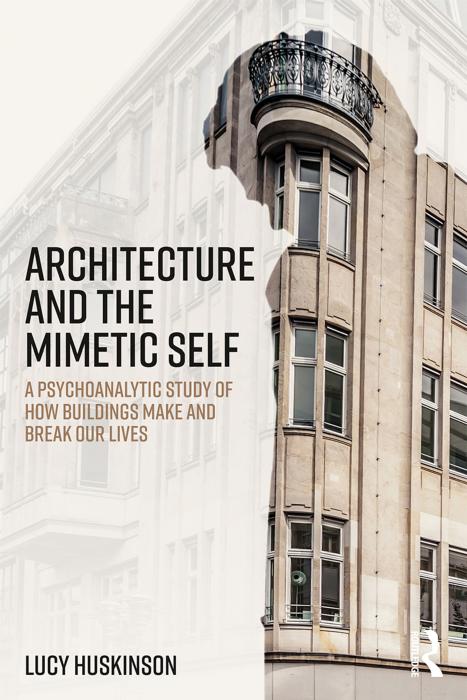
Architecture and the Mimetic Self A Psychoanalytic Study of How Buildings Make and Break Our Lives 1st edition by Lucy Huskinson ISBN 0415693047 978-0415693042
Original price was: $70.00.$35.00Current price is: $35.00.
Instant download Architecture and the Mimetic Self A Psychoanalytic Study of How Buildings Make and Break Our Lives Lucy Huskinson after payment
Architecture and the Mimetic Self A Psychoanalytic Study of How Buildings Make and Break Our Lives 1st edition by Lucy Huskinson – Ebook PDF Instant Download/Delivery: 0415693047, 978-0415693042
Full download Architecture and the Mimetic Self A Psychoanalytic Study of How Buildings Make and Break Our Lives 1st edition after payment
Product details:
ISBN 10: 0415693047
ISBN 13: 978-0415693042
Author: Lucy Huskinson
Buildings shape our identity and sense of self in profound ways that are not always evident to architects and town planners, or even to those who think they are intimately familiar with the buildings they inhabit. Architecture and the Mimetic Self provides a useful theoretical guide to our unconscious behaviour in relation to buildings, and explains both how and why we are drawn to specific elements and features of architectural design. It reveals how even the most uninspiring of buildings can be modified to meet our unconscious expectations and requirements of them―and, by the same token, it explores the repercussions for our wellbeing when buildings fail to do so.
Criteria for effective architectural design have for a long time been grounded in utilitarian and aesthetic principles of function, efficiency, cost, and visual impact. Although these are important considerations, they often fail to meet the fundamental needs of those who inhabit and use buildings. Misconceptions are rife, not least because our responses to architecture are often difficult to measure, and are in large part unconscious. By bridging psychoanalytic thought and architectural theory, Architecture and the Mimetic Self frees the former from its preoccupations with interpersonal human relations to address the vital relationships that we establish with our nonhuman environments.
In addition to providing a guide to the unconscious behaviours that are most relevant for evaluating architectural design, this book explains how our relationships with the built environment inform a more expansive and useful psychoanalytic theory of human relationship and identity. It will appeal to psychoanalysts and analytical psychologists, architects, and all who are interested in the overlaps of psychology, architecture, and the built environment.
Architecture and the Mimetic Self A Psychoanalytic Study of How Buildings Make and Break Our Lives 1st Table of contents:
Chapter 1 Introduction: Buildings design us as much as we them
Architectural blueprints of being
The chapters
Notes
Chapter 2 Architectural blueprints of psyche
Breuer’s house of hysteria (1893–1895)
Freud’s architecture of psyche
Freud’s buildings of hysteria
Architectural Rome as City of Memory
Psychosomatic houses of Freud and Scherner
The houses that Jung built
Jung’s dream-house of psyche (1909)
228 Seestrasse in Küsnacht and the upper storey of the dream-house
The rectory at Basle, the ‘tower’ at Bollingen, and the lower storeys of the dream-house
Buildings gaze back
Conclusion: building the self and the self within buildings
Notes
Chapter 3 The architectural event: Buildings as events that disclose our being
Building enduring structures for ourselves
Architecture that inhibits
Architecture as event and container of infinite surplus
The symbolic nature of buildings
Imaginative perception
Discovering ourselves through architecture
Notes
Chapter 4 The body’s role in the architectural event: Fortification and containment
Unstable bodies, unstable architecture
Mimesis
Freudian mimesis
Lacan’s statue
Touching the skin-ego
Psychoanalytic resistance to the nonhuman environment and architectural object
The psychoanalytic concession: architecture as memorial to mother
Reinstating architecture as mother’s accomplice
The affective built environment prior to mother
Buildings facilitate vital separation from mother
Conclusion: the flesh of the building and the building of flesh
Notes
Chapter 5 Using architecture to think ourselves into being: Buildings as storehouses of unconscious thought
‘Thinking’ unconsciously
Creative potentials of unconscious thinking
Henri Poincaré’s creative distractions
Stages of creative thinking
The ‘dream-work’: building blocks of unconscious insight and evocative architectural design
Architecture that distracts, perplexes, and surprises
The distracting spatial procedures of the dream-work
Disclosing unconscious insights through evocative architecture
Revisiting Freud at the Acropolis: Freud’s memory building
Conclusion: buildings are inscriptions of us
Notes
Chapter 6 The self that is disclosed through architecture
Different models of the unconscious lead to different architectural insights
The uncanny: the unconscious as it gathers and unfolds its surprise
Disclosing unconscious material: sublime and numinous surprises
Sublime insights
Numinous insights
Uncanny, sublime, or numinous architecture? How to tell the difference
Anaesthetic architecture: the problem of the ‘American sublime’, and the need for ugliness
Ugliness and distortion
Notes
Chapter 7 Conclusion: architecture that captures the imagination: Designing and responding to evocative architecture
Making banal buildings evocative by enhancing our capacity to notice them
Attending to the unexpected: noticing the unfamiliar within the most familiar of places
The significance of wandering for wondering
Reawakening architecture
A journey about a room, pedestrian explorers, and the freedom to run through architecture
Designing for our existential needs
The need for gaps and breaks
Ambiguous and contrasting features are evocative
The interplay of shadow and light
Incorporating the radical within the conventional
Koolhaas and the problematic surrealist approach
People also search for Architecture and the Mimetic Self A Psychoanalytic Study of How Buildings Make and Break Our Lives 1st :
mimetic architecture examples
what is the self archetype
architecture photography techniques
architecture psychoanalysis
architecture and the mimetic self