


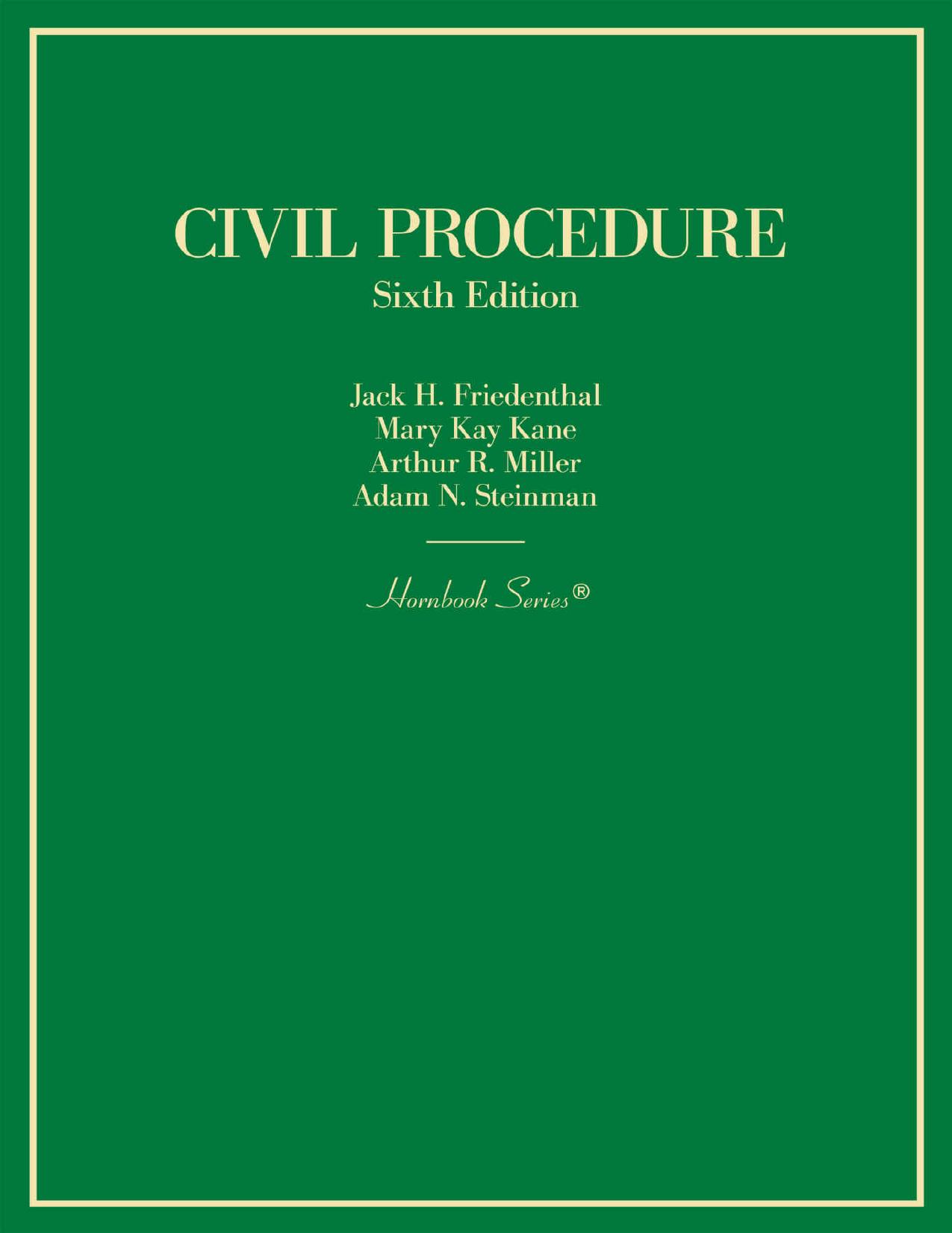
Civil Procedure 6th edition by Jack Friedenthal, Mary Kay Kane, Arthur Miller, Adam Steinman ISBN 1647082692 978-1647082697
Original price was: $70.00.$35.00Current price is: $35.00.
Instant download Civil Procedure (Hornbooks) Jack H. Friedenthal & Mary Kay Kane & Arthur R. Miller & Adam N. Steinman after payment
Civil Procedure 6th edition by Jack Friedenthal, Mary Kay Kane, Arthur Miller, Adam Steinman- Ebook PDF Instant Download/Delivery: 1647082692 , 978-1647082697
Full download Civil Procedure 6th edition after payment
Product details:
ISBN 10: 1647082692
ISBN 13: 978-1647082697
Author: Jack Friedenthal, Mary Kay Kane, Arthur Miller, Adam Steinman
Gain insight into the laws governing all of the major steps in the civil litigation process, starting with jurisdiction, venue, and ascertaining the governing law, and moving through pleading, joinder, discovery, pretrial management and adjudication, trials, appeals, and the effect and enforcement of judgments. Class actions and other forms of complex, multiparty litigation, as well as Alternative Dispute Resolution (ADR), are also covered. This text addresses the major themes underlying the various rules and procedures, and it has continuing utility as a desk book in legal practice and as an entrée into deeper research.
Civil Procedure 6th Table of contents:
CHAPTER 1. INTRODUCTION
§ 1.1 Civil Procedure Defined
§ 1.2 General Description of Court Systems
CHAPTER 2. SUBJECT-MATTER JURISDICTION AND VENUE
§ 2.1 Overview
A. FEDERAL SUBJECT-MATTER JURISDICTION
§ 2.2 The Nature of the Federal Courts
§ 2.3 Federal-Question Jurisdiction
§ 2.4 Federal-Question Jurisdiction—The Well-Pleaded Complaint Rule
§ 2.5 Diversity-of-Citizenship Jurisdiction—In General
§ 2.6 Diversity-of-Citizenship Jurisdiction—Application of Diversity Requirements
§ 2.7 Diversity-of-Citizenship Jurisdiction—Devices to Create and Destroy Diversity
§ 2.8 Amount-in-Controversy Requirements
§ 2.9 Amount-in-Controversy Requirements—The Effect of Additional Claims and Additional Parties
§ 2.10 Actions in Which the United States Is a Party and Admiralty and Maritime Cases
§ 2.11 Removal Jurisdiction
§ 2.12 Supplemental Jurisdiction—History
§ 2.13 Supplemental Jurisdiction—Joinder of Claims
§ 2.14 Supplemental Jurisdiction—Joinder of Parties
B. VENUE
§ 2.15 Venue Requirements
§ 2.16 Local and Transitory Actions
§ 2.17 Transfer and Forum Non Conveniens
CHAPTER 3. PERSONAL JURISDICTION
§ 3.1 Overview
A. HISTORICAL DEVELOPMENT OF JURISDICTIONAL DOCTRINE
1. Traditional Bases of Jurisdiction
§ 3.2 The Jurisdictional Categories
2. The Rule of Physical Presence
§ 3.3 Pennoyer v. Neff
3. Jurisdiction Over Persons: Exceptions to the Rule of Physical Presence
§ 3.4 The Presence Test: Some Problems and Limitations
§ 3.5 Jurisdiction Based on Consent
§ 3.6 Jurisdiction Based on Domicile and Residence
§ 3.7 Jurisdiction Based on Corporate Presence and “Doing Business”
4. Jurisdiction Over Property
§ 3.8 In-Rem and Quasi-in-Rem Jurisdiction: Traditional Doctrine
§ 3.9 Problems with Traditional Doctrine: Quasi-in-Rem Jurisdiction Under Stress
B. CONTEMPORARY JURISDICTION NOTIONS: IN-PERSONAM JURISDICTION
1. Constitutional Requirements
§ 3.10 The Basic Rule of International Shoe: The Minimum Contacts and Fair Play and Substantial Justice Requirements
§ 3.11 Refinements of the Basic Standard: The Requirement of a Purposeful Act and Foreseeability
2. Statutory Requirements
§ 3.12 The Growth and Use of Long-Arm Statutes
§ 3.13 Particular Applications of Long-Arm Statutes
3. The Internet
§ 3.14 Jurisdiction Based on Internet Communications
C. CONTEMPORARY JURISDICTION NOTIONS: IN-REM AND QUASI-IN-REM JURISDICTION
§ 3.15 International Shoe Triumphant: A Uniform Standard for Jurisdiction
§ 3.16 International Shoe Applied to In-Rem and Quasi-in-Rem Jurisdiction
§ 3.17 The Seizure of Property: Requirements and Definition
D. THE IMPACT OF SHAFFER V. HEITNER ON PENNOYER’S SATELLITE JURISDICTION THEORIES
§ 3.18 The Current Viability of Consent, Domicile, and Transitory Presence Theories
E. AMENABILITY TO SUIT
§ 3.19 Source of Governing Law
F. NOTICE AND THE OPPORTUNITY TO BE HEARD
1. Due-Process Requirements
§ 3.20 The Requirement of Reasonable Notice
§ 3.21 Service of Process as a Means of Notice
§ 3.22 The Timing of Notice and the Opportunity to Be Heard
2. Service-of-Process Requirements and Limits
§ 3.23 The Etiquette and Sufficiency of Service of Process
§ 3.24 Impermissible Uses of Service of Process
§ 3.25 Immunity from Service of Process
G. CHALLENGES TO JURISDICTION
§ 3.26 Challenging Jurisdiction—An Introduction
§ 3.27 Methods of Challenging Jurisdiction
§ 3.28 Limited Appearances in Quasi-in-Rem Proceedings
§ 3.29 Protecting the Defendant Against Vexatious Litigation
CHAPTER 4. ASCERTAINING THE APPLICABLE LAW
A. FEDERAL COURTS
§ 4.1 The Rules of Decision Act and Swift v. Tyson
§ 4.2 Erie Railroad Company v. Tompkins
§ 4.3 Evolution of the Erie Doctrine
§ 4.4 The Erie Doctrine and the Federal Rules
§ 4.5 Determining Which State’s Law Controls
§ 4.6 Determining the Content of the Governing State Law
§ 4.7 Federal Common Law
B. STATE COURTS
§ 4.8 Federal Law in State Courts
CHAPTER 5. MODERN PLEADING
§ 5.1 Introduction
§ 5.2 The Function and Effectiveness of Modern Pleading
§ 5.3 Types of Pleadings
A. PLEADING REQUIREMENTS
1. Code Pleading
§ 5.4 Pleading a Cause of Action: A Definition
§ 5.5 The Uncertain Meaning of “Facts” in the Code-Pleading System
§ 5.6 Challenges Based on Indefiniteness, Ambiguity, or Uncertainty
2. Notice Pleading
§ 5.7 The Basic Requirements of Notice Pleading
§ 5.8 Challenges to Notice Pleading in Federal and State Courts
§ 5.9 Reversion to Fact Pleading; The Requirement of “Plausibility” and Resulting Uncertainty
§ 5.10 The Impact of the “Plausibility” Standard
§ 5.11 Application of the Plausibility Standard to Counterclaims, Crossclaims, Impleader Claims and Affirmative Defenses
§ 5.12 The Role of Motions to Clarify Pleadings
3. Truthfulness in Pleading
§ 5.13 Devices to Assure Candor in Pleading
4. Alternative and Inconsistent Allegations
§ 5.14 Ability to Assert Alternative and Inconsistent Allegations
§ 5.15 Method of Asserting Alternative and Inconsistent Allegations; Incorporation of Allegations by Reference
B. THE COMPLAINT
§ 5.16 Format Requirements; the Basic Elements of the Complaint
§ 5.17 Pleading a Right to Relief
§ 5.18 Special Problems of Pleading in Specific Cases
C. THE ANSWER
§ 5.19 General Rules
§ 5.20 Admissions
§ 5.21 Denials
§ 5.22 Affirmative Defenses
D. THE REPLY AND SUBSEQUENT PLEADINGS
§ 5.23 The Propriety of Pleadings Beyond the Complaint and Answer
E. CHALLENGES TO PLEADINGS
§ 5.24 Devices for Attacking the Substantive Sufficiency of the Pleadings
§ 5.25 Devices for Challenging Uncertainty or Ambiguity
§ 5.26 Devices for Challenging Form and Other Procedural Irregularities
§ 5.27 Consequences of a Ruling on a Challenge to the Pleadings
F. AMENDED AND SUPPLEMENTAL PLEADINGS
§ 5.28 Amendments: In General
§ 5.29 Amendments and the Statutes of Limitations
§ 5.30 Supplemental Pleadings
CHAPTER 6. JOINDER OF PARTIES AND CLAIMS
A. IN GENERAL
§ 6.1 History and Policy Behind Party and Claim Joinder
§ 6.2 Consolidation, Separation, and Severance
B. PARTIES TO THE ACTION
§ 6.3 Who Is a Proper Party—Real Parties in Interest, Capacity to Sue, and Standing
§ 6.4 Permissive-Party Joinder
§ 6.5 Compulsory-Party Joinder
C. CLAIMS
§ 6.6 The Standard for Claim Joinder—In General
§ 6.7 Counterclaims
§ 6.8 Crossclaims
§ 6.9 Third-Party Practice (Impleader)
§ 6.10 Intervention
CHAPTER 7. DISCOVERY
A. INTRODUCTION
§ 7.1 History, Purposes, and Techniques of Modern Discovery
B. SCOPE OF DISCOVERY
§ 7.2 Scope—In General
§ 7.3 Discovery Prior to the Commencement of the Case
§ 7.4 Privileged Matters
§ 7.5 Material Prepared for Litigation—The “Work-Product” Doctrine
§ 7.6 Expert Information
C. THE MECHANICS OF MODERN DISCOVERY DEVICES
§ 7.7 Mandatory Planning Conference
§ 7.8 Oral Depositions and Depositions on Written Questions
§ 7.9 Written Interrogatories
§ 7.10 Requests for Admission
§ 7.11 Discovery and Production of Property
§ 7.12 Physical and Mental Examinations
D. SPECIAL RULES AND PROBLEMS REGARDING THE DETAILS AND SCOPE OF DISCOVERY
§ 7.13 The Duty to Supplement Responses
§ 7.14 Discovery Directed to Nominal Parties
§ 7.15 Controlling Discovery to Achieve Proportionality and Avoid Harassment and Abuse
§ 7.16 Special Rules Governing Discovery of Electronically Stored Information
§ 7.17 Sanctions and Motions to Compel Response
E. USE OF DISCOVERY AT TRIAL
§ 7.18 Use of Discovery at Trial
F. PUBLIC ACCESS TO DISCOVERED INFORMATION
§ 7.19 Court Control of Discovered Information
CHAPTER 8. THE PRETRIAL CONFERENCE
§ 8.1 Nature and Purposes of a Pretrial Conference
§ 8.2 Procedural Aspects of the Pretrial Conference
§ 8.3 The Pretrial Order
CHAPTER 9. ADJUDICATION WITHOUT TRIAL
A. SUMMARY JUDGMENT
§ 9.1 History and Purpose
§ 9.2 Procedure for Obtaining a Summary Judgment
§ 9.3 The Standard for Determining Whether to Grant a Summary Judgment
B. DEFAULT JUDGMENT
§ 9.4 The Entry of Default and Default Judgment
C. DISMISSALS
§ 9.5 Voluntary Dismissals
§ 9.6 Involuntary Dismissals
CHAPTER 10. THE TRIAL PROCESS
§ 10.1 A General Description
§ 10.2 The Law of Evidence
CHAPTER 11. JURY TRIAL
A. INTRODUCTION
§ 11.1 The Origins and Role of Jury Trial in Modern Society
§ 11.2 The Judge-Jury Relationship
B. THE RIGHT TO JURY TRIAL
§ 11.3 The Right to Jury Trial—In General
§ 11.4 Jury Trial in the Federal Courts—The Seventh Amendment and the Historical Test
§ 11.5 Problems of Law and Equity in the Federal Courts—Modern Developments
§ 11.6 Jury Trial in the Federal Courts—Statutory Causes of Action
§ 11.7 Jury Trial in State Courts—The New York Approach
§ 11.8 Problems of Federalism
§ 11.9 Procedure for Obtaining Jury Trial
C. TRIAL BY JURY
§ 11.10 Selection and Composition of the Jury
§ 11.11 Size of the Jury and the Requirement of Unanimity
CHAPTER 12. VERDICTS AND JUDGMENTS
A. DECISIONMAKING
§ 12.1 The Verdict: Its Entry and Form
§ 12.2 Findings and Conclusions in Nonjury Cases
B. ATTACKS ON VERDICTS AND JUDGMENTS
§ 12.3 Directed Verdicts and Judgments Notwithstanding the Verdict (Judgments as a Matter of Law)
§ 12.4 Motions for New Trial
§ 12.5 Juror Misconduct and Impeachment of the Verdict
§ 12.6 Motions to Alter the Judgment or for Relief from the Judgment
CHAPTER 13. APPEALS
A. APPEALABILITY
§ 13.1 The Timing of Appeals—The Final-Judgment Rule
§ 13.2 Judicial Exceptions to the Final-Judgment Rule
§ 13.3 Statutory Exceptions to the Final-Judgment Rule
B. REVIEWABILITY
§ 13.4 The Nature and Scope of Review
CHAPTER 14. FORMER ADJUDICATION
§ 14.1 Overview and Terminology
§ 14.2 Distinguishing Between Res Judicata and Collateral Estoppel—Claim and Issue Preclusion
A. RES JUDICATA—CLAIM PRECLUSION
§ 14.3 General Principles Underlying Res Judicata
§ 14.4 The Scope of Res Judicata—What Is a Claim or Cause of Action
§ 14.5 The Scope of Res Judicata—Some Applications
§ 14.6 The Scope of Res Judicata—The Effect of Res Judicata on Defendant’s Assertions
§ 14.7 Requirements for the Application of Res Judicata
§ 14.8 Exceptions to the Application of Res Judicata
B. COLLATERAL ESTOPPEL—ISSUE PRECLUSION
§ 14.9 General Principles Underlying Collateral Estoppel
§ 14.10 The Scope of Collateral Estoppel—Defining an Issue
§ 14.11 Requirements for the Application of Collateral Estoppel
§ 14.12 Exceptions to the Application of Collateral Estoppel
C. WHO CAN BE BOUND
§ 14.13 General Principles Governing Who Is Bound
§ 14.14 The Doctrine of Mutuality
D. INTERSYSTEM PROBLEMS OF FORMER ADJUDICATION
§ 14.15 Principles Governing Judgment Recognition Across System Lines
CHAPTER 15. SECURING AND ENFORCING JUDGMENTS
§ 15.1 Overview
A. PROVISIONAL REMEDIES
§ 15.2 Attachment
§ 15.3 Civil Arrest
§ 15.4 Preliminary Injunctions
§ 15.5 Temporary Receivers
§ 15.6 Notice of Pendency
B. ENFORCEMENT OF JUDGMENTS
§ 15.7 Executions and Levies
§ 15.8 Contempt
CHAPTER 16. SPECIALIZED PROCEEDINGS: CLASS ACTIONS, DERIVATIVE SUITS, AND INTERPLEADER
A. CLASS ACTIONS
1. In General
§ 16.1 Purpose and History
2. Prerequisites
§ 16.2 Federal Class-Action Prerequisites
§ 16.3 State Class-Action Prerequisites
§ 16.4 Personal and Subject-Matter Jurisdiction Requirements
3. Special Procedures and Problems
§ 16.5 Procedures in Class Actions
§ 16.6 Notice
§ 16.7 Dismissal and Compromise
§ 16.8 Binding Effect of a Class-Action Judgment
B. SHAREHOLDER-DERIVATIVE SUITS
§ 16.9 Shareholder-Derivative Suits
C. INTERPLEADER
§ 16.10 Purpose and History
§ 16.11 Modern Interpleader: Practice and Procedure
§ 16.12 Jurisdiction and Venue
§ 16.13 Federal Injunctions Against Other Judicial Proceedings
Table of Cases
Table of Statutes and Rules
Index
People also search for Civil Procedure 6th :
civil procedure hornbook
civil procedure hornbook pdf
criminal procedure hornbook
civil procedure a coursebook 4th edition
hornbook civil procedure
Tags: Jack Friedenthal, Mary Kay Kane, Arthur Miller, Adam Steinman, Civil Procedure