
Civil Procedure in a Nutshell 8th Edition by Mary Kay Kane – Ebook PDF Instant Download/Delivery: 168328111X ,9781683281115
Full download Civil Procedure in a Nutshell 8th Edition after payment
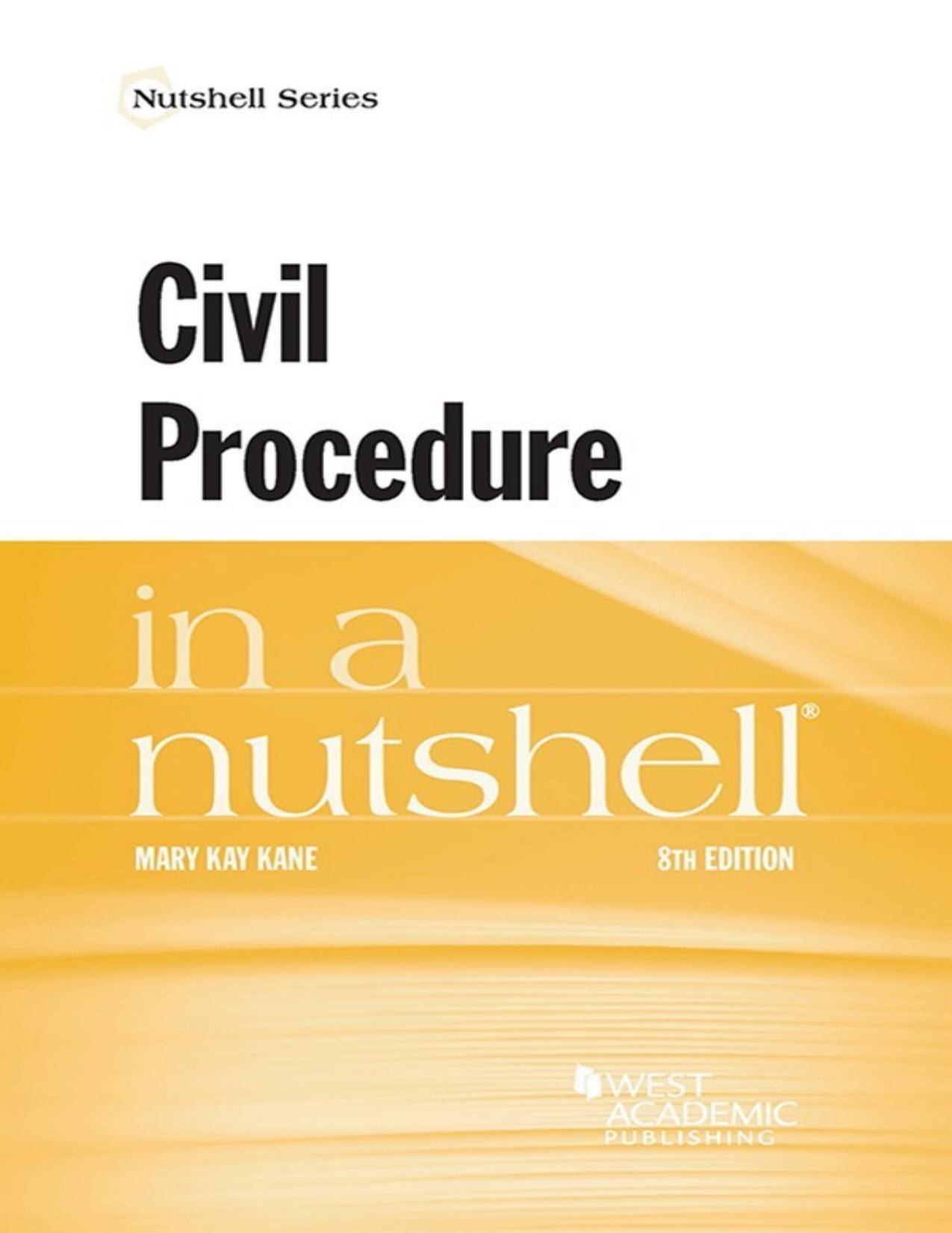
Product details:
ISBN 10: 168328111X
ISBN 13: 9781683281115
Author: Mary Kay Kane
Civil Procedure in a Nutshell 8th Edition Table of contents:
Chapter 1 Introduction
§ 1–1. General Background
§ 1–2. Current Structure of Court Systems
Chapter 2 Choosing the Proper Court
A. Subject-Matter Jurisdiction
1. In General
§ 2–1. Principles Governing
2. Federal Jurisdiction
§ 2–2. Federal-Question Jurisdiction
§ 2–3. DiversityofCitizenship Jurisdiction
§ 2–4. Amount in Controversy
§ 2–5. Supplemental Jurisdiction
§ 2–6. Removal Jurisdiction
B. Venue
§ 2–7. General Principles Governing
§ 2–8. Local Action Principle
C. Personal Jurisdiction
§ 2–9. Introduction
1. Statutory Sources of Jurisdictional Power
a. State Courts
§ 2–10. Types of Statutes
§ 2–11. General Rules Governing
§ 2–12. Specialized Provisions
2. Standard for Asserting Personal Jurisdiction
a. Traditional Bases
§ 2–13. Sovereignty: The Territoriality Theory
§ 2–14. Intangibles and Contingent Obligations
§ 2–15. Consent
§ 2–16. The In Personam Wing : Minimum Contacts, “Fair Play and Substantial Justice”
§ 2–17. Application of Minimum Contacts Test: Some Examples
§ 2–18. Minimum Contacts as Applied to In Rem and QuasiInRem Cases
§ 2–19. Current Utility of the Three Jurisdictional Categories
§ 2–20. Current Viability of Consent, Domicile and Transient Jurisdiction Theories
3. Other Jurisdictional Constraints
§ 2–21. Notice
§ 2–22. Other Constitutional Limits
4. Service of Process—The Means of Asserting Jurisdiction
§ 2–23. Types of Service
§ 2–24. Impermissible Use of Service
§ 2–25. Immunity from Process
D. Challenge to the Plaintiff’s Selection
1. Direct Attack
§ 2–26. Subject-Matter Jurisdiction
§ 2–27. Personal Jurisdiction
§ 2–28. Limited Appearances
§ 2–29. Venue and Service of Process
§ 2–30. Forum Non Conveniens and Transfer
2. Collateral Attack
§ 2–31. Principles Governing
Chapter 3 Pretrial: Framing the Litigation
A. Pleading
§ 3–1. General Theory of Pleading
§ 3–2. History: Common-Law Pleading
1. Plaintiff
§ 3–3. The Complaint: Code Pleading
§ 3–4. The Complaint: Federal (“Notice”) Pleading
§ 3–5. The Reply
2. Defendant
§ 3–6. The Answer
3. Assuring Truthfulness in Pleading
§ 3–7. Signature and Verification Requirements
4. Challenges to the Pleadings
§ 3–8. Methods of Challenging the Pleadings
B. Amended and Supplemental Pleadings
§ 3–9. General Standards and Practice
§ 3–10. Statutes of Limitation: Relation Back
C. Joinder of Parties and Claims
1. Party Joinder
§ 3–11. Parties Who Must Be Joined
§ 3–12. Real Parties in Interest and Capacity to Sue
§ 3–13. Necessary and Indispensable Parties
§ 3–14. Parties Who May Be Joined
§ 3–15. Proper Parties
§ 3–16. Impleaded Parties (Third-Party Defendants)
§ 3–17. Other Additional Parties
§ 3–18. Intervenors
2. Claim Joinder
§ 3–19. Claim Joinder—In General
§ 3–20. Defendant Joinder: Counterclaims and Crossclaims
D. Discovery
1. In General
§ 3–21. General Principles Governing
§ 3–22. Mandatory Disclosure
2. Discovery Devices: The Mechanics and Tactics
§ 3–23. Depositions
§ 3–24. Depositions upon Written Questions
§ 3–25. Interrogatories
§ 3–26. Discovery of Documents and Things
§ 3–27. Physical and Mental Examinations
§ 3–28. Requests for Admissions
§ 3–29. Objections to Discovery Requests
§ 3–30. Protective Orders and Sanctions: Controlling Abuses
3. Specific Problems
§ 3–31. Attorney Work-Product
§ 3–32. Expert Witnesses
§ 3–33. Insurance Agreements
§ 3–34. Electronically Stored Information
§ 3–35. Abuses and Proposals for Reform
E. Pretrial Conference
§ 3–36. In General
§ 3–37. The Judge’s Role
§ 3–38. Pretrial Orders
Chapter 4 Adjudication Without Trial
A. Summary Judgment
§ 4–1. In General
§ 4–2. Grounds for Obtaining
§ 4–3. Burden of Proof
§ 4–4. Credibility as a Fact Issue
§ 4–5. Procedure
B. Default Judgment
§ 4–6. Types of Default
§ 4–7. Procedure
C. Voluntary and Involuntary Dismissal
§ 4–8. Voluntary Dismissals
§ 4–9. Involuntary Dismissals: Failure to Prosecute
Chapter 5 The Trial
A. The Process
§ 5–1. A General Description
§ 5–2. Rules of Evidence
B. Jury Trial
1. In General
§ 5–3. The Jury—Its History, Character, and Function
2. Scope of Jury Trial Rights
§ 5–4. Sources of Jury Trial Rights
§ 5–5. Constitutional Juries in Nonstatutory Actions
§ 5–6. Constitutional Juries in Statutory Actions
§ 5–7. Demand Requirements
3. Means of Controlling the Jury
§ 5–8. In General
§ 5–9. Selection Process
§ 5–10. Types of Verdicts
§ 5–11. Impeachment of the Verdict
C. Trial and Post-Trial Motions
§ 5–12. Directed Verdicts
§ 5–13. Judgments Notwithstanding the Verdict
§ 5–14. New Trial
§ 5–15. Partial and Conditional New Trials
§ 5–16. Combined Motions for New Trial and Judgment Notwithstanding the Verdict
Chapter 6 Judgments and Their Effects
A. Relief from Judgments
§ 6–1. Principles Governing
§ 6–2. Grounds for Relief
B. Securing and Enforcing Judgments
§ 6–3. How a Judgment Is Enforced
§ 6–4. Securing a Judgment—Constitutional Limitations
C. The Binding Effect of Judgments
1. In General
§ 6–5. The Nomenclature
§ 6–6. General Principles Governing
2. Res Judicata
§ 6–7. Requirements for Asserting
§ 6–8. Defining a Cause of Action or Claim
§ 6–9. Who Will Be Bound
§ 6–10. Policies Outweighing Res Judicata
3. Collateral Estoppel
§ 6–11. Requirements for Asserting
§ 6–12. Mediate and Ultimate Facts
§ 6–13. Who Will Be Bound
§ 6–14. Limitations on Collateral Estoppel
Chapter 7 Appeals
A. Time for Bringing an Appeal
1. The Final Judgment Rule
§ 7–1. Final Judgment Rule
§ 7–2. Specialized Rules for Multi- Claim, Multi-Party Cases
2. Exceptions to the Final Judgment Rule
§ 7–3. Statutory Interlocutory Appeals Routes
§ 7–4. Judicial Interlocutory Appeals Routes
§ 7–5. Extraordinary Routes of Appeal
B. The Mechanics of Appeal
§ 7–6. Appealable Issues
§ 7–7. Standard of Review
Chapter 8 Specialized Multi-Party—Multi-Claim Proceedings
A. Class Actions
§ 8–1. General Purpose and Utility of Class Actions
§ 8–2. Types of Class Action Statutes
§ 8–3. Jurisdiction Requirements
§ 8–4. Procedural Fairness : Adequacy of Representation, Notice, and Binding Effect
§ 8–5. Two Problems: Damage Assessment and Attorney’s Fees
B. Interpleader
§ 8–6. History and General Requirements
§ 8–7. Federal Statutory and Rule Interpleader Compared
§ 8–8. Assertion of Additional Claims
C. Multidistrict Litigation
§ 8–9. Modern Techniques for Handling
Chapter 9 Other Special Problems in Federal Litigation
A. Access Barriers
§ 9–1. Standing, Mootness, and Justiciability
B. What Law Governs
§ 9–2. The Erie Doctrine
§ 9–3. Choosing Which State’s Law Controls
§ 9–4. Federal Common Law
§ 9–5. Federal Law in State Courts
Index
People also search for Civil Procedure in a Nutshell 8th Edition:
in a nutshell series law
nutshell part 8
6 steps in a civil case
5 steps in a civil lawsuit
nutshell civil procedure
Tags: Mary Kay Kane, Civil Procedure, Nutshell