


Concepts in Programming Languages 1st edition by John Mitchell – Ebook PDF Instant Download/Delivery: 0521780985, 978-0521780988
Full download Concepts in Programming Languages 1st edition after payment
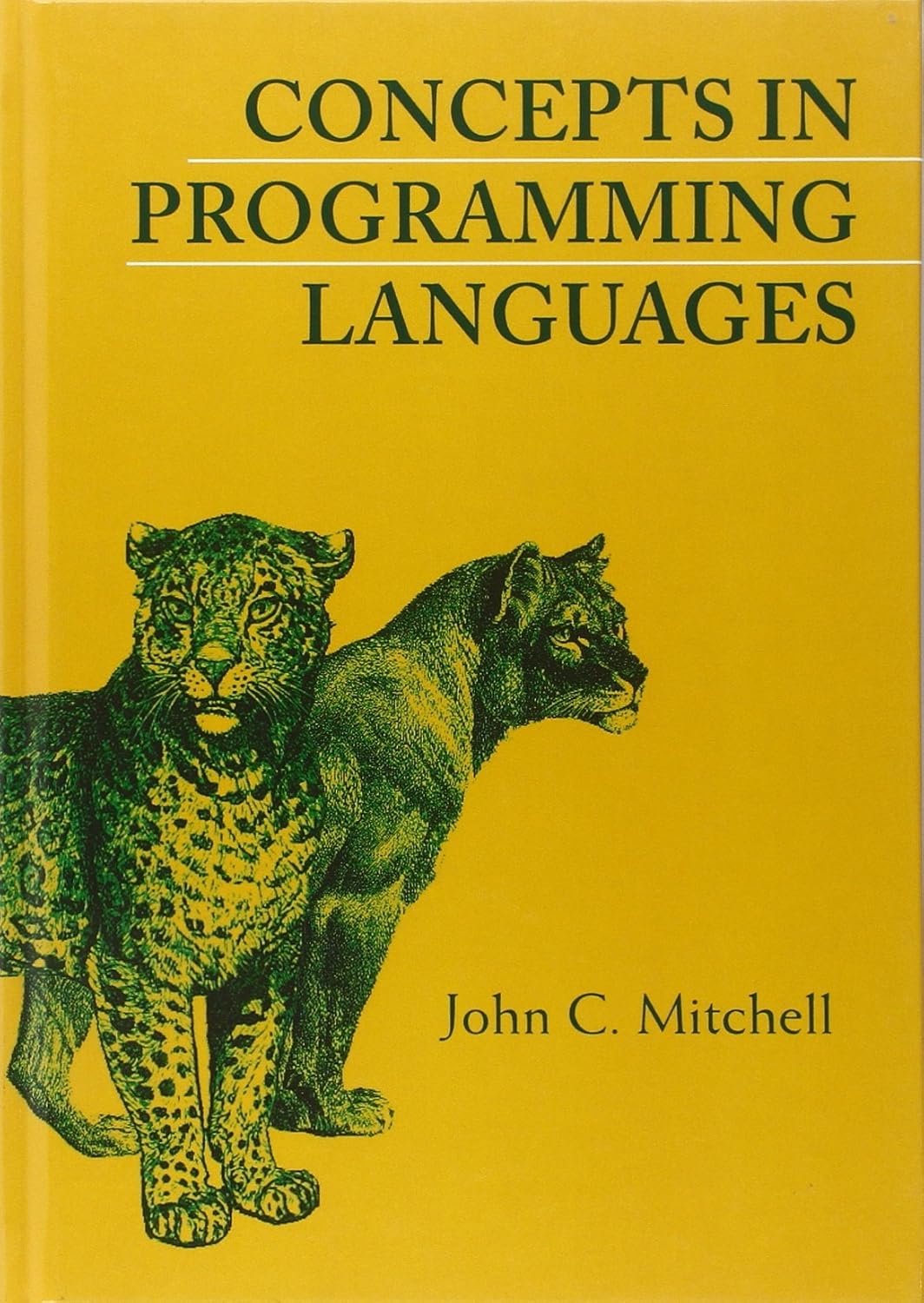
Product details:
ISBN 10: 0521780985
ISBN 13: 978-0521780988
Author: John Mitchell
Concepts in Programming Languages elucidates the central concepts used in modern programming languages, such as functions, types, memory management, and control. The book is unique in its comprehensive presentation and comparison of major object-oriented programming languages. Separate chapters examine the history of objects, Simula and Smalltalk, and the prominent languages C++ and Java. The author presents foundational topics, such as lambda calculus and denotational semantics, in an easy-to-read, informal style, focusing on the main insights provided by these theories. Advanced topics include concurrency, concurrent object-oriented programming, program components, and inter-language interoperability. A chapter on logic programming illustrates the importance of specialized programming methods for certain kinds of problems.
Concepts in Programming Languages 1st Table of contents:
Acknowledgments
PART 1 Functions and Foundations
1 Introduction
1.1 PROGRAMMING LANGUAGES
1.2 GOALS
1.2.1 General Goals
1.2.2 Specific Themes
1.3 PROGRAMMING LANGUAGE HISTORY
1.4 ORGANIZATION: CONCEPTS AND LANGUAGES
2 Computability
2.1 PARTIAL FUNCTIONS AND COMPUTABILITY
2.1.1 Expressions, Errors, and Nontermination
2.1.2 Partial Functions
Programs Define Partial Functions
2.1.3 Computability
Computable Functions
Noncomputable Functions
Applications
2.2 CHAPTER SUMMARY
EXERCISES
2.1 Partial and Total Functions
2.2 Halting Problem on No Input
2.3 Halting Problem on All Input
3 Lisp: Functions, Recursion, and Lists
3.1 LISP HISTORY
3.2 GOOD LANGUAGE DESIGN
Motivating Application
Program Execution Model
Theoretical Foundations
3.3 BRIEF LANGUAGE OVERVIEW
Atoms
S-Expressions and Lists
Functions and Special Forms
Evaluation of Expressions
Static and Dynamic Scope
Lisp and Scheme
3.4 INNOVATIONS IN THE DESIGN OF LISP
3.4.1 Statements and Expressions
3.4.2 Conditional Expressions
3.4.3 The Lisp Abstract Machine
What is an Abstract Machine?
The Abstract Machine for Lisp
Cons Cells
Representation of Lists by Cons Cells
3.4.4 Programs as Data
3.4.5 Function Expressions
3.4.6 Recursion
3.4.7 Higher-Order Functions
3.4.8 Garbage Collection
Mark-and-Sweep Garbage Collection
3.4.9 Pure Lisp and Side Effects
3.5 CHAPTER SUMMARY: CONTRIBUTIONS OF LISP
EXERCISES
3.1 Cons Cell Representations
3.2 Conditional Expressions in Lisp
3.3 Detecting Errors
3.4 Lisp and Higher-Order Functions
3.5 Definition of Garbage
3.6 Reference Counting
3.7 Regions and Memory Management
3.8 Concurrency in Lisp
4 Fundamentals
4.1 COMPILERS AND SYNTAX
4.1.1 Structure of Simple Compiler
Lexical Analysis
Syntax Analysis
Semantic Analysis
Intermediate Code Generation
Code Optimization
Code Generation
4.1.2 Grammars and Parse Trees
Grammars
Derivations
Parse Trees and Ambiguity
4.1.3 Parsing and Precedence
4.2 LAMBDA CALCULUS
4.2.1 Functions and Function Expressions
4.2.2 Lambda Expressions
Syntax of Expressions
Variable Binding
Lambda Abstraction in Lisp and Algol
Equivalence and Substitution
Renaming Bound Variables
4.2.3 Programming in Lambda Calculus
Functions of Several Arguments
Declarations
Recursion and Fixed Points
4.2.4 Reduction, Confluence, and Normal Forms
Normal Forms
Confluence
4.2.5 Important Properties of Lambda Calculus
4.3 DENOTATIONAL SEMANTICS
Compositionality
4.3.1 Object Language and Metalanguage
4.3.2 Denotational Semantics of Binary Numbers
4.3.3 Denotational Semantics of While Programs
Expressions with Variables
While Programs
States and Commands
Denotational Semantics
4.3.4 Perspective and Nonstandard Semantics
4.4 FUNCTIONAL AND IMPERATIVE LANGUAGES
4.4.1 Imperative and Declarative Sentences
4.4.2 Functional versus Imperative Programs
Referential Transparency
Historical Debate
Functional Programming and Concurrency
Practical Functional Programming
4.5 CHAPTER SUMMARY
EXERCISES
4.1 Parse Tree
4.2 Parsing and Precedence
4.3 Lambda Calculus Reduction
4.4 Symbolic Evaluation
4.5 Lambda Reduction with Sugar
4.6 Translation into Lambda Calculus
4.7 Order of Evaluation
4.8 Denotational Semantics
4.9 Semantics of Initialize-Before-Use
4.10 Semantics of Type Checking
4.11 Lazy Evaluation and Parallelism
4.12 Single-Assignment Languages
4.13 Functional and Imperative Programs
4.14 Functional Languages and Concurrency
PART 2 Procedures, Types, Memory Management, and Control
5 The Algol Family and ML
5.1 THE ALGOL FAMILY OF PROGRAMMING LANGUAGES
5.1.1 Algol 60
5.1.2 Algol 68
5.1.3 Pascal
5.1.4 Modula
5.2 THE DEVELOPMENT OF C
C Arrays and Pointers
Critique
5.3 THE LCF SYSTEM AND ML
5.4 THE ML PROGRAMMING LANGUAGE
5.4.1 Interactive Sessions and the Run-Time System
Expressions
Declarations
5.4.2 Basic Types and Type Constructors
Unit
Bool
Integers
Strings
Real
Tuples
Records
Lists
5.4.3 Patterns, Declarations, and Function Expressions
Value Declarations
Function Declarations
5.4.4 ML Data-Type Declaration
5.4.5 ML Reference Cells and Assignment
L-values and R-values
ML Reference Cells
Operations on Reference Cells
5.4.6 ML Summary
5.5 CHAPTER SUMMARY
EXERCISES
5.1 Algol 60 Procedure Types
5.2 Algol 60 Pass-By-Name
5.3 Nonlinear Pattern Matching
5.4 ML Map for Trees
5.5 ML Reduce for Trees
5.6 Currying
5.7 Disjoint Unions
5.8 Lazy Evaluation and Functions
6 Type Systems and Type Inference
6.1 TYPES IN PROGRAMMING
6.1.1 Program Organization and Documentation
6.1.2 Type Errors
6.1.3 Types and Optimization
6.2 TYPE SAFETY AND TYPE CHECKING
6.2.1 Type Safety
6.2.2 Compile-Time and Run-Time Checking
6.3 TYPE INFERENCE
6.3.1 First Examples of Type Inference
6.3.2 Type-Inference Algorithm
6.4 POLYMORPHISM AND OVERLOADING
6.4.1 Parametric Polymorphism
C++ Function Templates
Comparison with ML Polymorphism
6.4.2 Implementation of Parametric Polymorphism
C++ Implementation
ML Implementation
Comparison
6.4.3 Overloading
6.5 TYPE DECLARATIONS AND TYPE EQUALITY
6.5.1 Transparent Type Declarations
6.5.2 C Declarations and Structs
6.5.3 ML Data-Type Declaration
6.6 CHAPTER SUMMARY
Reasons for Using Types
Type Inference
Polymorphism and Overloading
Type Declarations and Type Equality
EXERCISES
6.1 ML Types
6.2 Polymorphic Sorting
6.3 Types and Garbage Collection
6.4 Polymorphic Fixed Point
6.5 Parse Graph
6.6 Parse Graph
6.7 Type Inference and Bugs
6.8 Type Inference and Debugging
6.9 Polymorphism in C
6.10 Typing and Run-Time Behavior
6.11 Dynamic Typing in ML
7 Scope, Functions, and Storage Management
7.1 BLOCK-STRUCTURED LANGUAGES
Simplified Machine Model
A Note about C
7.2 IN-LINE BLOCKS
7.2.1 Activation Records and Local Variables
Intermediate Results
Scope and Lifetime
Blocks and Activation Records for ML
7.2.2 Global Variables and Control Links
7.3 FUNCTIONS AND PROCEDURES
7.3.1 Activation Records for Functions
7.3.2 Parameter Passing
Semantics of Pass-by-Value
Semantics of Pass-by-Reference
7.3.3 Global Variables (First-Order Case)
Access Links are Used to Maintain Static Scope
7.3.4 Tail Recursion (First-Order Case)
Tail Recursion as Iteration
7.4 HIGHER-ORDER FUNCTIONS
7.4.1 First-Class Functions
7.4.2 Passing Functions to Functions
Use of Closures
7.4.3 Returning Functions from Nested Scope
Solution to Storage Management Problem
7.5 CHAPTER SUMMARY
EXERCISES
7.1 Activation Records for In-Line Blocks
7.2 Tail Recursion and Iteration
7.3 Time and Space Requirements
7.4 Parameter Passing
7.5 Aliasing and Static Analysis
7.6 Pass-by-Value-Result
7.7 Parameter-Passing Comparison
7.8 Static and Dynamic Scope
7.9 Static Scope in ML
7.10 Eval and Scope
7.11 Lambda Calculus and Scope
7.12 Function Calls and Memory Management
7.13 Function Returns and Memory Management
7.14 Recursive Calls and Memory Management
7.15 Closures
7.16 Closures and Tail Recursion
7.17 Tail Recursion and Order of Operations
8 Control in Sequential Languages
8.1 STRUCTURED CONTROL
8.1.1 Spaghetti Code
8.1.2 Structured Control
8.2 EXCEPTIONS
8.2.1 Purpose of an Exception Mechanism
8.2.2 ML Exceptions
8.2.3 C++ Exceptions
8.2.4 More about Exceptions
Exceptions for Error Conditions
Exceptions for Efficiency
Static and Dynamic Scope
Typing and Exceptions
Exceptions and Resource Allocation
8.3 CONTINUATIONS
8.3.1 A Function Representing “The Rest of the Program”
8.3.2 Continuation-Passing Form and Tail Recursion
8.3.3 Continuations in Compilation
8.4 FUNCTIONS AND EVALUATION ORDER
8.5 CHAPTER SUMMARY
EXERCISES
8.1 Exceptions
8.2 Exceptions
8.3 Exceptions
8.4 Exceptions and Recursion
8.5 Tail Recursion and Exception Handling
8.6 Evaluation Order and Exceptions
8.7 Control Flow and Memory Management
8.8 Tail Recursion and Continuations
8.9 Continuations
PART 3 Modularity, Abstraction, and Object-Oriented Programming
9 Data Abstraction and Modularity
9.1 STRUCTURED PROGRAMMING
9.1.1 Data Refinement
9.1.2 Modularity
9.2 LANGUAGE SUPPORT FOR ABSTRACTION
9.2.1 Abstraction
Procedural Abstraction
Data Abstraction
9.2.2 Abstract Data Types
9.2.3 ML abstype
Clu Clusters
9.2.4 Representation Independence
9.2.5 Data-Type Induction
Partition Operations
Induction over Constructors
9.3 MODULES
9.3.1 Modula and Ada
Ada Packages
9.3.2 ML Modules
9.4 GENERIC ABSTRACTIONS
9.4.1 C++ Function Templates
Simple Polymorphic Function
Operations on Type Parameters
Comparison with ML Polymorphism
9.4.2 Standard ML Functors
9.4.3 C++ Standard Template Library
9.5 CHAPTER SUMMARY
Structured Programming
Language Support for Abstraction
Modules and Generic Programming
EXERCISES
9.1 Efficiency vs. Modularity
9.2 Equivalence of Abstract Data Types
9.3 Equivalence of Closures
9.4 Modularity of Concrete Data Types
9.5 Templates and Polymorphism
10 Concepts in Object-Oriented Languages
10.1 OBJECT-ORIENTED DESIGN
10.2 FOUR BASIC CONCEPTS IN OBJECT-ORIENTED LANGUAGES
10.2.1 Dynamic Lookup
10.2.2 Abstraction
10.2.3 Subtyping
10.2.4 Inheritance
Inheritance and Abstraction
10.2.5 Closures as Objects
10.2.6 Inheritance Is Not Subtyping
10.3 PROGRAM STRUCTURE
Comparison of Examples 10.1 and 10.2
10.4 DESIGN PATTERNS
Motivation
Implementation
Sample Code
Motivation
Implementation
Example of Façade Pattern
10.5 CHAPTER SUMMARY
10.6 LOOKING FORWARD: SIMULA, SMALLTALK, C++, JAVA
EXERCISES
10.1 Expression Objects
10.2 Objects vs. Type Case
10.3 Visitor Design Pattern
11 History of Objects: Simula and Smalltalk
11.1 ORIGIN OF OBJECTS IN SIMULA
11.1.1 Object and Simulation
11.1.2 Main Concepts in Simula
11.2 OBJECTS IN SIMULA
11.2.1 Basic Object-Oriented Features in Simula
11.2.2 An Example: Points, Lines, Circles
Problem
Algorithm
Methodology
Point
Line
11.2.3 Sample Code and Representation of Objects
11.3 SUBCLASSES AND SUBTYPES IN SIMULA
11.3.1 Subclasses and Inheritance
11.3.2 Object Types and Subtypes
11.4 DEVELOPMENT OF SMALLTALK
Dynabook
11.5 SMALLTALK LANGUAGE FEATURES
11.5.1 Terminology
11.5.2 Classes and Objects
Run-Time Representation of Objects
11.5.3 Inheritance
Run-Time Structure to Support Inheritance
11.5.4 Abstraction in Smalltalk
11.6 SMALLTALK FLEXIBILITY
11.6.1 Dynamic Lookup and Polymorphism
11.6.2 Booleans and Blocks
11.6.3 Self and Super
11.6.4 System Extensibility: The Ingalls Test
Why is This Important?
What Are the Implementation Costs?
11.7 RELATIONSHIP BETWEEN SUBTYPING AND INHERITANCE
11.7.1 Interfaces as Object Types
11.7.2 Subtyping
11.7.3 Subtyping and Inheritance
11.8 CHAPTER SUMMARY
Simula
Smalltalk
EXERCISES
11.1 Simula Inheritance and Access Links
11.2 Loophole in Encapsulation
11.3 Subtyping of Refs in Simula
11.4 Smalltalk Run-Time Structures
11.5 Smalltalk Implementation Decisions
11.6 Protocol Conformance
11.7 Removing a Method
11.8 Subtyping and Binary Methods
11.9 Delegation-Based Object-Oriented Languages
12 Objects and Run-Time Efficiency: C++
12.1 DESIGN GOALS AND CONSTRAINTS
12.1.1 Compatibility with C
12.1.2 Success of C++
12.2 OVERVIEW OF C++
12.2.1 Additions to C Not Related to Objects
Type bool
Reference Type and Pass-By Reference
User-Defined Overloading
12.2.2 Object-Oriented Features
12.2.3 Good Decisions and Problem Areas
Problem Areas
12.3 CLASSES, INHERITANCE, AND VIRTUAL FUNCTIONS
12.3.1 C++ Classes and Objects
12.3.2 C++ Derived Classes (Inheritance)
12.3.3 Virtual Functions
12.3.4 Why is C++ Lookup Simpler than Smalltalk Lookup?
Arguments to Member Functions and this
Scope Qualifiers
Nonvirtual and Overloaded Functions
12.4 SUBTYPING
12.4.1 Subtyping Principles
12.4.2 Public Base Classes
12.4.3 Specializing Types of Public Members
12.4.4 Abstract Base Classes
12.5 MULTIPLE INHERITANCE
12.5.1 Implementation of Multiple Inheritance
12.5.2 Name Clashes, Diamond Inheritance, and Virtual Base Classes
Name Clashes
Diamond Inheritance
Virtual Base Classes
12.6 CHAPTER SUMMARY
EXERCISES
12.1 Assignment and Derived Classes
12.2 Function Objects
12.3 Function Subtyping
12.4 Subtyping and Public Data
12.5 Phantom Members
12.6 Subtyping and Visibility
12.7 Private Virtual Functions
12.8 “Like Current” in Eiffel
12.9 Subtyping and Specifications
12.10 C++ Multiple Inheritance and Casts
12.11 Multiple Inheritance and Thunks
12.12 Dispatch on State
13 Portability and Safety: Java
13.1 JAVA LANGUAGE OVERVIEW
13.1.1 Java Language Goals
13.1.2 Design Decisions
13.2 JAVA CLASSES AND INHERITANCE
13.2.1 Classes and Objects
13.2.2 Packages and Visibility
13.2.3 Inheritance
13.2.4 Abstract Classes and Interfaces
13.3 JAVA TYPES AND SUBTYPING
13.3.1 Classification of Types
13.3.2 Subtyping for Classes and Interfaces
13.3.3 Arrays, Covariance, and Contravariance
13.3.4 Java Exception Class Hierarchy
13.3.5 Subtype Polymorphism and Generic Programming
13.4 JAVA SYSTEM ARCHITECTURE
13.4.1 Java Virtual Machine
13.4.2 Class Loader
13.4.3 Java Linker, Verifier, and Type Discipline
13.4.4 Bytecode Interpreter and Method Lookup
Finding a Virtual Method by Class
Finding a Virtual Method by Interface
13.5 SECURITY FEATURES
13.5.1 Buffer Overflow Attack
13.5.2 The Java Sandbox
Class Loader
The Bytecode Verifier and Virtual Machine Run-Time Tests
The Security Manager
13.5.3 Security and Type Safety
13.6 JAVA SUMMARY
Objects and Classes
Dynamic Lookup
Encapsulation
Inheritance
Subtyping
Virtual Machine Architecture
Security
EXERCISES
13.1 Initializing Static Fields
13.2 Java final and finalize
13.3 Subtyping and Exceptions
13.4 Java Interfaces and Multiple Inheritance
13.5 Array Covariance in Java
13.6 Java Bytecode Analysis
13.7 Exceptions, Memory Management, and Concurrency
13.8 Adding Pointers to Java
13.9 Stack Inspection
PART4 Concurrency and Logic Programming
14 Concurrent and Distributed Programming
14.1 BASIC CONCEPTS IN CONCURRENCY
14.1.1 Execution Order and Nondeterminism
14.1.2 Communication, Coordination, and Atomicity
14.1.3 Mutual Exclusion and Locking
Mutual Exclusion
Locks and Busy Waiting
Deadlock
14.1.4 Semaphores
14.1.5 Monitors
14.2 THE ACTOR MODEL
14.3 CONCURRENT ML
14.3.1 Threads and Channels
Functions Using Threads and Channels
14.3.2 Selective Communication and Guarded Commands
14.3.3 First-Class Synchronous Operations: Events
Selective Communication with Events
14.4 JAVA CONCURRENCY
14.4.1 Threads, Communication, and Synchronization
Communication between threads
Synchronization Primitives
14.4.2 Synchronized Methods
Synchronized Methods and Inheritance
14.4.3 Virtual Machine and Memory Model
Concurrent Garbage Collection
Java Memory Model
14.4.4 Distributed Programming and Remote Method Invocation
Creating Remote Objects
Dynamic Class Loading
The RMI Registry
14.5 CHAPTER SUMMARY
General Issues in Concurrency
Actor Systems
Concurrent ML
Java Threads and Synchronization
Distributed Java Programming and Remote Method Invocation
EXERCISES
14.1 Mutual Exclusion
14.2 Fairness
14.3 Actor Computing
14.4 Message Passing
14.5 CML Events
14.6 Concurrent Access to Objects
14.7 Java Synchronized Objects
14.8 Resources and Java Garbage Collection
14.9 Separate read and write Synchronization
14.10 Java Memory Model
15 The Logic Programming Paradigm and Prolog
15.1 HISTORY OF LOGIC PROGRAMMING
15.2 BRIEF OVERVIEW OF THE LOGIC PROGRAMMING PARADIGM
15.2.1 Declarative Programming
15.2.2 Interactive Programming
15.3 EQUATIONS SOLVED BY UNIFICATION AS ATOMIC ACTIONS
15.3.1 Terms
15.3.2 Substitutions
15.3.3 Most General Unifiers
15.3.4 A Unification Algorithm
MARTELLI–MONTANARI ALGORITHM
15.4 CLAUSES AS PARTS OF PROCEDURE DECLARATIONS
15.4.1 Simple Clauses
15.4.2 Computation Process
15.4.3 Clauses
15.5 PROLOG’S APPROACH TO PROGRAMMING
15.5.1 Multiple Uses of a Single Program
15.5.2 Logical Variables
A type assignment
A Sequence Program
Difference lists
15.6 ARITHMETIC IN PROLOG
15.6.1 Arithmetic Operators
15.6.2 Arithmetic Comparison Relations
15.6.3 Evaluation of Arithmetic Expressions
15.7 CONTROL, AMBIVALENT SYNTAX, AND META-VARIABLES
15.7.1 Cut
15.7.2 Ambivalent Syntax and Meta-variables
15.7.3 Control Facilities
Disjunction
If-then-else
Negation
Call
15.7.4 Negation as Failure
15.7.5 Higher-Order Programming and Meta-Programming in Prolog
Term Inspection Facilities
Program manipulation facilities
15.8 ASSESSMENT OF PROLOG
Lack of Types
Subtle Arithmetic
Idiosyncratic Control
Complex Semantics of Various Built-ins
No Modules and No Objects
15.9 BIBLIOGRAPHIC REMARKS
15.10 CHAPTER SUMMARY
Acknowledgements
APPENDIX A Additional Program Examples
A.1 PROCEDURAL AND OBJECT-ORIENTED ORGANIZATION
A.1.1 Shape Program: Typecase Version
A.1.2 Shape Program: Object-Oriented Version
Glossary
Index
People also search for Concepts in Programming Languages 1st :
design concepts in programming languages pdf
fundamental concepts in programming languages
strachey fundamental concepts in programming languages
fundamental concepts in programming languages pdf
christopher strachey. fundamental concepts in programming languages