


Coordinate Measuring Machines and Systems 2nd Edition by Robert Hocken, Paulo Pereira – Ebook PDF Instant Download/Delivery: 1138076899, 978-1138076891
Full download Coordinate Measuring Machines and Systems 2nd edition after payment
Product details:
ISBN 10: 1138076899
ISBN 13: 978-1138076891
Author: Robert Hocken, Paulo Pereira
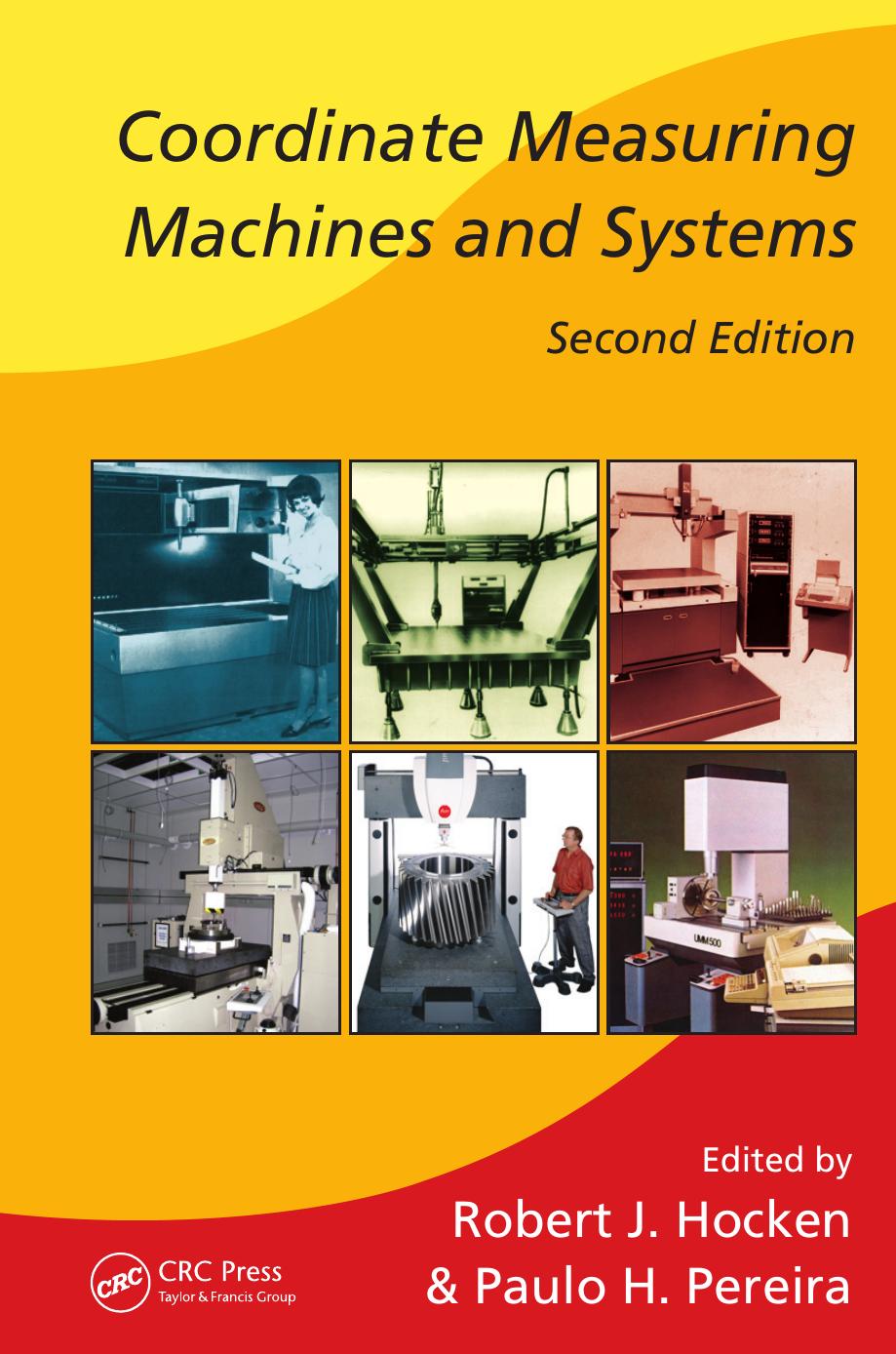
Since John Bosch edited and published the first version of this book in 1995, the world of manufacturing and coordinate measuring machines (CMMs) and coordinate measuring systems (CMSs) has changed considerably. However, the basic physics of the machines has not changed in essence but have become more deeply understood. Completely revised and updated to reflect the change that have taken place in the last sixteen years, Coordinate Measuring Machines and Systems, Second Edition covers the evolution of measurements and development of standards, the use of CMMs, probing systems, algorithms and filters, performance and financial evaluations, and accuracy.
See What’s New in the Second Edition:
- Explores the rising expectations of the user for operator interfaces, ease of use, algorithms, speed, communications, and computational capabilities
- Details the expansion of machines such as the non-Cartesian CMM in market share and their increase in accuracy and utility
- Discusses changes in probing systems, and the number of points they can deliver to ever more sophisticated software
- Examines the pressures created by new applications to improve machine performance
The book features two new editors, one from academia and one from a metrology intensive user industry, many new authors, and known experts who have grown with the field since the last version. Furnishing case studies from a wide range of installations, the book details how CMMs can best be applied to gain a competitive advantage in a variety of business settings.
Coordinate Measuring Machines and Systems 2nd Table of contents:
Chapter 1 Evolution of Measurement
1.1 Pyramids Provide Evidence of Early Measuring Skills
1.1.1 The Cubit—One of the Earliest Units of Measure
1.2 Accuracy In Navigation Is Basis For The Micrometer
1.2.1 Gage Blocks satisfy Need for Measuring References
1.2.2 Early Comparators Set New Standards for Accuracy
1.3 Interchangeable Parts Gain International Recognition
1.4 Dial Indicator Simplifies Measuring
1.5 Automobile Accelerates Developments In Metrology
1.5.1 Reed Mechanism Provides Greater Shop Floor Precision
1.5.2 Air Gaging Proves Effective for Checking Tight Tolerance Parts
1.5.3 Electronic Gaging Expands Capability for Process Control
1.5.4 Machine Tools Evolve into Early Coordinate Measuring Machines
1.6 First Coordinate Measuring Machine Developed As Aid To Automated Machining
1.6.1 Sheffield Introduces Coordinate Measuring Machines to the North American Market
1.6.2 Digital Electronic Automation Is First Company Formed to Produce Coordinate Measuring Machines
1.6.3 Coordinate Measuring Machine Developments Initiated in Japan by Mitutoyo
1.6.4 Touch-Trigger Probes Expand Versatility of Coordinate Measuring Machines
1.6.5 Software Becomes Essential to Coordinate Metrology
1.6.6 Carl Zeiss Contributions to Coordinate Metroeogy
1.6.7 Coordinate Measuring Machine Industry Follows Traditional Business Patterns
1.7 Summary
Acknowledgments
Chapter 2 The International Standard of Length
2.1 Definition of The Meter
2.1.1 Realization of the International System of Units: Unit of Length
2.1.2 Laser Displacement Interferometry
2.1.3 International Comparison of Artifacts
2.2 Coordinate Measuring Machine Measurement Traceability
2.2.1 The Physical Chain of Traceability
2.2.2 Documentary Standards Defining Traceability
2.2.3 The Old and the New Traceabiuty
2.2.4 Traceability in Coordinate Measuring Machines— Task-Specific Measurement Uncertainty
2.3 A Note On Customary Units of Length In The United States
2.4 Summary
Chapter 3 Specification of Design Intent Introduction to Dimensioning and Tolerancing
3.1 Geometric Tolerancing
3.1.1 Principle Elements of Geometric Tolerancing
3.1.1.1 Zones
3.1.1.2 Datums
3.1.1.3 Basic Dimensions
3.1.2 Types of Tolerances
3.1.2.1 Form
3.1.2.2 Orientation
3.1.2.3 Profile
3.1.2.4 Runout
3.1.2.5 Size
3.1.2.6 Location
3.2 Coordinate Measuring Machine Inspection of Geometric Tolerances
3.2.1 Physical Interpretation
3.2.2 Algorithms for Point Data
3.3 Y14.5-2009
Chapter 4 Cartesian Coordinate Measuring Machines
4.1 Coordinate Metrology
4.2 Basic Coordinate Measuring Machine Configurations
4.2.1 Moving Bridge
4.2.2 Fixed Bridge
4.2.3 Cantilever
4.2.4 Horizontal Arm
4.2.5 Gantry
4.2.6 Other Configurations
4.3 Hardware Components
4.3.1 Structural Elements
4.3.2 Bearing Systems
4.3.3 Drive Systems
4.3.3.1 Rack-and-Pinion Drive
4.3.3.2 Belt Drive
4.3.3.3 Friction Drive
4.3.3.4 Leadscrew Drive
4.3.3.5 Linear Motor Drive
4.3.4 Displacement Transducers
4.3.4.1 Transmission Scale
4.3.4.2 Reflection Scale
4.3.4.3 Interferential Scale
4.3.4.4 Laser Interferometer Scale
4.4 Control system for coordinate measuring machines
4.5 Summary
Acknowledgments
Chapter 5 Operating a Coordinate Measuring Machine
5.1 Introduction
5.2 Before Starting
5.2.1 Safety
5.2.2 Coordinate Measuring Machine Start-Up
5.2.3 Reviewing the Drawing
5.2.4 Choosing Probes
5.2.5 Fixturing
5.2.6 Record Keeping
5.3 Developing The Measurement Program
5.3.1 Qualification
5.3.2 Alignment
5.3.3 Inspection
5.3.4 Analysis
5.3.5 Reporting
5.3.6 Test Run
5.3.7 Enhancing the Program
5.4 Other Resources
5.5 Conclusion
Chapter 6 Probing Systems for Coordinate Measuring Machines
6.1 Purposes and basics of probing
6.1.1 Probing Process
6.1.1.1 The Positioning Step
6.1.1.2 The Probing Step
6.1.1.3 The Measuring Step
6.1.1.4 The Evaluating Step
6.1.2 History of Probing Systems
6.1.3 Basic Configuration of a Tactile Probing System
6.1.4 Classification of Probing Systems for Coordinate Measuring Machines
6.1.4.1 Contact Detection
6.1.4.2 Operational Principle
6.1.4.3 Mode of Operation
6.1.4.4 Probing Force Generation
6.1.4.5 Kinematics
6.1.4.6 Size of Probing Element and Feature to Be Measured
6.2 Practical aspects
6.2.1 Principles of Displacement Measurement
6.2.1.1 Inductive Systems
6.2.1.2 Capacitive Systems
6.2.1.3 Resistive Systems
6.2.1.4 Optical Systems
6.2.1.5 Scale-Based Systems
6.2.2 Probing Element
6.2.3 Influences on Probing Performance
6.2.3.1 Probing System Qualification
6.2.3.2 Environmental Influences
6.2.3.3 Wear and Deformation
6.2.3.4 Pretravel and Overtravel
6.2.4 Probing Error
6.2.5 Multisensor Coordinate Measuring Machines
6.2.6 Probing Systems for Coordinate Measuring Machines
6.2.6.1 The Renishaw Revo Five-Axis Measuring Head
6.2.6.2 Zeiss VAST Navigator
6.2.7 Probing Systems for Measuring Microparts
6.2.7.1 Scanning Probe Microscope-Based Microprobing Systems
6.2.7.2 Tactile Microprobing Systems
6.3 Probing System Accessories
6.3.1 Accessory Elements for Improving Accessibility
6.3.2 Accessory Elements for Improving Navigation
6.3.3 Accessory Elements for Automation
6.4 Summary
Chapter 7 Multisensor Coordinate Metrology
7.1 From Profile Projector To Optical-Tactile Metrology
7.2 Visual Sensors For Coordinate Measuring Machines
7.2.1 Optical Edge Sensor
7.2.2 Image Processing Sensor
7.2.3 Illumination for Visual Sensors
7.2.4 Distance Sensors
7.2.5 Autofocus
7.2.6 Laser Point Sensors
7.2.7 Multidimensional Distance Sensors
7.2.8 Multisensor Technology
7.3 Computer Tomography
7.3.1 Principle of X-Ray Tomography
7.3.2 Multisensor Coordinate Measuring Machines with X-Ray Tomography
7.3.3 Accurate Measurements with Computer Tomography
7.3.4 Measuring a Plastic Part
7.4 Measuring Accuracy
7.4.1 Specification and Acceptance Testing
7.4.2 Measurement Uncertainty
7.4.3 Correlation among Sensors
7.5 Outlook
Chapter 8 Coordinate Measuring System Algorithms and Filters
8.1 Curve And Surface Fitting
8.1.1 Least Squares Fits
8.1.2 Minimum-Zone Fits
8.1.3 Minimum Total Distance (L1) Fits
8.1.4 Minimum-Circumscribed Fits
8.1.5 Maximum-Inscribed Fits
8.1.6 Other Fit Objectives
8.1.7 General Shapes
8.1.8 Weighted Fitting
8.1.9 Constrained Fitting
8.1.10 Fit Objective Choices
8.2 Stylus Tip Compensation
8.3 Data Filtering
8.3.1 Convolution Filters
8.3.2 Morphological Filters
8.4 GD&T, Datums, and Local Coordinate Systems
8.4.1 Flatness Example
8.4.2 Datum Reference Frames
8.4.3 More Complex Datum Reference Frames
8.5 Data Reduction
8.6 Software Testing
8.7 Conclusion
8.8 Annex—Residual Functions For Basic Geometric Shapes
Chapter 9 Performance Evaluation
9.1 Measurement Error And Uncertainty
9.1.1 Combined Standard Uncertainty
9.1.2 Expanded Uncertainty and Level of Confidence
9.1.3 Impact of Measurement Uncertainty
9.2 Overview of The Coordinate Measuring Machine Measurement Process
9.2.1 Software Performance (Algorithm Implementation)
9.2.2 Fitting Criteria (Algorithm Selection)
9.2.3 Sampling Strategy
9.2.3.1 Workpiece Geometry
9.2.3.2 Sensitivity to Measurement and Workpiece Errors
9.2.4 Coordinate Measuring Machine Hardware Performance
9.2.4.1 Coordinate Measuring Machine Geometry
9.2.4.1.1 Rigid-Body Errors
9.2.4.1.2 Uncertainty in Rigid-Body Errors
9.2.4.1.3 Structural Distortions
9.2.4.1.4 CMM Dynamic Errors
9.2.4.2 Coordinate Measuring Machine Probing System
9.2.4.2.1 Stylus Ball Size
9.2.4.2.2 Probe Lobing
9.2.4.2.3 Multiple Styli
9.2.4.2.4 Probe/Stylus Changing
9.3 Quantifying Coordinate Measuring Machine Performance
9.3.1 Artifacts and Their Mounting
9.3.2 Coordinate Measuring Machine Standards
9.3.2.1 Interpreting Standardized Specifications
9.3.2.2 Recent Trends in Coordinate Measuring Machine Standards
9.3.2.3 Decision Rules Used in Coordinate Measuring Machine Standards
9.3.2.4 International Standard ISO 10360 and ASME B89.4.10360 (2008)
9.3.2.5 ASME B89.4.1M (1997 with 2001 Supplements)
9.3.2.5.1 Repeatability
9.3.2.5.2 Linear Displacement Accuracy
9.3.2.5.3 Volumetric Performance (General)
9.3.2.5.4 Volumetric Performance Test
9.3.2.5.5 Volumetric Performance Using Offset Probes
9.3.2.5.6 Volumetric Performance for Rotary Table Coordinate Measuring Machines
9.3.2.5.7 Bidirectional Length Test
9.3.2.5.8 Probing Performance
9.3.2.6 VDI/VDE 2617 Standard
9.3.2.6.1 One-Dimensional Length Measuring Uncertainty (uv)
9.3.2.6.2 Two-Dimensional Length Measuring Uncertainty (u2)
9.3.2.6.3 Three-Dimensional Length Measuring Uncertainty (u3)
9.3.2.6.4 Probe Performance
9.3.2.6.5 Rotary Table Tests
9.3.2.7 CMMA Standard
9.3.3 Machine Tools Used as Coordinate Measuring Machines
9.3.4 Methods for the Estimation of Measurement Uncertainty
9.3.4.1 Measurement Uncertainty Using CMM Standards
9.3.4.2 Measurement Uncertainty Using Comparison Methods
9.3.4.2.7 Cage Repeatability and Reproducibility Issues
9.3.4.3 Measurement Uncertainty Using Monte Carlo Software
9.3.5 Interim Testing
9.4 Summary
Acknowledgments
Appendix A
Chapter 10 Temperature Fundamentals
10.1 Thermal Effects Diagram
10.2 The 20°C Reference Temperature
10.3 Average Temperatures Other Than 20°C
10.3.1 Uncertainties of Coefficients of Thermal Expansion
10.4 Nonuniform Temperature
10.4.1 Gradients—Thermal Variations in Space
10.4.2 Temperature Variation—Thermal Variations in Time
10.4.3 Dynamic Effects of Thermal Variations
10.4.4 Thermal Memory from a Previous Environment
10.4.4.1 Soak Out Experiments
10.5 Drift Test
10.5.1 Drift of Coordinate Measuring Machines
10.5.2 Transducer Drift Check
10.5.3 Thermal Drift of Laser Interferometers
10.6 Thermal Error Index
10.6.1 Example of the Thermal Error Index
10.6.2 Features of Thermal Error Index
10.6.3 International Organization for Standardization Use of Thermal Error Index
10.7 Reducing The Thermal Error Index
10.7.1 Compensation of the Machine
10.7.1.1 Limitations of Finite Element Analysis
10.7.2 Part Compensation versus Temperature Control
10.7.3 Direct Temperature Control
10.7.3.1 Modern Machine Tools Boxes
10.7.3.2 Thermally Optimized Factory
10.7.3.3 Coordinate Measuring Machine Boxes
10.7.3.4 Coordinate Measuring Machine Manufacturers Boxes
10.7.3.5 Coordinate Measuring Machines and the Lead of Machine Tools
10.8 Design of Temperature-Controlled Rooms
10.9 Relationship Between Reference And Workpiece Temperatures
10.10 Summary
10.10.1 Near-Term Actions to Reduce Thermal Error Index
10.10.2 Long-Term Actions to Reduce the Thermal Error Index
Appendix: How Measurement of Temperature Affects The Measurement of Length
Chapter 11 Environmental Control
11.1 Importance of Temperature Control
11.1.1 Temperature Control
11.1.1.1 Direction of Airflow
11.1.1.2 Entrance and Egress of Airflow
11.1.1.3 Velocity and Volume of Airflow
11.1.1.4 Mode of Temperature Regulation
11.1.1.5 Location of Temperature Sensors
11.1.1.6 Air Lock or Soak Out Room
11.1.2 Common Practices to Reduce Thermal Influences
11.1.2.1 Reducing Radiation Effects
11.1.2.2 Reducing Convection Effects
11.1.2.3 Reducing Conduction Effects
11.1.2.4 General Methods
11.1.3 Temperature Recording
11.2 Humidity Control
11.3 Dust Control
11.4 Vibration Isolation Treatments
11.4.1 The Need for Vibration Isolation
11.4.2 Sources of External Disturbing Vibrations
11.4.2.1 Source
11.4.2.2 Path
11.4.2.3 Receiver
11.4.3 Vibration Isolation System Types and Characteristics
11.4.3.1 Passive Isolators: Pads
11.4.3.2 Passive Isolators: Springs
11.4.3.3 Passive Isolators: Air Springs
11.4.4 Inertia Bases
11.4.5 Vibration Specifications
11.5 Sound Level Control
11.6 Other Considerations
11.7 Summary
Chapter 12 Error Compensation of Coordinate Measuring Machines
12.1 Classifications of Error Compensation Techniques
12.1.1 Real-Time and Non-Real-Time Error Compensations
12.1.2 Software and Hardware Error Compensations
12.1.3 Error Compensation, Error Correction, and Error Separation
12.2 Key Techniques of Coordinate Measuring Machine Error Compensation
12.2.1 Establishment of Mathematical Model
12.2.2 Machine Calibration
12.2.3 Compensation Software and Device
12.3 Mathematical Model of Machine Errors
12.3.1 Quasi-Rigid Body Model of FXYZ Type Machine
12.3.2 Geometric Models for Other Types of Machines
12.3.3 Verification for Quasi-Rigid Body Assumption Model
12.3.4 Geometric Model of a Machine That Does Not Obey the Axis Independence Assumption
12.3.5 Geometric Model of Coordinate Measuring Machines with a Rotary Table
12.3.6 Thermal Model of the Coordinate Measuring Machine
12.4 Application Problems of Error Compensation Techniques In Coordinate Measuring Machines
12.4.1 Prerequirements
12.4.2 Verification and Troubleshooting
12.4.3 Limitations
12.5 Trends In Error Compensation Development
Chapter 13 “Reversal” Techniques for Coordinate Measuring Machine Calibration
13.1 Classic Reversals
13.2 Self-Calibration On Coordinate Measuring Machines
13.3 Summary
Chapter 14 Measurement Uncertainty for Coordinate Measuring Systems
14.1 Background
14.2 Examples
14.2.1 Metrology Planning for a New Manufacturing Cell
14.2.1.1 Machine Uncertainty
14.2.1.2 Sampling Uncertainty
14.2.1.3 Uncertainty Due to Temperature
14.2.1.4 Datum Uncertainty
14.2.2 Other Exampees
14.3 Conclusion
Acknowledgments
Chapter 15 Application Considerations
15.1 Hardware Capability
15.1.1 Measuring Volume, Machine Configuration, and Part Weight
15.1.1.1 Sizing Recommendations
15.1.1.2 Machine Configuration
15.1.1.3 Part Weight
15.1.2 Measuring Accuracy
15.1.2.1 Accuracy and Repeatability
15.1.2.2 Uncertainty Budget
15.1.3 Traceability and Uncertainty for Part Measurements
15.1.4 Speed or Throughput
15.1.5 Probe Types
15.1.5.1 Contact Probes
15.1.5.2 Non-Contact Sensors
15.2 Software Capability
15.2.1 Programming Routines
15.2.1.1 Advantages of Programmable CMMs
15.2.1.2 Teach Programming
15.2.1.3 Parametric Programming
15.2.1.4 Off-Line Programming
15.2.2 Operator Interfaces
15.2.3 Data Evaluation Systems
15.2.4 Data Output Formats
15.2.5 Data Interfaces
15.3 Other Considerations
15.3.1 People or Training Requirements
15.3.2 Part Handling, Probing, and Fixturing
15.3.3 Environmental Conditions
15.3.3.1 Part Cleaning
15.3.3.2 Temperature
15.3.3.3 Vibration
15.3.3.4 Humidity
15.3.3.5 Electrical Power
15.3.3.6 Compressed Air
15.3.4 Sampling Strategy
15.3.4.1 Part Sampling (Inspection Frequency)
15.3.4.2 Point Sampling
15.3.5 Layout or Workflow
15.3.6 Warranty and Maintenance
15.3.7 Information Sources
15.3.8 Metrology Services Outsourcing
15.4 System Cost
15.5 Summary
Acknowledgments
Chapter 16 Typical Applications
16.1 Case Study 1: Location of Cooling Holes In Hollow, Cast, And Turbine Airfoils
16.1.1 Airfoil Inspection Equipment
16.1.2 Workpieces and Fixtures
16.1.3 Quality Assurance
16.1.4 Data Handling
16.1.5 Calibration and Reverification
16.1.6 Measurement Uncertainty
16.1.7 Summary
16.2 Case Study 2: Gear Measurement With Coordinate Measuring Machines On The Shop Floor
16.2.1 Coordinate Measuring Machine Equipment
16.2.2 Workpieces and Fixtures
16.2.3 Organization
16.2.4 Data Handling
16.2.5 Periodic Inspection of Coordinate Measuring Machines
16.2.6 Measurement Uncertainty†
16.2.7 Summary
16.3 Case Study 3: Applications of Large Coordinate Measuring Machines In Industries
16.3.1 Coordinate Measuring Machine Equipment
16.3.2 Workpieces and Their Handling
16.3.3 Data Handling
16.3.4 Periodic Inspection of Measuring Machine Capability
16.3.5 Organization
16.3.6 Summary
16.4 Case Study 4: Leitz Pmm-F Inspects Wind Energy Plant Components
16.4.1 Coordinate Measuring Machine Equipment
16.4.2 Workpieces and Fixtures
16.4.3 Organization
16.4.4 Data Handling
16.4.5 Periodic Inspection of Coordinate Measuring Machines
16.4.6 Measurement Uncertainty
16.4.7 Summary
16.5 Case Study 5: Untended Automation Cells
16.5.1 Coordinate Measuring Machine Equipment
16.5.2 Workpieces and Fixtures
16.5.3 Organization
16.5.4 Data Handling
16.5.5 Periodic Inspection of Coordinate Measuring Machines
16.5.6 Measurement Uncertainty
16.5.7 Summary
16.6 Case Study 6: Geometry Measurement of Cast Aluminum Cylinder Heads Using Industrial Computed Tomography
16.6.1 Coordinate Measuring Machine Equipment
16.6.2 Workpiece and Measuring Task
16.6.3 Data Handling
16.6.4 Accuracy Enhancements
16.6.5 Periodic Inspection of Measuring Machine Capability
16.6.6 Measurement Uncertainty Study
16.6.7 Summary
16.7 Case Study 7: Noncontact Measurement of Sculptured Surface of Rotation
16.7.1 Coordinate Measuring Machine Equipment
16.7.2 Workpieces and Their Handung
16.7.3 Data Handung
16.7.4 Periodic Inspection of Measuring Machine Capability
16.7.5 Organization
16.7.6 Summary
16.8 Case Study 8: Measuring Precision Medical Prostheses
16.8.1 Coordinate Measuring Machine Equipment
16.8.2 Workpieces and fixtures
16.8.3 Organization
16.8.4 Data Handung
16.8.5 Periodic Inspection of Coordinate Measuring Machines
16.8.6 Measurement Uncertainty
16.8.7 Summary
16.9 Case Study 9: Precision Coordinate Measuring Machine For Calibration of Length Standards And Master Gages
16.9.1 Coordinate Measuring Machine Equipment
16.9.2 Workpieces and Fixtures
16.9.3 Organization
16.9.4 Data Handling
16.9.5 Periodic Inspection of Coordinate Measuring Machines
16.9.6 Measurement Uncertainty
16.9.7 Summary
16.10 Case Study 10: Measurement of an Image Slicer Mirror Array, Using The Isara Ultraprecision Coordinate Measuring Machine
16.10.1 Coordinate Measuring Machine Equipment
16.10.2 Workpieces and Fixtures
16.10.3 Data Handling
16.10.4 Measurement Uncertainty
16.10.5 Summary
16.11 Case Study 11: Ultraprecision Micro-Coordinate Measuring Machine For Small Workpieces
16.11.1 Coordinate Measuring Machine Equipment
16.11.2 Workpieces and Fixtures
16.11.3 Organization
16.11.4 Data Handling
16.11.5 Calibration and Correction of the Micro-Coordinate Measuring Machine
16.11.6 Performance Verification
16.11.7 Measurement Uncertainty
16.11.8 Summary
16.12 Case Study 12: Measurements of Large Silicon Spheres Using A Coordinate Measuring Machine
16.12.1 Introduction
16.12.2 Coordinate Measuring Machine Equipment
16.12.3 Measurement Achievement
16.12.4 Measurement Method
16.12.5 Measurement Procedure
16.12.6 Summary
Acknowledgments
Chapter 17 Non-Cartesian Coordinate Measuring Systems
17.1 Introduction
17.2 Articulated Arm Coordinate Measuring Machines
17.2.1 Working Principle
17.2.2 Construction Realization
17.2.3 Accuracy Analysis
17.2.3.1 Errors of the Angular Encoders
17.2.3.2 Squareness Errors
17.2.3.3 Error Motions of the Articulated Arm
17.2.3.4 Thermal Errors
17.2.3.5 Elastic Deformations of Rods
17.2.3.6 Probing Error
17.2.3.7 Calibration Errors
17.2.4 Performance Evaluation of Articulated Arm Coordinate Measuring Machines
17.2.4.1 Effective Diameter Performance Test (B89.4.22, Section 5.2)
17.2.4.2 Single-Point Articulation Performance Test (B89.4.22, Section 5.3)
17.2.4.3 Volumetric Performance Test (B89.4.22, Section 5.4)
17.3 Triangulation Systems
17.3.1 Theodolite Systems
17.3.1.1 Working Principle
17.3.1.2 Accuracy Analysis
17.3.2 Photogrammetry
17.3.2.1 Working Principle
17.3.2.2 Camera Calibration
17.3.2.3 Image Matching
17.3.2.4 Accuracy Analysis
17.3.3 Light Pen Coordinate Measuring Machine
17.3.3.1 Working Principle
17.3.3.2 Accuracy Analysis
17.4 Spherical Coordinate Measuring Systems
17.4.1 Laser Tracker
17.4.1.1 Working Principle
17.4.1.2 Target Component
17.4.1.3 Tracking System
17.4.1.4 System Calibration
17.4.1.5 Accuracy Analysis
17.4.2 Systems Based on Absolute Distance Measurement
17.4.2.1 Time-of-Flight Measuring Systems
17.4.2.2 Phase Difference Measuring System
17.4.3 Performance Evaluation of Laser-Based Spherical Coordinate Measurement Systems
17.5 Multilateration Systems
17.5.1 Working Principle
17.6 Summary
Chapter 18 Measurement Integration
18.1 Selection Factors
18.2 Coordinate Measuring Machine Measurements In The Manufacturing Process
18.2.1 Preprocess Measurement and Analysis
18.2.2 In-Process Measurements
18.2.3 Process-Intermittent Measurements
18.2.4 Postprocess Measurements
18.3 Summary
Acknowledgments
Chapter 19 Financial Evaluations
19.1 Strategic Implications Pertaining To Measurement
19.1.1 Measurement Serves Different Objectives in Industry
19.1.2 Coordinate Measuring Machines for Process Control
19.1.2.1 Uncertainty Reduction with Standard Computerized Equipment for Statistical Process Control
19.1.2.2 Optimum Measurement Plan Using Coordinate Measuring Machines
19.1.3 Standard Coordinate Measuring Machines for Process Control
19.1.4 Alternate Measurement Approaches for Process Control
19.1.4.1 On-Machine Probing
19.1.4.2 Dedicated Gaging
19.1.5 Flexible Inspection Systems
19.1.6 Acceptance of Coordinate Measuring Machines for Process Control in Industry
19.2 Technical Requirements Are Critical
19.2.1 Functional Tolerances Required for Zero-Defect Manufacturing
19.2.1.1 Analytical Measurements with Coordinate Measuring Machines to Establish Functional Tolerances
19.2.2 Process Control Uncertainty Contribution to Overall Process Uncertainty
19.3 Financial Analysis Involves Many Factors
19.3.1 Comparison of Measurement Costs Per Workpiece
19.3.1.1 Fixed Costs
19.3.1.2 Variable Costs
19.3.2 Determining Return on Investment for Direct Computer-Controlled Coordinate Measuring Machines
19.3.2.1 Scrap and Rework Reduction
19.3.3 A Sample Process Control Cost Comparison
19.3.4 Sample Gage and Fixture Calibration Cost Comparison
19.3.5 Net Present Value Calculations
19.4 Summary
Acknowledgments
References
Bibliography
Index
People also search for Coordinate Measuring Machines and Systems 2nd :
coordinate measuring machines and systems second edition
coordinate measuring machines and systems second edition pdf
what is coordinate measuring machine
what is a coordinate measuring machine used for
coordinate measuring machine definition
Tags: Robert Hocken, Paulo Pereira, Coordinate Measuring