


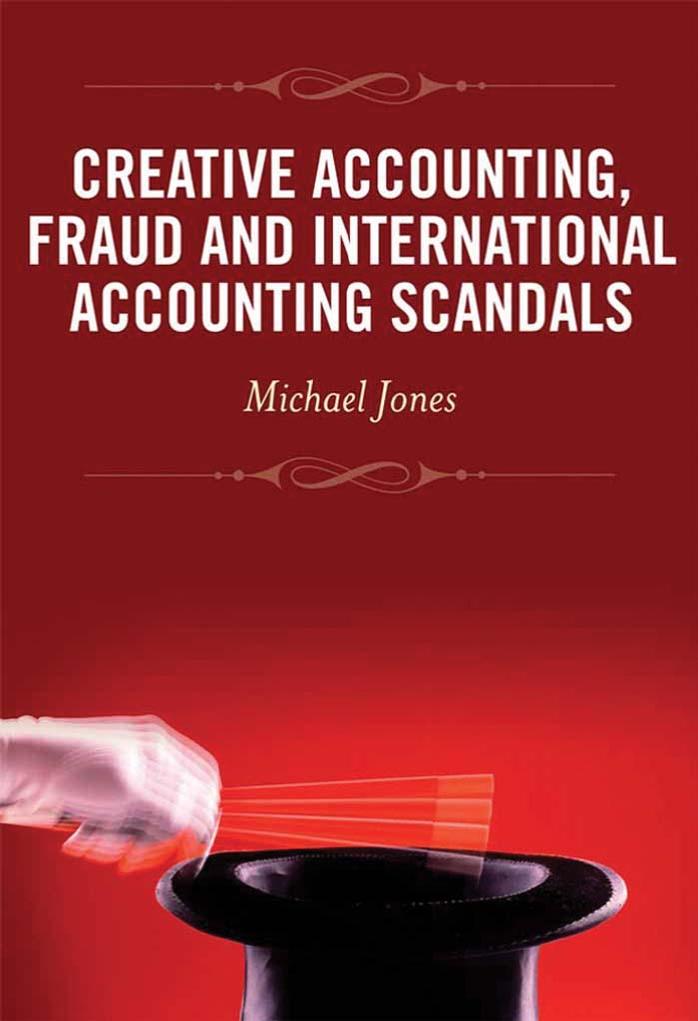
Creative Accounting Fraud and International Accounting Scandals 1st Edition by Michael Jones ISBN 0470057653 978-0470057650
Original price was: $70.00.$35.00Current price is: $35.00.
Instant download Creative Accounting Fraud and International Accounting Scandals 1st Edition by Michael J. Jones after payment
Creative Accounting Fraud and International Accounting Scandals 1st Edition by Michael Jones – Ebook PDF Instant Download/Delivery: 0470057653, 978-0470057650
Full download Creative Accounting Fraud and International Accounting Scandals 1st edition after payment
Product details:
ISBN 10: 0470057653
ISBN 13: 978-0470057650
Author: Michael Jones
Business scandals are always with us from the South Sea Bubble to Enron and Parmalat. As accounting forms a central element of any business success or failure, the role of accounting is crucial in understanding business scandals. This book aims to explore the role of accounting, particularly creative accounting and fraud, in business scandals. The book is divided into three parts. In Part A the background and context of creative accounting and fraud is explored. Part B looks at a series of international accounting scandals and Part C draws some themes and implications from the country studies.
Creative Accounting Fraud and International Accounting Scandals 1st Table of contents:
PART A
1 Introduction – Setting the Scene
1.1 Introduction
1.2 Exploring the Terms
1.2.1 Creative Accounting
1.2.2 Fraud
1.2.3 Other Terms
1.3 Structure of the Book
1.3.1 Increase Income
1.3.2 Decrease Expenses
1.3.3 Increase Assets
1.3.4 Decrease Liabilities
1.4 Conclusion
2 The Creative Accounting and Fraud Environment
2.1 Introduction
2.2 The Main Actors
2.2.1 Managers
2.2.2 Investment Analysts
2.2.3 Regulators
2.2.4 Auditors
2.2.5 Shareholders
2.2.6 Merchant Banks
2.2.7 Other Users
2.2.8 Legal Authorities
2.3 Effective Corporate Governance
2.3.1 Effective Internal Controls
2.3.2 Division of the Responsibility between Chief Executive and Chairman
2.3.3 Audit Committee
2.3.4 Independent Board of Directors
2.4 Economic Environment
2.5 Conclusion
3 Motivations to Indulge in Creative Accounting and Fraud
3.1 Introduction
3.1.1 Personal Incentives
3.1.2 Market Expectations
3.1.3 Special Circumstances
3.1.4 Cover-up Fraud
3.2 Conclusion
4 Methods of Creative Accounting and Fraud
4.1 Introduction
4.2 Basic Principles
4.3 Nature of Accounting
4.4 Methods of Creative Accounting
4.4.1 Strategy 1: Increase Income
4.4.2 Strategy 2: Decrease Expenses
4.4.3 Strategy 3: Increase Assets
4.4.4 Strategy 4: Decrease Liabilities
4.4.5 Strategy 5: Increase Operating Cash Flow
4.5 Simple Numerical Example
4.6 Fraud
4.6.1 Misappropriation of Assets
4.6.2 Fictitious Transactions
4.7 Conclusion
5 Evidence for Creative Accounting and Fraud
5.1 Introduction
5.2 The Descriptive Studies
5.2.1 Ian Griffiths, Creative Accounting (1986)
5.2.2 County Natwest WoodMac, Company Pathology (1991)
5.2.3 UBS Phillips & Drew, Accounting for Growth (1991)
5.2.4 Trevor Pijper, Creative Accounting (1993)
5.2.5 Frank Clarke, Graeme Dean and Kyle Oliver, Corporate Collapse: Accounting, Regulatory and Ethi
5.2.6 Frank Clarke and Graeme Dean, Indecent Disclosure: Gilding the Corporate Lily (2007)
5.2.7 McBarnet and Whelan, Creative Accounting and the Cross-eyed Javelin Thrower (1999)
5.2.8 Charles Mulford and Eugene Comiskey, The Financial Numbers Game (2002)
5.2.9 Beasley, Carcello and Hermanson, Fraudulent Financial Reporting 1987–1997: An Analysis of U.
5.2.10 Joseph Wells, Principles of Fraud Examination (2005)
5.3 The Statistical Studies
5.3.1 Earnings Management Studies
5.4 Conclusion
6 Impression Management
6.1 Introduction
6.1.1 Accounting Narratives
6.1.2 Graphs
6.2 Conclusion
7 Taking the Long View: Accounting Scandals over Time
7.1 Introduction
7.1.1 Ancient and Medieval
7.1.2 Seventeenth and Eighteenth Centuries
7.1.3 Nineteenth Century
7.1.4 Twentieth Century: Before Second World War
7.1.5 Twentieth Century: 1945–1980s
7.2 Conclusion
PART B
8 Accounting Scandals in Australia since the Late 1980s
8.1 Introduction
8.2 Overview of Accounting Scandals during and since the 1890s
8.3 Case Studies of Accounting Scandals since the Late 1980s
8.3.1 Adelaide Steamship
8.3.2 Bond Corporation
8.3.3 Harris Scarfe
8.3.4 One.Tel
8.4 HIH Insurance
8.4.1 Background
8.4.2 Why did HIH Collapse?
8.4.3 Accounting Issues
8.4.4 Legal Outcomes Arising from the HIH Collapse
8.5 Corporate Governance Reforms Following the Accounting Scandals of the Early 2000s
8.6 Conclusion
9 Corporate Accounting Scandals in China
9.1 Introduction
9.2 Summary of Corporate Scandals
9.2.1 Shenzhen Yuanye
9.2.2 Great Wall Fund Raising
9.2.3 Hongguang
9.2.4 Daqing Lianyi
9.2.5 Kangsai Group
9.2.6 Lantian Gufen
9.3 A Case in Depth – Zhengzhou Baiwen
9.3.1 Background
9.3.2 Themes of the Scandal
9.3.3 Who is to Blame?
9.3.4 Consequences of the Baiwen Scandal
9.3.5 Aftermath
9.4 Conclusion
10 Accounting Scandals in Germany
10.1 Introduction
10.2 Accounting Scandals Between 1985 and 2006
10.2.1 Co op AG (1988)
10.2.2 Balsam AG (1994)
10.2.3 Bremer Vulkan Verbund AG (1995)
10.2.4 Philipp Holzmann AG (1999)
10.3 Most Important Cases: Flowtex and Comroad
10.3.1 Flowtex Gmbh & Co. KG (2000)
10.3.2 ComRoad AG (2001)
10.4 Accounting Scandals and Regulatory Responses
10.5 Examinations of the German Financial Reporting Enforcement Panel 2005–2006
10.6 Conclusion
11 Creative Accounting and Fraud in Greece
11.1 Introduction
11.2 Two Accounting Scandals
11.2.1 ETBA Finance
11.2.2 Dynamic Life
11.3 The Bank of Crete Scandal
11.3.1 Koskotas’s Employment with the Bank of Crete
11.3.2 The Accounting Information Systems of the Time
11.3.3 The Economic Environment at that Time
11.4 The Aftermath
11.5 Conclusions
12 Corporate Creative Accounting in India: Extent and Consequences
12.1 Introduction
12.2 Some Examples of Creative Accounting in India
12.3 Some Important Corporate Cases in India
12.4 The Satyam Computer Services Ltd Scandal (2009)
12.4.1 Background
12.4.2 Satyam: A Global Organisation
12.4.3 Alleged Possible Processes and their Impact
12.4.4 Good Guy, Bad Choices
12.4.5 Role of the Auditors
12.4.6 Institution of Legal Proceedings
12.4.7 Salvaging Satyam
12.4.8 Rebuilding the Corporate Image
12.4.9 Some Antidotes
12.5 Aftermath
12.5.1 Changes in the Companies Act
12.5.2 Measures Taken by the SEBI
12.5.3 Prudential Norms of the RBI
12.6 Conclusion
12.7 Acknowledgements
13 Creative Accounting and Accounting Scandals in Italy
13.1 Introduction
13.2 Creative Accounting Practices in Italy: A Case Study Analysis
13.2.1 The Choice of Consolidation Technique
13.2.2 The Accounting of Stock Options
13.2.3 The Accounting of ‘Creative Gains’ in Football Club Companies
13.3 The Most Important Accounting Fraud in Italy: The Parmalat Case
13.3.1 Parmalat: Was it a Case of Creative Accounting or of False Accounting?
13.3.2 Key Accounting Issues at Parmalat: Some Examples of the Accounting Fraud
13.3.3 The Role of Corporate Governance Actors
13.3.4 The Role of Information Demand-side Actors: Institutional Investors, Financial Analysts and B
13.4 The Aftermath of the Parmalat Scandal and its Impact on Business and Society
13.5 Conclusion
14 Creative Accounting and Accounting Scandals in Japan
14.1 Introduction
14.2 Accounting Regulations and Standards in Japan
14.2.1 Accounting Regulations
14.2.2 Accounting Standards
14.3 Short History of Accounting Scandals Before the 1980s
14.4 Three Types of Accounting Scandal Post-1980s
14.4.1 Accounting Scandal to Maintain High Share Prices
14.4.2 Accounting Scandal Related to Contracts
14.4.3 Accounting Scandal to Avoid Bankruptcy
14.5 Consequences of the Accounting Scandals
14.5.1 Revision of Accounting Standards for Consolidated Financial Statements
14.5.2 Reorganization of Audit Firms
14.5.3 Establishing Internal Control Systems
14.6 Conclusion
15 Financial Accounting Scandals in the Netherlands
15.1 Introduction
15.2 Some Minor Accounting Scandals
15.2.1 Creative Accounting at Rijn-Schelde-Verolme (RSV)
15.2.2 Creative Accounting at Fokker
15.3 Royal Ahold
15.3.1 Consolidation of Joint Ventures at Royal Ahold
15.3.2 Consolidation Accounting in the Netherlands
15.3.3 Consolidation Accounting under US GAAP
15.3.4 The Control and Side Letters
15.3.5 Accounting for Vendor Allowances at US Foodservice (USF)
15.3.6 Proper Accounting Treatment Vendor Allowances
15.3.7 Measures Taken by Royal Ahold after Discovering the Fraud
15.3.8 Acquisition Accounting
15.3.9 Reserves, Allowances and Provisions
15.3.10 Lease Accounting
15.4 Conclusion
16 Creative Accounting and Financial Scandals in Spain
16.1 Introduction
16.2 Accounting Scandals in Spain Since the 1980s
16.2.1 The Banking Sector
16.2.2 Investment Service Firms
16.2.3 The Real Estate Sector: The Case of PSV and IGS
16.3 Investments in Stamps: The Latest Series of Financial Scandals in the Country. Afinsa and Fóru
16.3.1 Background of the Cases of Afinsa and Fórum Filatélico
16.3.2 The Nature of the Businesses and the Accounting for Investment Contracts
16.3.3 The Suppliers
16.3.4 Valuation of Stamps
16.3.5 Reflections on the Scandal
16.3.6 Where were the Auditors?
16.3.7 Was it a Surprise?
16.3.8 Consequences of the Scandal
16.4 The Aftermath of the Scandals
16.5 Conclusion
17 Accounting Scandals in Sweden – A Long Tradition
17.1 Introduction
17.2 Fermenta and Prosolvia: Swedish Stock Market Darlings
17.2.1 Fermenta – 1980s Biotech Company’s Accounting Errors
17.2.2 Prosolvia – 1990s Experts in Simulating Virtual Reality?
17.2.3 Reconstruction of Ownership
17.2.4 Fictitious Invoices, Invented Agreements and Premature Income Recognition
17.2.5 Insider Trading
17.3 Two Scandals in Multinationals that Dominated the Swedish Media
17.3.1 ABB – Shaken and Stirred
17.3.2 Skandia – A Shooting Star Turns into a White Dwarf
17.4 Conclusions
18 Creative Accounting – The UK Experience
18.1 Introduction
18.2 Historical Background
18.3 Some Recent Accounting Scandals
18.3.1 Bank of Credit and Commerce International (BCCI)
18.3.2 The Mirror Group
18.4 Polly Peck
18.4.1 Meyna
18.4.2 Vestel
18.4.3 Unipac
18.4.4 Accounting Policies at Polly Peck
18.5 The Immediate Aftermath
18.5.1 Accounting Regulatory Change
18.5.2 Governance and Enforcement
18.6 Subsequent Developments
18.7 Conclusions
18.8 Acknowledgements
19 Creative Accounting and Accounting Scandals in the USA
19.1 Introduction
19.2 Scandals since the 1990s
19.2.1 Premature or Fictitious Revenue Recognition
19.2.2 Capitalized Costs and/or Extended Amortization Periods
19.2.3 Overstated Assets and/or Understated Liabilities
19.2.4 Other Creative Accounting Practices
19.3 Enron and Worldcom
19.3.1 Enron Corp.
19.3.2 WorldCom, Inc.
19.4 Aftermath of the Scandals
20 Bank Failures and Accounting During the Financial Crisis of 2008–2009
20.1 Introduction
20.2
20.2.1 Kaupthing Bank
20.2.2 Northern Rock
20.3 Origins of the ‘Credit Crunch’
20.3.1 Sub-prime Lending
20.3.2 Types of Mortgage
20.3.3 Economic Downturn and Rising Unemployment
20.4 Financial Instruments Associated with the Credit Crunch
20.4.1 Collateralised Debt Obligations (CDOs)
20.4.2 Credit Default Swaps (CDS)
20.4.3 Collateralised Mortgage Obligations (CMOs)
20.4.4 Securitisation and Off-balance Sheet Financing
20.4.5 Repurchase agreements or ‘repos’
20.5 Creative Accounting in the Banking Sector
20.5.1 Loan-loss Allowances
20.5.2 Adjustment of Reporting Dates
20.5.3 Enhancing Profits through Disposals of Assets
20.5.4 Lawful Adjustments to Composition of ‘Level 3’ Assets in Banks’ Balance Sheets
20.5.5 Decline in Value of Outstanding Debt
20.6 Lehman’s, Madoff and Bear Stearns; Failures and Consequences
20.6.1 Lehman Brothers
20.6.2 Bernard Madoff
20.6.3 Bear Stearns
20.7 Conclusion
PART C
21 Identifying Some Themes
21.1 Introduction
21.2 Some Themes
21.2.1 Background
21.2.2 Creative Accounting or Fraud
21.3 The Major Methods Used
21.3.1 Strategy 1: Increasing Income
21.3.2 Strategy 2: Decreasing Expenses
21.3.3 Strategy 3: Increasing Assets
21.3.4 Strategy 4: Decreasing Liabilities
21.3.5 Other Methods of Creative Accounting
21.4 Methods of Fraud
21.5 Incentives for Creative Accounting and Fraud
21.6 Overstrong Personalities
21.7 Failure of Internal Controls
21.8 Failure of External Auditors
21.9 Conclusion
22 The Impact of Accounting Scandals and Creative Accounting
22.1 Introduction
22.2 Short-term Immediate Effects
22.2.1 Insiders
22.2.2 Outsiders
22.3 Long-term Effects
22.3.1 One-off Regulatory Responses
22.4 Cumulative Effects
22.5 Conclusion
23 Conclusion – Looking Backwards and Forwards
23.1 Overview
23.2 Thematic Analysis
23.3 Lessons for the Future
23.3.1 Factors Increasing the Possibilities of Creative Accounting and Fraud
23.3.2 Factors Reducing the Potential for Creative Accounting and Fraud
23.4 Prognosis
23.5 Conclusion
Appendix 1 Chronological List of Major Instances of Accounting Issues Across 12 Countries and Beyond
Appendix 2 Alphabetical List of Most Important Accounting Scandals Across 12 Countries and Beyond si
Index
EULA
People also search for Creative Accounting Fraud and International Accounting Scandals 1st :
reative accounting fraud and international accounting scandals pdf
creative accounting examples
is creative accounting illegal
creative accounting
creative accounting scandals
Tags: Michael Jones, Creative Accounting, International Accounting