


Digital Image Processing 4th Edition by Rafael Gonzalez, Richard Woods – Ebook PDF Instant Download/Delivery: 0134734807, 9780134734804
Full download Digital Image Processing 4th edition after payment
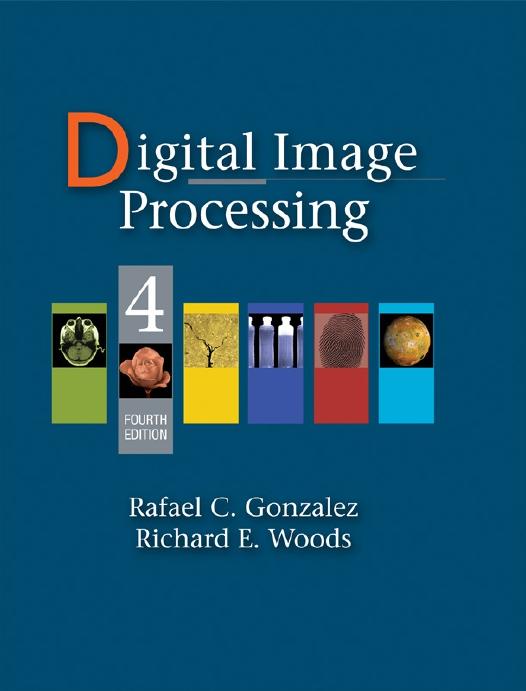
Product details:
ISBN 10: 0134734807
ISBN 13: 9780134734804
Author: Rafael Gonzalez, Richard Woods
This is the eBook of the printed book and may not include any media, website access codes, or print supplements that may come packaged with the bound book. Introduce your students to image processing with the industry’s most prized text For 40 years, Image Processing has been the foundational text for the study of digital image processing. The book is suited for students at the college senior and first-year graduate level with prior background in mathematical analysis, vectors, matrices, probability, statistics, linear systems, and computer programming. As in all earlier editions, the focus of this edition of the book is on fundamentals. The 4th Edition, which celebrates the book’s 40th anniversary, is based on an extensive survey of faculty, students, and independent readers in 150 institutions from 30 countries. Their feedback led to expanded or new coverage of topics such as deep learning and deep neural networks, including convolutional neural nets, the scale-invariant feature transform (SIFT), maximally-stable extremal regions (MSERs), graph cuts, k-means clustering and superpixels, active contours (snakes and level sets), and exact histogram matching. Major improvements were made in reorganizing the material on image transforms into a more cohesive presentation, and in the discussion of spatial kernels and spatial filtering. Major revisions and additions were made to examples and homework exercises throughout the book. For the first time, we added MATLAB projects at the end of every chapter, and compiled support packages for you and your teacher containing, solutions, image databases, and sample code. The support materials for this title can be found at www.ImageProcessingPlace.com
Digital Image Processing 4th Table of contents:
1. Introduction
Preview
1.1 What is Digital Image Processing?
1.2 The Origins of Digital Image Processing
1.3 Examples of Fields that Use Digital Image Processing
1.3.1 Gamma-Ray Imaging
1.3.2 X-Ray Imaging
1.3.3 Imaging in the Ultraviolet Band
1.3.4 Imaging in the Visible and Infrared Bands
1.3.5 Imaging in the Microwave Band
1.3.6 Imaging in the Radio Band
1.3.7 Other Imaging Modalities
1.4 Fundamental Steps in Digital Image Processing
1.5 Components of an Image Processing System
Summary, References, and Further Reading
2. Digital Image Fundamentals
Preview
2.1 Elements of Visual Perception
2.1.1 Structure of the Human Eye
2.1.2 Image Formation in the Eye
2.1.3 Brightness Adaptation and Discrimination
2.2 Light and the Electromagnetic Spectrum
2.3 Image Sensing and Acquisition
2.3.1 Image Acquisition Using a Single Sensing Element
2.3.2 Image Acquisition Using Sensor Strips
2.3.3 Image Acquisition Using Sensor Arrays
2.3.4 A Simple Image Formation Model
2.4 Image Sampling and Quantization
2.4.1 Basic Concepts in Sampling and Quantization
2.4.2 Representing Digital Images
2.4.3 Linear vs. Coordinate Indexing
2.4.4 Spatial and Intensity Resolution
2.4.5 Image Interpolation
2.5 Some Basic Relationships Between Pixels
2.5.1 Neighbors of a Pixel
2.5.2 Adjacency, Connectivity, Regions, and Boundaries
2.5.3 Distance Measures
2.6 Introduction to the Basic Mathematical Tools Used in Digital Image Processing
2.6.1 Elementwise Versus Matrix Operations
2.6.2 Linear Versus Nonlinear Operations
2.6.3 Arithmetic Operations
2.6.4 Set and Logical Operations
2.6.5 Basic Set Operations
2.6.6 Logical Operations
2.6.7 Fuzzy Sets
2.6.8 Spatial Operations
2.6.9 Single-Pixel Operations
2.6.10 Neighborhood Operations
2.6.11 Geometric Transformations
2.6.12 Image Registration
2.6.13 Vector and Matrix Operations
2.6.14 Image Transforms
2.6.15 Probability and Random Variables
2.6.16 Sample Spaces, Events, and Probability
2.6.17 The Sum (Addition) Rule of Probability
2.6.18 Conditional Probability
2.6.19 Independence
2.6.20 The Law of Total Probability
2.6.21 Bayes’ Rule
2.6.22 Random Variables
2.6.23 Probability Functions for Discrete Random Variables
2.6.24 Some Important Probability Mass Functions
2.6.25 Estimating Discrete Probability Functions from Sample Data
2.6.26 Expected Value and Moments of Discrete Random Variables
2.6.27 Continuous Random Variables
2.6.28 The Uniform and Gaussian Probability Density Functions
2.6.29 Expected Values and Moments of Continuous Random Variables
2.6.30 Estimating the Mean, Variance, and Higher-Order Moments from Sample Data
2.6.31 Multivariate Random Variables
2.6.32 The Multivariate Gaussian PDF
2.6.33 Estimating the Parameters of the Multivariate Gaussian PDF
Summary, References, and Further Reading
Problems
Projects
3. Intensity Transformations and Spatial Filtering
Preview
3.1 Background
3.1.1 The Basics of Intensity Transformations and Spatial Filtering
3.1.2 About the Examples in this Chapter
3.2 Some Basic Intensity Transformation Functions
3.2.1 Image Negatives
3.2.2 Log Transformations
3.2.3 Power-Law (Gamma) Transformations
3.2.4 Piecewise Linear Transformation Functions
3.2.5 Contrast Stretching
3.2.6 Intensity-Level Slicing
3.2.7 Bit-Plane Slicing
3.3 Histogram Processing
3.3.1 Histogram Equalization
3.3.2 Histogram Matching (Specification)
3.3.3 Exact Histogram Matching (Specification)
3.3.4 Foundation
3.3.5 Ordering: Computing the neighborhood averages and extracting the K-tuples
3.3.6 Exact Histogram Specification Algorithm
3.3.7 Local Histogram Processing
3.3.8 Using Histogram Statistics for Image Enhancement
3.4 Fundamentals of Spatial Filtering
3.4.1 The Mechanics of Linear Spatial Filtering
3.4.2 Spatial Correlation and Convolution
3.4.3 Separable Filter Kernels
3.4.4 Some Important Comparisons Between Filtering in the Spatial and Frequency Domains
3.4.5 A Word About How Spatial Filter Kernels are Constructed
3.5 Smoothing (Lowpass) Spatial Filters
3.5.1 Box Filter Kernels
3.5.2 Lowpass Gaussian Filter Kernels
3.5.3 Order-Statistic (Nonlinear) Filters
3.6 Sharpening (Highpass) Spatial Filters
3.6.1 Foundation
3.6.2 Using the Second Derivative for Image Sharpening—the Laplacian
3.6.3 Unsharp Masking and Highboost Filtering
3.6.4 Using First-Order Derivatives for Image Sharpening—the Gradient
3.7 Highpass, Bandreject, and Bandpass Filters from Lowpass Filters
3.8 Combining Spatial Enhancement Methods
3.9 Using Fuzzy Techniques for Intensity Transformations and Spatial Filtering
3.9.1 Introduction
3.9.2 Principles of Fuzzy Set Theory
3.9.3 Definitions
3.9.4 Some Common Membership Functions
3.9.5 Using Fuzzy Sets
3.9.6 Using Fuzzy Sets for Intensity Transformations
3.9.7 Using Fuzzy Sets for Spatial Filtering
Summary, References, and Further Reading
Problems
Projects
People also search for Digital Image Processing 4th :
digital image processing 4th edition
introductory digital image processing 4th edn
introductory digital image processing 4th edition
digital image processing 4th edition solutions pdf github
digital image processing 4th edition solution manual pdf github
Tags: Rafael Gonzalez, Richard Woods, Digital Image Processing