


Esthetics of Anterior Fixed Prosthodontics 1st edition by Gerard Chiche, Alain Pinault – Ebook PDF Instant Download/Delivery: 0867152583, 978-0867152586
Full download Esthetics of Anterior Fixed Prosthodontics 1st edition after payment
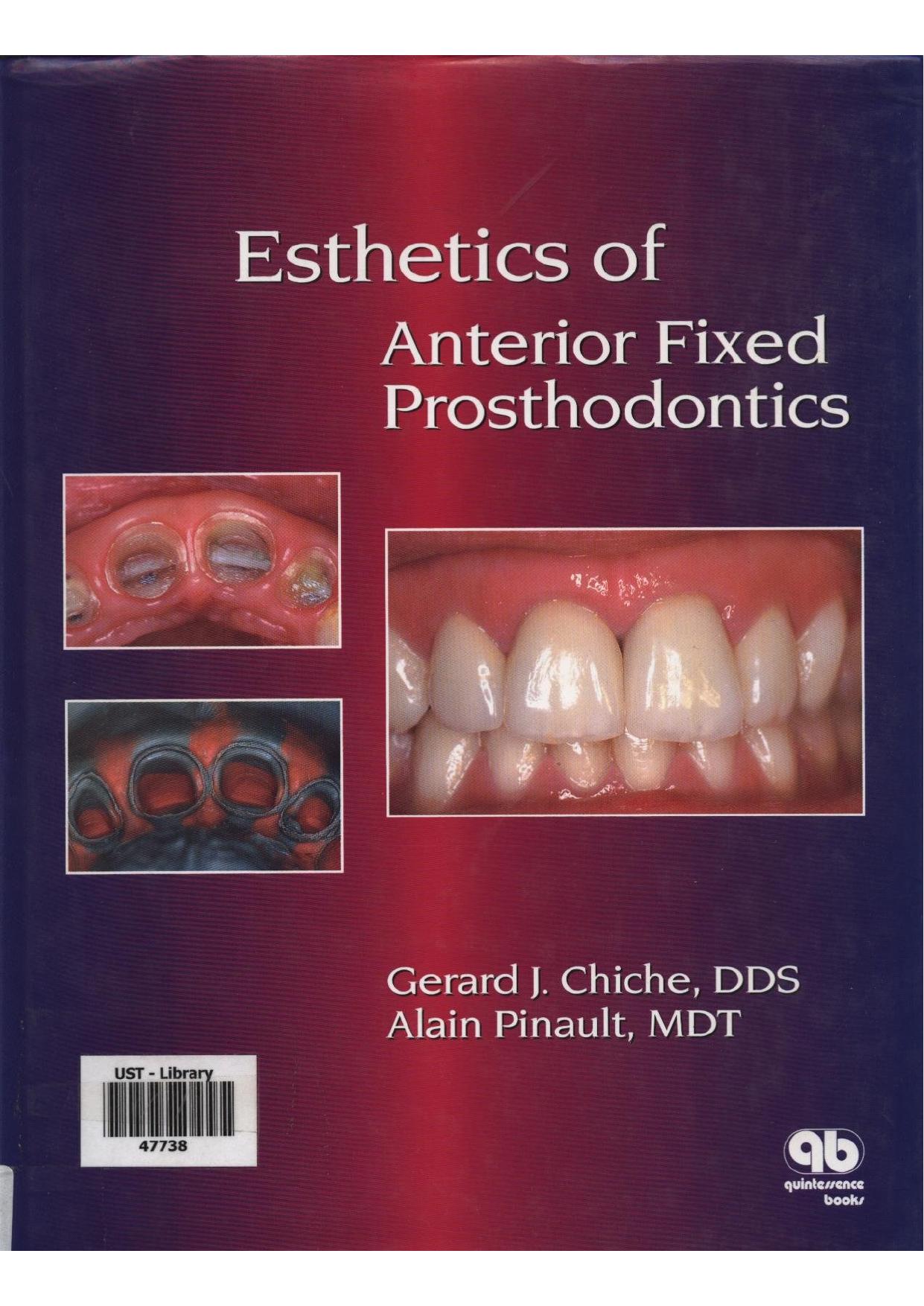
Product details:
ISBN 10: 0867152583
ISBN 13: 978-0867152586
Author: Gerard Chiche, Alain Pinault
Louisiana State University, New Orleans. Text for dental practitioners on the artistic and scientific principles of esthetics, diagnosis and management planning, the making of new crowns, and the remaking of deficient crowns. Color photographs. DNLM: Crowns.
Esthetics of Anterior Fixed Prosthodontics 1st Table of contents:
Chapter 1 Artistic and Scientific Principles Applied to Esthetic Dentistry
Frame and reference
Horizontal reference lines
Fig. 1-1 Facial Proportions
Fig. 1-2a and b
Interpupillary line
The Interpupillary Line
Fig. 1-3
Fig. 1-4
Fig. 1-5
Fig. 1-6a and b
Lip lines
Fig. 1-7a and b
Lip Lines
Fig. 1-8
Fig. 1-9
Fig. 1-10
Fig. 1-11a
Fig. 1-11b and c
Fig. 1-12
Vertical reference lines
Fig. 1-13
Facial Midline
Fig. 1-14
Fig. 1-15
Sagittal references
Upper lip support
Lower lip relation
Fig. 1-16
The occlusal plane
Phonetic references
Fig. 1-17a-c
Proportion and idealism
Fig. 1-18
Fig. 1-19
Fig. 1-20
Fig. 1-21
Fig. 1-22
Fig. 1-23a and b
Symmetry and diversity
Patients’ preferences
Pleasing natural symmetry
Fig. 1-24a-c
Fig. 1-25a and b
Natural variations
Dental midline
Maxillary central incisors
Maxillary lateral incisors
Maxillary canines
Perspective and illusion
Altering the perception of an individual tooth
Widening and narrowing
Rules of Symmetry/Asymmetry for Maxillary Anterior Teeth
Altering Maxillary Incisors
Fig. 1-26
Shortening and lengthening
Widening and Shortening
Prosthetic Options for Periodontally Involved Teeth that Cannot be Shortened
Fig. 1-27a-c
Altering perception between teeth
Perspective by contrast
Parallel perspective
Shading perspective
Fig. 1-28a and b
Fig. 1-29
Fig. 1-30
Fig. 1-31a and b
Fig. 1-32
References
Chapter 2 Diagnosis and Treatment Planning of Esthetic Problems
Orthodontic considerations
Vertical tooth position
Fig. 2-1
Interpupillary line
Upper lip line
Fig. 2-2
Fig. 2-3a and b
Fig. 2-4a and b
Fig. 2-5
Fig. 2-6
Fig. 2-7a-c
Fig. 2-8
Mediolateral position
Fig. 2-9a and b
Fig. 2-10a and b
Crown length
Fig. 2-11
Crown width
Periodontal considerations
Esthetic restorations for a previously unrestored dentition
Fig. 2-12a and b
Fig. 2-13
Fig. 2-14a and b
Restorations for a previously restored dentition
Fig. 2-15
Correction of noninflammatory periodontal defects
Inadequate attached keratinized gingiva
Prominent frena
Localized gingival recessions
Deficient pontic areas
Table 2-1 Classification Systems for Edentulous Ridge Deformities
Gingival asymmetries
Excessive gingival display (the “gummy smile”)
Restorative dentistry considerations
Fig. 2-16a and b
Fig. 2-17a and b
Direct composite resin bonding
Porcelain laminate veneers
Fig. 2-18a-c
Fig. 2-19a and b
Fig. 2-20
Fig. 2-21a and b
Fig. 2-22a-c
Fig. 2-23a and b
Fig. 2-24a and b
Fig. 2-25a and b
Full-coverage crowns
Metal ceramic crowns
All-ceramic crowns
Etched-metal resin-bonded prosthesis (Maryland bridge)
Preoperative Analysis
Implant crowns
Fig. 2-26a-c
Fig. 2-27a and b
Fig. 2-28a and b
References
Chapter 3 Replacement of Deficient Crowns
Esthetic analysis
Analysis of Deficient Crowns
Incisal plane
Morphology
Inclination
Fig. 3-1
Fig. 3-2
Fig. 3-3
Fig. 3-4
Fig. 3-5
Fig. 3-6
Fig. 3-7a
Fig. 3-7b
Fig. 3-8
Fig. 3-9a
Fig. 3-9b
Fig. 3-9c
Fig. 3-10a
Fig. 3-10b
Fig. 3-10c
Incisal length
Determinants
Table 3-1 Average Maxillary Incisor Display (mm) with Lips at Rest8
Treatment Planning for Alterations in Incisal Length
Incisal length modification
Fig. 3-11
Fig. 3-12
Fig. 3-13a
Fig. 3-13b
Fig. 3-13c
Fig. 3-13d
Fig. 3-14
Incisal profile
Fig. 3-15 Sequence of Retreatment
Fig. 3-16
Fig. 3-17
Fig. 3-18
Analysis of Overcontoured Incisal Profile
Tooth proportion
Fig. 3-19
Fig. 3-20
Proportion determined by statistical average
Proportion determined by face form
Proportion determined by dentist and patient preference
Proportion determined by anatomic characteristics
Proportions in Dental Composition
Optimum tooth-to-tooth relationship
Dominance and rhythm
Ideal central incisor-to-lateral incisor ratio
Fig. 3-21
Fig. 3-22a
Fig. 3-22b
Fig. 3-23a
Fig. 3-23b
Fig. 3-23c
Fig. 3-23d
Fig. 3-23e
Fig. 3-24a-c
Fig. 3-25a
Fig. 3-25b
Fig. 3-26a
Fig. 3-26b and c
Fig. 3-27
Gingival outline
Asymmetry
Tooth proportion
Gingival outline
Fig. 3-28
Gingival exposure
Restorative procedures
Fig. 3-29
Fig. 3-30a and b
Fig. 3-31a
Fig. 3-31b
Fig. 3-31c
Fig. 3-31d
Fig. 3-32
Replacement of deficient crowns
Table 3-2 Mean Pocket Depth (mm) after Elimination of Proximal Subgingival Overhangs*
Endodontic considerations in prosthetic retreatment*
Assessing the status of the pulp
Assessing the endodontically treated tooth
Most Frequent Mistakes Found in Deficient Crowns
Retreatment for Deficient Crowns
References
Chapter 4 Metal Ceramic Crowns
Anterior preparations for full veneer crowns
Retention
Fig. 4-1
Fig. 4-2
Fig. 4-3
Fig. 4-4
Fig. 4-5a
Fig. 4-5b
Fig. 4-6a and b
Position of the incisal edge of the preparation
Fig. 4-7
Fig. 4-8
Fig. 4-9
Fig. 4-10
Fig. 4-11
Fig. 4-12
Fig. 4-13
Fig. 4-14
Fig. 4-15
Fig. 4-16a
Fig. 4-16b
Fig. 4-17a
Fig. 4-17b
Fig. 4-18
Fig. 4-19a
Fig. 4-19b
Fig. 4-19c
Fig. 4-19d
References for Incisal Edge of Preparation
Precision of the preparation
Armamentarium
Armamentarium for Tooth Preparation
Preparations for metal ceramic crowns
Finish lines
Shoulder with bevel
Flat shoulder
Chamfer
Margin design
Metal collar
Fig. 4-20
Fig. 4-21
Fig. 4-22
Fig. 4-23
Metal feather-edge
Porcelain margins
Fig. 4-24a
Fig. 4-24b
Fig. 4-24c
Fig. 4-24d
Fig. 4-25a
Fig. 4-25b
Fig. 4-25c
Fig. 4-26
Fig. 4-27
Fig. 4-28a-c
Fig. 4-29
Fig. 4-30
Fig. 4-31
Fig. 4-32
Fig. 4-33
Color rendition
Reduction thickness
Fig. 4-34a-d
Thickness Requirements According to Shade
Fig. 4-35
Fig. 4-36
Fig. 4-37
Fig. 4-38
Fig. 4-39
Fig. 4-40a-c
Fig. 4-41
Fig. 4-42
Metal type
Type of Compensation for Thin Teeth
Compensations Required According to Tooth Thickness and Shade
References
Chapter 5 All-Ceramic Crowns and Foil Crowns
All-ceramic crowns
Selection
Esthetic performance
Advantages and Disadvantages of Current Ceramic Systems
Fig. 5-1
Fig. 5-2
Fig. 5-3a and b
Fig. 5-4a and b
Fig. 5-4c
Fig. 5-5a-c
Fig. 5-6a and b
Fig. 5-7
Indications
Preparations for all-ceramic crowns
Length of the preparation
Fig. 5-8a and b
Fig. 5-9
Fig. 5-10
Shoulder
Shoulder versus chamfer
Fig. 5-11
Fig. 5-12
Fig. 5-13
Fig. 5-14
Shoulder width
Fig. 5-15
Fig. 5-16a-c
Fig. 5-17a and b
Facial and lingual reduction
Fig. 5-18a and b
Fig. 5-19
Taper
Strength of all-ceramic crown systems
Surface flaws
Core thickness
Fig. 5-20
Strengthening mechanisms
Current Ceramic Systems for Clinical Application
High alumina ceramics
Fig. 5-21a and b
Fig. 5-22a and b
Fig. 5-23
Fig. 5-24a and b
Table 5-1 Numerical Strengths of All-Ceramic Crown Systems
Investigations of strength of all-ceramic crown systems
Foil crowns
Thickness reduction
Fig. 5-25a and b
Fig. 5-26a and b
Fig. 5-27a-d
Strengthening mechanism
Role of the foil matrix
Foil adaptation
References
Chapter 6 Communication with the Dental Laboratory: Try-In Procedures and Shade Selection
Dentist-Technician Communication
Orientation of the master cast
Esthetic orientation
Fig. 6-1
Orientation techniques
Fig. 6-2
Fig. 6-3
Fig. 6-4a-d
Occlusal orientation
Facebow transfer
Fig. 6-5
Fig. 6-6
Fig. 6-7
Interocclusal recording
Anterior guidance
Table 6-1 Occlusal Records for Anterior Tooth Preparations
Function of the Anterior Guide Table14-16
Incisal edge position
Horizontal overlap
Fig. 6-8a and b
Fig. 6-9a-c
Vertical overlap
Fig. 6-10
Fig. 6-11
Crown contour
Shape and arrangement
Diagnostic waxing and/or provisional restorations
Fig. 6-12a
Fig. 6-12b
Fig. 6-12c
Fig. 6-12d
Fig. 6-13a
Fig. 6-13b
Fig. 6-13c
Fig. 6-13d
Fig. 6-14a
Fig. 6-14b
Fig. 6-14c
Fig. 6-15a
Fig. 6-15b
Intraoral photographs and computerized video imaging
Fig. 6-16
Fig. 6-17
Crown emergence
Master cast
Accessory master cast
Fig. 6-18a and b
Fig. 6-19a
Fig. 6-19b
Fig. 6-20
Clinical try-in
Fig. 6-21
Fig. 6-22
Try-in sequence
Fig. 6-23a-c
Fig. 6-24a and b
Fig. 6-25
Fig. 6-26
Shade selection
Basic shade
Fig. 6-27a and b
Fig. 6-28
Fig. 6-29
Armamentarium for Shade Matching
Fig. 6-30
Fig. 6-31
Fig. 6-32
Fig. 6-33
Basic shade variations
Orange modification
Fig. 6-34a and b
Fig. 6-35a and b
Variation according to location
Nonshade guide color
Laboratory considerations
Enamel shade, translucency, and location
Fig. 6-36
Fig. 6-37a and b
Fig. 6-38
Fig. 6-39
Fig. 6-40a
Fig. 6-40b
Fig. 6-40c
Fig. 6-41
Fig. 6-42
Fig. 6-43
Fig. 6-44
Fig. 6-45
Fig. 6-46
Fig. 6-47a
Fig. 6-47b and c
Fig. 6-48
Laboratory considerations
Fig. 6-49
Table 6-2 Luster According to Glazing Temperature and Surface Texture
Table 6-3 Basic Variations for Standard Shades A1, A2, A3 and Translation in the Porcelain Construction
Fig. 6-50a
Fig. 6-50b
Fig. 6-50c
Fig. 6-50d
Fig. 6-50e and f
Fig. 6-51a
Fig. 6-51b
Fig. 6-51c and d
Fig. 6-52a
Fig. 6-52b
Fig. 6-52c and d
References
Chapter 7 Tissue Management for the Maxillary Anterior Region
Tooth preparations
Fit
Biologic width
Fig. 7-1a and b
Fig. 7-2
Fig. 7-3a and b
Intracrevicular dentistry
Fig. 7-4a and b
Level of margins
Intracrevicular preparation technique
Fig. 7-5a and b
Fig. 7-6a
Fig. 7-6b
Fig. 7-7a-c
Fig. 7-8
Fig. 7-9
Fig. 7-10a and b
Rationale for delaying impression procedure for anterior teeth
Initial tooth preparation-healthy tissues
Deficient crowns
Fig. 7-11a and b
Fig. 7-12
Fig. 7-13a-d
Gingival Management—Impression Timing
Fig. 7-14a
Fig. 7-14b
Fig. 7-15a and b
Fig. 7-16a and b
Systematic guidelines
Subgingival contours
Supragingival convexity
Guidelines for Predictable Tissue Management
Subgingival convexity
Fig. 7-17
Fig. 7-18a-c
Fig. 7-19a
Fig. 7-19b
Fig. 7-19c
Marginal precision with provisional restorations
Single shell technique
Multiple shell technique
Fig. 7-20a
Fig. 7-20b
Fig. 7-20c
Fig. 7-20d
Fig. 7-21
Fig. 7-22a and b
Modified shell technique91
References
Chapter 8 Impressions for the Anterior Dentition
Impressions for natural teeth
Gingival retraction
Mechanical-chemical method
Retraction techniques for the anterior region
Single string technique
Selective double string technique
Double string technique
Fig. 8-1
Fig. 8-2a-d
Fig. 8-3a-d
Fig. 8-4a-e
Fig. 8-5a and b
Fig. 8-6a-d
Retraction Procedures for the Anterior Region
Accuracy of impression procedures
Dimension of stone die
Fig. 8-7a and b
Causes of Size Deviation of Stone Dies
Disclosing of the casting
Fig. 8-8a
Tray selection for impressions in the anterior region
Manufactured stock plastic trays (polystyrene).
Acrylic resin custom trays.
Fig. 8-8b
Stock metal trays.
Tray Selection for Impressions in the Anterior Region
Impressions for laminate veneers
Fig. 8-9
Fig. 8-10a and b
Fig. 8-11
Fig. 8-12a and b
Fig. 8-13
Fig. 8-14a
Fig. 8-14b
Impressions of implants
Fig. 8-15a and b
Fig. 8-16
Fig. 8-17
Try-in Options and Verification for Implant Impressions
Fig. 8-18
Fig. 8-19
Fig. 8-20a
Fig. 8-20b
Fig. 8-21
Fig. 8-22
Fig. 8-23a and b
Fig. 8-24
References
Chapter 9 Establishing an Esthetic Gingival Appearance
Residual gingival/periodontal defects
Bone defects
Fig. 9-1
Reestablishing proper “biologic width”
Determining surgical methods
Fig. 9-2
Considerations Before Bone Removal
Fig. 9-3
Determining bone quantity to be removed
Fig. 9-4 and 9-5
Fig. 9-6
Fig. 9-7
Impact of surgical healing on final tooth preparation
Gingival asymmetries
Precautions
Complications
Fig. 9-8a
Fig. 9-8b
Fig. 9-8c
Fig. 9-9a
Fig. 9-9b
Fig. 9-9c
Fig. 9-9d
Fig. 9-10
Fig. 9-11a
Fig. 9-11b
Fig. 9-12
Fig. 9-13a
Fig. 9-13b
Fig. 9-14a and b
Fig. 9-15
Inadequate keratinized gingiva
Fig. 9-16a
Fig. 9-16b and c
Fig. 9-16d
Localized gingival recessions
Fig. 9-17
Fig. 9-18a and b
Fig. 9-19
Deficient pontic areas
Buccolingual edentulous ridge defects
Fig. 9-20
Fig. 9-21
Fig. 9-22a
Fig. 9-22b and c
Fig. 9-22d and e
Fig. 9-23
Fig. 9-24a
Fig. 9-24b
Fig. 9-24c
Fig. 9-24d
Apicocoronal edentulous ridge defects
Fig. 9-25
Fig. 9-26a and b
Fig. 9-26c and d
Combination edentulous ridge defects
Correction of aberrant frena
Ridge Augmentation Procedures
Guided Tissue Regeneration Techniques Using a Barrier
Fig. 9-27a and b
Excessive gingival display
Fig. 9-28a and b
Fig. 9-29
Fig. 9-30
Fig. 9-31a-d
References
People also search for Esthetics of Anterior Fixed Prosthodontics 1st :
esthetics of anterior fixed prosthodontics pdf
what does anterior mean in dentistry
examples of fixed prosthodontics
types of fixed prosthodontics
what is fixed prosthodontics
Tags: Gerard Chiche, Alain Pinault, Fixed Prosthodontics