


Ethics for the Practice of Psychology in Canada 3rd edition by Derek Truscott, Kenneth Crook – Ebook PDF Instant Download/Delivery: 1772125423, 978-1772125429
Full download Ethics for the Practice of Psychology in Canada 3rd edition after payment
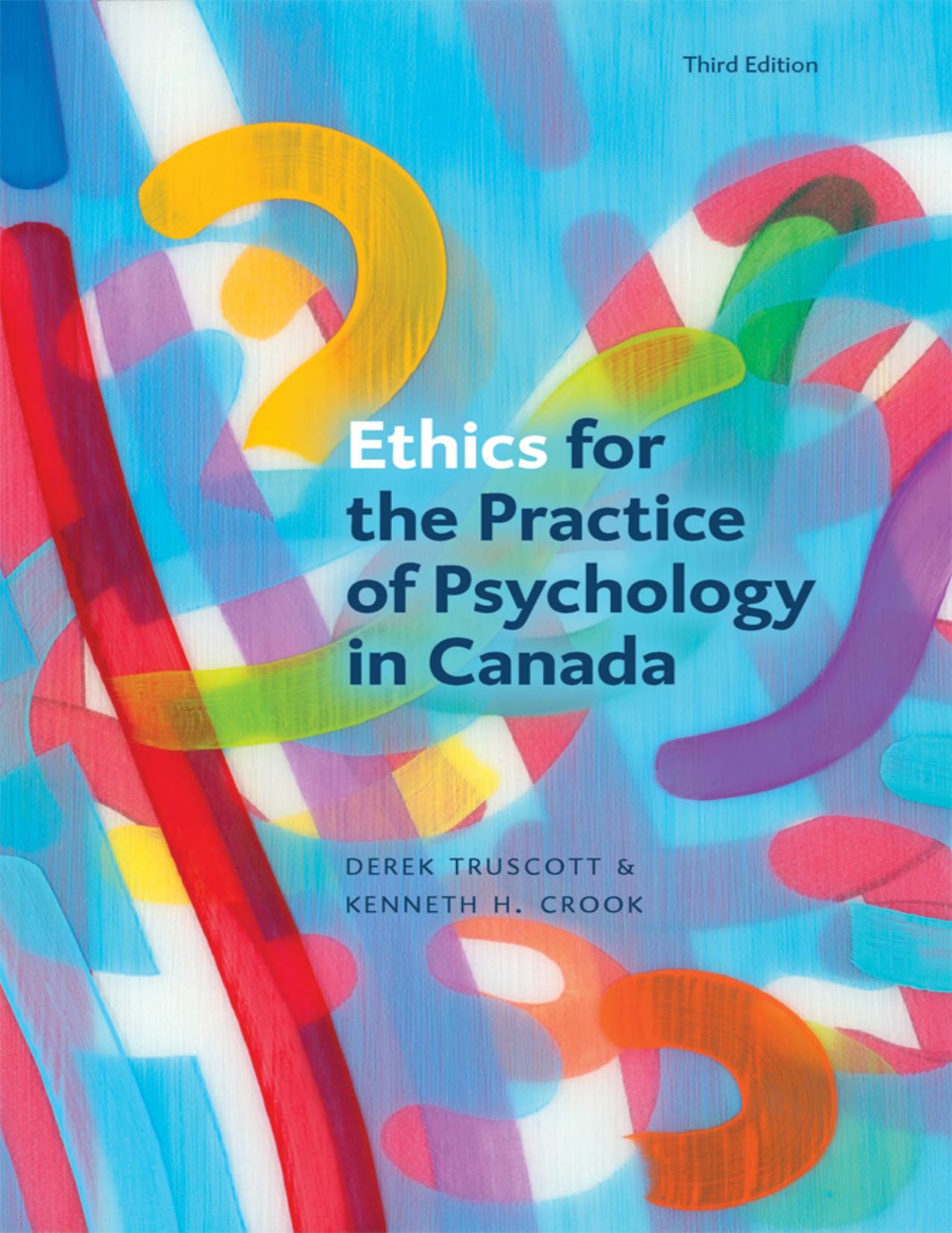
Product details:
ISBN 10: 1772125423
ISBN 13: 978-1772125429
Author: Derek Truscott, Kenneth Crook
Since its initial release in 2004, Ethics for the Practice of Psychology in Canada has filled a vital need for a single source on professional ethics and law relevant to Canadian psychologists. This important new edition reflects the fourth edition of the Canadian Code of Ethics for Psychologists and highlights discussions in the areas of diversity and social justice. An essential resource, it focusses on the most pertinent ethical and legal issues for Canadian psychologists, including decision making, consent, confidentiality, helping without harming, professional boundaries, diversity, social responsibility, and conducting research. An appendix includes discussion questions and reflective journal exercises to facilitate awareness of personal motives and biases relevant to making ethical choices. The EPUB edition is accessible.
Ethics for the Practice of Psychology in Canada 3rd Table of contents:
Acknowledgements
1 | Understanding Ethics
Case Study: A Client in Need
Four Foundational Systems of Ethics
Teleology
Deontology
Virtue
Relational
Systems of ethics appraised
The Canadian Code of Ethics for Psychologists
Principle I: Respect for the Dignity of Persons and Peoples
Principle II: Responsible Caring
Principle III: Integrity in Relationships
Principle IV: Responsibility to Society
Canadian Code of Ethics for Psychologists appraised
Summary
Other Case Studies
Professor under pressure
Negative outcomes
Reluctant parolee
2 | Making Ethical Decisions
Case Study: Child Abuse
Ethical Reasoning
Listen / Relational
Feel / Virtue
Think / Deontology
Act / Teleology
Making Ethical Decisions
1. Identification of individuals and groups likely to be affected by the decision: Listen / Relational
2. Consideration of personal bias, stress, or self-interest: Feel / Virtue
3. Identification of relevant ethical principles, standards, and guidelines: Think / Deontology
4. Development of alternative courses of action: Think / Deontology
5. Analysis of likely short-term, ongoing, and long-term risks and benefits of alternatives: Think + Act / Deontology + Teleology
6. Choice of course of action: Act / Teleology
7. Action
8. Evaluation of the results of the course of action: Listen / Relational
9. Assumption of responsibility for consequences of action taken: Feel / Virtue
10. Appropriate action to prevent future occurrences of the dilemma: Think + Act / Deontology + Teleology
Summary
Other Case Studies
Offender treating offenders
Do your job
Need to know?
3 | Meeting Professional Standards
Case Study: A Psychologist by Any Other Name
Professional Standards
Entrance standards
Practice standards
Practice guidelines
Professional Accountability
Ethics committees
Discipline committees
Complaints against psychologists
Case Study of a Complaint
Complaint
Investigation
Discipline hearing
Regulating Ourselves
Confirm the issue
Safeguard confidentiality
Consult with others
Address the issue
Involve others in an action plan
Summary
Other Case Studies
A good night’s sleep
Assessments under the table
Meddling misogynist
4 | Incorporating Legal Expectations
Case Study: Haunted by Grief
Areas of Law
Criminal
Civil
Negligence
Duty of care
Reasonable care
Causation
Plaintiff’s conduct
Relationships and Consequences Relevant to Legal Expectations
Intervention
Assessment
Suicide
Harm to third parties
Summary
Other Case Studies
Think of the children
Said too much
Wrong man
5 | Obtaining Consent
Case Study: Parental Refusal
Duties and Virtues Fundamental to Consent
Autonomy
Fidelity
Relationships and Consequences Relevant to Consent
Standards of disclosure
Freedom of consent
Process of consent
Children
Dependent adults
Assessing competence to consent
Summary
Other Case Studies
Eternal soul
Mind reader
On his own terms
6 | Protecting Confidentiality
Case Study: Marital Secrets
Duties and Virtues Fundamental to Confidentiality
Autonomy
Discretion
Relationships and Consequences Relevant to Confidentiality
Third-party access to information
Client access to information
Legal proceedings
Group and family therapy
Children and dependent adults
Mandatory reporting of a child in need of protection
Technological threats
Summary
Other Case Studies
Cooking the books
Troubled student
Whose records?
7 | Helping without Harming
Case Study: To Treat or Not to Treat?
Duties and Virtues Fundamental to Helping without Harming
Beneficence and benevolence
Nonmaleficence and nonmalevolence
Diligence
Relationships and Consequences Relevant to Helping without Harming
Establishing competence
Maintaining competence
Expanding services
Monitoring outcomes
Avoiding accusations of harm
Summary
Other Case Studies
Recovering alcoholic
Best for whom?
Tyranny of metrics
8 | Maintaining Professional Boundaries
Case Study: New Business Partner
Duties and Virtues Fundamental to Professional Boundaries
Nonmaleficence and nonmalevolence
Temperance
Relationships and Consequences Relevant to Professional Boundaries
Practicing in isolated communities
Third parties
Teaching and supervision
Physical contact
Social relationships
Sexual relationships
Summary
Other Case Studies
Past catches up
Custody dispute
Nobody does it better
9 | Appreciating Diversity
Case Study: Hearing Voices
Duties and Virtues Fundamental to Diversity
Respect
Nonmaleficence
Beneficence
Relationships and Consequences Relevant to Diversity
Group membership
Individual identity
Assessment
Intervention
Research
Summary
Other Case Studies
Real-world assessment
Protection from whom?
The cost of friendship
10 | Being Socially Responsible
Case Study: A Shelter in Need
Duties and Virtues Fundamental to Social Responsibility
Justice
Authority
Relationships and Consequences Relevant to Social Responsibility
Advancing the discipline
Access to services
Misuse of psychological knowledge
Social intervention
Social activism
Summary
Other Case Studies
Robbers Cave redux
The disruptive student
Banality of evil?
11 | Conducting Research
Case Study: Political Violence
Duties and Virtues Fundamental to Research
Autonomy
Beneficence and nonmaleficence
Justice
Integrity
Relationships and Consequences Relevant to Research
Consent
Privacy
Confidentiality
Children and vulnerable persons
Scientific misconduct
Summary
Other Case Studies
Blow the whistle?
Safe youth
Proposal with potential
Appendix: Learning Resources
References
Index
People also search for Ethics for the Practice of Psychology in Canada 3rd:
ethics for the practice of psychology in canada 3rd ed
what are the 5 ethics in psychology
what is ethics in psychology
ethics for psychologists
ethics for psychology experiments
Tags: Derek Truscott, Kenneth Crook, the Practice, Psychology in Canada