


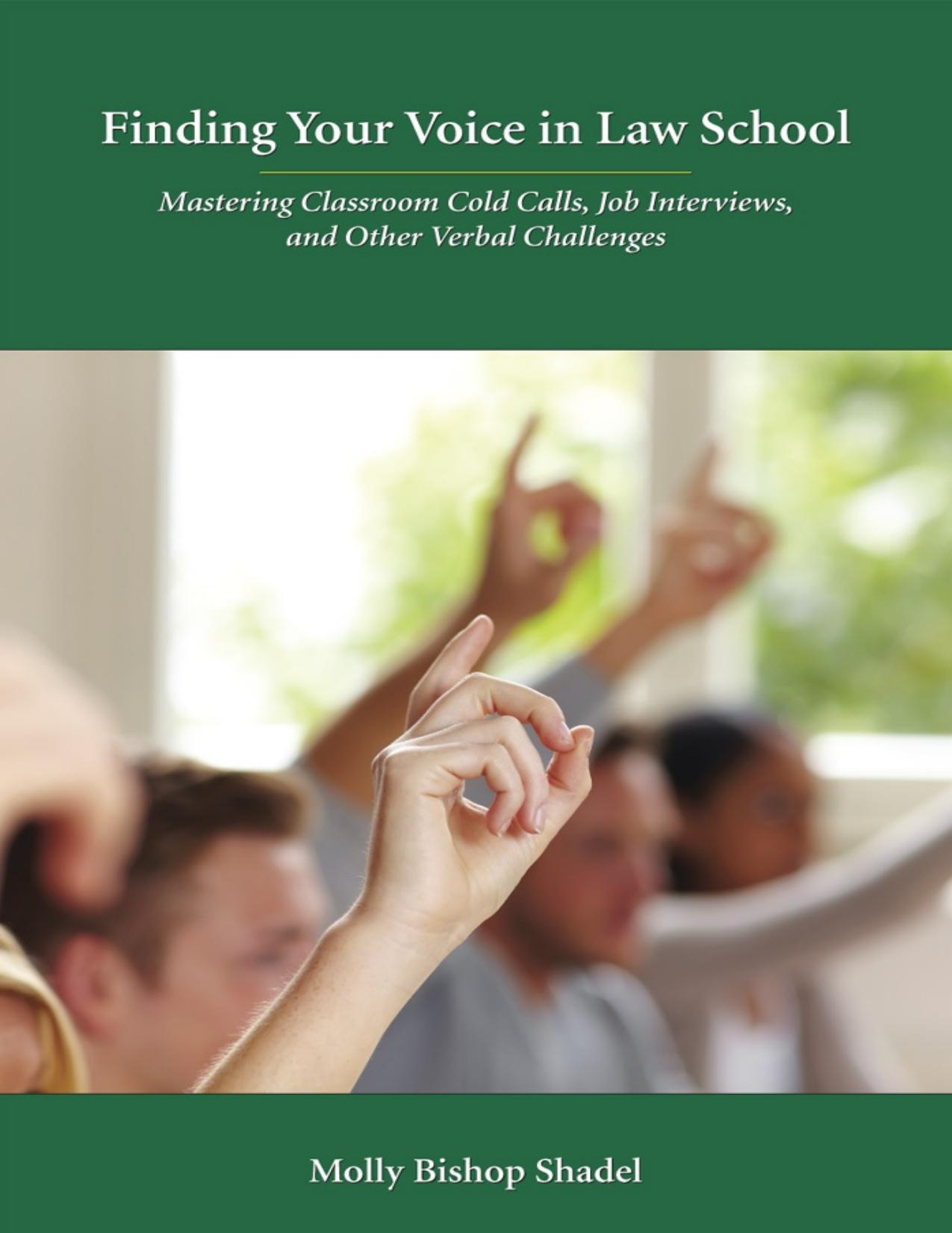
Finding Your Voice in Law School 1st edition by Molly Shadel ISBN 1611630738 978-1611630732
Original price was: $70.00.$35.00Current price is: $35.00.
Instant download Finding Your Voice in Law School Mastering Classroom Cold Callb Interviews and Other Verbal Challenges Molly Bishop Shadel after payment
Finding Your Voice in Law School 1st edition by Molly Shadel – Ebook PDF Instant Download/Delivery: 1611630738 , 978-1611630732
Full download Finding Your Voice in Law School 1st edition after payment
Product details:
ISBN 10: 1611630738
ISBN 13: 978-1611630732
Author: Molly Shadel
Drawn from interviews with students and attorneys from leading law schools and firms, Finding Your Voice in Law School delivers winning strategies for succeeding in law school and beyond.
Many college graduates aren’t prepared for the new challenges they will face in law school. Intense classroom discussion, mock trials and moot courts, learning the language of law, and impressing potential employers in a range of interview situations―it sounds intimidating, but it doesn’t have to be. Finding Your Voice in Law School offers a step-by-step guide to the most difficult tests you will confront as a law student, from making a speech in front of a room full of lawyers to arguing before a judge and jury. Author Molly Shadel, a former Justice Department attorney and Columbia law graduate who now teaches advocacy at the University of Virginia School of Law, also explains how to lay a strong foundation for your professional reputation.
Communicating effectively―with professors, at social gatherings, with supervisors and colleagues at summer jobs, and as a leader of a student organization―can have a lasting impact on your legal career. Building the skills (and attitude) you need to shine among a sea of qualified students has never been more important. Finding Your Voice in Law School shows what it takes to become the lawyer you want to be.
Law school―with its emphasis on classroom discussion and public speaking―can be intimidating. This useful and highly readable book demystifies the law school experience by giving concrete guidance on answering questions in class, mock trials and moot courts, what to say during a job interview, and how to interact with professors and legal professionals. It will not only help you be a better law student, it will help you become a better lawyer.
― David M. Schizer, Dean and the Lucy G. Moses Professor of Law and the Harvey R. Miller Professor of Law and Economics at Columbia Law School
From preparing effectively for class, to succeeding in mock trial and moot court, to making persuasive presentations, to shining at job interviews,Finding Your Voice in Law Schoolprovides step-by-step guidance on how to be a better speaker (and, in turn, a better student) in a whole range of contexts. Professor Shadel not only shows students how to be skillful communicators, but she also inspires them to have the confidence in themselves necessary to excel. With sound advice, easy-to-understand anecdotes, and insightful tips, the book is a gem. If you’re a law student or planning to go to law school―whether a natural public speaker or someone horrified at the thought of it―this book is for you.
― Austen Parrish, Interim Dean and Professor of Law at Southwestern Law School
There are many books about the written side of law school, but this is the first to stress the myriad ways in which getting the most out of the law school experience requires mastering a range of in-class and out-of-class oral skills. Although focused on the law student who wishes to excel in classroom performance, moot court, interviews, and many other oral experiences, it will serve as a valuable guide for the new and not-so-new practitioner as well.
― Frederick Schauer, David and Mary Harrison Distinguished Professor of Law, University of Virginia, and author of Thinking Like a Lawyer
This is a book that all incoming law students should read. And if they want to get (and keep) the best possible jobs, they should read it again before their interviews start.
― Kevin M. Donovan, Senior Assistant Dean for Career Services, University of Virginia School of Law
Finding Your Voice in Law School 1st Table of contents:
Chapter One · The Socratic Method: Learning to Think Like a Lawyer
Where Did the Socratic Method Come From?
Why Should You Try to Master the Socratic Method?
Chapter Two · The Socratic Method: How to Prepare for Class
Strategy One: Devise a Plan to Keep Up with the Reading
Strategy Two: Read for Particular Things
What Is the Law, Anyway?
Pay Attention to Precedent
The Text Matters
The Importance of Authority
Using Analogy Well
Avoid Logical Fallacies
Strategy Three: Tactical Note-Taking, the One-Page Brief, and Course Outlines
Chapter Three · The Socratic Method: Strategies in the Classroom
Strategy One: Pay Attention in Class
Strategy Two: Techniques for Answering the Question
Strategy Three: What to Do If You Don’t Know the Answer
Strategy Four: Learn to Overcome Self-Consciousness
Strategy Five: Predict the Questions
Chapter Four · Making a Formal Presentation in a Class or on the Job
Your Goals: Ethos, Pathos and Logos
Writing the Presentation
Find a Theme
Craft Your Structure
Pay Special Attention to Your First and Last Paragraphs
Get Their Attention Back
Use Clear Language
Give Yourself Ample Rehearsal Time
Speaking on Short Notice
Delivery Matters
What to Do with Your Feet
What to Do with Your Hands
Use Your Best Voice
Make Eye Contact
Think About Rhythm: Pausing and Pace
Overcoming Fear of Public Speaking
Final Thoughts
Chapter Five · First-Year Moot Court and Beyond
What Is an Oral Argument?
Before the Oral Argument
How to Prepare
The Importance of Practicing
At the Oral Argument
What to Expect on the Big Day
What to Bring to the Lectern
Beginning the Argument
Answering Questions During Argument
Using the Right Language
Striking the Right Tone
Chapter Six · Trial Practice Classes and Mock Trial Teams
What a Trial Looks Like
The Importance of Credibility (Ethos)
Engage the Jury’s Attention (Pathos)
Persuade Them with Logic (Logos)
The Opening Statement
Direct Examination
Refreshing a Witness’s Recollection
Entering an Exhibit into Evidence
Cross-Examination
Impeaching a Witness
Arguing Objections
Closing Argument
Chapter Seven · Leading a Student Organization
The Benefits of Leadership Experience
How to Lead a Meeting
Prepare an Agenda in Advance
Respect People’s Time
Consider What Should Be Accomplished Outside of a Meeting
Keep the Meeting Productive and the Conversation on Track
Set the Right Tone
Delegate Tasks Effectively
Expect the Unexpected
Chapter Eight · Interacting with Professors
Interactions in the Classroom
Interactions Outside of the Classroom
Electronic Communications
Meeting with Professors
Working for Professors
Securing Letters of Recommendation
Chapter Nine · Job Interviews
First-Round and Callback Interviews: The Basic Structure
Preparing for the Interview
Know Your Resume
Find Your Theme
Know Why You Want This Job
Deal with Bad Facts Gracefully
Know the Employer
Know Your Classes
Know About the World
Know the Answers to Basic Interview Questions
Practice for the Interview
Vocal Tips
Mastering Nonverbal Communication
What to Wear
During the Interview
Special Issues for Callback Interviews
How to Network
Chapter Ten · Communicating on the Job
Electronic Communications
In-Person Meetings
Asking Questions
Professional Behavior
Dress Professionally
Turn in Your Assignments on Time
Show Up to Work on Time and Work for the Entire Workday
Take Any Legal Training Classes the Employer Offers
Beware of Multitasking
Social Events
Epilogue
Appendix of Cases and Rules
Vokes v. Arthur Murray, Inc.
Lucy v. Zehmer
Regina v. Faulkner
Hilder v. St. Peter
Selected Federal Rules of Evidence
Index
People also search for Finding Your Voice in Law School 1st :
finding your voice lesson plan
finding your teacher voice
finding your voice leader in me
mastering the law school exam
mastering the voice
Tags: Molly Shadel, Finding Your, Law School