

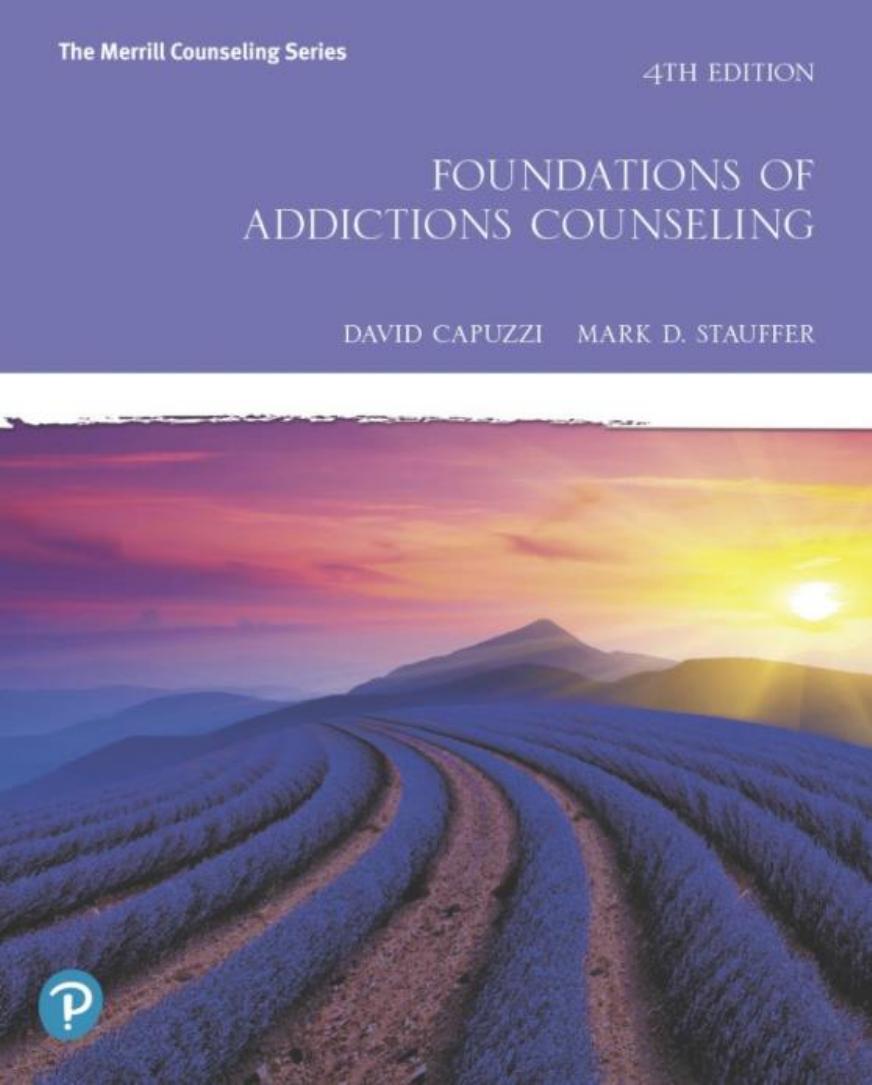
Foundations of Addictions Counseling 4th edition by David Capuzzi, Mark Stauffer – Ebook PDF Instant Download/Delivery: 0135169852, 9780135169858
Full download Foundations of Addictions Counseling 4th edition after payment
Product details:
ISBN 10: 0135169852
ISBN 13: 9780135169858
Author: David Capuzzi, Mark Stauffer
A practical collection of tools and strategies for prospective addictions counselors that includes a solid foundation of research, theory, and history. Practical and comprehensive, Foundations of Addiction Counseling explores an array of techniques and skills that a new practitioner will need in the real world while providing a thorough review of the research, theory, and history of addiction counseling. With chapters written by expert scholars, this text covers many topics in depth often ignored by other comparable books, such as multiple chapters on cross-cultural counseling, professional issues in addictions counseling, the assessment of client strengths, gender issues in substance use, working in rehabilitation centers, and working with clients with disabilities. Combining practice, research, and theory, the 4th Edition of this unique text offers students the tools and strategies they need for successful practice. The revised edition includes new case studies, extended discussion in the chapters dedicated to substance and process addictions (Chs. 2-3), a thoroughly updated chapter on maintenance and relapse prevention (Ch. 13), and an expanded chapter on substance use and families (Ch 14). Also available with MyLab Counseling By combining trusted author content with digital tools and a flexible platform, MyLab personalizes the learning experience and improves results for each student. MyLab Counseling organizes all assignments around essential learning outcomes and the CACREP standards – enabling easy course alignment and reporting. Note: You are purchasing a standalone product; MyLab Counseling does not come packaged with this content. Students, if interested in purchasing this title with MyLab Counseling, ask your instructor to confirm the correct package ISBN and Course ID. Instructors, contact your Pearson representative for more information. If you would like to purchase both the physical text and MyLab Counseling, search for: 013516687X / 9780135166871 Foundations of Addictions Counseling plus MyLab Counseling with Pearson eText — Access Card Package, 4/e Package consists of: 0135166934 / 9780135166932 Foundations of Addictions Counseling 013518455X / 9780135184554 MyLab Counseling with Pearson eText — Access Card — Foundations of Addictions Counseling, 4/e
Foundations of Addictions Counseling 4th Table of contents:
Part 1. Introduction to Addictions Counseling
Chapter 1. History and Etiological Models of Addiction
-
Approaches to the Prevention of Addiction in the United States
-
Current Policies Influencing Prevention
-
Models for Explaining the Etiology of Addiction
-
The Moral Model
-
Psychological Models
-
Cognitive-Behavioral Models
-
Learning Models
-
Psychodynamic Models
-
Personality Theory Models
-
-
Family Models
-
Behavioral Model
-
Family Systems Model
-
Family Disease Model
-
-
The Disease Model
-
The Public Health Model
-
The Developmental Model
-
Biological Models
-
Genetic Models
-
Neurobiological Models
-
-
Sociocultural Models
-
Supracultural Models
-
Culture-Specific Models
-
Subcultural Models
-
-
Multicausal Models
-
-
Summary and Some Final Notations
-
Useful Websites
-
Funding Opportunities
-
Funding Sources for Prevention Programs
-
References
Chapter 2. Substance Addictions
-
Substances of Addiction
-
Depressants
-
Alcohol
-
Sedatives/Hypnotics
-
Opioids
-
-
Stimulants
-
Nicotine
-
Ephedrine, Amphetamines, and Amphetamine-Like Medications
-
Cocaine
-
-
Cannabinoids
-
Hallucinogens and Other Psychedelics
-
-
Neurobiology and the Physiology of Addiction
-
Understanding the Reward Pathway
-
Understanding Loss of Control and Continued Use
-
Physiological Components
-
-
Summary and Some Final Notations
-
Useful Websites
-
References
Chapter 3. Process Addictions
-
Gambling Addiction
-
Technology Addiction
-
Internet Gaming Disorder
-
Sexual Addiction
-
Work Addiction
-
Compulsive Buying
-
Food Addiction and Disordered Eating
-
Summary and Some Final Notations
-
Useful Websites
-
References
Chapter 4. Professional Issues in Addictions Counseling
-
Counselor Competence
-
Comorbidity
-
Specific Populations
-
Clinical Knowledge of Polysubstance Disorder
-
Knowledge of Theory, Treatment, and Recovery Models
-
Boundary Violation Issues
-
Multiculturalism
-
Education
-
Counselors in Recovery
-
Counselors Who Have Never Been Users
-
Self-Care
-
Continuing Education
-
Credentialing, Certification, and Licensure
-
Accreditation
-
Treatment and Research Issues
-
Managed Care, Funding, Reimbursement
-
Measuring Outcomes and Efficacy
-
Future Trends
-
Positive Psychology
-
Unity Among Self-Help Groups
-
Changes in U.S. Drug Laws
-
-
-
Summary and Some Final Notations
-
Useful Websites
-
References
Chapter 5. Introduction to Assessment
-
Philosophical Foundations
-
Hope
-
Strengths-Based Approaches
-
Holistic Approaches
-
Spirituality
-
-
DSM-5 and Assessment
-
ASAM and the Physiology of Addiction
-
Level of Care Dimensions
-
Client Collaboration
-
Multidisciplinary Approach
-
Role of the Addictions Assessor
-
Key Concepts
-
Motivation
-
Triggers and Consequences
-
Expectancy
-
Rapport
-
-
Assessment Process
-
Instrument Design
-
Interviews (Structured, Semi-structured, Unstructured)
-
Background, Functioning, Use History
-
Family, Peer Relationships
-
-
Summary and Some Final Notations
-
Useful Websites
-
References
Chapter 6. Assessment and Diagnosis of Substance-Related and Addictive Disorders
-
Diagnosing Using DSM-5
-
Substance Use Disorders (SUDs)
-
Gambling Disorder
-
-
Importance of Standardized Assessments
-
Instrument Criteria
-
Sensitivity and Specificity
-
Reliability and Validity
-
Time/Cost Efficiency
-
-
Substance Use Disorder Instruments
-
SASSI-4, MAST, CAGE, AUDIT, AUI
-
ASI
-
-
Prenatal Alcohol Use Instruments
-
T-ACE, TWEAK
-
-
Gambling and Other Process Addiction Instruments
-
Summary and Some Final Notations
-
Useful Websites
-
References
Part 2. The Treatment of Addictions
Chapter 7. Motivational Interviewing
-
Overview
-
Stages-of-Change Model
-
Understanding Change and Resistance
-
Principles and Techniques
-
Open-Ended Questions
-
Reflective Listening
-
Affirmation
-
Summarization
-
Eliciting Change Talk
-
-
Reducing Resistance
-
Enhancing Confidence and Commitment
-
Advantages and Disadvantages
-
Summary and Some Final Notations
-
Useful Websites
-
References
Chapter 8. Psychotherapeutic Approaches
-
Counselor Beliefs and Behaviors
-
Empirically Supported Approaches
-
Behavioral and Cognitive-Behavioral Interventions
-
Mindfulness-Based Approaches
-
Brief Interventions
-
Solution-Focused Counseling (SFC)
-
Assumptions and Practices
-
Integration and Pragmatism
-
-
Harm Reduction
-
Summary and Some Final Notations
-
Useful Websites
-
References
Chapter 9. Treatment of Comorbid Disorders
-
Adaptation of Mental Health Systems
-
Prevalence and Assessment
-
Cultural Issues
-
Comorbid Treatment Models
-
Disease Concept Model
-
Alternative Models
-
-
Treatment Planning
-
Strengths, Issues, Goals, Objectives, Strategies
-
-
Summary and Some Final Notations
-
Useful Websites
-
References
Chapter 10. Group Counseling for Treatment of Addictions
-
Group Work Theory
-
Types of Groups
-
Psychoeducational
-
Psychotherapeutic
-
Self-Help
-
-
Ethical and Legal Issues
-
Managing Diversity
-
Family Group Counseling
-
Common Group Topics
-
Strategies for Effective Group Treatment
-
Summary and Some Final Notations
-
Useful Websites
-
References
Chapter 11. Addiction Pharmacotherapy
-
Key Terms and Concepts
-
Neurobiology and Pharmacodynamics
-
Role of the Counselor
-
Pharmacotherapy for Alcohol Use Disorder
-
Withdrawal
-
First- and Second-Line Treatments
-
Comparative Efficacy
-
Alternative Approaches
-
-
Glossary
-
Summary and Some Final Notations
-
Useful Websites
-
References
Chapter 12. 12-Step Facilitation of Treatment
-
History of 12-Step Groups
-
Overview of Groups (AA, NA, CoDA, etc.)
-
Group Process
-
Sponsors and Support
-
Effectiveness of 12-Step Programs
-
Counselor’s Role
-
Resources and Learning Opportunities
-
Summary and Some Final Notations
-
Useful Websites
-
References
Chapter 13. Maintenance and Relapse Prevention
-
Continuum of Care
-
Lapse vs. Relapse
-
Relapse Conceptualization
-
Intrapersonal, Interpersonal Factors
-
-
High-Risk Situations
-
Prevention and Coping Strategies
-
CBT, Mindfulness, Peer Support
-
Tech-Assisted Recovery
-
-
Summary and Some Final Notations
-
Useful Websites
-
References
Part 3. Addictions and Family Therapy, Rehabilitation, and School Settings
Chapter 14. Substance Addiction and Families
-
Family Counseling and Addiction Dynamics
-
Impact on Couples and Children
-
Codependence and Enabling
-
Treatment and Assessment Approaches
-
Summary and Some Final Notations
-
Useful Websites
-
References
Chapter 15. Persons with Disabilities and Addictions
-
Characteristics and Risk Factors
-
Health, Psychological, and Social Risks
-
Access Barriers
-
Treatment Utilization
-
Summary and Some Final Notations
-
Useful Websites
-
References
Chapter 16. Prevention Programs Across the Lifespan
-
Evidence-Based Programs
-
Needs Assessment, Planning, Implementation
-
Prevention by Age Group
-
Children, Adolescents, Higher Ed, Military, Older Adults
-
-
Summary and Some Final Notations
-
Useful Websites
-
References
Part 4. Cross-Cultural Counseling in Addictions
Chapter 17. Cross-Cultural Counseling: Engaging Ethnic Diversity
-
Cultural Relevance in Treatment
-
Disparities and Group-Specific Needs
-
Native, Asian, Latino, African American, Multiracial Clients
-
-
Theoretical Frameworks
-
Multicultural Competencies
-
Summary and Some Final Notations
-
Useful Websites
-
References
Chapter 18. Gender, Sex, and Addictions
-
Gender-Based Addiction Factors
-
Treatment for Women, Men, Transgender, and DSD Clients
-
Outcomes and Relapse Prevention
-
Summary and Some Final Notations
-
Useful Websites
-
References
Chapter 19. LGBTQ Affirmative Addictions Treatment
-
Common Myths and Cultural Context
-
Affirmative Assessment and Language
-
Treatment Modalities
-
Creating Safe Spaces
-
Counselor Advocacy
-
Summary and Some Final Notations
-
Useful Websites
-
References
Epilogue: Some Additional Perspectives
Chapter 20. Inpatient and Outpatient Addiction Treatment
-
Inpatient Treatment
-
Levels of Care
-
Assessment
-
Clinician and Family Roles
-
-
Outpatient Services
-
Policy and Legal Implications
-
Residential Programs and Drug Courts
-
Advocacy
-
Summary and Some Final Notations
-
Useful Websites
-
References
Index
People also search for Foundations of Addictions Counseling 4th :
foundations of addictions counseling 4th edition pdf
foundations of addictions counseling 4th edition apa citation
foundations of addictions counseling 4th edition free
4 benefits of counseling
foundations of addictions counseling with access 4th 20
Tags: David Capuzzi, Mark Stauffer, Addictions Counseling