

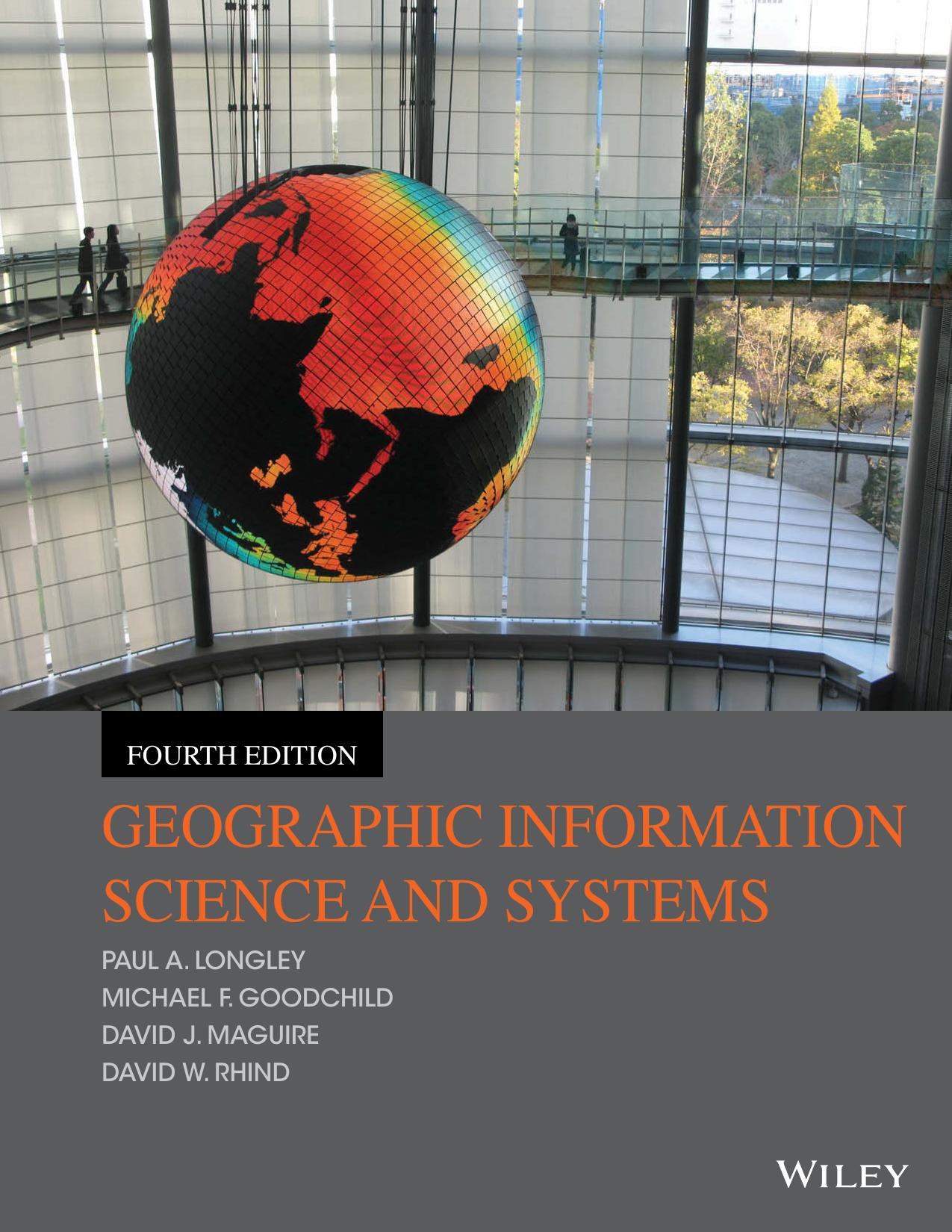
Geographic Information Science and Systems 4th Edition by Paul Longley, Michael Goodchild, David Maguire, David Rhind – Ebook PDF Instant Download/Delivery: 1119128458 , 978-1119128458
Full download Geographic Information Science and Systems 4th edition after payment
Product details:
ISBN 10: 1119128458
ISBN 13: 978-1119128458
Author: Paul Longley, Michael Goodchild, David Maguire, David Rhind
Effective use of today’s powerful GIS technology requires an understanding of the science of problem-solving that underpins it. Since the first edition published over a decade ago, this book has led the way, with its focus on the scientific principles that support GIS usage. It has also provided thorough, upto- date coverage of GIS procedures, techniques and public policy applications. This unique combination of science, technology and practical problem solving has made this book a best-seller across a broad spectrum of disciplines. This fully updated 4th edition continues to deliver on these strengths.
Geographic Information Science and Systems 4th Table of contents:
1 Geographic Information: Science, Systems, and Society
-
Introduction: What Are GI Science and Systems, and Why Do They Matter?
-
Data, Information, Evidence, Knowledge, and Wisdom
-
GI Science and Systems
-
The Technology of Problem Solving
-
The Disciplinary Setting of GI Science and Systems (GISS)
-
GI Science and Spatial Thinking
-
GI Systems and Science in Society
-
Questions for Further Study
-
Further Reading
2 The Nature of Geographic Data
-
Introduction
-
The Fundamental Problem
-
Spatial Autocorrelation and Scale
-
Spatial Sampling
-
Sampling and VGI
-
Distance Decay
-
Measuring Distance Effects as Spatial Autocorrelation
-
Taming Geographic Monsters
-
Induction and Deduction and How It All Comes Together
-
Questions for Further Study
-
Further Reading
3 Representing Geography
-
Introduction
-
Digital Representation
-
Representation of What and for Whom?
-
The Fundamental Problem
-
Discrete Objects and Continuous Fields
-
Rasters and Vectors
-
The Paper Map
-
Generalization
-
Conclusion
-
Questions for Further Study
-
Further Reading
4 Georeferencing
-
Introduction
-
Place-Names and Points of Interest
-
Postal Addresses and Postal Codes
-
IP Addresses
-
Linear Referencing Systems
-
Cadasters and the U.S. Public Land Survey System
-
Measuring the Earth: Latitude and Longitude
-
Projections and Coordinates
-
Measuring Latitude, Longitude, and Elevation: GPS
-
Converting Georeferences
-
Geotagging and Mashups
-
Georegistration
-
Summary
-
Questions for Further Study
-
Further Reading
5 Uncertainty
-
Introduction
-
Uncertainty in the Conception of Geographic Phenomena
-
Further Uncertainty in the Representation of Geographic Phenomena
-
Further Uncertainty in the Analysis of Geographic Phenomena
-
Consolidation
-
Questions for Further Study
-
Further Reading
2 Techniques
6 GI System Software
-
Introduction
-
The Evolution of GI System Software
-
Architecture of GI System Software
-
Building GI Software Systems
-
GI Software Vendors
-
Types of GI Systems
-
Conclusion
-
Questions for Further Study
-
Further Reading
7 Geographic Data Modeling
-
Introduction
-
GI Data Models
-
Example of a Water-Facility Object Data Model
-
Geographic Data Modeling in Practice
-
Questions for Further Study
-
Further Reading
8 Data Collection
-
Introduction
-
Primary Geographic Data Capture
-
Secondary Geographic Data Capture
-
Obtaining Data from External Sources (Data Transfer)
-
Capturing Attribute Data
-
Citizen-Centric Web-Based Data Collection
-
Managing a Data Collection Project
-
Questions for Further Study
-
Further Reading
9 Creating and Maintaining Geographic Databases
-
Introduction
-
Database Management Systems
-
Storing Data in DBMS Tables
-
SQL
-
Geographic Database Types and Functions
-
Geographic Database Design
-
Structuring Geographic Information
-
Editing and Data Maintenance
-
Multiuser Editing of Continuous Databases
-
Conclusion
-
Questions for Further Study
-
Further Reading
10 The GeoWeb
-
Introduction
-
Distributing the Data
-
The Mobile User
-
Distributing the Software: GI Services
-
Prospects
-
Questions for Further Study
-
Further Reading
3 Analysis
11 Cartography and Map Production
-
Introduction
-
Maps and Cartography
-
Principles of Map Design
-
Map Series
-
Applications
-
Conclusion
-
Questions for Further Study
-
Further Reading
12 Geovisualization
-
Introduction: Uses, Users, Messages, and Media
-
Geovisualization, Spatial Query, and User Interaction
-
Geovisualization and Transformation
-
Participation, Interaction, Augmentation, and Dynamic Representation
-
Consolidation
-
Questions for Further Study
-
Further Reading
13 Spatial Data Analysis
-
Introduction: What Is Spatial Analysis?
-
Analysis Based on Location
-
Analysis Based on Distance
-
Conclusion
-
Questions for Further Study
-
Further Reading
14 Spatial Analysis and Inference
-
The Purpose of Area-Based Analyses
-
Centrality
-
Analysis of Surfaces
-
Design
-
Hypothesis Testing
-
Conclusion
-
Questions for Further Study
-
Further Reading
15 Spatial Modeling with GI Systems
-
Introduction
-
Types of Models
-
Technology for Modeling
-
Multicriteria Methods
-
Accuracy and Validity: Testing the Model
-
Conclusion
-
Questions for Further Study
-
Further Reading
4 Policy, Management, and Action
16 Managing GI Systems
-
Introduction
-
Managing Risk
-
The Case for the GI System: ROI
-
The Process of Developing a Sustainable GI System
-
Sustaining a GI System—The People and Their Competences
-
Conclusions
-
Questions for Further Study
-
Further Reading
17 Information and Decision Making
-
Why We Need Information
-
Information as Infrastructure
-
Different Forms of GI
-
Open Data and Open Government
-
Example of an Information Infrastructure: The Military
-
Conclusions
-
Questions for Further Study
-
Further Reading
18 Navigating the Risks
-
Clashes Between Scientists and the Judiciary
-
Business Models for GI-Related Enterprises
-
Legal and Regulatory Constraints
-
Privacy and GI Systems
-
Public Trust, Ethics, and Coping with the Media
-
Partnerships, Up-Scaling Activities, and Risk Mitigation
-
Coping with Spatial Stupidity
-
Conclusions
-
Questions for Further Study
-
Further Reading
19 Epilog: GISS in the Service of Humanity
-
GISS, the Active Citizen, and Citizen Scientists
-
Context: Our Differentiated World
-
Context: Our Interdependent World
-
The Process
-
The Grand Challenges
-
Grand Challenges Whose Effects We Can Help to Ameliorate
-
Conclusions
People also search for Geographic Information Science and Systems 4th:
master in geographic information science and systems
geographic information science and systems 4th edition pdf
longley et al 2015 geographic information science and systems
geographic information science and systems 4th edition pdf free
geographic information science and systems pdf
Tags: Paul Longley, Michael Goodchild, David Maguire, David Rhind, Geographic Information