

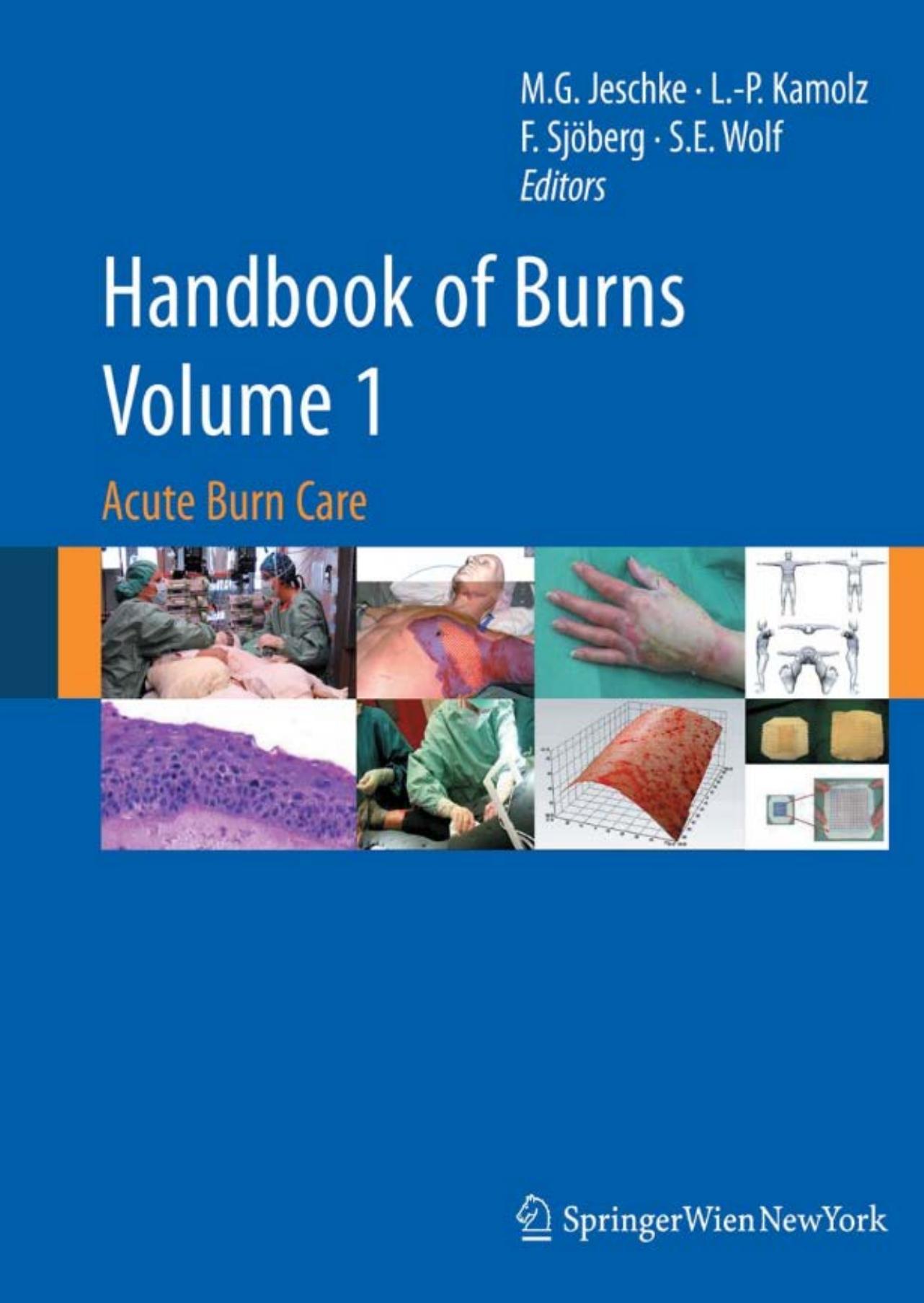
Handbook of Burns, Volume 1: Acute Burn Care 1st Edition – Ebook PDF Instant Download/Delivery: 3709103487, 9783709103487
Full download Handbook of Burns, Volume 1: Acute Burn Care 1st Edition after payment
Product details:
ISBN 10: 3709103487
ISBN 13: 9783709103487
Author: Acute Burn Care
This volume covers the entire spectrum of acute burn treatment. Individual chapters deal with basic aspects of different burn mechanisms as well as the acute care of burn patients. Pre-hospital management, critical care and basic concepts of burn surgery related to the acute phase, as well as the use of skin and skin substitutes in early stages of therapy are addressed in this volume. Chapters on supportive therapies such as optimizing nutrition and fluid homeostasis, infection control and treatment, respiratory support and pain management complete the comprehensive approach to the patient in this early stage of treatment, while chapters on epidemiology, prevention and disaster management enable the reader to evaluate the given information in a broader context.
Handbook of Burns, Volume 1 1st Table of contents:
- History, epidemiology, prevention and education
- A history of burn care
- “Black sheep in surgical wards”
- Toxaemia, plasmarrhea, or infection?
- The Guinea Pig Club
- Burns and sulfa drugs at Pearl Harbor
- The Cocoanut Grove fire of 1942, and beyond
- Burn center concept
- Shock and resuscitation
- Wound care and infection
- Burn surgery
- Inhalation injury and pulmonary care
- Nutrition and the “Universal Trauma Model”
- Rehabilitation
- Conclusions
- References
- Epidemiology and prevention of burns throughout the world
- Introduction
- Epidemiology
- The inequitable distribution of burns
- Cost of fires and burns
- Cost by age
- Cost by mechanism
- Limitations of data
- Risk factors
- Socioeconomic factors
- Race and ethnicity
- Age-related factors: children
- Age-related factors: the elderly
- Regional factors
- Gender-related factors
- Intent
- Comorbidity
- Agents
- Residential fires
- Non-electric domestic appliances
- War, mass casualties, and terrorism
- Interventions
- Smoke detectors
- Residential sprinklers
- Hot water temperature regulation
- Lamps and stoves
- Fireworks legislation
- Fire-safe cigarettes
- Children’s sleepwear
- Acid assaults
- Burns first aid treatment
- Burn care systems
- Role of the World Health Organization
- Conclusions and recommendations
- Surveillance
- Smoke alarms
- Transition away from open fires and kerosene appliances
- Gender inequality
- Community surveys
- Acknowledgements
- References
- Prevention of burn injuries
- Introduction
- Burns prevalence and relevance
- Burn injury risk factors
- WHO?
- WHERE?
- HOW?
- Burn prevention types
- Burn prevention: The basics to design a plan
- Target-specific burn prevention strategies
- Flame burns
- Prevention of scald burns
- Conclusions
- References
- Burns associated with wars and disasters
- Introduction
- Wartime burns
- Epidemiology of burns sustained during combat operations
- Fluid resuscitation and initial burn care in theater
- Evacuation of thermally-injured combat casualties
- Definitive management of burned casualties at USAISR
- Care of host-nation burn patients
- Disaster-related burns
- Epidemiology
- Treatment of disaster-related burns
- The American Burn Association (ABA) disaster management plan
- Summary
- References
- Education in burns
- Introduction
- Surgical education
- Background
- Simulation
- Education in the internet era
- Rotations as courses
- Mentorship
- Peer mentorship
- Hierarchical mentorship
- What is a mentor
- Implementation
- Interprofessional education
- What is interprofessional education
- Approaches to interprofessional education
- References
- European practice guidelines for burn care: Minimum level of burn care provision in Europe
- Foreword
- Background
- Introduction
- Burn injury and burn care in general
- Conclusion
- References
- Pre-hospital and initial management of burns
- Pre-hospital, fluid and early management, burn wound evaluation
- Introduction
- Modern care
- Early management
- At the accident
- At a local hospital – stabilization prior to transport to the Burn Center
- Transportation
- References
- Medical documentation of burn injuries
- Introduction
- Medical documentation of burn injuries
- Contents of an up-to-date burns registry
- Shortcomings in existing documentation systems designs
- Burn depth
- Classification of burn depth
- Classification based on healing time
- Burn depth as a dynamic process
- Non-clinical methods to classify burn depth
- Burn extent
- Basic principles of determining the burn extent
- Methods to determine burn extent
- Computer aided three-dimensional documentation systems
- Methods used by BurnCase 3D
- Creating a comparable international database
- Results
- Conclusion
- Financing and accomplishment
- References
- Pathophysiology of burn injury
- Introduction
- Local changes
- Burn depth
- Burn size
- Systemic changes
- Hypovolemia and rapid edema formation
- Altered cellular membranes and cellular edema
- Mediators of burn injury
- Hemodynamic consequences of acute burns
- Hypermetabolic response to burn injury
- Glucose metabolism
- Myocardial dysfunction
- Effects on the renal system
- Effects on the gastrointestinal system
- Effects on the immune system
- Summary and conclusion
- References
- Anesthesia for patients with acute burn injuries
- Introduction
- Preoperative evaluation
- Monitors
- Pharmacology
- Perioperative fluid management
- Postoperative care
- References
- Diagnosis and management of inhalation injury
- Introduction
- Effects of inhaled gases
- Carbon monoxide
- Cyanide toxicity
- Upper airway injury
- Lower airway injury
- Diagnosis
- Resuscitation after inhalation injury
- Other treatment issues
- Prognosis
- Conclusions
- References
- Respiratory management
- Airway management
- (a) Endotracheal intubation
- (b) Elective tracheostomy
- Chest escharotomy
- Bronchial hygiene and chest physio-therapy
- Inhaled heparin/N-acetylcystine (Heparin-NAC)
- Conventional mechanical ventilation
- Introduction
- Pathophysiological principles
- Low tidal volume and limited plateau pressure approaches
- Permissive hypercapnia
- The open-lung approach
- PEEP
- Lung recruitment maneuvers
- Unconventional mechanical ventilation strategies
- High-frequency percussive ventilation (HFPV)
- High-frequency oscillatory ventilation
- Airway pressure release ventilation (APRV)
- Ventilator associated pneumonia (VAP)
- (a) Prevention
- (b) Treatment
- References
- Acute burn care and therapy
- Organ responses and organ support
- Introduction
- Burn shock and resuscitation
- Post-burn hypermetabolism
- Individual organ systems
- Central nervous system
- Peripheral nervous system
- Pulmonary
- Cardiovascular
- Renal
- Gastrointestinal tract
- Conclusion
- References
- Critical care of thermally injured patient
- Introduction
- Oxidative stress and Inflammation
- Oxidative stress control strategies
- Fluid and cardiovascular management beyond 24 hours
- Other organ function/dysfunction and support
- The nervous system
- Respiratory system and inhalation injury
- Renal failure and renal replacement therapy
- Gastro-intestinal system
- Glucose control
- Endocrine changes
- Stress response (Fig. 2)
- Low T3 syndrome
- Gonadal depression
- Thermal regulation
- Metabolic modulation
- Propranolol
- Oxandrolone
- Recombinant human growth hormone
- Insulin
- Electrolyte disorders
- Sodium
- Chloride
- Calcium, phosphate and magnesium
- Calcium
- Bone demineralization and osteoporosis
- Micronutrients and antioxidants
- Thrombosis prophylaxis
- Conclusion
- References
- Treatment of infection in burns
- Introduction
- Clinical management strategies
- Pathophysiology of the burn wound
- Diagnosis and management of specific infections
- Burn wound infection
- Cellulitis
- Impetigo
- Catheter related infections
- Urinary tract infection
- Tracheobronchitis
- Pneumonia
- Sepsis in the burn patient
- The microbiology of burn wound infection
- Sources of organisms
- Gram-positive organisms
- Gram-negative organisms
- Infection control
- Pharmacological considerations in the treatment of burn infections
- Topical antimicrobial treatment
- Systemic antimicrobial treatment (Table 3)
- Gram-positive bacterial infections
- Enterococcal bacterial infections
- Gram-negative bacterial infections
- Treatment of yeast and fungal infections
- The Polyenes (Amphotericin B)
- Azole antifungals
- Echinocandin antifungals
- Nucleoside analog antifungal (Flucytosine)
- Conclusion
- References
- Acute treatment of severely burned pediatric patients
- Introduction
- Initial management of the burned child
- Fluid resuscitation
- Sepsis
- Inhalation injury
- Burn wound excision
- Burn wound coverage
- Metabolic response and nutritional support
- Modulation of the hormonal and endocrine response
- Recombinant human growth hormone
- Insulin-like growth factor
- Oxandrolone
- Propranolol
- Glucose control
- Insulin
- Metformin
- Novel therapeutic options
- Long-term responses
- Conclusion
- References
- Adult burn management
- Introduction
- Epidemiology and aetiology
- Classification
- Pathophysiology
- Assessment of the burn wound
- Depth of burn
- Size of the burn
- Initial management of the burn wound
- First aid
- Burn blisters
- Escharotomy
- General care of the adult burn patient
- Superficial partial thickness wound
- Biological/Semi biological dressings
- Topical antimicrobials
- Biological dressings
- Other dressings
- Exposure
- Deep partial thickness wound
- Total wound excision
- Serial wound excision and conservative management
- Full thickness burns
- Excision and autografting
- Topical antimicrobials
- Large full thickness burns
- Serial excision
- Mixed depth burn
- Donor sites
- Techniques of wound excision
- Blood loss
- Antibiotics
- Anatomical considerations
- Skin replacement
- Autograft
- Allograft
- IntegraR
- MatridermR
- Other skin replacements
- Cultured skin substitutes
- Skin graft take
- Rehabilitation and outcome
- Future care
- References
- Burns in older adults
- Introduction
- Burn injury epidemiology
- Pathophysiologic changes and implications for burn therapy
- Aging
- Comorbidities
- Acute management challenges
- Fluid resuscitation
- Burn excision
- Pain and sedation
- End of life decisions
- Summary of key points and recommendations
- References
- Acute management of facial burns
- Introduction
- Anatomy and pathophysiology
- Management
- General approach
- Airway management
- Facial burn wound management
- Initial wound care
- Topical agents
- Biological dressings
- Surgical burn wound excision of the face
- Wound closure
- Special areas and adjacent of the face
- Eyelids
- Nose and ears
- Lips
- Scalp
- The neck
- Catastrophic injury
- Post healing rehabilitation and scar management
- Outcome and reconstruction
- Summary
- References
- Hand burns
- Introduction
- Initial evaluation and history
- Initial wound management
- Escharotomy and fasciotomy
- Surgical management: Early excision and grafting
- Tissue flaps
- Skin substitutes
- Amputation
- Hand therapy
- Secondary reconstruction
- References
- Treatment of burns – established and novel technology
- Introduction
- Partial thickness burns
- Synthetic and bio-synthetic membranes – biobrane,awbat, suprathel
- Biological membranes – amnion and others
- Xenograft
- Full thickness burns
- Dermal analogs
- Keratinocyte coverage
- Facial transplantation
- Tissue engineering and stem cells
- Gene therapy and growth factors
- Conclusion
- References
- Wound healing
- History of wound care
- Types of wounds
- Mechanisms of wound healing
- Hemostasis
- Inflammation
- Proliferation
- Epithelialization
- Remodeling
- Fetal wound healing
- Stem cells
- Abnormal wound healing
- Impaired wound healing
- Hypertrophic scars and keloids
- Chronic non-healing wounds
- Conclusions
- References
- Pain management after burn trauma
- Introduction
- Significance of pain management
- Pathophysiology of pain after burn injuries
- Nociceptive pain
- Inflammation-related pain
- Neuropathic pain
- Sympathetically Maintained Pain (SMP)
- Pain rating and documentation
- Pain management and analgesics
- Pharmacokinetics in severe burns
People also search for Handbook of Burns Volume 1 1st:
handbook of burns
acute burn care handbook
burn injury management book
burn surgery reference
critical care burns
Tags: Handbook, Burns, Volume, Acute Burn Care