

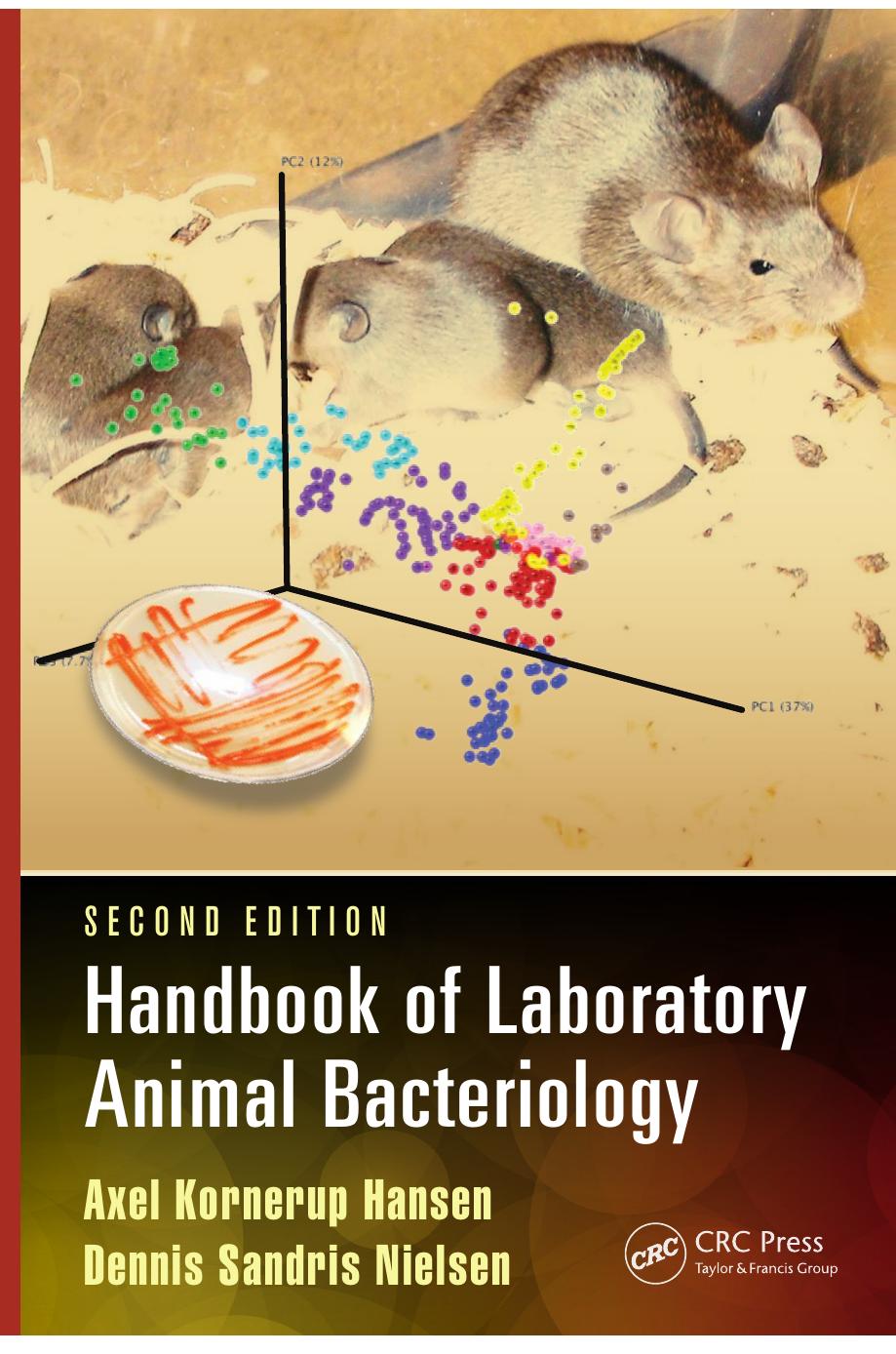
Handbook of Laboratory Animal Bacteriology 2nd edition by Axel Kornerup Hansen – Ebook PDF Instant Download/Delivery: 036765895X, 978-0367658953
Full download Handbook of Laboratory Animal Bacteriology 2nd edition after payment
Product details:
ISBN 10: 036765895X
ISBN 13: 978-0367658953
Author: Axel Kornerup Hansen
The Handbook of Laboratory Animal Bacteriology, Second Edition provides comprehensive information on all bacterial phylae found in laboratory rodents and rabbits to assist managers, veterinary pathologists and laboratory animal veterinarians in the management of these organisms. The book starts by examining the general aspects of bacteriology and how to sample and identify bacteria in animals. It then describes the most relevant species within each phylum and discusses the impact they may have on research. Emphasizing those bacteria known to interfere with research protocols, the book offers methods for isolation and differentiation among related bacteria. It discusses where to purchase reagents for rodent bacteriology and outlines standards for safety in a bacteriological laboratory.
Handbook of Laboratory Animal Bacteriology 2nd Table of contents:
Chapter 1 Laboratory animal bacteriology
1.1 Foundation of the discipline of bacteriology
1.2 The need for securing the absence of zoonoses
1.3 Eradication of bacterial pathogens
1.3.1 The early age of laboratory animal pathology
1.3.2 Specific pathogen- free animal breeding and health monitoring
1.3.3 New agents with a research- interfering potential
1.3.4 The development of health monitoring
1.4 The impact of the symbiotic microbiota
1.4.1 The development of gnotobiotechnology
1.4.2 Schaedler’s flora
1.4.3 Microbiome studies
1.5 The future of laboratory animal bacteriology
References
Chapter 2 Sampling animals for bacteriological examination
2.1 Examining healthy animals
2.1.1 Sampling strategies
2.1.1.1 Random sampling
2.1.1.2 Calculation of the sample size
2.1.2 Sampling frequency
2.1.3 Defining the microbiological entity
2.2 Characterization of the commensal microbiota
2.3 Sampling procedures
2.3.1 Planning the work
2.3.2 Euthanasia
2.3.3 Blood sampling
2.3.4 Instruments and sterilizing procedures during sampling
2.3.5 Opening and inspecting the carcass
2.3.6 Sampling from various organs
2.3.7 Sampling from diseased animals
2.3.8 Sampling from live animals
2.3.8.1 Sampling from the gut
2.3.8.2 Sampling from the respiratory pathways
References
Chapter 3 Cultivation and identification of bacteria
3.1 The basic steps in cultivation
3.2 The choice of media
3.3 Incubation of media
3.4 Isolation of bacteria
3.5 Initial characterization of the isolates
3.6 Conclusive identification
3.6.1 Specific techniques used for identification of bacteria
3.6.1.1 Gram- stainability tests
3.6.1.2 Other methods used for describing the shape of bacteria
3.6.1.3 Motility tests
3.6.1.4 Test for aerobic and anaerobic growth
3.6.1.5 Catalase test
3.6.1.6 Cytochrome oxidase test
3.6.1.7 Acid- fast or spore staining
3.6.1.8 Carbohydrate fermentation and utilization assays
3.6.1.9 Disk methods
3.6.1.10 Commercial test kits
3.7 Molecular biology- based methods for rapid identification of microorganisms
3.7.1 Extraction of DNA
3.7.2 Grouping by repetitive DNA element PCR
3.7.3 Identification by ribosomal RNA gene sequencing
References
Chapter 4 Immunological methods
4.1 Antigens and antibodies
4.2 Agglutination
4.3 Immunofluorescence techniques
4.3.1 Diagnosing the presence of bacteria in a sample
4.3.2 The immunofluorescence assay
4.4 Immunoenzymatic staining
4.5 Enzyme- linked immunosorbent assay
4.5.1 Principles
4.5.2 The microtiter plates
4.5.3 The antigen
4.5.4 Antibodies, enzymes, and substrates
4.5.5 Coating the wells
4.5.6 Blocking the wells
4.5.7 Performing the assay
4.5.8 Control sera
4.5.9 Interpretation of the OD value
4.6 Immunoblotting
4.7 Multiplex
References
Chapter 5 Molecular biology- based methods for microbiota characterization
5.1 Why molecular biology- based methods?
5.2 RNA and DNA storage and extraction
5.3 Denaturing and temperature gradient gel electrophoresis
5.4 Terminal restriction fragment length polymorphism analysis
5.5 Clone library analysis
5.6 High- throughput sequencing
5.7 Quantitative real- time PCR
References
Chapter 6 Mechanisms behind bacterial impact on animal models
6.1 Mechanisms of pathogenicity and research interference from specific bacteria
6.1.1 Pathogenicity versus research interference
6.1.2 Epidemiological terms
6.1.3 Host– bacterial interaction influencing pathogenicity and research interference
6.1.3.1 Adhesins and receptors
6.1.3.2 Toxins
6.1.4 Host– environment interaction influencing pathogenicity and research interference
6.2 Mechanisms of pathogenicity and research interference from the commensal gut microbiota
6.2.1 Host– microbial interactions within immunity
6.2.1.1 Interactions within acquired immunity
6.2.1.2 Interactions within innate immunity
6.2.2 Host– microbial interactions within metabolism
References
Chapter 7 Systematic classification of bacteria
7.1 Domains of life
7.1.1 Operational taxonomic units
7.1.2 Members of the mice and rat microbiome
References
Chapter 8 Firmicutes
8.1 Introduction
8.2 Streptococcaceae
8.2.1 Impact on the host
8.2.1.1 Lancefield’s groups A, B, C, and G
8.2.1.2 Streptococcus pneumoniae
8.2.1.3 Lancefield’s group D
8.2.1.4 Lactococcus spp.
8.2.1.5 Gemella
8.2.2 Characteristics of the agent
8.3 Enterococcaceae
8.4 Aerococcaceae
8.5 Lactobacillaceae
8.6 Leuconostaceae
8.7 Staphylococcaceae
8.7.1 Impact on the host
8.7.2 Characteristics of the agent
8.8 Bacillaceae
8.8.1 Impact on the host
8.8.2 Characteristics of the agent
8.9 Listeriaceae
8.9.1 Impact on the host
8.9.2 Characteristics of the agent
8.10 Erysipelotrichidae
8.11 Clostridiaceae
8.11.1 Impact on the host
8.11.1.1 Clostridium difficile and C. perfringens
8.11.1.2 Clostridium spiroforme
8.11.1.3 Clostridium piliforme
8.11.1.4 Segmented filamentous bacteria (Candidatus savagella)
8.11.1.5 Faecalibacterium prausnitzii
8.11.2 Characteristics of the agent
8.11.2.1 Clostridium difficile and C. perfringens
8.11.2.2 Clostridium spiroforme
8.11.2.3 Clostridium piliforme
8.11.2.4 Segmented filamentous bacteria
8.12 Lachnospiraceae
8.13 Eubacteriaceae
8.14 Ruminococcaceae
References
Chapter 9 Bacteroidetes
9.1 Introduction
9.2 Bacteroidales
9.2.1 Bacteroidaceae
9.2.1.1 Impact on the host
9.2.1.2 Characteristics of the agent
9.2.2 S24-7
9.2.3 Prevotellaceae
9.2.3.1 Impact on the host
9.2.3.2 Characteristics of the agent
9.2.4 Rikenellaceae
9.2.5 Porphyromonadaceae
9.3 Flavobacteriales
9.4 Sphingobacteriales
9.4.1 Cilia- associated respiratory bacillus
9.4.1.1 Impact on the host
9.4.1.2 Characteristics of the agent
References
Chapter 10 Proteobacteria
10.1 Gammaproteobacteria
10.1.1 Enterobacteriaceae
10.1.1.1 Impact on the host
10.1.1.2 Characteristics of the agent
10.1.2 Pasteurellaceae
10.1.2.1 Impact on the host
10.1.2.2 Characteristics of the agent
10.1.3 Pseudomonadacea
10.1.3.1 Pseudomonas
10.1.4 Francisellaceae
10.1.4.1 Francisella
10.1.5 Aeromonadaceae, Xanthomonadaceae, Sphingomonadaceae, and Moraxcellaceae
10.2 Betaproteobacteria
10.2.1 Alcaligenaceae
10.2.1.1 Bordetella
10.2.2 Spirillaceae
10.2.2.1 Spirillum minus
10.3 Epsilonproteobacteria
10.3.1 Campylobacteraceae
10.3.1.1 Campylobacter
10.3.2 Helicobacteraceae
10.3.2.1 Helicobacter
10.3.2.2 Rabbit- associated cilia- associated respiratory bacillus
10.4 Alphaproteobacteria
References
Chapter 11 Actinobacteria
11.1 Introduction
11.2 Micrococcaceae
11.3 Corynebacteriaceae
11.3.1 Characteristics of infection
11.3.2 Characteristics of the agent
11.4 Actinomycetaceae
11.4.1 Actinomyces
11.4.2 Arcanobacterium
11.5 Mycobacteriaceae
11.5.1 Characteristics of infection
11.5.2 Characteristics of the agent
11.6 Bifidobacteriaceae
References
Chapter 12 Spirochaetae
12.1 Introduction
12.2 Treponema
12.2.1 Impact on the host
12.2.2 Characteristics of the agent
12.3 Brachyspira
12.4 Leptospira
12.4.1 Impact on the host
12.4.2 Characteristics of the agent
References
Chapter 13 Tenericutes
13.1 Introduction
13.2 Mycoplasma
13.2.1 Impact on the host
13.2.2 Characteristics of the agent
13.3 Acholeplasma
References
Chapter 14 Verrucomicrobia, Deferribacteres, Fusobacterium, and TM7
14.1 Verrucomicrobia
14.1.1 Akkermansia
14.1.1.1 Impact on the host
14.1.1.2 Characteristics of the agent
14.2 Deferribacteres
14.2.1 Mucispirillum schaedleri
14.2.1.1 Impact on the host
14.2.1.2 Characteristics of the agent
14.3 Fusobacteria
14.3.1 Fusobacterium necrophorum
14.3.1.1 Impact on the host
14.3.1.2 Characteristics of the agent
14.3.2 Streptobacillus moniliformis
14.3.2.1 Impact on the host
14.3.2.2 Characteristics of the agent
14.4 Candidate phylum TM7
People also search for Handbook of Laboratory Animal Bacteriology 2nd:
laboratory animal handbook
handbook of laboratory and diagnostic tests pdf
handbook of laboratory health and safety
handbook of laboratory and diagnostic tests
handbook of antimicrobial therapy for small animals