


Handbook of Molecular Imprinting Advanced Sensor Applications 1st edition by Seung Woo Lee, Toyoki Kunitake – Ebook PDF Instant Download/Delivery: 9814316652, 978-9814316651
Full download Handbook of Molecular Imprinting Advanced Sensor Applications 1st edition after payment
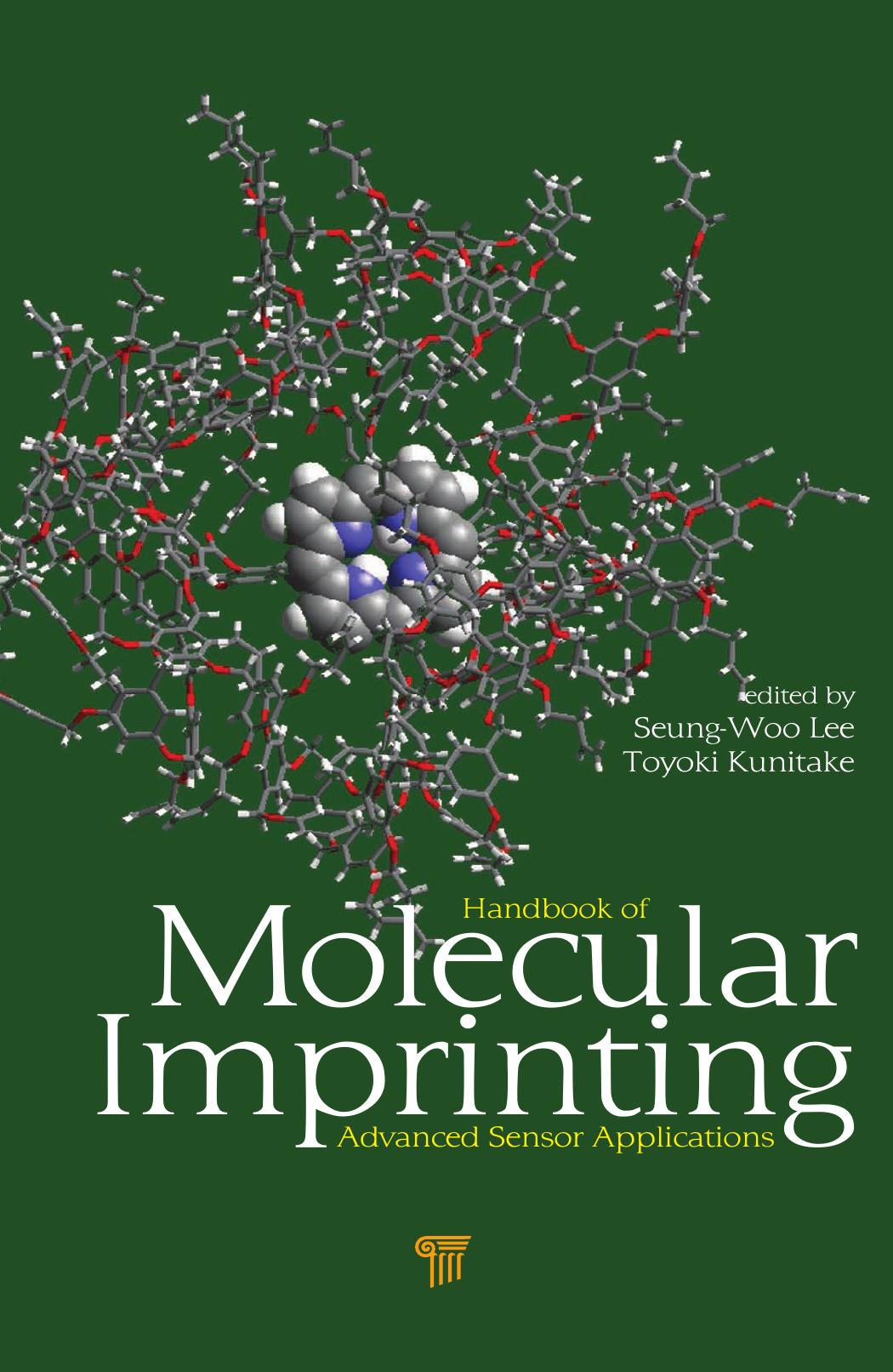
Product details:
ISBN 10: 9814316652
ISBN 13: 978-9814316651
Author: Seung Woo Lee, Toyoki Kunitake
Molecular imprinting focuses on the fabrication of an artificial receptor with perfect molecular recognition abilities. It has attracted a great deal of scientific attention because of the enormous opportunities it opens in the fields of separation, catalysis, and analysis. The advantages of the molecular imprinting enable to target a wide class of substances ranging from small molecules to big conglomerates, such as proteins or even cells. In recent years, sensor applications based on molecular imprinting have started to attract greater attention because of the easy creation of robust receptor sites with high specificity and sensitivity toward a target compound.
A collection of contributions from distinguised experts, Handbook of Molecular Imprinting: Advanced Sensor Applications provides a comprehensive overview on the specific challenges of molecular imprinting in sensor applications. It covers various molecular imprinting approaches. As a result, a perspective of future device ensembles for sensing is acquired. The text lays particular emphasis on fundamental aspects as well as novel ideas in the context of sensor applications. It also highlights the operation principles of various sensor transducers that are generally employed in combination with molecular imprinting recognition elements.
Handbook of Molecular Imprinting Advanced Sensor Applications 1st Table of contents:
Part 1: Fundamentals of Molecular Imprinting and Sensor Applications
1. Fundamentals and Perspectives of Molecular Imprinting in Sensor Applications
2. Molecularly Imprinted Optical Sensing Receptor
3. Translational Applications of Molecularly Imprinted Polymer-Based Electrochemical Sensors
4. Optical Sensors for MonitoringTrace Inorganic Toxins
5. MIP Thermistor
Part 2: Potential Materials for Molecular Imprinting
6. The Use of a Thermally Reversible Bond for Molecular Imprinting
7. Molecular-Sieving Silica/Tin Oxide Sensor Prepared by Chemical Vapor Deposition in the Presence o
8. Environmental Approaches by Molecular Imprinting on Titanium Dioxide
Part 3: MIP Sensors for Environmentaland Trace Detection
9. Molecularly Imprinted Nanocomposites for Highly Sensitive SPR Detection
10. Molecularly Imprinted Room Temperature Phosphorescent Optosensors for Environmental Pollutants
11. Electrochemical Sensing of Nitroaromatic Compounds in Natural Waters and Soil Samples
12. Trace Detection Based on Cyclodextrin Anchored Molecularly Imprinted TiO2 Thin Films
13. Molecularly Imprinted Au Nanoparticle Composites and Their Application for Sensing, Controlled R
Part 4: Bio-Medical Applications of MIP Sensors
14. Protein-Sensing Using Organic/Inorganic Hybrid Materials Prepared by Liquid-Phase Deposition-Bas
15. Molecular Imprinted Polymer-Based Chemiluminescence Sensors
16. Detection of Cells and Viruses Using Synthetic Antibodies
Part 5: MIP Market and Prospects
17. Molecularly Imprinted Polymers: Science Goes Market? A Market Analysis Based on the Patent S
People also search for Handbook of Molecular Imprinting Advanced Sensor Applications 1st:
handbook of single molecule biophysics
handbook of molecular biophysics
handbook of epigenetics the new molecular and medical genetics
handbook of biochemistry and molecular biology
handbook of milk composition
Tags: Seung Woo Lee, Toyoki Kunitake, Molecular Imprinting, Sensor Applications