


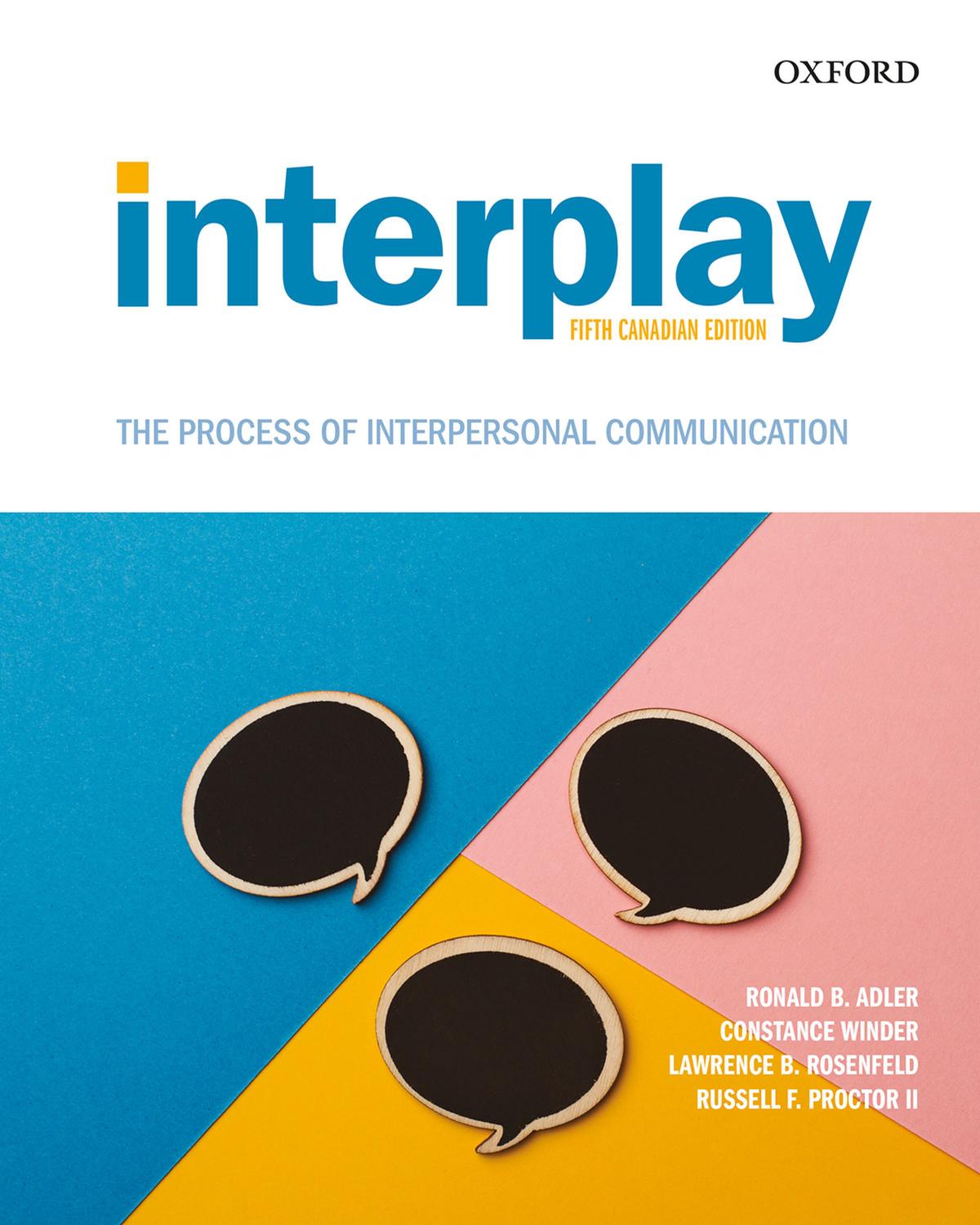
Interplay 5th edition by Ronald Adler, Constance Winder, Lawrence Rosenfeld, Russell Proctor ISBN 0199033471 978-0199033478
Original price was: $70.00.$50.00Current price is: $50.00.
Instant download Interplay The Process of Interpersonal Communication Fifth 5th Canadian Edition By Ronald B. Adler after payment
Interplay 5th edition by Ronald Adler, Constance Winder, Lawrence Rosenfeld, Russell Proctor – Ebook PDF Instant Download/Delivery: 0199033471 , 978-0199033478
Full download Interplay 5th edition after payment
Product details:
ISBN 10: 0199033471
ISBN 13: 978-0199033478
Author: Ronald Adler, Constance Winder, Lawrence Rosenfeld, Russell Proctor
The outstanding scholarship instructors want. The practical insights students need. This market-leading text provides students with a solid foundation for effective interpersonal communication with an emphasis on Canadian cultures, values, and identities. By showing how to apply communication skills in a variety of situations and cultural settings, Interplay prepares students to become effective communicators in both their personal and professional lives.
Interplay 5th Table of contents:
PART ONE: Foundations of Interpersonal Communication
1 Interpersonal Process
Why We Communicate
Physical Needs
Identity Needs
Social Needs
Practical Needs
The Communication Process
A Model of Communication
Insights from the Transactional Communication Model
Communication Principles
The Nature of Interpersonal Communication
Quantitative and Qualitative Definitions
Personal and Impersonal Communication: A Matter of Balance
Communication Misconceptions
Interpersonal Communication and Technology
Characteristics of Computer-Mediated Communication
Interpersonal Communication and Cultural Diversity
Culture
Intercultural Communication
Interpersonal and Intercultural Communication
Comparison of Canadian and US Culture
Attitudes toward Violence
Acceptance of Diversity
Relative Status of Men and Women
Communication Competence
Communication Competence Defined and Described
Characteristics of Competent Communication
SUMMARY
MULTIPLE-CHOICE QUESTIONS
ACTIVITIES
DISCUSSION QUESTIONS
JOURNAL IDEAS
2 Communication and the Self
Communication and the Self-Concept
How the Self-Concept Develops
Self-Concept Development in Context
Characteristics of the Self-Concept
The Self-Fulfilling Prophecy and Communication
Presenting the Self: Communication as Impression Management
Public and Private Selves
Characteristics of Impression Management
Why Manage Impressions?
How Do We Manage Impressions?
Identity Management and Honesty
Disclosing the Self
Self-Disclosure Factors
Models of Self-Disclosure
Benefits and Risks of Self-Disclosure
Alternatives to Self-Disclosure
Silence and Secrecy
Lying
Equivocation
Hinting
The Ethics of Evasion
Guidelines for Self-Disclosure
Is the Other Person Important to You?
Is the Risk of Disclosing Reasonable?
Is the Self-Disclosure Appropriate?
Is the Disclosure Reciprocated?
Will the Effect Be Constructive?
SUMMARY
MULTIPLE-CHOICE QUESTIONS
ACTIVITIES
DISCUSSION QUESTIONS
JOURNAL IDEAS
3 Perceiving Others
The Perception Process
Reality Is Constructed
Steps in the Perception Process
Influences on Perception
Access to Information
Physiological Influences
Psychological Influences
Social Influences
Cultural Influences
Common Tendencies in Perception
We Make Snap Judgments
We Cling to First Impressions
We Judge Ourselves More Charitably than We Do Others
We Are Influenced by Our Expectations
We Are Influenced by the Obvious
We Assume Others Are Similar to Us
Perceiving Others More Accurately
Perception Checking
Building Empathy
SUMMARY
MULTIPLE-CHOICE QUESTIONS
ACTIVITIES
DISCUSSION QUESTIONS
JOURNAL IDEAS
4 Emotions
What Are Emotions?
Physiological Changes
Cognitive Interpretations
Outward Expression
Influences on Emotional Expression
Personality
Culture
Gender
Social Conventions and Roles
Social Media
Emotional Contagion
Expressing Emotions Effectively
Recognize Your Feelings
Choose the Best Language
Share Multiple Feelings
Recognize the Difference between Feeling and Acting
Accept Responsibility for Your Feelings
Choose the Best Time and Place to Express Your Feelings
Managing Emotions
Facilitative and Debilitative Emotions
Thoughts as a Cause of Feelings
Irrational Thinking and Debilitative Emotions
Minimizing Debilitative Emotions
Maximizing Facilitative Emotions
SUMMARY
MULTIPLE-CHOICE QUESTIONS
ACTIVITIES
DISCUSSION QUESTIONS
JOURNAL IDEAS
PART TWO: Creating and Responding to Messages
5 Listening
The Nature of Listening
The Importance of Listening
Listening Defined
Listening Styles
The Challenge of Listening
Recognizing Barriers to Listening
Avoiding Poor Listening Habits
Components of Listening
Hearing
Attending
Understanding
Remembering
Responding
Types of Listening Responses
Silent Listening
Questioning
Paraphrasing
Empathizing
Supporting
Analyzing
Evaluating
Advising
Which Style to Use?
SUMMARY
MULTIPLE-CHOICE QUESTIONS
ACTIVITIES
DISCUSSION QUESTIONS
JOURNAL IDEAS
6 Language
The Nature of Language
Language Is Symbolic
Language Is Governed by Rules
Language Is Subjective
Language and Worldview
The Influence of Language
Naming and Identity
Credibility and Status
Affiliation
Power and Politeness
Sexism
Sexual Orientation
Racism
Uses (and Abuses) of Language
Precision and Vagueness
The Language of Responsibility
Culture and Language
High- versus Low-context Cultures
Verbal Communication Styles
Code-Switching
Gender and Language
Extent of Gender Differences
Online Language and Gender
Non-Gender Influences on Language Use
SUMMARY
MULTIPLE-CHOICE QUESTIONS
ACTIVITIES
DISCUSSION QUESTIONS
JOURNAL IDEAS
7 Non-verbal Communication
Non-verbal Communication Defined
Characteristics of Non-verbal Communication
Non-verbal Communication Is Always Occurring
Non-verbal Communication Is Primarily Relational
Non-verbal Communication Is Ambiguous
Non-verbal Communication Occurs in Mediated Messages
Non-verbal Communication Is Influenced by Culture and Gender
Functions of Non-verbal Communication
Creating and Maintaining Relationships
Regulating Interaction
Influencing Others
Influencing Ourselves
Concealing/Deceiving
Types of Non-verbal Communication
Body Movement
Touch
Voice
Distance
Territoriality
Time
Physical Attractiveness
Clothing
Physical Environment
SUMMARY
MULTIPLE-CHOICE QUESTIONS
ACTIVITIES
DISCUSSION QUESTIONS
JOURNAL IDEAS
PART THREE: Dimensions of Interpersonal Relationships
8 Dynamics of Interpersonal Relationships
Why We Form Relationships
Appearance
Similarity
Complementarity
Rewards
Competence
Proximity
Disclosure
Intimacy and Distance in Relationships
Forms of Intimacy
Forms of Distance
The Influence of Culture and Gender on Intimacy
Models of Relational Dynamics
Stages of Relational Development
Dialectical Tensions in Relationships
Characteristics of Relational Development
Communicating about Relationships
Content and Relational Messages
Maintaining and Supporting Relationships
Repairing Damaged Relationships
SUMMARY
MULTIPLE-CHOICE QUESTIONS
ACTIVITIES
DISCUSSION QUESTIONS
JOURNAL IDEAS
9 Communication Climate
What Is Communication Climate?
How Communication Climates Develop
Levels of Message Confirmation
Causes and Effects of Defensiveness
Climate Patterns
Creating Supportive Climates
Evaluation versus Description
Controlling Communication versus Problem Orientation
Strategy versus Spontaneity
Neutrality versus Empathy
Superiority versus Equality
Certainty versus Provisionalism
Invitational Communication
The Language of Choice
Responding Non-defensively to Criticism
SUMMARY
MULTIPLE-CHOICE QUESTIONS
ACTIVITIES
DISCUSSION QUESTIONS
JOURNAL IDEAS
10 Managing Conflict
What Is Conflict?
Expressed Struggle
Interdependence
Perceived Incompatible Goals
Perceived Scarce Resources
Inevitability
Conflict Styles
Avoidance (Lose–Lose)
Accommodation (Lose–Win)
Competition (Win–Lose)
Compromise
Collaboration (Win–Win)
Which Style to Use?
Conflict in Relational Systems
Complementary and Symmetrical Conflict
Serial Arguments
Toxic Conflict: “The Four Horsemen”
Conflict Rituals
Variables in Conflict Styles
Gender
Culture
Conflict Management in Practice
Steps for the Win–Win Approach
SUMMARY
MULTIPLE-CHOICE QUESTIONS
ACTIVITIES
DISCUSSION QUESTIONS
JOURNAL IDEAS
PART FOUR: Contexts of Interpersonal Communication
11 Communication in Close Relationships: Friends, Family, and Romantic Partners
Communication in Friendships
Types of Friendships
Friendships, Gender, and Communication
Friendship and Social Media
Communication in Successful Friendships
Communication in the Family
Creating the Family through Communication
Patterns of Family Communication
Families as Communication Systems
Effective Communication in Families
Communication in Romantic Relationships
Characteristics of Romantic Relationships
Effective Communication in Romantic Relationships
SUMMARY
MULTIPLE-CHOICE QUESTIONS
ACTIVITIES
DISCUSSION QUESTIONS
JOURNAL IDEAS
12 Work, Group, and Team Communication
Communicating in Organizations
Formal Communication
Informal Communication
Relationships in Work Groups and Teams
Characteristics of Groups and Teams
Personal Skills in Work Groups and Teams
Group Cultures
Face-to-Face and Mediated Relationships
Leadership, Power, and Influence in Working Groups
Types of Leadership
Types of Power
Leadership that Supports Diversity and Inclusion
Advancing Your Career
Networking
Interviewing
SUMMARY
MULTIPLE-CHOICE QUESTIONS
ACTIVITIES
DISCUSSION QUESTIONS
JOURNAL IDEAS
Glossary
References
Name index
Subject Index
People also search for Interplay 5th:
adler interplay the process of interpersonal communication
adler interplay the process of interpersonal communication 15th edition
interplay the process of interpersonal communication 16th edition pdf
borrow interplay the process of interpersonal communication
interplay the process of interpersonal communication 16th edition
Tags: Ronald Adler, Constance Winder, Lawrence Rosenfeld, Russell Proctor, Interplay