


Introducing Phonology 2nd Edition by David Odden – Ebook PDF Instant Download/Delivery: 1107627974 , 978-1107627970
Full download Introducing Phonology 2nd edition after payment
Product details:
ISBN 10: 1107627974
ISBN 13: 978-1107627970
Author: David Odden
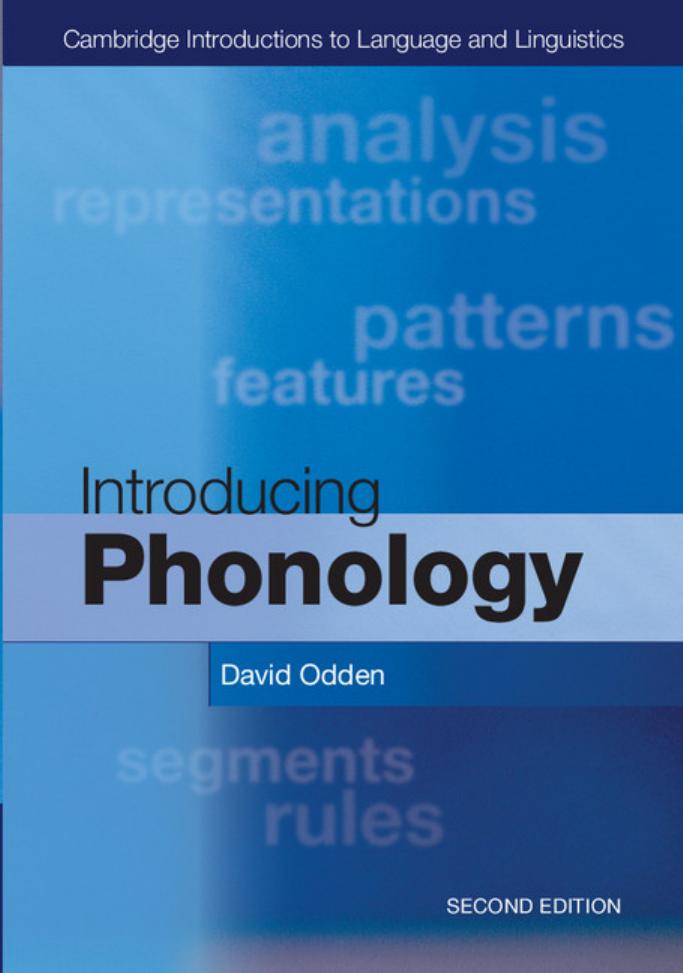
Designed for students with only a basic knowledge of linguistics, this leading textbook provides a clear and practical introduction to phonology, the study of sound patterns in language. It teaches in a step-by-step fashion the logical techniques of phonological analysis and the fundamental theories that underpin it. This thoroughly revised and updated edition teaches students how to analyze phonological data, how to think critically about data, how to formulate rules and hypotheses, and how to test them. New to this edition: • Improved examples, over 60 exercises and 14 new problem sets from a wide variety of languages encourage students to practise their own analysis of phonological processes and patterns • A new and updated reference list of phonetic symbols and an updated transcription system, making data more accessible to students • Additional online material includes pedagogical suggestions and password-protected answer keys for instructors
Introducing Phonology 2nd Table of contents:
1 What is phonology?
1.1 Phonetics – the manifestation of language sound
1.2 Phonology: the symbolic perspective on sound
Summary
Exercises
Suggestions for further reading
2 Allophonic relations
2.1 English consonantal allophones
2.2 Allophony in other languages
Summary
Exercises
Suggestions for further reading
3 Feature theory
3.1 Scientific questions about speech sounds
3.2 Distinctive feature theory
3.3 Features and classes of segments
3.4 Possible phonemes and rules – an answer
3.5 The formulation of phonological rules
3.6 Changing the theory
Summary
Exercises
Suggestions for further reading
4 Underlying representations
4.1 The importance of correct underlying forms
4.2 Refining the concept of underlying form
4.3 Finding the underlying form
4.4 Practice at problem solving
4.5 Underlying forms and sentence-level phonology
4.6 Underlying forms and multiple columns in the paradigm
Summary
Exercises
Suggestions for further reading
5 Interacting processes
5.1 Separating the effects of different rules
5.2 Different effects of rule ordering
Summary
Exercises
Suggestions for further reading
6 Doing an analysis
6.1 Yawelmani
6.2 Hehe
6.3 Fore
6.4 Modern Hebrew
6.5 Japanese
Summary
Exercises
Suggestions for further reading
7 Phonological typology and naturalness
7.1 Inventories
7.2 Segmental processes
7.3 Prosodically based processes
7.4 Why do things happen?
Summary
Suggestions for further reading
8 Abstractness and psychological reality
8.1 Why limit abstractness?
8.2 Independent evidence: historical restructuring
8.3 Well-motivated abstractness
8.4 Grammar-external evidence for abstractness
8.5 How abstract is phonology?
Exercises
Suggestions for further reading
9 Nonlinear representations
9.1 The autosegmental theory of tone: the beginnings of a change
9.2 Extension to the segmental domain
9.3 Suprasegmental structure
People also search for Introducing Phonology 2nd:
introducing phonology 2nd edition pdf
introducing phonology pdf
introducing phonology odden answer key
introducing phonology david odden solutions
introduction to phonology
Tags: David Odden, Introducing Phonology