


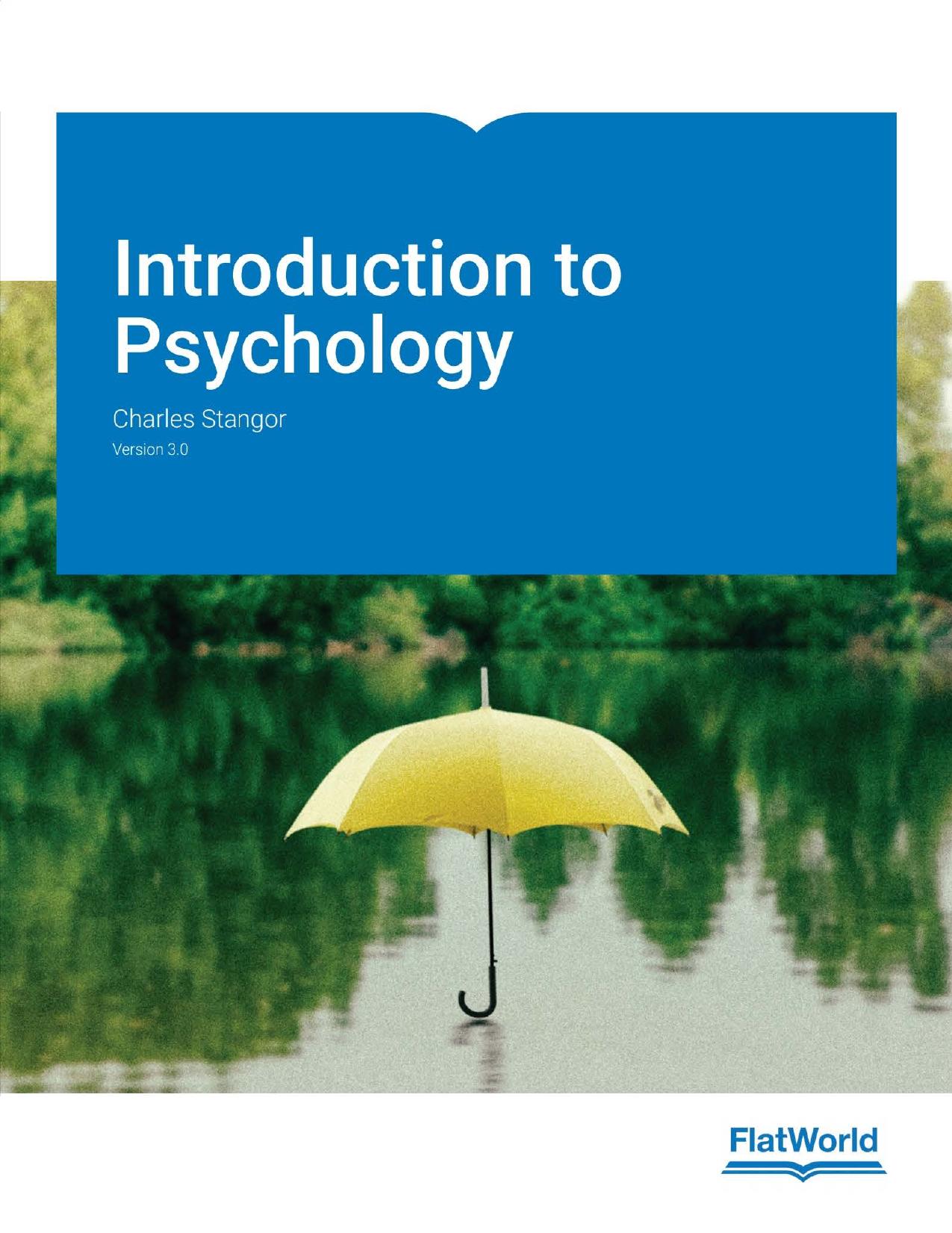
Introduction to Psychology Version 3.0 1st edition By Charles Stangor – Ebook PDF Instant Download/Delivery: 1453387245, 978-1453387245
Full download Introduction to Psychology Version 3.0 1st edition after payment
Product details:
ISBN 10: 1453387245
ISBN 13: 978-1453387245
Author: Charles Stangor
Introduction to Psychology is a concise and conceptual introduction to the fascinating subject of psychology. Featuring a central theme of action—predicting our own actions and those around us–this book grabs students’ attention and does not let go. A strong underlying secondary theme of empiricism unifies the narrative under the umbrella of psychology as a science. Its standard, fifteen-chapter organization makes this textbook an ideal choice for a typical semester- or quarter-long course.
Introduction to Psychology Version 3.0 1st Table of contents:
About the Author
Acknowledgments
Preface
Chapter 1: Introducing Psychology
1.1 Psychology as a Science
1.2 The Evolution of Psychology: History, Approaches, and Questions
1.3 Chapter Summary
Chapter 2: Psychological Science
2.1 Psychologists Use the Scientific Method to Guide Their Research
2.2 Psychologists Use Descriptive, Correlational, and Experimental Research Designs to Understand Behavior
2.3 You Can Be an Informed Consumer of Psychological Research
2.4 Chapter Summary
Chapter 3: Brains, Bodies, and Behavior
3.1 The Neuron Is the Building Block of the Nervous System
3.2 Our Brains Control Our Thoughts, Feelings, and Behavior
3.3 Psychologists Study the Brain Using Many Different Methods
3.4 Putting It All Together: The Nervous System and the Endocrine System
3.5 Chapter Summary
Chapter 4: Sensing and Perceiving
4.1 We Experience Our World Through Sensation
4.2 Seeing
4.3 Hearing
4.4 Tasting, Smelling, and Touching
4.5 Accuracy and Inaccuracy in Perception
4.6 Chapter Summary
Chapter 5: Consciousness, Body Rhythms, and Mental States
5.1 Sleeping and Dreaming Revitalize Us for Action
5.2 Altering Consciousness With Psychoactive Drugs
5.3 Altering Consciousness Without Drugs
5.4 Chapter Summary
Chapter 6: Growing and Developing Across the Lifespan
6.1 Conception and Prenatal Development
6.2 Infancy and Childhood: Exploring and Learning
6.3 Adolescence: Developing Independence and Identity
6.4 Early and Middle Adulthood: Building Effective Lives
6.5 Late Adulthood: Aging, Retiring, and Bereavement
6.6 Chapter Summary
Chapter 7: Learning
7.1 Learning by Association: Classical Conditioning
7.2 Changing Behavior Through Reinforcement and Punishment: Operant Conditioning
7.3 Learning by Insight and Observation
7.4 Using the Principles of Learning to Understand Everyday Behavior
7.5 Chapter Summary
Chapter 8: Remembering and Judging
8.1 Memories as Types and Stages
8.2 How We Remember: Cues to Improving Memory
8.3 Accuracy and Inaccuracy in Memory and Cognition
8.4 Chapter Summary
Chapter 9: Intelligence and Language
9.1 Defining and Measuring Intelligence
9.2 The Social, Cultural, and Political Aspects of Intelligence
9.3 Communicating With Others: The Development and Use of Language
9.4 Chapter Summary
Chapter 10: Emotions and Motivation: Happiness, Stress, Health, Eating, and Sex
10.1 The Experience of Emotion
10.2 Stress: The Unseen Killer
10.3 Positive Emotions: The Power of Happiness
10.4 Two Fundamental Human Motivations: Eating and Mating
10.5 Chapter Summary
Chapter 11: Psychology in Our Social Lives
11.1 Social Cognition: Making Sense of Ourselves and Others
11.2 Interacting with Others: Helping, Hurting, and Conforming
11.3 Working With Others: The Costs and Benefits of Social Groups
11.4 Chapter Summary
Chapter 12: Personality
12.1 Personality and Behavior: Approaches and Measurement
12.2 The Origins of Personality
12.3 Is Personality More Nature or More Nurture? Behavioral and Molecular Genetics
12.4 Chapter Summary
Chapter 13: Defining Psychological Disorders
13.1 Psychological Disorder: What Makes a Behavior “Abnormal”?
13.2 Anxiety and Dissociative Disorders: Fearing the World Around Us
13.3 Depressive Disorders: Emotions as Illness
13.4 Schizophrenia: The Edge of Reality and Consciousness
13.5 Personality Disorders
13.6 Physical, Sexual, Eating, and Sleeping Disorders
13.7 Chapter Summary
Chapter 14: Treating Psychological Disorders
14.1 Reducing Disorder by Confronting It: Psychotherapy
14.2 Reducing Disorder Biologically: Drug and Brain Therapy
14.3 Reducing Disorder by Changing the Social Situation
14.4 Evaluating Treatment and Prevention: What Works?
14.5 Chapter Summary
Chapter 15: Answers to Quiz Questions
15.1 Chapter 1
15.2 Chapter 2
15.3 Chapter 3
15.4 Chapter 4
15.5 Chapter 5
15.6 Chapter 6
15.7 Chapter 7
15.8 Chapter 8
15.9 Chapter 9
15.10 Chapter 10
15.11 Chapter 11
15.12 Chapter 12
15.13 Chapter 13
15.14 Chapter 14
People also search for Introduction to Psychology Version 3.0 1st :
what is the best introduction to psychology textbook
what is intro to psychology
intro to psychology summary
introduction to psychology version 3.2
introduction to psychology version 3.2 by charles stangor