


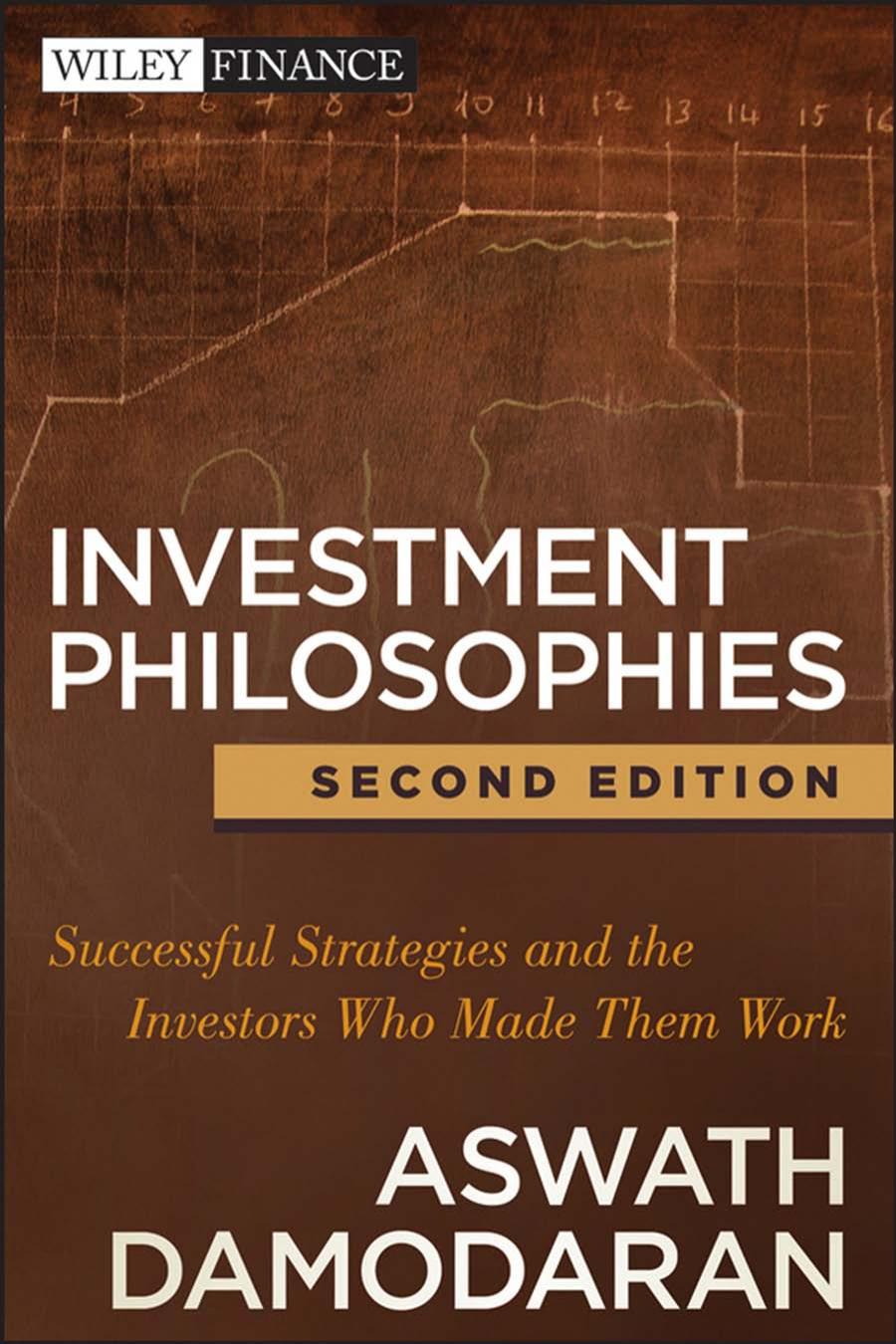
Investment Philosophies 2nd edition by Aswath Damodaran – Ebook PDF Instant Download/Delivery: 1118011511 , 978-1118011515
Full download Investment Philosophies 2nd edition after payment
Product details:
ISBN 10: 1118011511
ISBN 13: 978-1118011515
Author: Aswath Damodaran
The guide for investors who want a better understanding of investment strategies that have stood the test of time
This thoroughly revised and updated edition of Investment Philosophies covers different investment philosophies and reveal the beliefs that underlie each one, the evidence on whether the strategies that arise from the philosophy actually produce results, and what an investor needs to bring to the table to make the philosophy work.
The book covers a wealth of strategies including indexing, passive and activist value investing, growth investing, chart/technical analysis, market timing, arbitrage, and many more investment philosophies.
- Presents the tools needed to understand portfolio management and the variety of strategies available to achieve investment success
- Explores the process of creating and managing a portfolio
- Shows readers how to profit like successful value growth index investors
- Aswath Damodaran is a well-known academic and practitioner in finance who is an expert on different approaches to valuation and investment
This vital resource examines various investing philosophies and provides you with helpful online resources and tools to fully investigate each investment philosophy and assess whether it is a philosophy that is appropriate for you.
Investment Philosophies 2nd Table of contents:
CHAPTER 1 Introduction
WHAT IS AN INVESTMENT PHILOSOPHY?
Human Frailty
Market Efficiency
Tactics and Strategies
WHY DO YOU NEED AN INVESTMENT PHILOSOPHY?
THE BIG PICTURE OF INVESTING
Step 1: Understanding the Client
Step 2: Portfolio Construction
Step 3: Evaluate Portfolio Performance
CATEGORIZING INVESTMENT PHILOSOPHIES
Market Timing versus Asset Selection
Activist versus Passive Investing
Time Horizon
Coexistence of Contradictory Strategies
Investment Philosophies in Context
DEVELOPING AN INVESTMENT PHILOSOPHY
Step 1: Understand the Fundamentals of Risk and Valuation
Step 2: Develop a Point of View about How Markets Work and Where They Might Break Down
Step 3: Find the Philosophy That Provides the Best Fit for You
CONCLUSION
EXERCISES
CHAPTER 2 Upside, Downside: Understanding Risk
WHAT IS RISK?
EQUITY RISK: THEORY-BASED MODELS
Defining Risk
Diversifiable and Nondiversifiable Risk
Models Measuring Market Risk
ASSESSING CONVENTIONAL RISK AND RETURN MODELS
EQUITY RISK: ALTERNATIVE MEASURES
Accounting-Based Measures
Proxy Models
Market-Implied Measures
Risk-Adjusted Cash Flows
Margin of Safety
EQUITY RISK: ASSESSING THE FIELD
DEFAULT RISK
The Determinants of Default Risk
Bond Ratings as Measures of Default Risk
What If a Firm Has No Bond Rating, and Why Do We Care?
CONCLUSION
EXERCISES
CHAPTER 3 Numbers Don’t Lie—Or Do They?
THE BASIC ACCOUNTING STATEMENTS
ASSET MEASUREMENT AND VALUATION
Accounting Principles Underlying Asset Measurement
Measuring Asset Value
MEASURING FINANCING MIX
Accounting Principles Underlying Liability and Equity Measurement
Measuring the Value of Liabilities and Equity
Preferred Stock
Equity
MEASURING EARNINGS AND PROFITABILITY
Accounting Principles Underlying Measurement of Earnings and Profitability
Measuring Accounting Earnings and Profitability
Measures of Profitability
MEASURING RISK
Accounting Principles Underlying Risk Measurement
Accounting Measures of Risk
DIFFERENCES IN ACCOUNTING STANDARDS AND PRACTICES
CONCLUSION
EXERCISES
CHAPTER 4 Show Me the Money: The Basics of Valuation
INTRINSIC VALUE
The Mechanics of Present Value
Valuing an Asset with Guaranteed Cash Flows
Introducing Uncertainty into Valuation
Valuing an Asset with an Infinite Life
RELATIVE VALUATION
Standardized Values and Multiples
The Fundamentals Behind Multiples
The Use of Comparables
VALUING AN ASSET WITH CONTINGENT CASH FLOWS (OPTIONS)
Cash Flows on Options
Determinants of Option Value
CONCLUSION
EXERCISES
CHAPTER 5 Many a Slip: Trading, Execution, and Taxes
THE TRADING COST DRAG
THE COMPONENTS OF TRADING COSTS: TRADED FINANCIAL ASSETS
The Bid-Ask Spread
The Price Impact
The Opportunity Cost of Waiting
Investment Strategy and Total Trading Costs
TRADING COSTS WITH NONTRADED ASSETS
Trading Costs on Real Assets
Trading Costs on Private Equity/Businesses
MANAGEMENT OF TRADING COSTS
TAXES
Investment Returns and Taxes
The Tax Drag on Returns
Tax Management Strategies
Tax Arbitrage
CONCLUSION
EXERCISES
CHAPTER 6 Too Good to Be True? Testing Investment Strategies
WHY DOES MARKET EFFICIENCY MATTER?
EFFICIENT MARKETS: DEFINITION AND IMPLICATIONS
What Is an Efficient Market?
Market Efficiency, Investors, and Information
BEHAVIORAL FINANCE: THE CHALLENGE TO EFFICIENT MARKETS
Psychological Studies
The Evidence
Testing Market Efficiency
Strategies for Testing Market Efficiency
The Cardinal Sins in Testing Market Efficiency
Some Lesser Sins That Can Be a Problem
A SKEPTIC’S GUIDE TO INVESTMENT STRATEGIES
CONCLUSION
EXERCISES
CHAPTER 7 Smoke and Mirrors? Price Patterns, Volume Charts, and Technical Analysis
RANDOM WALKS AND PRICE PATTERNS
The Basis for Random Walks
The Basis for Price Patterns
EMPIRICAL EVIDENCE
The Really Short Term: Mild Price Patterns
The Mid Term: Price Momentum
The Long Term: Price Reversal Again!
Price Correlation Run Amok: Market Bubbles
Seasonal and Temporal Patterns in Prices
Volume Patterns
THE FOUNDATIONS OF TECHNICAL ANALYSIS
TECHNICAL INDICATORS AND CHARTING PATTERNS
Markets’ Overreaction—Contrarian Indicators
Shifting Demand
Slow Learning Markets: Momentum Indicators
Long-Term Cycles: Mystical Indicators
Determinants of Success at Charting and Technical Analysis
CONCLUSION
EXERCISES
CHAPTER 8 Graham’s Disciples: Value Investing
WHO IS A VALUE INVESTOR?
THE PASSIVE SCREENER
Ben Graham: The Father of Screening
Warren Buffett: Sage from Omaha
Value Screens
Determinants of Success
Tools for Success
THE CONTRARIAN VALUE INVESTOR
Basis for Contrarian Investing
Strategies and Evidence
Determinants of Success
ACTIVIST VALUE INVESTING
Strategies and Evidence
Classes of Activist Investors
Empirical Evidence on Activist Investing
Determinants of Success
CONCLUSION
EXERCISES
CHAPTER 9 The Allure of Growth: Small Cap and Growth Investing
WHO IS A GROWTH INVESTOR?
PASSIVE GROWTH INVESTING
Small Cap Investing
Initial Public Offerings
Growth Screens
ACTIVIST GROWTH INVESTING
Description
The Market for Private Equity and Venture Capital
The Process of Venture Capital Investing
The Payoff to Venture Capital and Private Equity Investing
Determinants of Success in Activist Growth Investing
CONCLUSION
EXERCISES
CHAPTER 10 Information Pays: Trading on News
INFORMATION AND PRICES
Private and Public Information
Information Efficiency: How Stock Prices React to News
TRADING ON PRIVATE INFORMATION
Insiders
Analysts
TRADING ON PUBLIC INFORMATION
Earnings Announcements
Acquisitions
Takeover-Based Investment Strategies
Other Announcements
IMPLEMENTING AN INFORMATION-BASED INVESTMENT STRATEGY
CONCLUSION
EXERCISES
CHAPTER 11 A Sure Profit: The Essence of Arbitrage
PURE ARBITRAGE
Futures Arbitrage
Options Arbitrage
Fixed Income Arbitrage
Determinants of Success
NEAR ARBITRAGE
Same Security, Multiple Markets
Closed-End Funds
Convertible and Capital Structure Arbitrage
Determinants of Success
SPECULATIVE ARBITRAGE
Paired Arbitrage
Merger Arbitrage
Determinants of Success
LONG/SHORT STRATEGIES—HEDGE FUNDS
Background, History, and Structure
Performance
CONCLUSION
EXERCISES
CHAPTER 12 The Impossible Dream? Timing the Market
MARKET TIMING: PAYOFFS AND COSTS
The Payoff to Market Timing
The Cost of Market Timing
In Summary
MARKET TIMING APPROACHES
Market Timing Based on Nonfinancial Indicators
Market Timing Based on Technical Indicators
Market Timing Based on Fundamentals
Determinants of Success
THE EVIDENCE ON MARKET TIMING
Mutual Fund Managers
Investment Newsletters
Market Strategists
MARKET TIMING STRATEGIES
The Big Picture
The Details
MARKET TIMING INSTRUMENTS
Futures
Options
Exchange-Traded Funds (ETFs)
CONNECTING MARKET TIMING TO SECURITY SELECTION
CONCLUSION
EXERCISES
CHAPTER 13 Ready to Give Up? The Allure of Indexing
THE MECHANICS OF INDEXING
A Fully Indexed Fund
A Sampled Index Fund
A HISTORY OF INDEXING
THE CASE FOR INDEXING
Individual Investors
Professional Money Managers
In Summary
WHY DO ACTIVE INVESTORS NOT PERFORM BETTER?
Transaction Costs
High Taxes
Too Much Activity
Failure to Stay Fully Invested in Equities—Delusions of Market Timing
Behavioral Factors
ALTERNATIVE PATHS TO INDEXING
Exchange-Traded Funds
Index Futures and Options
Enhanced Index Funds
CONCLUSION
EXERCISES
CHAPTER 14 A Road Map to Choosing an Investment Philosophy
A SELF-ASSESSMENT
Personal Characteristics
Financial Characteristics
Market Beliefs
FINDING AN INVESTMENT PHILOSOPHY
The Choices
THE RIGHT INVESTMENT PHILOSOPHY
Review and Introspection
CONCLUSION
EXERCISES
People also search for Investment Philosophies 2nd:
investment philosophies aswath damodaran pdf
investment philosophies aswath damodaran
investment philosophies aswath damodaran 2nd edition 2012
investment philosophies list
investment philosophies