


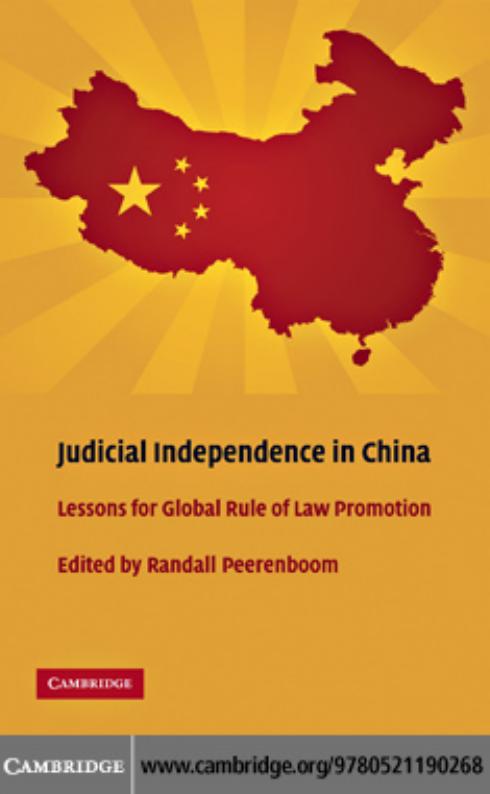
Judicial Independence in China Lessons for Global Rule of Law Promotion 1st edition by Randall Peerenboom ISBN 0521137349 978-0521137348
Original price was: $70.00.$35.00Current price is: $35.00.
Instant download Judicial Independence in China Lessons for Global Rule of Law Promotion by Randall Peerenboom after payment
Judicial Independence in China Lessons for Global Rule of Law Promotion 1st edition by Randall Peerenboom – Ebook PDF Instant Download/Delivery: 0521137349 , 978-0521137348
Full download Judicial Independence in China Lessons for Global Rule of Law Promotion 1st edition after payment
Product details:
ISBN 10: 0521137349
ISBN 13: 978-0521137348
Author: Randall Peerenboom
This volume challenges the conventional wisdom about judicial independence in China and its relationship to economic growth, rule of law, human rights protection, and democracy. The volume adopts an interdisciplinary approach that places China’s judicial reforms and the struggle to enhance the professionalism, authority, and independence of the judiciary within a broader comparative and developmental framework. Contributors debate the merits of international best practices and their applicability to China; provide new theoretical perspectives and empirical studies; and discuss civil, criminal, and administrative cases in urban and rural courts. This volume contributes to several fields, including law and development and the promotion of rule of law and good governance, globalization studies, neo-institutionalism and studies of the judiciary, the emerging literature on judicial reforms in authoritarian regimes, Asian legal studies, and comparative law more generally.
Judicial Independence in China Lessons for Global Rule of Law Promotion 1st Table of contents:
1 Introduction
Why study judicial independence in china?
Chapter synopses
Key issues and findings
From Substance to Process
Judicial Independence and Its Limits
Economic Growth
Judicial Independence, Corruption, and Good Governance
Whither china? recent debates over the role of the judiciary and the way forward
2 Halfway Home and a Long Way to Go: China’s Rule of Law Evolution and the Global Road to Judicial
Global judicial integrity principles and best practices
Key Implementation Challenges: A Methodology for Judicial Reforms
Implementation of the jip in china
Judicial corruption
Key policy recommendations
Conclusion
3 A New Approach for Promoting Judicial Independence
What is wrong with global standards? the denial of culture and politics
From an individual legal approach to a collective political approach
Conceptualizing the Independence of the Judiciary as a Political Struggle
Paying Attention to Power Relations within the Judiciary
A results-oriented approach rather than a formalistic approach
The Idea of Separation of Powers
Judicial Independence Grows with Individualism
Why Are Judges Willing to Be Independent?
Judges as Political Actors
The Ambiguity of Rule of Law and the Implications for Judging: Which Ends Do Independent Judges Serv
Analyzing local bad habits rather than praising global best practices
Visibility as a Political Task
A problem-sharing approach rather than a model approach
Remove Shame about the Miscarriage of Justice
There Is Not One Model but Several Ways to Translate Common Principles into Reality
Conclusion
4 The Party and the Courts
Locating the party
The problem of reference: from abstract ideals to pragmatic assessment of actual consequences
A new model for studying china
Conclusion
5 Judicial Independence in China: Common Myths and Unfounded Assumptions
Judicial independence
Collective, personal, internal, and decisional independence in china
Collective Independence
Personal Independence
Internal Independence
External independence in china
The Party’s Influence on the Judiciary
People’s Congresses and the Judiciary
Local Governments and the Judiciary
The Procuracy, Public Security, and Police
The Relation between Higher and Lower Level Courts
Social Pressures
Summary conclusions
Policy recommendations
6 A New Analytic Framework for Understanding and Promoting Judicial Independence in China
The analytical framework
Types of Cases
Sources of Interference
Impact of Interference
Some Qualifications and Caveats
Summary of Results
Detailed discussion of each type of case
Pure Political Cases
Politically Sensitive Socioeconomic Cases
Politically Sensitive Class-Action or Multiple-Plaintiff Suits
Politically Sensitive New Economic Cases
Criminal Cases
Civil Cases
Labor Cases
Administrative Cases
Conclusion
7 Judicial Independence and the Company Law in the Shanghai Courts
The new justiciability of the company law
Corporate law in the people’s courts: autonomy and independence
Implications of the 2006 Company Law
Competence, Autonomy, and Independence Differentiated
Judicial independence
Determining Political Background
Intimations of Judicial Independence
Failures to Demonstrate Judicial Independence
Judicial autonomy
Conclusion
8 Local Courts in Western China: The Quest for Independence and Dignity
Introduction
Outline of the Chapter
Fieldwork and Methodology
Grassroots judges between socialist collectivism and local protectionism
“What Is Judicial Independence?” (Shenme shi sifa duli?)
“Court Is Just Like a Swill Barrel!” (Ganshui Tong)
“Judges Are Those Who Eat at the Peoples Table!”
A New Judiciary for the Sake of Social Harmony
The judges’ political and professional condition at the grassroots level
The People’s Tribunal, an Institution that Binds Judges
How Can Ordinary Judges Establish a Profession?
Qualifications and prestige
Reforming the governance of the judiciary
The Iron Rice Bowl
Rural Justice as a Common Good?
Conclusion
9 The Judiciary Pushes Back: Law, Power, and Politics in Chinese Courts
Mow disputes
The courts’ resistance
Subsequent developments: assessing court resistance
Analysis
Conclusion: implications for judicial independence and human rights protection
10 Corruption in China’s Courts
Introduction
Analytical Framework
Data Sources
Data Configuration
Limitations
Corruption in china’s courts: scope and prevalence
Type a: extreme cases involving physical violence
Type b: corruption without exchange (nonbribery)
Type c: corruption through exchange
Brief Introduction to Litigation Procedure in China’s Courts
Adjudication Phase
Enforcement Phase
Case Registration Phase
General findings and interpretation
Conclusion
11 A Survey of Commercial Litigation in Shanghai Courts
Corporate litigants
The Decision to Litigate
Pretrial Maneuvering: Party Influence of Judges
The Trial Process
Outcomes and Enforcement
Private party litigants
The Decision to Litigate
Party Influence of Judges
The Trial Process
Outcomes and Enforcement
Conclusion
12 Judicial Independence in Authoritarian Regimes: Lessons from Continental Europe
Judicial independence in democratic regimes
Two Legal Traditions in a Process of Change
Judicial Independence in Totalitarian and Authoritarian Regimes
Summary
Application to china
Policy recommendations
13 Judicial Independence in East Asia: Lessons for China
The concept of independence
Judicial independence in authoritarian states
Northeast asian experience
Japan
Taiwan and Korea
Lessons for judicial independence in china
People also search for Judicial Independence in China Lessons for Global Rule of Law Promotion 1st :
disadvantages of judicial independence
judicial independence uk examples
judicial independence in china
china independent judiciary
china judicial independence
Tags: Randall Peerenboom, Judicial Independence, Global Rule, Law Promotion