


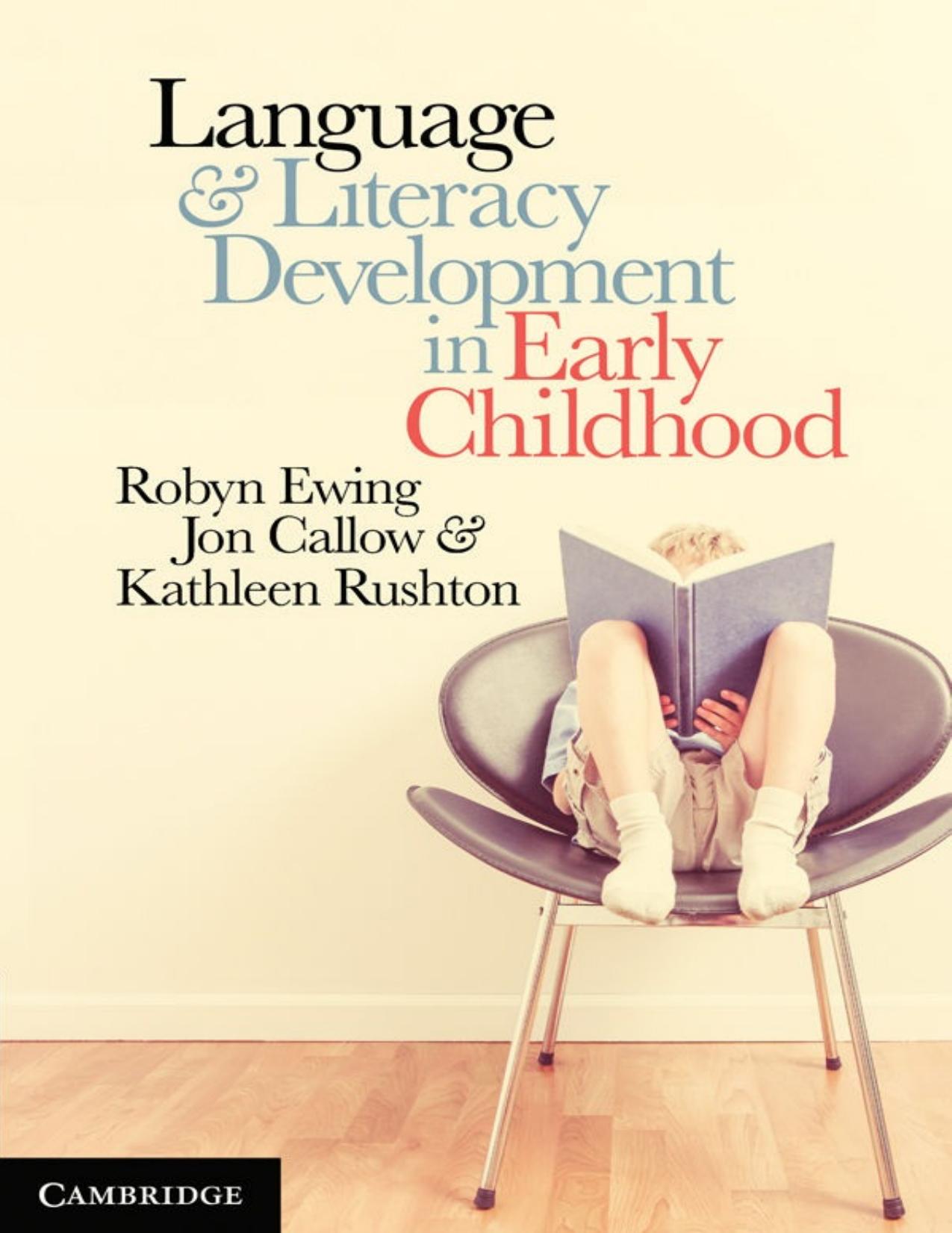
Language and Literacy Development in Early Childhood 1st edition by Robyn Ewing, Jon Callow, Kathleen Rushton ISBN 1107578620 978-1107578623
Original price was: $70.00.$35.00Current price is: $35.00.
Instant download Language and Literacy Development in Early Childhood Robyn Ewing & Jon Callow & Kathleen Rushton after payment
Language and Literacy Development in Early Childhood 1st edition by Robyn Ewing, Jon Callow, Kathleen Rushton – Ebook PDF Instant Download/Delivery: 1107578620, 978-1107578623
Full download Language and Literacy Development in Early Childhood 1st edition after payment
Product details:
ISBN 10: 1107578620
ISBN 13: 978-1107578623
Author: Robyn Ewing, Jon Callow, Kathleen Rushton
This book provides pre-service and practising teachers with an integrated approach to language and literacy learning in early childhood. Written by leading academics in the field, it explores how children learn to talk, play using language, become literate and make meaning – from birth through to the pre-school years. Emphasising the importance of imagination and the arts in language learning, this book addresses a wide range of contemporary issues, highlights the impact of diverse socioeconomic, language and cultural backgrounds on young children’s language and literacy development, and shows how early childhood teachers can effectively partner with parents and caregivers to help children learn through and about language. Case studies, interviews, reflective questions, clear links to the Early Years Learning Framework and the Australian Curriculum, and a rich array of practical and creative activities for use in early childhood environments help students connect theory and current research to practice.
Language and Literacy Development in Early Childhood 1st Table of contents:
Chapter 1 Introduction: The importance of language in our lives
Further reading
Chapter 2 Learning how to mean: Dimensions of early language development
Anticipated outcomes for the chapter
Introduction
What enables learning of our first language?
Learning to talk
The relationship between meaning and language structure
The importance of social interaction in language development
Learning language: Learning culture
Supporting children’s language development in the early years
Drawing it all together
Questions for further discussion
Further reading
Useful websites
References
Chapter 3 Playing with language: Imaginative play, language development and technology
Anticipated outcomes for the chapter
Introduction
Play
Fostering language development through imaginative play
Introducing a new kind of play: Digital play
The interrelationship between digital and more traditional forms of play
Play, technology and social interaction
Play-based pedagogy for language learning
Playful activity
Communication with significant others
Artefact-.centred joint activity
Drawing it all together
Questions for further discussion
Further reading
References
Chapter 4 Talking to learn: Listening to young children’s language
Anticipated outcomes for the chapter
Introduction
How language develops: Starting at home
Learning to represent knowledge through oral language
Field –. What will you talk about?
Tenor –. Who is your audience?
Lempriere’s work with young learners on understanding tenor
Mode –. How will you achieve your purpose?
Moving from spoken to written texts
Producing texts: A young learner’s ability to choose
Social factors in language development
Identifying patterns from word to text
Learning through spoken interaction
Talk as process
Talk as performance
The difference between spoken and written language
Scaffolding: Controlled, guided and independent practice
Drawing it all together
Questions for further discussion
Further reading
References
Chapter 5 Difference and diversity in language and literacy development
Anticipated outcomes for the chapter
Introduction
Supporting young students to develop their identities as bilingual and bicultural learners
Interview with Amenah Mourad, a bilingual educational leader
How can a mono.lingual, English-.speaking teacher best support bilingual learners?
How can we support young learners and honour their first language and culture?
How can we best support refugee students?
Learning to interact orally in English
Developing literacy in English
Learning about the structures and features of English
Drawing it all together
Questions for further discussion
Further reading
Books
Apps
Interactive picture books
Organisations and resources for teachers
References
Chapter 6 Aboriginal perspectives in the early childhood literacy classroom
Anticipated outcomes for the chapter
Introduction
Australia is (and always was) a multilingual, multicultural society
Languages spoken
The importance of teaching children about their local Aboriginal communities
The importance of the home language as a starting point for reading and writing
Learning about culture through story
Interview with Helen Empacher, school principal and Aboriginal woman, descendant of the Yuin people
How would you include an Aboriginal perspective in the classroom?
What preparations are needed for reading a Dreamtime story?
How can you check that a text or resource is acceptable?
Developing an Aboriginal perspective
Helen Empacher’s lesson plan example
Discussing Our little Yuin
Helen Empacher teaches the lesson on Our Little Yuin to a kindergarten class
Helen reads Our little Yuin to the class
Cultural inclusion: Learning who ‘we’ are
Drawing it all together
Questions for further discussion
Further reading
Useful websites
References
Chapter 7 Reading with children: Quality literature and language development
Anticipated outcomes for the chapter
Introduction: Shared reading of literature
Literature ‘lessons’
Seeing self in stories
Book talk: Aidan Chambers’ Tell Me framework
Quality literature
Rich learning experiences with literature
Drawing it all together
Questions for further discussion
Further reading
Useful websites
References
Chapter 8 Supporting the emergent reader
Anticipated outcomes for the chapter
Introduction
What happens as we read together
A short history of reading
Phases of reading and literacy development
Making meaning using letter–sound knowledge
English orthography
Phonemic awareness
Developing phonological knowledge as part of learning to read
Daily activities
Drawing it all together
Questions for further discussion
Further reading
Useful websites
References
Chapter 9 Storying and the emergent storyteller and writer
Anticipated outcomes for the chapter
Introduction
The narratives of young children: Establishing a sense of self and identity through story
Becoming a confident storyteller: The teacher as storyteller
Beginning
‘Advance/.detail’ game: Retelling a story with a partner
Supporting children’s storying development in the early years: Listening to each other
Oral storying and the emergent creative writer
Drawing it all together
Questions for further discussion
Further reading
Useful websites
References
Chapter 10 Making meaning with image and text in picture books
Anticipated outcomes for the chapter
Introduction
A short history of picture books
The parts of a picture book
Engaging with picture books using a visual metalanguage
Exploring the different levels of picture books
Focusing on the visual mode
Working with the visual and written modes
Using a visual metalanguage when reading picture books
Creating visual and multimodal texts
Drawing it all together
Questions for further discussion
Further reading
Picture books
Wordless books
References
Chapter 11 Digital literacies in the lives of young children
Anticipated outcomes for the chapter
Introduction
Literacy is already digital
Principles for planning digital literacy practices
Play and creativity
Pedagogical choices
Providing relevant, engaging content in the classroom
Literacy is enhanced by technology
Multimodal features
Access and technical considerations
Drawing it all together
Questions for further discussion
Further reading
Apps and software
References
Chapter 12 Language and literacy assessment in early childhood contexts and classrooms
Anticipated outcomes for the chapter
Introduction
Key concepts: Evaluation, assessment and measurement
Evaluation
Assessment
Assessment for learning: Formative assessment
Authentic assessment
Assessing language and literacy development
Assessment of learning: Summative assessment
Measurement
Tests
Linking language and literacy development with the Early Years Learning Outcomes (2009)
Principles of assessment
Establish a caring, supportive, risk-.free learning community
Focus on children’s engagement in the task
Build positive relationships with students
Use a range of different assessment strategies
Potential assessment strategies
Modify strategies to be culturally relevant and linguistically possible
Encourage children’s identity development and autonomy
Show consistent use of teacher judgement
Avoid labelling or stereotyping
Involving children in self and peer assessment
Towards meaningful assessment: Learning stories, rich tasks and portfolios
Rich tasks
Performance-.based assessment tasks
Drawing it all together
Questions for further discussion
Further reading
References
Index
People also search for Language and Literacy Development in Early Childhood 1st:
language and literacy development are important because it focuses on
language and literacy development
language and literacy development in early childhood
language and literacy development examples
language and literacy development in preschoolers
Tags: Robyn Ewing, Jon Callow, Kathleen Rushton, Literacy Development, Early Childhood