

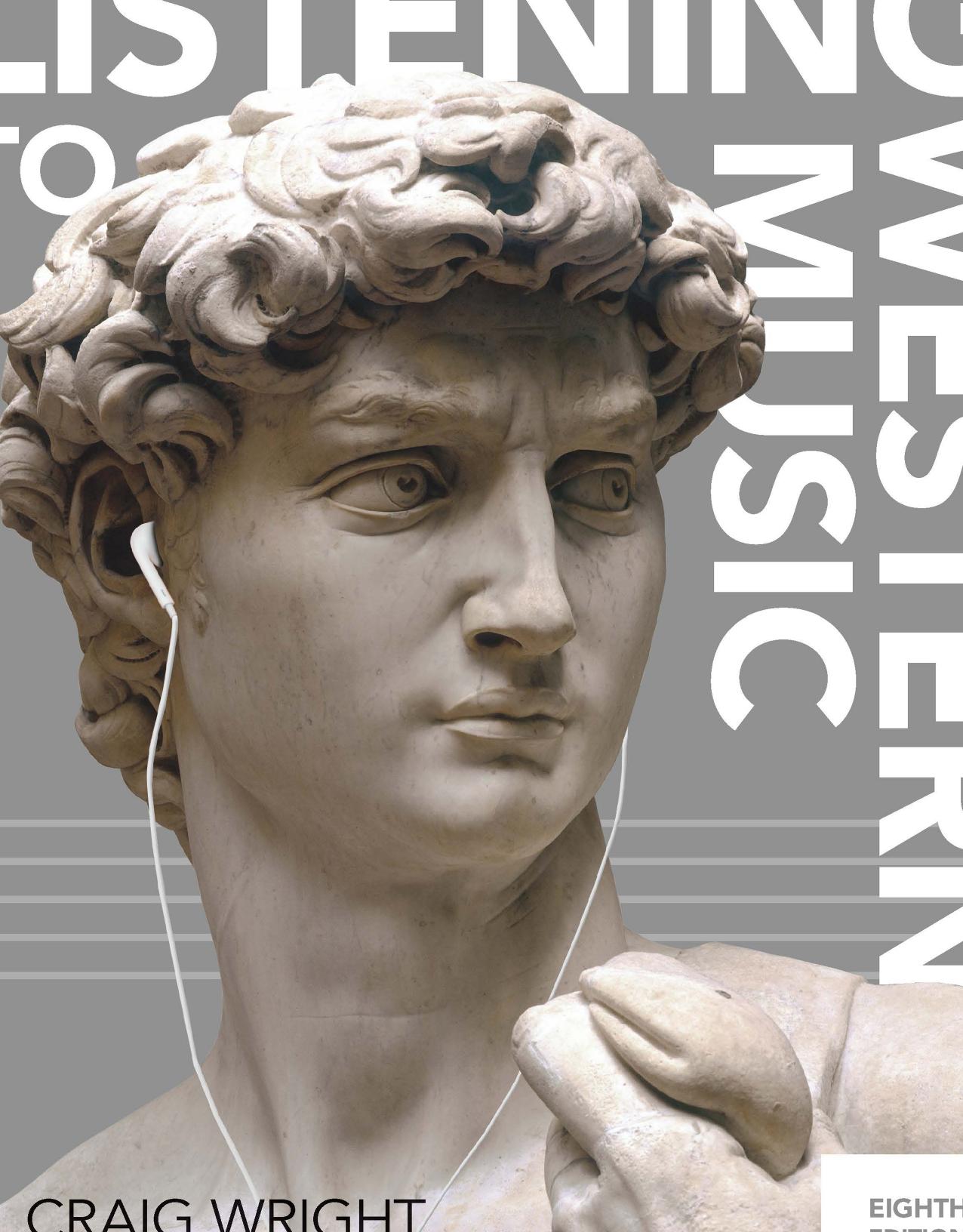
Listening to Western Music 8th Edition by Craig Wright – Ebook PDF Instant Download/Delivery: 1305587014, 978-1305587014
Full download Listening to Western Music 8th edition after payment
Product details:
ISBN 10: 1305587014
ISBN 13: 978-1305587014
Author: Craig Wright
LISTENING TO WESTERN MUSIC is designed to help you develop and refine the listening skills of your students and inspire a lifelong appreciation of music. Author and award-winning scholar-teacher Craig Wright, who has taught Music Appreciation courses for more than 35 years, is consistently praised by reviewers and other professors for his unparalleled accuracy and his clear, direct, conversational style. Throughout the book, Wright connects with today’s students by incorporating comparisons between pop and classical music and by using examples from popular artists to illustrate core concepts. This chronological text succinctly covers traditional Western music from medieval to modern, discussing examples from each historical period within their social contexts and the construction of each piece. LISTENING TO WESTERN MUSIC is the only text that provides Craig Wright’s own Listening Exercises, in the book and online, which help students focus on important musical elements and episodes. A free CD, packaged with each print copy of the text, includes all of the musical examples for the Part 1 listening exercises. A full set of optional online student resources includes Active Listening Guides, streaming music, an interactive eBook, quizzing, and more–all to challenge your students. All of the music discussed in the text is also available on CD and on Sony Music download cards.Important Media content referenced within the product description or the product text may not be available in the ebook version.
Listening to Western Music 8th Table of contents:
Part One: Introduction to Listening
Ch 1: The Power of Music
Ch 1: Learning Objectives
Ch 1: Introduction
Music, the Ear, and the Brain
Our Musical Template: Why We Like What We Like
Listening to Whose Music?
How Does Classical Music Work?
Where and How to Listen
Getting Started: No Previous Experience Required
Ch 1: Key Words
Ch 2: Rhythm, Melody, and Harmony
Ch 2: Learning Objectives
Ch 2: Introduction
Rhythm
Rhythmic Notation
Ch 2: Key Words
Ch 3: Color, Texture, Form, and Style
Ch 3: Learning Objectives
Ch 3: Introduction
Color
The Voice
Musical Instruments
Texture
Ch 3: Key Words
Part Two: The Middle Ages and Renaissance, 476–1600
Ch 4: Medieval Music, 476–1450
Ch 4: Learning Objectives
Ch 4: Introduction
Music in the Monastery
Music in the Cathedral
Music at the Court
Ch 4: Key Words
Ch 5: Renaissance Music, 1450–1600
Ch 5: Learning Objectives
Ch 5: Introduction
Josquin Desprez (c. 1455–1521) and the Renaissance Motet
The Counter-Reformation and Palestrina (1525–1594)
Popular Music in the Renaissance
Ch 5: Key Words
Part Three: The Baroque Period, 1600–1750
Ch 6: Early Baroque Music: Opera
Ch 6: Learning Objectives
Ch 6: Introduction
Baroque Architecture and Music
Baroque Painting and Music
Early Baroque Opera
Ch 6: Key Words
Ch 7: Toward Late Baroque Instrumental Music
Ch 7: Learning Objectives
Ch 7: Introduction
The Baroque Orchestra
Mouret and Trumpet Music for the French Court
Pachelbel and His Canon
Vivaldi and the Baroque Concerto
Ch 7: Key Words
Ch 8: The Late Baroque: Bach
Ch 8: Learning Objectives
Ch 8: Introduction
Johann Sebastian Bach (1685–1750)
Fugue
Ch 8: Key Words
Ch 9: The Late Baroque: Handel
Ch 9: Learning Objectives
Ch 9: Introduction
George Frideric Handel (1685–1759)
Handel and the Orchestral Dance Suite
Handel and Opera
Handel and Oratorio
Ch 9: Key Words
Part Four: The Classical Period, 1750–1820
Ch 10: Introduction to Classical Style: Haydn and Mozart
Ch 10: Learning Objectives
Ch 10: Introduction
The Enlightenment
The Democratization of Classical Music and the Rise of “For Profit” Concerts
The Dynamic Quality of Classical Style
Vienna: Home to Classical Composers
Ch 10: Key Words
Ch 11: Classical Forms: Ternary and Sonata–Allegro
Ch 11: Learning Objectives
Ch 11: Introduction
Ternary Form
Sonata–Allegro Form
Ch 11: Key Words
Ch 12: Classical Forms: Theme and Variations, Rondo
Ch 12: Learning Objectives
Ch 12: Introduction
Theme and Variations
Rondo Form
Form, Mood, and the Listener’s Expectations
Ch 12: Key Words
Ch 13: Classical Genres: Instrumental Music
Ch 13: Learning Objectives
Ch 13: Introduction
The Symphony and the Symphony Orchestra
The String Quartet
The Sonata
The Concerto
Ch 13: Key Words
Ch 14: Classical Genres: Vocal Music
Ch 14: Learning Objectives
Ch 14: Introduction
Mozart and Opera
Ch 14: Key Words
Ch 15: Beethoven: Bridge to Romanticism
Ch 15: Learning Objectives
Ch 15: Introduction
The Early Years (1770–1802)
The “Heroic” Period (1803–1813)
The Final Years (1814–1827)
What Is Forward Looking in Beethoven’s Music?
Ch 15: Key Words
Part Five: Romanticism, 1820–1900
Ch 16: Introduction to Romanticism
Ch 16: Learning Objectives
Ch 16: Introduction
Romantic Inspiration, Romantic Creativity
The Musician as “Artist,” Music as “Art”
The Style of Romantic Music
Bigger Is Better: Greater Length, More Volume and Color
Ch 16: Key Words
Ch 17: Romantic Music: The Art Song
Ch 17: Learning Objectives
Ch 17: Introduction
The Art Song
Franz Schubert (1797–1828)
Clara Wieck Schumann (1819–1896)
Ch 17: Key Words
Ch 18: Romantic Music: Program, Ballet, and Musical Nationalism
Ch 18: Learning Objectives
Program Music
Peter Tchaikovsky (1840–1893): Tone Poem and Ballet Music
Ch 18: Key Words
Ch 19: Romantic Music: Piano Music
Ch 19: Learning Objectives
Ch 19: Introduction
Robert Schumann (1810–1856)
Frédéric Chopin (1810–1849)
Franz Liszt (1811–1886)
Ch 19: Key Words
Ch 20: Romantic Opera: Italy
Ch 20: Learning Objectives
Ch 20: Introduction
Italian Bel Canto Opera
Giuseppe Verdi (1813–1901)
Ch 20: Key Words
Ch 21: Romantic Opera: Germany
Ch 21: Learning Objectives
Ch 21: Introduction
Germany and Nordic Fantasy Literature
Richard Wagner (1813–1883)
Wagner’s “Music Dramas”
Ch 21: Key Words
Ch 22: Nineteenth-Century Realistic Opera
Ch 22: Learning Objectives
Ch 22: Introduction
Georges Bizet’s Carmen (1875)
Giacomo Puccini’s La bohème (1896)
Ch 22: Key Words
Ch 23: Late Romantic Orchestral Music
Ch 23: Learning Objectives
Ch 23: Introduction
Romantic Values and Today’s Concert Hall
Johannes Brahms (1833–1897)
Antonín Dvoˇrák (1841–1904)
Gustav Mahler (1860–1911)
Ch 23: Key Words
Part Six: Modern and Postmodern Art Music, 1880–Present
Ch 24: From Impresionism to Modernism
Ch 24: Learning Objectives
Ch 24: Introduction
Impressionism
Impressionism in Painting and Music
Exoticism in Music
Ch 24: Key Words
Ch 25: Early-Twentieth-Century Modernism
Ch 25: Learning Objectives
Ch 25: Introduction
Modernism: An Anti-Romantic Movement
Modernist Painting and Music: The Rejection of Representational Art
Arnold Schoenberg (1874–1951)
Ch 25: Key Words
Ch 26: American Modernism
Ch 26: Learning Objectives
Ch 26: Introduction
Charles Ives (1874–1954)
Samuel Barber (1910–1981)
Aaron Copland (1900–1990)
Ellen Taaffe Zwilich (b. 1939)
Ch 26: Key Words
Ch 27: Postmodernism
Ch 27: Learning Objectives
Ch 27: Introduction
Edgard Varèse (1883–1965) and Electronic Music
John Cage (1912–1992) and Chance Music
John Adams (b. 1947) and Minimalism
Caroline Shaw (b. 1982) and a New Model for Classical Music
A Bonus Work and a Test: Christopher Rouse, Flute Concerto, Fifth Movement, Amhrán (1993)
Ch 27: Key Words
Glossary
Recording Credits
Photo Credits
Index
People also search for Listening to Western Music 8th:
listening to music craig wright 8th edition pdf
listening to music craig wright 8th edition
craig wright listening to western music (8th edition copyright 2017)
craig wright listening to music pdf
craig wright listening to music 8th edition
Tags: Craig Wright, Western Music