

Managerial Economics A Problem Solving Approach 5th Edition by Luke Froeb – Ebook PDF Instant Download/Delivery: 1337106666, 9781337106665
Full download Managerial Economics A Problem Solving Approach 5th edition after payment
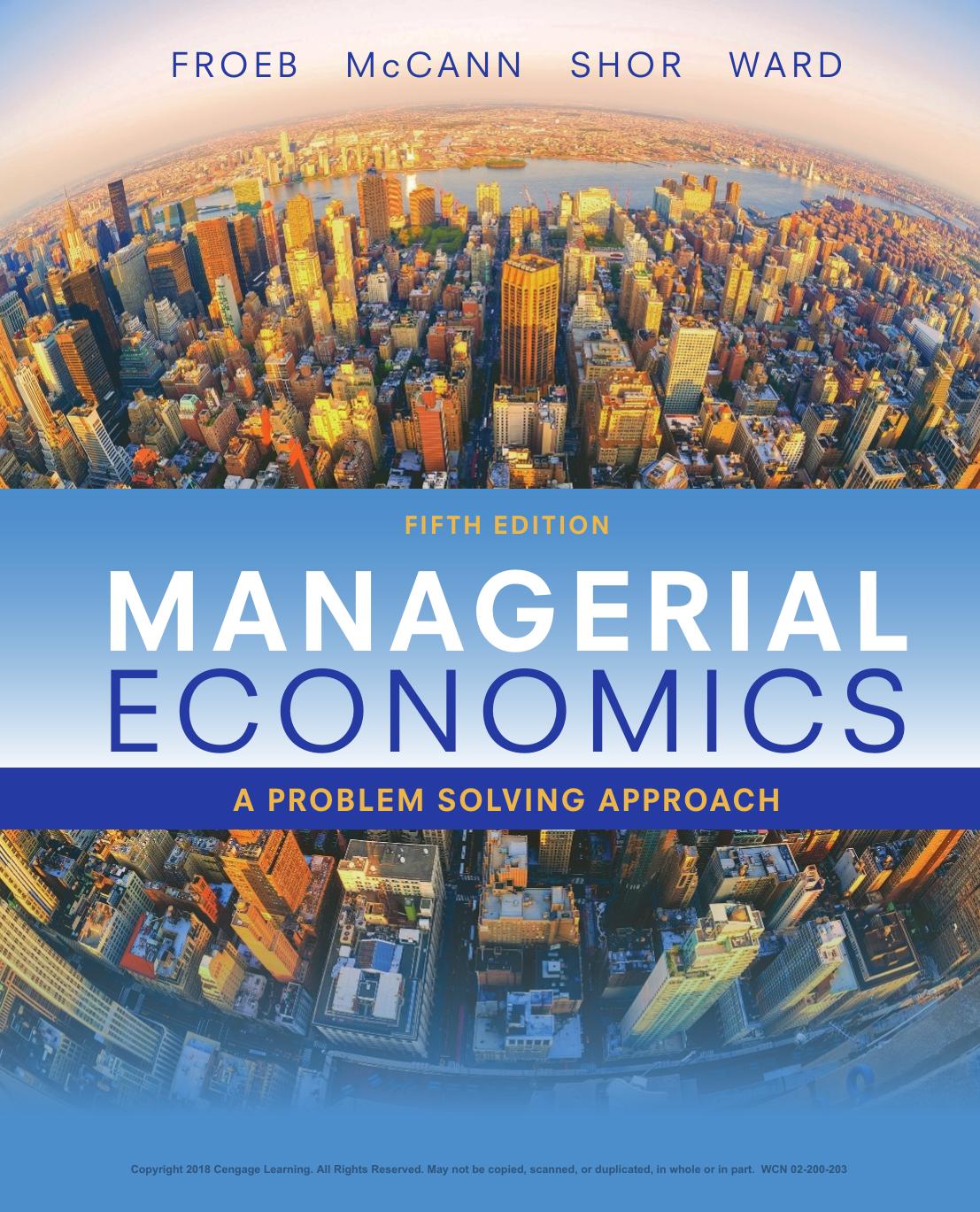
Product details:
ISBN 10: 1337106666
ISBN 13: 9781337106665
Author: Luke Froeb
Discover how to use managerial economics to both diagnose and solve business problems with this breakthrough text, designed specifically for MBA students. Froeb/McCann/Ward/Shor’s MANAGERIAL ECONOMICS, 5E offers a succinct, fast-paced, yet challenging, approach full of invaluable insights. This edition incorporates less math and fewer technical models, graphs and figures than traditional managerial economics texts, while emphasizing the real decisions that today’s managers face daily.You’ll find this learning guide useful both now and throughout your business career. The latest economic updates keep you abreast of the most recent economic developments and current economic challenges worldwide. You learn how to apply economic theory to even the most formidable business challenges.
Managerial Economics A Problem Solving Approach 5th Table of contents:
Section 1: Problem Solving and Decision Making
-
Chapter 1: Introduction: What This Book Is About
-
1.1. Using Economics to Solve Problems
-
1.2. Problem-Solving Principles
-
1.3. Test Yourself
-
1.4. Ethics and Economics
-
1.5. Economics in Job Interviews
-
Summary & Homework Problems
-
-
Chapter 2: The One Lesson of Business
-
2.1. Capitalism and Wealth
-
2.2. Does the Government Create Wealth?
-
2.3. How Economics Is Useful to Business
-
Taxes
-
Subsidies
-
Price Controls
-
-
2.4. Wealth Creation in Organizations
-
Summary & Homework Problems
-
-
Chapter 3: Benefits, Costs, and Decisions
-
3.1. Background: Variable, Fixed, and Total Costs
-
3.2. Background: Accounting versus Economic Profit
-
3.3. Costs Are What You Give Up
-
3.4. Sunk-Cost Fallacy
-
3.5. Hidden-Cost Fallacy
-
3.6. A Final Warning
-
Summary & Homework Problems
-
-
Chapter 4: Extent (How Much) Decisions
-
4.1. Fixed Costs Are Irrelevant to an Extent Decision
-
4.2. Marginal Analysis
-
4.3. Deciding between Two Alternatives
-
4.4. Incentive Pay
-
4.5. Tie Pay to Performance Measures That Reflect Effort
-
4.6. Is Incentive Pay Unfair?
-
Summary & Homework Problems
-
-
Chapter 5: Investment Decisions: Look Ahead and Reason Back
-
5.1. Compounding and Discounting
-
5.2. How to Determine Whether Investments Are Profitable
-
5.3. Break-Even Analysis
-
5.4. Choosing the Right Manufacturing Technology
-
5.5. Shut-Down Decisions and Break-Even Prices
-
5.6. Sunk Costs and Post-Investment Hold-Up
-
Summary & Homework Problems
-
Section 2: Pricing, Costs, and Profits
-
Chapter 6: Simple Pricing
-
6.1. Background: Consumer Values and Demand Curves
-
6.2. Marginal Analysis of Pricing
-
6.3. Price Elasticity and Marginal Revenue
-
6.4. What Makes Demand More Elastic?
-
6.5. Forecasting Demand Using Elasticity
-
6.6. Stay-Even Analysis, Pricing, and Elasticity
-
6.7. Cost-Based Pricing
-
Summary & Homework Problems
-
-
Chapter 7: Economies of Scale and Scope
-
7.1. Increasing Marginal Cost
-
7.2. Economies of Scale
-
7.3. Learning Curves
-
7.4. Economies of Scope
-
7.5. Diseconomies of Scope
-
Summary & Homework Problems
-
-
Chapter 8: Understanding Markets and Industry Changes
-
8.1. Which Industry or Market?
-
8.2. Shifts in Demand
-
8.3. Shifts in Supply
-
8.4. Market Equilibrium
-
8.5. Predicting Industry Changes Using Supply and Demand
-
8.6. Explaining Industry Changes Using Supply and Demand
-
8.7. Prices Convey Valuable Information
-
8.8. Market Making
-
Summary & Homework Problems
-
-
Chapter 9: Market Structure and Long-Run Equilibrium
-
9.1. Competitive Industries
-
9.2. The Indifference Principle
-
9.3. Monopoly
-
Summary & Homework Problems
-
-
Chapter 10: Strategy: The Quest to Keep Profit from Eroding
-
10.1. A Simple View of Strategy
-
10.2. Sources of Economic Profit
-
The Industry (External) View
-
The Resource (Internal) View
-
-
10.3. The Three Basic Strategies
-
Summary & Homework Problems
-
-
Chapter 11: Foreign Exchange, Trade, and Bubbles
-
11.1. The Market for Foreign Exchange
-
11.2. The Effects of a Currency Devaluation
-
11.3. Bubbles
-
11.4. How Can We Recognize Bubbles?
-
11.5. Purchasing Power Parity
-
Summary & Homework Problems
-
Section 3: Pricing for Greater Profit
-
Chapter 12: More Realistic and Complex Pricing
-
12.1. Pricing Commonly Owned Products
-
Commonly Owned Substitutes
-
Commonly Owned Complements
-
-
12.2. Revenue or Yield Management
-
12.3. Advertising and Promotional Pricing
-
12.4. Psychological Pricing
-
Summary & Homework Problems
-
-
Chapter 13: Direct Price Discrimination
-
13.1. Why (Price) Discriminate?
-
13.2. Direct Price Discrimination
-
13.3. Robinson-Patman Act
-
13.4. Implementing Price Discrimination
-
Pricing Laptops
-
Pricing Museum Tickets
-
-
13.5. Only Schmucks Pay Retail
-
Summary & Homework Problems
-
-
Chapter 14: Indirect Price Discrimination
-
14.1. Indirect Price Discrimination
-
HP Printers
-
-
14.2. Volume Discounts as Discrimination
-
14.3. Bundling Different Goods Together
-
Summary & Homework Problems
-
Section 4: Strategic Decision Making
-
Chapter 15: Strategic Games
-
15.1. Sequential-Move Games
-
15.2. Simultaneous-Move Games
-
How to Find Nash Equilibria
-
-
15.3. Prisoners’ Dilemma
-
Price Discrimination Dilemma
-
Advertising Dilemma
-
Free-Riding Dilemma
-
Getting Out of a Prisoners’ Dilemma
-
When Prisoners’ Dilemmas Are Repeated
-
-
15.4. Other Games
-
Game of Chicken
-
Dating Game
-
Shirking/Monitoring Game
-
-
Summary & Homework Problems
-
-
Chapter 16: Bargaining
-
16.1. Strategic View of Bargaining
-
16.2. Nonstrategic View of Bargaining
-
16.3. Conclusion
-
Summary & Homework Problems
-
Section 5: Uncertainty
-
Chapter 17: Making Decisions with Uncertainty
-
17.1. Random Variables and Probability
-
17.2. Uncertainty in Pricing
-
Price Discrimination
-
-
17.3. Data-Driven Decision Making
-
17.4. Minimizing Expected Error Costs
-
17.5. Risk versus Uncertainty
-
Summary & Homework Problems
-
-
Chapter 18: Auctions
-
18.1. Oral Auctions
-
18.2. Second-Price Auctions
-
18.3. First-Price Auctions
-
18.4. Bid Rigging
-
18.5. Common-Value Auctions
-
Summary & Homework Problems
-
-
Chapter 19: The Problem of Adverse Selection
-
19.1. Insurance and Risk
-
19.2. Anticipating Adverse Selection
-
19.3. Screening
-
19.4. Signaling
-
19.5. Adverse Selection and Internet Sales
-
Summary & Homework Problems
-
-
Chapter 20: The Problem of Moral Hazard
-
20.1. Introduction
-
Progressive Snapshot
-
Social Capital as a Motivator
-
-
20.2. Insurance
-
20.3. Moral Hazard versus Adverse Selection
-
20.4. Shirking
-
20.5. Moral Hazard in Lending
-
20.6. Moral Hazard and the 2008 Financial Crisis
-
Summary & Homework Problems
-
Section 6: Organizational Design
-
Chapter 21: Getting Employees to Work in the Firm’s Best Interests
-
21.1. Principal–Agent Relationships
-
21.2. Controlling Incentive Conflict
-
21.3. Marketing versus Sales
-
21.4. Franchising
-
21.5. A Framework for Diagnosing and Solving Problems
-
Summary & Homework Problems
-
-
Chapter 22: Getting Divisions to Work in the Firm’s Best Interests
-
22.1. Incentive Conflict between Divisions
-
22.2. Transfer Pricing
-
22.3. Organizational Alternatives
-
22.4. Budget Games: Paying People to Lie
-
Summary & Homework Problems
-
-
Chapter 23: Managing Vertical Relationships
-
23.1. How Vertical Relationships Increase Profit
-
23.2. Double Marginalization
-
23.3. Incentive Conflicts between Retailers and Manufacturers
-
Quality Control
-
Promotional Activities
-
“Free Riding” among Retailers
-
New Product Introduction
-
-
23.4. Price Discrimination
-
Use Vertical Integration When Contractual Solutions Aren’t Enough
-
-
23.5. Antitrust Risks
-
23.6. Do NOT Buy a Customer or Supplier Simply Because It Is Profitable
-
Summary & Homework Problems
-
Section 7: Wrapping Up
-
Chapter 24: Test Yourself
-
24.1. Should You Keep Frequent Flyer Points for Yourself?
-
24.2. Should You Lay Off Employees in Need?
-
24.3. Manufacturer Hiring
-
24.4. American Airlines
-
24.5. Law Firm Pricing
-
24.6. Should You Give Rejected Food to Hungry Servers?
-
24.7. Managing Interest-Rate Risk at Banks
-
24.8. What You Should Have Learned
-
People also search for Managerial Economics A Problem Solving Approach 5th:
managerial economics a problem solving approach 5th edition
managerial economics a problem solving approach answer key
managerial economics a problem solving approach free pdf
managerial economics a problem solving approach 6th edition ebook
managerial economics –– a problem solving approach froeb
Tags:
Luke Froeb,Managerial Economics,Solving Approach