

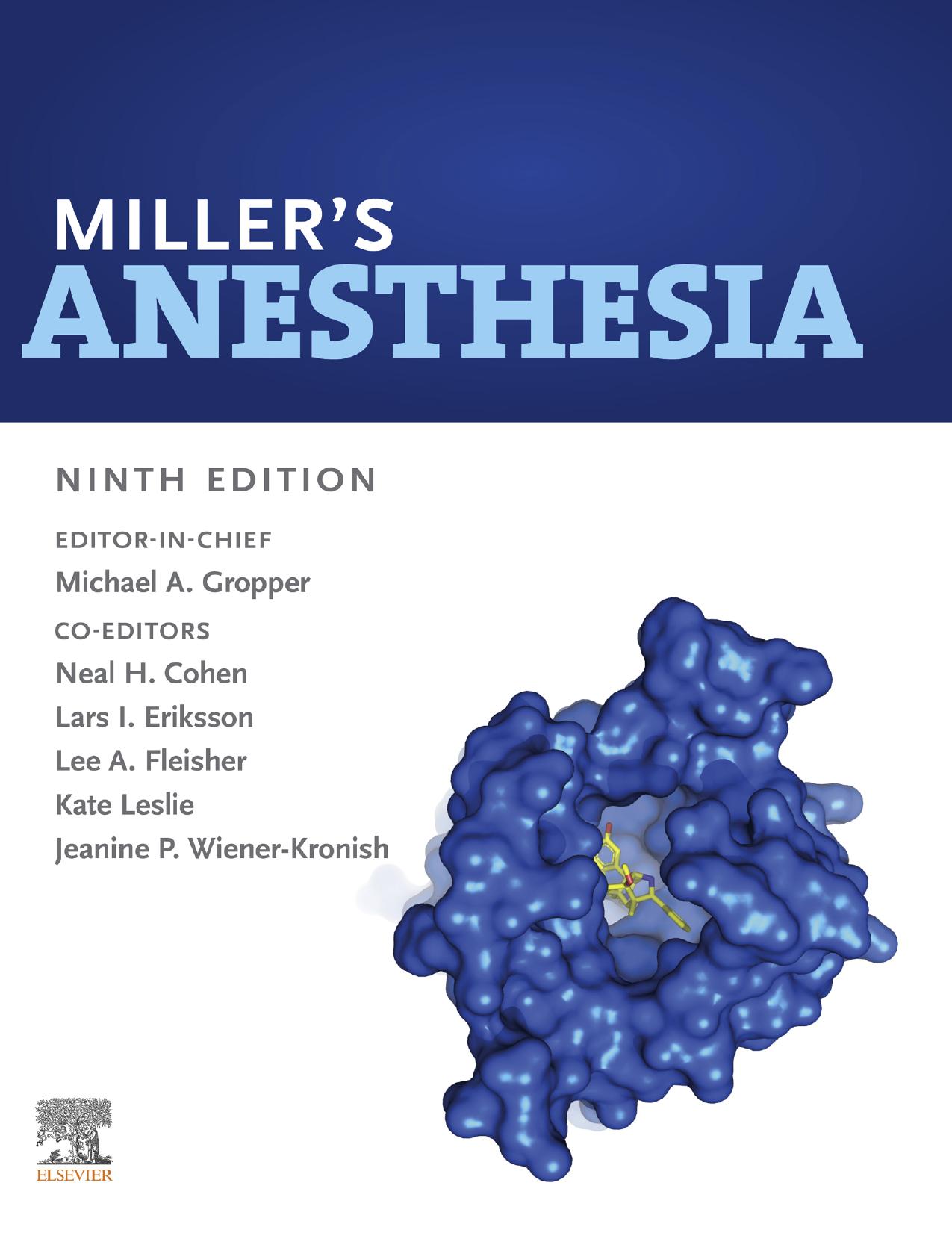
Miller’s Anesthesia 2 Volume Set 9th Edition by Michael Gropper, Lars Eriksson, Lee Fleisher, Jeanine Wiener Kronish, Neal Cohen, Kate Leslie ISBN 0323596045 978-0323596046
Original price was: $70.00.$35.00Current price is: $35.00.
Instant download Miller’s Anesthesia 2 Volume Set 9th Edition By Michael A. Gropper Unknown after payment
Miller’s Anesthesia 2 Volume Set 9th Edition by Michael Gropper, Lars Eriksson, Lee Fleisher, Jeanine Wiener Kronish, Neal Cohen, Kate Leslie – Ebook PDF Instant Download/Delivery: 0323596045 , 978-0323596046
Full download Miller’s Anesthesia 2 Volume Set 9th edition after payment
Product details:
ISBN 10: 0323596045
ISBN 13: 978-0323596046
Author: Michael Gropper, Lars Eriksson, Lee Fleisher, Jeanine Wiener Kronish, Neal Cohen, Kate Leslie
Covering everything from historical and international perspectives to basic science and current clinical practice, Miller’s Anesthesia, 9th Edition, remains the preeminent reference in the field. Dr. Michael Gropper leads a team of global experts who bring you the most up-to-date information available on the technical, scientific, and clinical issues you face each day – whether you’re preparing for the boards, studying for recertification, or managing a challenging patient care situation in your practice.
- Contains fully revised and updated content throughout, including numerous new videos online.
- Includes four new chapters: Clinical Care in Extreme Environments: High Pressure, Immersion, and Hypo- and Hyperthermia; Immediate and Long-Term Complications; Clinical Research; and Interpreting the Medical Literature.
- Addresses timely topics such as neurotoxicity, palliation, and sleep/wake disorders.
- Streamlines several topics into single chapters with fresh perspectives from new authors, making the material more readable and actionable.
- Features the knowledge and expertise of former lead editor Dr. Ronald Miller, as well as new editor Dr. Kate Leslie of the University of Melbourne and Royal Melbourne Hospital.
- Provides state-of-the-art coverage of anesthetic drugs, guidelines for anesthetic practice and patient safety, new techniques, step-by-step instructions for patient management, the unique needs of pediatric patients, and much more – all highlighted by more than 1,500 full-color illustrations for enhanced visual clarity.
- Enhanced eBook version included with purchase. Your enhanced eBook allows you to access all of the text, figures, and references from the book on a variety of devices, in addition to accessing regular updates, related websites, and an expanded collection of procedural videos.
The initial printing of Miller’s Anesthesia, 9e contained a dosage error in chapter 26, “Intravenous Drug Delivery Systems,” on page 771, Table 26.5 (Manual Infusion Schemes). A maintenance infusion of Dexmedetomidine was mistakenly reported as 0.3 – 0.7 mcg/kg/min instead of 0.3 – 0.7 mcg/kg/hr (or 0.005-0.015 mcg/kg/min). As of October 2, 2020 all stock has been corrected. If you find that you have a book with this error please contact publisher for correction sticker.
Miller’s Anesthesia 2 Volume Set 9th Table of contents:
Section I. Introduction
1. The Scope of Modern Anesthetic Practice
Introduction
Forces That Will Change Practice (Fig. 1.1)
Conclusions
2. Anesthesia and Analgesia in the Global Context
Introduction
Section 1: Anesthesia and “Global Health”
Section 2: Evolution of Anesthesia Care Models and Challenges Around the World
Section 3: Essentials for Practice in Resource-Constrained Settings
Appendix 1 Links and Useful Resources
Conclusions
3. Perioperative Medicine
Introduction
Perioperative Management
Models of Perioperative Care
Conclusion
4. Informatics in Perioperative Medicine
Introduction
Computer Systems
Computer Networks
The Internet
Information Security
Standards for Healthcare Data Exchange
Regulation of Electronic Data Exchange
The Nature of Healthcare Information in the Anesthesia Encounter
Development and Deployment of Anesthesia Information Management Systems
Integration of Anesthesia Care Information with Operating Room Information Systems
Development of Decision Support Tools
Integration with the Enterprise Electronic Health Record
Billing System Interactions
Challenges in Anesthesia Information Management System Implementation
Additional Uses for Collected Data
Interactions of Electronic Devices with the Delivery of Anesthesia Care
Conclusion
5. Quality Improvement in Anesthesia Practice and Patient Safety
What Is Quality?
Approaches to Quality Assessment
Quality Improvement Measures and Tools
Sources of Quality Improvement Information
Examples of Quality Improvement Programs
The Future: Research, Education, and Ethics
Summary
6. Avoiding Patient Harm in Anesthesia: Human Performance and Patient Safety
What this Chapter is About: An Overview
Human Performance and Patient Safety in Anesthesia: Why is this Important?
Nature of the Anesthesia Professional’s Operational Domain: A Dynamic and Complex Environment
Nature of the Anesthesia Professional’s Work: Task Variation and Workload Management
Patient Safety on the Individual and Team Level
Patient Safety on the Organizational Level
The Bigger Picture: Patient Safety Efforts on the U.S. National and International Level
Conclusion and Outlook
Appendix 6.1. Online Links and Valuable Public Sources
7. Patient Simulation
What This Chapter Is About: An Overview
Simulation in Anesthesia: Why Is It Important?
Application of Simulation in Anesthesia and Health Care
History, Development, and Types of Simulators and Simulation
Simulation Fidelity and Classification of Simulators
Sites of Simulation
Simulation Team Training Participants: Who Should Be Trained and in What Composition?
Patient Simulation Timing: Announced in Advance Versus Unannounced in Advance
Scopes of Simulation in Health Care: The 12 Dimensions of Simulation
Crisis Resource Management (ACRM; CRM): Part of Modern Patient Simulation Team Training
Anatomy of a Patient Simulation Team Training Exercise
Scenario Design and Execution: Knowing the Learning Objectives and Making It Real
Debriefing: Heart and Soul of Patient Simulation
Qualification and Certification of Simulation Instructors
Accreditation of Simulation Programs, Sites, and Centers
Benefits, Effectiveness, and Ecological Validity of Simulation Training
Cost of Patient Simulation and Simulation Centers
Using Simulation for Assessment of Clinical Performance
Simulation Societies and Simulation Journals
The Future of Patient Simulation in Anesthesia
Appendix 7.1 Online Links and Useful Resources
8. Ethical Aspects of Anesthesia Care
Ethical Theory
Clinical Ethics
Special Issues in Informed Consent and Informed Refusal
Ethics of Anesthesia Involving Pregnant Women
The Uncooperative Patient—Coercion and Restraint
Truth Telling—Disclosure of Errors and Apology
Research Ethics
Section II. Anesthetic Physiology
9. Consciousness, Memory, and Anesthesia
Introduction
Consciousness
Memory
Organization and Function of Normal Memory
Effects of Anesthetic Drugs on Declarative Memory Function in Humans
Nonhuman Studies of Anesthetic Effects on Memory Processes and Behavior in the Medial Temporal Lobe
Human and Nonhuman Studies of Anesthetic Effects on Fear Memory Systems
Anesthetic Effects on Implicit Memory Function
10. Sleep Medicine
Definition of Sleep
Physiology
How to Assess Sleep
Sleep and Breathing
Sleep and Anesthesia: Two Unequal Twins Influencing Perioperative Medicine
Sleep and Sedation in the Intensive Care Unit
Acknowledgment
11. Cerebral Physiology and the Effects of Anesthetic Drugs
The Anatomy of the Cerebral Circulation
Effects of Anesthetics on Cerebral Blood Flow and Cerebral Metabolic Rate
Other Effects of Anesthetics on Cerebral Physiology
Cerebral Physiology in Pathologic States
12. Neuromuscular Physiology and Pharmacology
Neuromuscular Transmission
Neuromuscular Junction
Drug Effects on Postjunctional Receptors
Biology of Prejunctional and Postjunctional Nicotinic Acetylcholine Receptors
Neuromuscular Junction at Extremes of Age
13. Respiratory Physiology and Pathophysiology
Respiratory Physiology Is Central to the Practice of Anesthesia
Pulmonary Physiology in Health
Ventilation
Static Lung Volumes—Functional Residual Capacity
Respiratory Mechanics
Distribution of Inspired Gas
Perfusion
Clinical Assessment of Lung Function
Intraoperative Respiratory Events
Ventilation-Perfusion Matching During Anesthesia
Factors that Influence Respiratory Function During Anesthesia
Lung Function After Cardiac Surgery
Protective Ventilation
Postoperative Physiotherapy
Intraoperative Hyperoxia
Effect of Sleep on Respiration
14. Cardiac Physiology
Physiology of the Intact Heart
Cellular Cardiac Physiology
Control of Cardiac Function
15. Gastrointestinal Physiology and Pathophysiology
Introduction
Gastrointestinal Anatomy and Function
Transit Time in Health and Disease
Methods of Evaluating Colonic Motility
The Effects of General Anesthesia on Bowel Function
Effect of Opioids on Bowel Function
Effect of Open Abdominal Surgery, Ischemia, Stomas, and Bowel Anastomosis on Gastrointestinal Physiology and Function
Gastrointestinal System Nociception
16. Hepatic Physiology, Pathophysiology, and Anesthetic Considerations
Anatomy of the Liver
Hepatic Physiology
Evaluation of the Liver
Hepatic Pathophysiology
Strategies for Minimizing Blood Loss
17. Renal Anatomy, Physiology, Pharmacology, and Evaluation of Function
Introduction
Organization of the Kidney
Induced Hypotension
18. Basic Principles of Pharmacology
Introduction
Pharmacokinetic Models
Special Interests in Anesthetic Pharmacokinetics
Pharmacodynamic Principles
Special Populations
Summary
19. Inhaled Anesthetics: Mechanisms of Action
History
Integrated Effects on Central Nervous System Function
Identification of Molecular Sites of Anesthetic Action
Cellular Mechanisms
Simple Circuits and Complex Networks
Research Strategies for the Future
Summary
20. Inhaled Anesthetic Uptake, Distribution, Metabolism, and Toxicity
Introduction
Uptake and Distribution of Inhaled Anesthetics
Synthesis of the Model and Inhaled Anesthetic Induction: PK/PD
Metabolism and Toxicity of Inhaled Anesthetics
21. Pulmonary Pharmacology and Inhaled Anesthetics
Introduction
Inhaled Anesthetics
Mucociliary Function and Surfactant
Nonvolatile Inhaled Agents
Summary
22. Inhaled Anesthetics: Delivery Systems
Standards and Guidelines for Anesthesia Workstations
Functional Anatomy of the Anesthesia Workstation
Checking Your Anesthesia Workstation
23. Intravenous Anesthetics
Propofol
Pharmacodynamics
Uses
Barbiturates
Physicochemical Characteristics
Pharmacokinetics
Pharmacology
Uses
Benzodiazepines
Pharmacodynamics
Drug Interactions
Uses
Flumazenil
Phencyclidines (Ketamine)
Pharmacodynamics
Etomidate
Pharmacodynamics
Uses
Dexmedetomidine
Effects on the Central Nervous System
Central Nervous System Protection and Other Central Nervous System Effects
Droperidol
Pharmacodynamics
Summary
24. Opioids
Introduction
Pharmacology of Opioids
Neurophysiologic Effects of Opioids
Respiratory Effects of Opioids
Cardiovascular Effects of Opioids
Endocrinologic Effects of Opioids
Renal and Urodynamic Effects of Opioids
Effects of Opioids on Digestive Organs
Other Opioid Effects
Pharmacokinetics and Pharmacodynamics of Opioids
Anesthetic Techniques Using Opioids
Other Opioid Agonists
Agonist-Antagonist Opioid Compounds
Opioid Antagonists
Drug Interactions With Opioids
25. Nonopioid Pain Medications
Introduction
Nonsteroidal antiinflammatory drugs
Acetaminophen
Calcium Channel Blockers
Sodium Channel Blockers
26. Intravenous Drug Delivery Systems
Introduction
Pharmacokinetic Considerations
Pharmacodynamic Considerations
Designing Dosing Regimens
Intravenous Infusion Devices and Technologies
Future Perspectives
27. Pharmacology of Neuromuscular Blocking Drugs
History and Clinical Use
Principles of Action of Neuromuscular Blocking Drugs at the Neuromuscular Junction
Pharmacology of Succinylcholine
Nondepolarizing Neuromuscular Blocking Drugs
Special Populations
28. Reversal (Antagonism) of Neuromuscular Blockade
History
Antagonism of Neuromuscular Blockade: Current Management Practices
Drugs Used to Antagonize (Reverse) Neuromuscular Blockade
29. Local Anesthetics
Basic Pharmacology
Anatomy of the Peripheral Nerve
Mechanism of Action of Local Anesthetics (Pharmacodynamics)
Clinical Pharmacology
Choice of Local Anesthetic for Various Regional Anesthetic Procedures
Pharmacokinetics
Toxicity
Development of Prolonged-Duration and Sensory- or Nociceptive-Selective Local Anesthetics
Biologic Mechanisms of Local Anesthetic Failure: Inflammation, Hyperalgesia, Tachyphylaxis, and Genetic Variants
Conclusions
Section III. Anesthesia Management
30. Risk of Anesthesia
Introduction
Framework of Perioperative Risk
Issues Related to Study Design
Risks Related to Patient Characteristics
Special Patient Groups
Risks Directly Related to the Anesthetic Drug
Risks Related to Surgery
Risks Related to the Location of Surgery and Postoperative Monitoring
Risks Related to the Anesthesia Provider
Improving Anesthesia Safety
Summary
31. Preoperative Evaluation
Evolution of Preanesthesia Evaluation
Goals and Benefits of Preanesthesia Evaluation
Clinical Examination During Preoperative Evaluation
Frailty, Geriatric Conditions, and the Older Surgical Patient
Preoperative Evaluation of Patients With Coexisting Disease
Special Issues in Preoperative Evaluation
Preoperative Laboratory and Diagnostic Studies
Preoperative Risk Assessment
Preoperative Medication Management
Planning for Anesthesia
Regulatory Issues
Preoperative Evaluation Clinic
Conclusion
32. Anesthetic Implications of Concurrent Diseases
Role of the Primary Care Physician or Consultant
Diseases Involving the Endocrine System and Disorders of Nutrition
Diseases Involving the Cardiovascular System
Disorders of the Respiratory and Immune Systems
Diseases of the Central Nervous System, Neuromuscular Diseases, and Psychiatric Disorders
Renal Disease and Electrolyte Disorders
Gastrointestinal and Liver Diseases
Hematologic Disorders and Oncologic Disease
Patients Given Drug Therapy for Chronic and Acute Medical Conditions
33. Anesthetic Implications of Complementary and Alternative Therapies
Herbal Medicines
Preoperative Assessment and Management
Coenzyme Q10
Other Dietary Supplements
Summary
Acupuncture
Music Therapy
Conclusion
34. Patient Positioning and Associated Risks
Introduction
Physiologic Considerations of Positioning
General Positioning Considerations
Specific Positions
Peripheral Nerve Injury
Pressure Injuries
Bite Injuries
Anesthesia Outside the Operating Room
Perioperative Visual Loss
Conclusion
Disclosure
35. Neuromuscular Disorders Including Malignant Hyperthermia and Other Genetic Disorders
Malignant Hyperthermia
Malignant Hyperthermia Is the Result of Abnormal Function of Muscle Calcium Release Units
Genetics
Fulminant Malignant Hyperthermia
Malignant Hyperthermia–Associated Syndromes
Diagnosis in the Operating Room and Postanesthesia Care Unit
Anesthesia for Susceptible Patients
Multiple Sclerosis
Motor Neuron Disorders
Guillain-Barré Syndrome
Hereditary Motor-Sensory Neuropathies, including Charcot-Marie-Tooth Disease
Duchenne Muscular Dystrophy and Becker Muscular Dystrophy
Limb-Girdle Muscular Dystrophy
Myotonic Dystrophy
Myotonia Congenita
Myotubular Myopathy
Metabolic Myopathies
Glycogen Storage Disease Type I
Glycogen Storage Disease Type II (Acid Maltase Deficiency)
Mitochondrial Myopathies
Myasthenia Gravis
Periodic Paralysis (Hyperkalemic, Hypokalemic, and Normokalemic)
Summary
36. Cardiovascular Monitoring
Introduction to Cardiovascular Monitoring: Focused Physical Examination
Heart Rate and Pulse Rate Monitoring
Electrocardiography Monitoring
Blood Pressure Monitoring
Central Venous Pressure Monitoring
Pulmonary Artery Catheter Monitoring
Cardiac Output Monitoring
37. Perioperative Echocardiography
Introduction
History of Perioperative Echocardiography
Principles of Ultrasound
Ultrasound Modalities
Three-Dimensional Image Acquisition
Indications and Practice Guidelines
Transesophageal Echocardiography Examination
Epicardial and Epiaortic Imaging
Transthoracic Echocardiography Examination
Qualitative Assessment
Quantitative Assessment
Hemodynamic Failure and Shock
Intraoperative Transesophageal Echocardiography – Noncardiac Surgery
Intraoperative Transesophageal Echocardiography – Cardiac Surgery
Intraprocedural Transesophageal Echocardiography- Structural Heart Interventions
Emerging Technologies
Perioperative Transthoracic Echocardiography and Focused Cardiac Ultrasound
Critical Care
Training and Certification
Future Directions
38. Implantable Cardiac Pulse Generators: Pacemakers and Cardioverter-Defibrillators
Introduction
Basic Cardiac Implantable Electronic Device Function
Perioperative Considerations
Conclusions
39. Neurologic Monitoring
Monitoring Modalities
Clinical Applications of Neurologic Monitoring
Nonsurgical Factors Influencing Monitoring Results
Summary
40. Monitoring the State of the Brain and Central Nervous System During General Anesthesia and Sedation
Induction of General Anesthesia
Maintenance of General Anesthesia: Physiologic Signs and the Nociceptive-Medullary-Autonomic Pathway
Maintenance of General Anesthesia: Electroencephalogram-Based Indices of Level of Consciousness
Emergence From General Anesthesia
Emerging Strategies for Monitoring the Brain States of General Anesthesia and Sedation
41. Respiratory Monitoring
Overview of Respiratory Monitoring
The Physical Examination
Pulse Oximetry
Mixed Venous Oxygen Saturation
Tissue Oxygenation
Capnometry and Capnography
Blood Gas Analysis
Monitoring Lung Flows, Volumes, and Pressures:
Plethysmographic Monitoring
Respiratory Rate Monitoring: Apnea Monitoring
Imaging for Respiratory Monitoring
Point of Care Tests
Respiratory Monitoring in Special Conditions
Automated Data Systems
Additional Monitored Variables
42. Renal Pathophysiology and Treatment for Perioperative Ischemia and Nephrotoxic Injury
Introduction and Acute Kidney Injury Definitions
Pathophysiologic Processes of Ischemic Acute Kidney Injury
Renal Response to Hypoperfusion: Autoregulation and Distribution of Cardiac Output to the Kidneys
Detection of Acute Kidney Injury
Preoperative Evaluation of Renal Function and Risk Stratification
Perioperative Acute Kidney Injury: Mechanisms and Treatment
Perioperative Blood Pressure and Fluid Management
Nephrotoxins and Acute Kidney Injury
Renal Replacement Therapy
Summary
43. Neuromuscular Monitoring
Principles of Peripheral Nerve Stimulation
Types of Peripheral Nerve Stimulation
Basic Considerations
Sites of Nerve Stimulation and Different Muscle Responses
Patterns of Nerve Stimulation
Equipment
Peripheral Nerve Stimulator
Objective Monitors
Evaluation of Recorded Evoked Responses
Use of Nerve Stimulators in Daily Clinical Practice
When to Use a Peripheral Nerve Stimulator
44. Airway Management in the Adult
Introduction
Functional Airway Anatomy
Airway Assessment
Physiologic Concepts for Airway Management
Anesthesia for Airway Management
Mask Ventilation
Supraglottic Airways
Tracheal Intubation
Emergency Front of Neck Access
Extubation of the Trachea
Dissemination of Critical Airway Information
Summary
45. Spinal, Epidural, and Caudal Anesthesia
Principles
Practice
Historical Perspectives
Anatomy
Anatomic Variations
Mechanism of Action
Physiologic Effects
Indications
Contraindications
Spinal Anesthesia
Epidural Anesthesia
Combined Spinal-Epidural
Caudal Anesthesia
Complications
Outcomes
Recent Advances
46. Peripheral Nerve Blocks and Ultrasound Guidance for Regional Anesthesia
Introduction
Techniques for Localizing Neural Structures
Ultrasound Guidance
Transducer Selection, Manipulation, and Modes of Imaging
Needle Tip Visibility
Approaches to Regional Block With Ultrasound
Brachial Plexus Blocks
Trunk Blocks
Lower Extremity Blocks
Continuous Catheter Techniques
Choice of Local Anesthetic
Complications and Safety
Training
Summary and Conclusions
47. Perioperative Fluid and Electrolyte Therapy
Physiology
Fluid Pharmacology
Clinical Fluid and Electrolyte Management
48. Perioperative Acid-Base Balance
Introduction—Why Is Acid-Base Balance Important?
What Are Acids and Bases?
What Determines the Acidity or Alkalinity of a Solution?
Acid-Base Abnormalities
Regulation of Acid-Base Balance
Analytic Tools Used in Acid-Base Chemistry
Acid-Base Problems in Perioperative and Critical Care Medicine
Metabolic Acidosis and Alkalosis
Ketoacidosis
Renal Acidosis
Hyperchloremic Acidosis
Perioperative Metabolic Alkalosis
Summary
49. Patient Blood Management: Transfusion Therapy
Evolution and Recent History of Blood Transfusion Therapy
Blood Procurement
Blood Component Therapy: Indications for Transfusion
Synthetic Oxygen-Carrying Substances
Autologous Blood
Compatibility Testing
Maximal Surgical Blood Order Schedule
Emergency Transfusion
Fresh Whole Blood
Complications
Citrate Intoxication and Hyperkalemia
Temperature
Acid-Base Abnormalities
Transfusion Reactions
Leukoreduction and Irradiation of Blood Transfusions
Informed Consent
50. Patient Blood Management: Coagulation
Introduction
Normal Hemostasis
Disorders of Hemostasis
Antithrombotics, Thrombolytics, and Procoagulant Drugs
Perioperative Management of Anticoagulation
Emergent Reversal of Anticoagulants
Conclusion
Section IV. Adult Subspecialty Management
51. Management of the Patient with Chronic Pain
Introduction
Drugs Used for Chronic Pain
Interventional Methods used for Chronic Pain
Perioperative Management of Patients with Chronic Pain
52. Palliative Medicine
What Is Palliative Medicine?
Where Is Palliative Care Delivered?
Differences Between Hospice Care and Palliative Care
Anesthetic Concerns in the Patient Receiving Palliative Care
Communication
Prognosis
The Dying Process
53. Anesthesia for Thoracic Surgery
Introduction
Concomitant Medical Conditions
Difficult Endobronchial Intubation
Prediction of Desaturation During One-Lung Ventilation
Assessment for Repeat Thoracic Surgery
Intraoperative Monitoring
Invasive Hemodynamic Monitoring
Other Monitoring Technology
Indirect Cardiac Output
Lung Isolation
Difficult Airways and One-Lung Ventilation
Lung-Isolation Techniques in Patients With a Tracheostomy in Place
Anesthetic Management
Management of One-Lung Ventilation
Hypoxic Pulmonary Vasoconstriction
Ventilation Strategies During One-Lung Ventilation
Prediction of Hypoxemia During One-Lung Ventilation
Treatment of Hypoxemia During One-Lung Ventilation
Anesthetic Management for Common Surgical Procedures
Pulmonary Surgery
Lobectomy
Pneumonectomy
Limited Pulmonary Resections: Segmentectomy and Wedge Resection
Anesthetic Management for Specific Surgical Procedures
Anesthesia for Tracheal Resection
Blebs, Bullae, Cysts, and Pneumatoceles
Lung Transplantation
Pulmonary Hemorrhage
Pulmonary Thromboendarterectomy
Bronchopulmonary Lavage
Mediastinal Masses
Thymectomy for Myasthenia Gravis
Postoperative Management
Postoperative Analgesia
54. Anesthesia for Cardiac Surgical Procedures
Cardiovascular Disease in the 21st Century
Approach to Anesthesia for the Adult Cardiac Patient
Cardiopulmonary Bypass
Specific Cardiovascular Disease States
Procedures in the Hybrid Operating Room
55. Anesthesia for Correction of Cardiac Arrhythmias
Historical Perspectives
Scope of Cardiac Arrhythmias
Normal Cardiac Rhythm
Cardiac Arrhythmias
Permanent Pacing
Resynchronization Therapy
Implantable Cardioverter-Defibrillator
Correction of Cardiac Arrhythmias With Ablation Therapy
Future Trends
56. Anesthesia for Vascular Surgery
Preoperative Evaluation
Abdominal Aortic Reconstruction
Endovascular Aortic Repair Surgery
Hybrid Arch Repairs
Carotid Endarterectomy
Endovascular Treatment of Carotid Disease: Carotid Artery Stenting
Lower Extremity Revascularization
57. Anesthesia for Neurologic Surgery and Neurointerventions
Recurrent Issues in Neuroanesthesia
Specific Procedures
58. Anesthesia for Bariatric Surgery
Obesity as a Disease
Nonsurgical Management of Obesity
Surgical Management of Obesity
Anesthetic Management of the Bariatric Surgical Patient
Considerations for Management of the Obese Patient Presenting for Nonbariatric Surgery
59. Anesthesia and the Renal and Genitourinary Systems
Innervation of the Genitourinary System
Anesthesia for Patients With Renal Disease
Renal and Genitourinary Procedures
Urogenital Pain Syndromes and Treatment
60. Anesthesia for Abdominal Organ Transplantation
Kidney Transplantation
Pancreas Transplantation
Liver Transplantation
Conclusions
61. Anesthesia for Organ Procurement
Introduction
Management of Organ Donors After Declaration of Neurologic Death
Donation After Circulatory (Cardiac) Death
Extended Criteria Donor
Management of Organ Donors Before Procurement
Management of Donors After Circulatory Death
Management of Organ Donor During Procurement Surgery
Management of Living Organ Donors
Organ Preservation and Management After Procurement
62. Anesthesia for Obstetrics
Physiologic Changes During Pregnancy and Delivery
Uteroplacental Physiology
Labor Progress
Labor Analgesia
Anesthesia Considerations for Operative Delivery
Anesthesia for Cesarean Delivery
Postcesarean Pain Control and Recovery
Complications of Regional Anesthesia
Maternal Comorbidities
Opioid Dependence
Anesthesia for Malpresentation and External Cephalic Version
Obstetric Emergencies
Nonobstetric Surgery During Pregnancy
63. Anesthesia for Fetal Surgery and Other Fetal Therapies
Indications, Procedures, and Outcomes
Twin Reversed Arterial Perfusion Sequence
Preoperative Assessment and Counseling
Intraoperative Management and Considerations
Postoperative Management and Considerations
Management of Ex Utero Intrapartum Treatment Procedure
Conclusions and Future Considerations
64. Anesthesia for Orthopedic Surgery
Preoperative Evaluation
Special Considerations for Conditions Leading to Orthopedic Surgery
Orthopedic Procedures in Children with Special Conditions
Perioperative Management of the Orthopedic Patient
Anesthesia for Spine Surgery
65. Geriatric Anesthesia
Organ-Specific Age-Related Physiologic and Pathologic Changes
Preoperative Assessment
Intraoperative Management Considerations for Older Adults
Postoperative Concerns
Outcomes
66. Anesthesia for Trauma
Introduction
Prioritizing Trauma Care
Anesthesia in War and Austere Conditions
Emergency Airway Management
Resuscitation from Hemorrhagic Shock
Trauma to the Central Nervous System
Orthopedic and Soft Tissue Trauma
Other Traumatic Injuries
Selected Patient Populations
Postoperative Care
Summary
67. Prehospital Care for Medical Emergencies and Trauma
Background
Emergency Medical Technician and Paramedic-Based Emergency Medical Service Systems
Primary Survey and Initial Assessment at the Scene
Out-of-Hospital Cardiac Arrest
Respiratory Distress
Neurologic Injury and Head Injury
Prehospital Trauma
Point-of-Care Diagnostics
Overdose/Toxicology/Environmental Exposure
Horizons in Prehospital Care
68. Biological, Natural, and Human-Induced Disasters: The Role of the Anesthesiologist
Introduction
Section 1: Natural Disasters
Section 2: Acts of Terrorism
Section 3: Chemical, Biological, Radiological, and Nuclear Warfare
Section 4: Epidemic and Pandemic Infectious Outbreaks
69. Anesthesia for Ophthalmic Surgery
Overview of Ophthalmic Anesthesia
Preoperative Evaluation
Orbital Blocks
Monitored Anesthesia Care
General Anesthesia
Anesthesia for Pediatric Ophthalmology
Postoperative Considerations in Ophthalmic Surgery
Ophthalmic Emergencies
Anesthesia-Related Eye Injuries
70. Anesthesia for Otolaryngologic and Head-Neck Surgery
Synopsis of Ear, Nose, and Throat Anatomy
Preoperative Evaluation for Ear, Nose, and Throat Surgery
Airway Management in Otolaryngology
Airway Disorders in Otolaryngology
Anesthesia for Panendoscopy
Otolaryngologic Trauma
Nasal Surgery
Tonsillectomy and Adenoidectomy
Endoscopic Sinus Surgery
Thyroid and Parathyroid Surgery
Airway Fires
Ear Surgery
Parotid and Other Salivary Gland Surgery
Sleep Apnea Surgery
Zenker Diverticulum
Anesthesia for Surgical Airways: Cricothyrotomy and Tracheostomy
Neck Dissection and Laryngectomy
Maxillary, Mandibular, and Temporomandibular Joint Surgery
Ear, Nose, and Throat Laser Surgery
Phonosurgery
Head and Neck Flap Reconstructive Surgery
Stridor and Heliox
Anesthesia for Face Transplantation
71. Anesthesia for Robotic Surgery
What Is a Robot?
Why Is the Robot Preferred?
When Is the Robot Used?
Future Applications of Robotic Surgery
Physiologic Changes Associated With Patient Positioning
Types of Robotic Surgery
Cardiac (See Also Chapter 54 Anesthesia for Cardiac Surgical Procedures)
Robotic-Assisted Thoracoscopic Surgery (See Also Chapter 53 Anesthesia for Thoracic Surgery)
Summary
72. Ambulatory (Outpatient) Anesthesia
Introduction
Benefits of Ambulatory Surgery
Facilities for Ambulatory Surgery
Patient Selection Criteria
Preoperative Assessment
Patient Preparation
Anesthetic Techniques
Monitoring Depth of Anesthesia
Recovery from Ambulatory Anesthesia
Postoperative Pain
Postoperative Nausea and Vomiting
Special Areas
Home Readiness and Beyond
73. Non-Operating Room Anesthesia
Overview: Defining Non-Operating Room Anesthesia—What It Is and How We Got Here
Transitional Priorities for Anesthesiologists Outside of the Operating Room
Specific Procedure-Related Issues
Interventional Pulmonary Procedures
Novel Anesthetic Concerns
Anesthesiology for Image-Guided Interventions: Evolution of a New Interface
Diagnostic and Therapeutic Interventions: New Challenges
Procedures Guided by Computed Tomography, Positron Emission Tomography, and Magnetic Resonance Imaging
Image-Guided Procedures for Specialty Areas: Neuroradiology and Interventional Cardiology
Procedures in the Neuroradiology Suite
Interventional Neuroradiology: Acute Stroke Treatments
Interventional Cardiology Procedures: General Considerations for the Electrophysiology and Catheterization Laboratories
Anesthesiologists in the Electrophysiology Laboratory
Anesthesiologists in the Catheterization Laboratory
Interventional Echocardiography Anesthesiologists as Co-Proceduralists—The Road Ahead
The Road Ahead: Toward a Comprehensive Strategy
Conclusions
Index
People also search for Miller’s Anesthesia 2 Volume Set 9th:
miller’s anesthesia 2-volume set
miller’s anesthesia 8th edition amazon
miller’s anesthesia 7th edition
miller’s anesthesia 2-volume set 9th edition
miller’s anesthesia 2-volume set 9th edition.pdf
Tags: Michael Gropper, Lars Eriksson, Lee Fleisher, Jeanine Wiener Kronish, Neal Cohen, Kate Leslie, Miller’s Anesthesia