


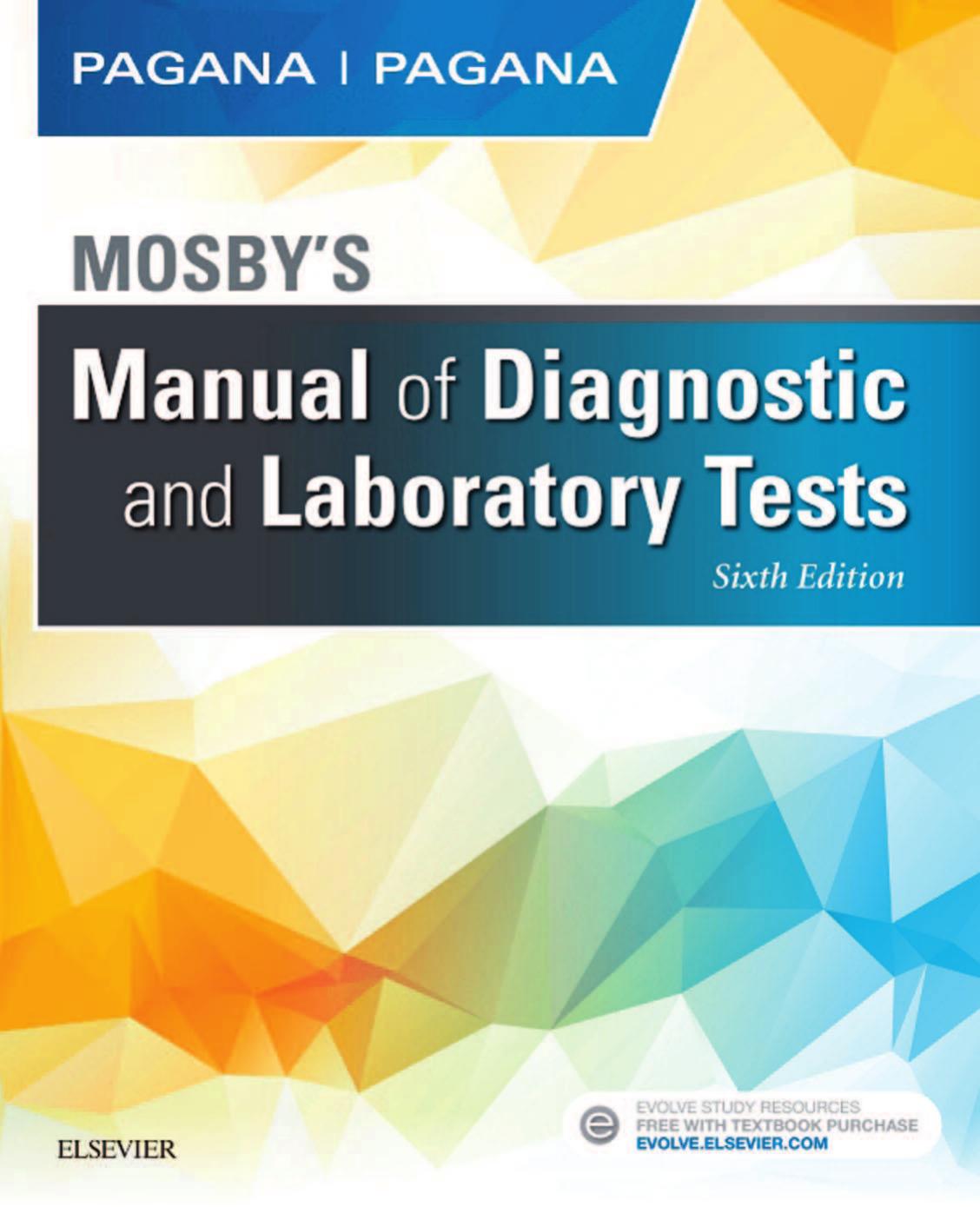
Mosbys Manual of Diagnostic and Laboratory Tests 6th edition by Kathleen Deska Pagana, Timothy Pagana – Ebook PDF Instant Download/Delivery: 0323446647, 9780323446648
Full download Mosbys Manual of Diagnostic and Laboratory Tests 6th edition after payment
Product details:
ISBN 10: 0323446647
ISBN 13: 9780323446648
Author: Kathleen Deska Pagana, Timothy Pagana
Writing care plans, understanding and performing tests, and interpreting test results is made easier with Mosby’s Manual of Diagnostic and Laboratory Tests, 6th Edition. This essential resource provides clear, concise overage of over 700 of the most commonly performed diagnostic and laboratory tests. Valuable in academic and clinical settings alike, it is beloved for its full-color design, user-friendly organization, and illustrations that help clarify keep concepts. Updated and streamlined content with new tests ensures you have the most relevant information. A new Diagnostic Testing for the Most Common Diseases section highlights the integration of medical testing as it relates to the top diseases or clinical syndromes.
- Tests are presented comprehensively and consistently, in a sequence that best simulates priorities in clinical practice.
- UNIQUE! Clinical Priorities boxes emphasize priorities and procedure considerations specific to understanding and performing tests.
- UNIQUE! Test Results and Clinical Significance sections describe the significance of the test findings and discuss the pathophysiology of the disease process and how it relates to the test result.
- UNIQUE! Home Care Responsibilities boxes focus on post-test factors for consideration.
- UNIQUE! Related Tests sections list additional tests related to the main test — including tests that provide similar information, confirmatory information, and other tests used to evaluate the same organ, disease process, or symptom complex.
- UNIQUE! Critical Values sections indicate test values of particular significance.
- UNIQUE! Icons indicate drugs that increase or decrease test values and patient teaching priorities.
- Age-Related Concerns boxes address pediatric and geriatric priorities.
- NEW and UPDATED! New tests have been added and outdated tests have been removed to reflect current best practices.
- NEW! A Diagnostic Testing for the Most Common Diseases section highlights the integration of medical testing as it relates to the top diseases or clinical syndromes.
Mosbys Manual of Diagnostic and Laboratory Tests 6th Table of contents:
Part 1: Introduction
-
Overview:
This guide serves as a comprehensive resource for healthcare professionals, detailing various diagnostic and laboratory tests, their procedures, clinical significance, preparation, and patient care. The text emphasizes the importance of correct sequencing, scheduling, and adherence to standard precautions to ensure accurate test results and patient safety.
Part 2: Blood Studies
-
2.1 Indications:
Overview of the clinical scenarios where blood tests are crucial. -
2.2 Preparation:
Guidelines on patient preparation (e.g., fasting, hydration). -
2.3 Procedures:
Step-by-step procedures for obtaining blood samples. -
2.4 Clinical Significance:
Explanation of the tests’ role in diagnosing and monitoring conditions. -
2.5 Complications:
Potential risks and complications related to blood draws (e.g., hematoma, infection). -
2.6 Patient Care:
Post-procedure care and patient education.
Part 3: Electrodiagnostic Tests
-
3.1 Indications:
When electrodiagnostic tests (e.g., EEG, EMG) are used in clinical settings. -
3.2 Preparation:
Instructions for preparing the patient (e.g., skin care, avoiding certain medications). -
3.3 Procedures:
Detailed steps for performing the tests. -
3.4 Clinical Significance:
Understanding the impact of electrodiagnostic tests in neurological assessments. -
3.5 Complications:
Risks such as discomfort or incorrect readings. -
3.6 Patient Care:
Guidance on managing patient comfort during testing.
Part 4: Endoscopic Procedures
-
4.1 Indications:
Situations where endoscopic tests (e.g., colonoscopy, bronchoscopy) are necessary. -
4.2 Preparation:
Patient preparation protocols (e.g., bowel prep for colonoscopy). -
4.3 Procedures:
Detailed procedures for performing endoscopic tests. -
4.4 Clinical Significance:
Role in identifying abnormalities such as tumors, ulcers, or blockages. -
4.5 Complications:
Potential risks like bleeding, perforation, or infection. -
4.6 Patient Care:
Post-procedure care and patient education.
Part 5: Urine and Fluid Analysis
-
5.1 Indications:
When urine and fluid tests (e.g., urinalysis, CSF analysis) are required. -
5.2 Preparation:
Instructions for collecting urine or fluid samples. -
5.3 Procedures:
Detailed procedures for analyzing urine and other fluids. -
5.4 Clinical Significance:
How these tests aid in diagnosing infections, kidney disease, and other conditions. -
5.5 Complications:
Potential complications such as improper sample collection or contamination. -
5.6 Patient Care:
Guidelines on patient comfort and aftercare.
Part 6: Diagnostic Imaging and Other Studies
-
6.1 Nuclear Scans
-
6.1.1 Indications
-
6.1.2 Procedures
-
6.1.3 Clinical Significance
-
6.1.4 Complications
-
6.1.5 Patient Care
-
-
6.2 Stool Tests
-
6.2.1 Indications
-
6.2.2 Procedures
-
6.2.3 Clinical Significance
-
6.2.4 Complications
-
6.2.5 Patient Care
-
-
6.3 Ultrasound Studies
-
6.3.1 Indications
-
6.3.2 Procedures
-
6.3.3 Clinical Significance
-
6.3.4 Complications
-
6.3.5 Patient Care
-
-
6.4 X-ray Studies
-
6.4.1 Indications
-
6.4.2 Procedures
-
6.4.3 Clinical Significance
-
6.4.4 Complications
-
6.4.5 Patient Care
-
-
6.5 Miscellaneous Studies
-
6.5.1 Indications
-
6.5.2 Procedures
-
6.5.3 Clinical Significance
-
6.5.4 Complications
-
6.5.5 Patient Care
-
Part 7: Considerations for Accurate Diagnosis
-
7.1 Interfering Factors
Understanding how various factors (e.g., medications, diet, timing) can affect test results. -
7.2 Contraindications
Identifying situations where certain tests should be avoided due to patient-specific factors. -
7.3 Adherence to Standard Precautions
Importance of following safety protocols to ensure accurate results and minimize risk to both patients and healthcare providers. -
7.4 Related Tests
Overview of tests often conducted together to confirm diagnoses or monitor disease progression.
Part 8: Conclusion
This guide provides an essential reference for healthcare professionals, enhancing their ability to understand and manage diagnostic procedures in laboratory medicine. By understanding the preparation, procedures, significance, complications, and patient care associated with each test, practitioners can improve diagnostic accuracy and patient outcomes.
People also search Mosbys Manual of Diagnostic and Laboratory Tests 6th :
mosby’s manual of diagnostic and laboratory tests pdf
mosby’s manual of diagnostic procedures and laboratory tests
mosby’s manual of diagnostic and laboratory tests 6th edition pdf
mosby’s manual of diagnostic and laboratory tests latest edition
mosby’s manual of diagnostic and laboratory tests 7th edition ebook
Tags: Kathleen Deska Pagana, Timothy Pagana, Mosbys Manual, Laboratory Tests