


Networked Control Systems Cloud Control and Secure Control 1st edition by Magdi Mahmoud, Yuanqing Xia – Ebook PDF Instant Download/Delivery: 0128163016, 9780128163016
Full download Networked Control Systems Cloud Control and Secure Control 1st edition after payment
Product details:
ISBN 10: 0128163016
ISBN 13: 9780128163016
Author: Magdi Mahmoud, Yuanqing Xia
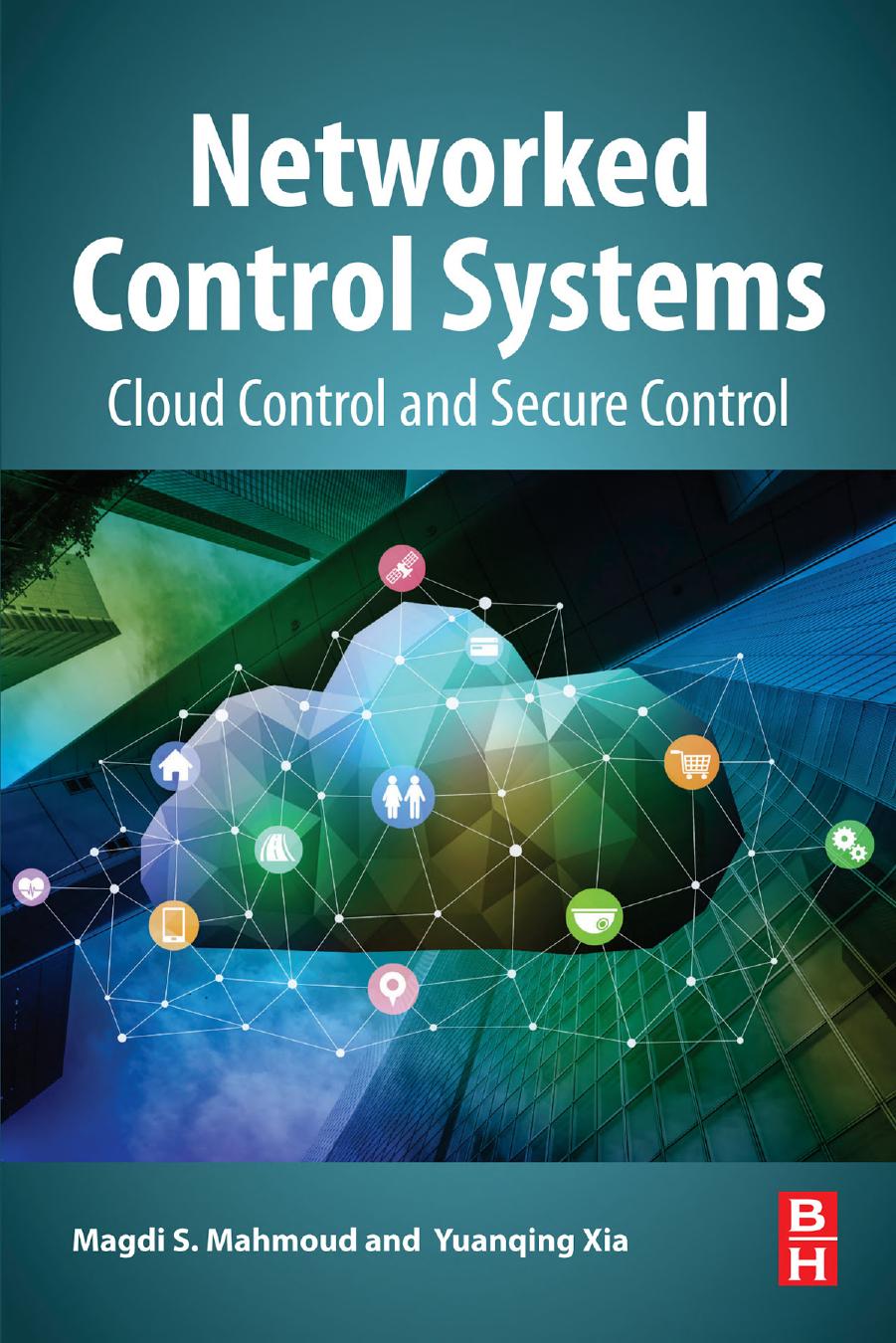
Networked Control Systems: Cloud Control and Secure Control explores new technological developments in networked control systems (NCS), including new techniques, such as event-triggered, secure and cloud control. It provides the fundamentals and underlying issues of networked control systems under normal operating environments and under cyberphysical attack. The book includes a critical examination of the principles of cloud computing, cloud control systems design, the available techniques of secure control design to NCS’s under cyberphysical attack, along with strategies for resilient and secure control of cyberphysical systems. Smart grid infrastructures are also discussed, providing diagnosis methods to analyze and counteract impacts.
Finally, a series of practical case studies are provided to cover a range of NCS’s. This book is an essential resource for professionals and graduate students working in the fields of networked control systems, signal processing and distributed estimation.
Networked Control Systems Cloud Control and Secure Control 1st Table of contents:
1 An Overview
1.1 Introduction
1.2 Networked Control Systems: Challenges
1.2.1 Basic Classification
1.2.2 Main Features
1.3 Current Key Ingredients
1.3.1 Control of Networks
1.3.2 Control Over Networks
1.3.3 Delay Characteristics
1.3.4 Data Loss
1.3.5 Quantization and Coding
1.3.6 QoS and Control
1.3.7 Multiagent Systems
1.3.8 Internet-Based Control
1.4 Internet-of-Things
1.4.1 Architecture
1.4.2 Knowledge and Big Data
1.4.3 Robustness
1.4.4 Standardizations
1.5 Cyberphysical Systems
1.5.1 Progress Ahead
1.5.2 Basic Features
1.5.3 Cyberphysical Attacks
1.5.4 Detection Methods
1.5.5 Robustness, Resilience and Security
1.5.6 Multilayer Systems
1.6 Notes
References
2 Networked Control Systems’ Fundamentals
2.1 Modeling of NCS
2.1.1 Quantization Errors
2.1.2 Packet Dropouts
2.1.3 Variable Sampling/Transmission Intervals
2.1.4 Variable Transmission Delays
2.1.5 Communication Constraints
2.2 Control Approaches Over Networks
2.2.1 Input Delay System Approach
2.2.2 Markovian System Approach
2.2.3 Switched System Approach
2.2.4 Stochastic System Approach
2.2.5 Impulsive System Approach
2.2.6 Predictive Control Approach
2.3 Advanced Issues in NCS
2.3.1 Decentralized and Distributed NCS
2.3.2 Event-Triggered Schemes
2.3.3 Cloud Control System
2.3.4 Co-Design in NCS
2.4 Notes
References
3 Cloud Computing
3.1 Introduction
3.2 Overview of Cloud Computing
3.2.1 Definitions
3.2.2 Related Technologies
3.3 Cloud Computing Architecture
3.3.1 A Layered Model of Cloud Computing
3.3.2 Business Model
3.3.3 Types of Clouds
3.4 Integrating CPS With the Cloud
3.5 Cloud Computing Characteristics
3.5.1 State-of-the-Art
3.5.2 Cloud Computing Technologies
3.5.3 Architectural Design of Data Centers
3.5.4 Distributed File System Over Clouds
3.5.5 Distributed Application Framework Over Clouds
3.5.6 Commercial Products
3.5.6.1 Amazon EC2
3.5.7 Microsoft Windows Azure Platform
3.5.7.1 Google App Engine
3.6 Addressed Challenges
3.6.1 Automated Service Provisioning
3.6.2 Virtual Machine Migration
3.6.3 Server Consolidation
3.6.4 Energy Management
3.6.5 Traffic Management and Analysis
3.6.6 Data Security
3.6.7 Software Frameworks
3.6.8 Storage Technologies and Data Management
3.6.9 Novel Cloud Architectures
3.7 Progress of Cloud Computing
3.7.1 The Major Providers
3.7.2 Control in the Cloud
3.7.3 PLC as a Service
3.7.4 Historian as a Service
3.7.5 HMI as a Service
3.7.6 Control as a Service
3.8 Cloud-Based Manufacturing
3.8.1 Cloud-Based Services
3.8.2 Conceptual Framework
3.9 Notes
References
4 Control From the Cloud
4.1 Introduction
4.2 Towards Controlling From the Cloud
4.2.1 Overview
4.2.2 Wireless Control Systems
4.2.3 Basic Classification
4.2.4 Remote Control Systems
4.2.5 Some Prevailing Challenges
4.2.6 Reflections on Industrial Automation
4.2.7 Quality-of-Service (QoS)
4.2.8 Preliminary Control Models
4.3 Cloud Control Systems
4.3.1 Introduction
4.3.2 Model Based Networked Control Systems
4.3.3 Data Driven Networked Control Systems Design
4.3.4 Networked Multiagent Systems
4.3.5 Control of Complex Systems
4.3.6 Cloud Control System Concepts
4.3.7 A Rudiment of Cloud Control Systems
4.3.8 Cooperative Cloud Control
4.4 Notes
References
5 Secure Control Design Techniques
5.1 Introduction
5.1.1 Security Goals
5.1.2 Workflow Within CPS
5.1.3 Summary of Attacks
5.1.4 Robust Networked Control Systems
5.1.5 Resilient Networked Systems Under Attacks
5.2 Time-Delay Switch Attack
5.2.1 Introduction
5.2.2 Model Setup
5.2.3 Control Methodology
5.2.4 Procedure for Controller Design
5.2.5 Simulation Example 5.1
5.2.6 Simulation Example 5.2
5.2.7 Simulation Example 5.3
5.2.8 Simulation Example 5.4
5.3 Security Control Under Constraints
5.3.1 Problem Formulation
5.3.2 A Binary Framework
5.3.2.1 Gaussian Noise Distribution
5.3.2.2 Finite Mean Noise Distribution
5.3.3 An M-ary Framework
5.3.4 Terminal State With a Continuous Distribution
5.3.5 Simulation Example 5.5
5.4 Lyapunov-Based Methods Under Denial-of-Service
5.4.1 Networked Distributed System
5.4.2 DoS Attacks’ Frequency and Duration
5.4.3 A Small-Gain Approach for Networked Systems
5.4.4 Stabilization of Distributed Systems Under DoS
5.4.5 A Hybrid Transmission Strategy
5.4.6 Zeno-Free Event-Triggered Control in the Absence of DoS
5.4.7 Hybrid Transmission Strategy Under DoS
5.4.8 Simulation Example 5.6
5.4.9 Simulation Example 5.7
5.5 Stabilizing Secure Control
5.5.1 Process Dynamics and Ideal Control Action
5.5.2 DoS and Actual Control Action
5.5.3 Control Objectives
5.5.4 Stabilizing Control Update Policies
5.5.5 Time-Constrained DoS
5.5.6 ISS Under Denial-of-Service
5.5.7 Simulation Example 5.8
5.5.8 Simulation Example 5.9
5.5.9 Simulation Example 5.10
5.5.10 Simulation Example 5.11
5.6 Notes
References
6 Case Studies
6.1 Hybrid Cloud-Based SCADA Approach
6.1.1 Cloud-Based SCADA Concept
6.1.2 Architecture Adaptation
6.1.3 Risk Evaluation
6.2 Smart Grid Under Time Delay Switch Attacks
6.2.1 System Model
6.2.2 Time-Delay Attack
6.2.3 TDS Attack as Denial-of-Service (DoS) Attack
6.2.4 A Crypto-Free TDS Recovery Protocol
6.2.5 Decision Making Unit (DMU)
6.2.6 Delay Estimator Unit (DEU)
6.2.7 Stability of the LFC Under TDS Attack
6.2.8 Simulation Example 6.1
6.3 Multisensor Track Fusion-Based Model Prediction
6.3.1 State Representation of Observation Model
6.3.2 Electromechanical Oscillation Model Formulation
6.3.3 Initial Correlation Information
6.3.4 Computation of Crosscovariance
6.3.5 Moving Horizon Estimate
6.3.6 Track Fusion Center
6.3.7 Evaluation of Residuals
6.3.8 Simulation Studies
6.4 Notes
References
7 Smart Grid Infrastructures
7.1 Cyberphysical Security
7.1.1 Introduction
7.1.2 Pricing and Generation
7.1.3 Cyberphysical Approach to Smart Grid Security
7.1.4 System Model
7.1.5 Cybersecurity Requirements
7.1.6 Attack Model
7.1.6.1 Attack Entry Points
7.1.6.2 Adversary Actions
7.1.7 Countermeasures
7.2 System-Theoretic Approaches
7.2.1 System Model
7.2.2 Security Requirements
7.2.3 Attack Model
7.2.4 Countermeasures
7.2.5 Needs for Cyberphysical Security
7.2.6 Typical Cases
7.2.7 Defense Against Replay Attacks
7.2.8 Cybersecurity Investment
7.3 Wide-Area Monitoring, Protection and Control
7.3.1 Introduction
7.3.2 Wide-Area Monitoring, Protection and Control
7.3.3 Cyberattack Taxonomy
7.3.4 Cyberattack Classification
7.3.5 Coordinated Attacks on WAMPAC
7.4 Notes
References
8 Secure Resilient Control Strategies
8.1 Basis for Resilient Cyberphysical System
8.1.1 Networked Control System Models
8.2 Resilient Design Approach
8.2.1 Introduction
8.2.2 Background
8.2.3 Problem Statement
8.2.4 System Model
8.2.5 Attack Monitor
8.2.6 Switching the Controller
8.2.7 Simulation Example 8.1
8.3 Remote State Estimation Under DoS Attacks
8.3.1 Introduction
8.3.2 Problem Setup
8.3.3 Process and Sensor Model
8.3.4 Multichannel Communication and Attack Model
8.3.5 Remote State Estimation
8.3.6 Problem of Interest
8.3.7 Stochastic Game Framework
8.3.8 Markov Chain Model
8.3.9 Extension to Power-Level Selection
8.3.10 Equilibrium Analysis
8.3.11 Learning Methodology
8.3.12 Simulations Example 8.2
8.3.12.1 Multichannel Strategies
8.3.12.2 Multichannel Strategies and Power-Level Selection
8.4 Notes
References
9 Cyberphysical Security Methods
9.1 A Generalized Game-Theoretic Approach
9.1.1 Physical Layer Control Problem
9.1.2 Cyberstrategy
9.1.3 Perfect-State Feedback Control
9.1.4 Cyberlayer Defense System
9.1.5 Linear Quadratic Problem
9.1.6 Cascading Failures
9.1.7 Games-in-Games Structure
9.1.8 Simulation Example 9.1
9.1.9 Defense Against Denial-of-Service Attack
9.1.10 Control System Model
9.1.11 Intrusion Detection Systems
9.1.12 Crosslayer Control Design
9.1.13 Simulation Example 11.2
9.1.14 Linear Programming for Computing Saddle-Point Equilibrium
9.2 Game-Theoretic Approach
9.2.1 Introduction
9.2.2 Model of NCS Subject to DoS Attack
9.2.3 Optimal Tasking Design
9.2.4 Defense and Attack Strategy Design
9.2.5 Tasking Control Strategies
9.2.6 Defense and Attack Strategies
9.2.7 Development of Defense Strategies
9.2.8 Development of Attack Strategies
9.2.9 Model Description
9.2.10 Strategy Design
9.2.11 Robustness Study
9.2.12 Comparative Study
9.2.13 Verification
9.3 Convex Optimization Problems
9.3.1 Introduction
9.3.2 Cybermission Damage Model
9.3.3 Known Mission Damage Data
9.3.4 Unknown Mission Damage Data
9.3.5 iCTF Competition
9.3.6 2011 iCTF
9.3.7 Actions Available to Every Team
9.3.8 Optimization Schemes and iCTF
9.3.9 iCTF Results
9.4 Notes
References
A Appendix
A.1 Preliminaries and Notations
A.2 A Brief of Game Theory
A.2.1 A Short Review
A.2.2 General Game Model and Equilibrium Concept
A.2.3 A Stochastic Game Formulation
A.2.4 Minimax Theorem
A.3 Gateaux Differential
A.4 Linear Matrix Inequalities
A.4.1 Basics
A.4.2 Some Standard Problems
A.4.3 The S-Procedure
A.5 Some Lyapunov-Krasovskii Functionals
A.6 Some Formulae for Matrix Inverses
A.6.1 Inverses of Block Matrices
A.6.2 Matrix Inversion Lemma
A.7 Partial Differentiation
References
Index
People also search for Networked Control Systems Cloud Control and Secure Control 1st:
networked control system
network control
a client controls access to the resources on a network
system network configuration cui
cloud network controller
Tags: Magdi Mahmoud, Yuanqing Xia, Networked Control, Secure Control