


Physicochemical and Environmental Plant Physiology 5th edition by Park Nobel – Ebook PDF Instant Download/Delivery: 0128191465, 978-0128191460
Full download Physicochemical and Environmental Plant Physiology 5th edition after payment
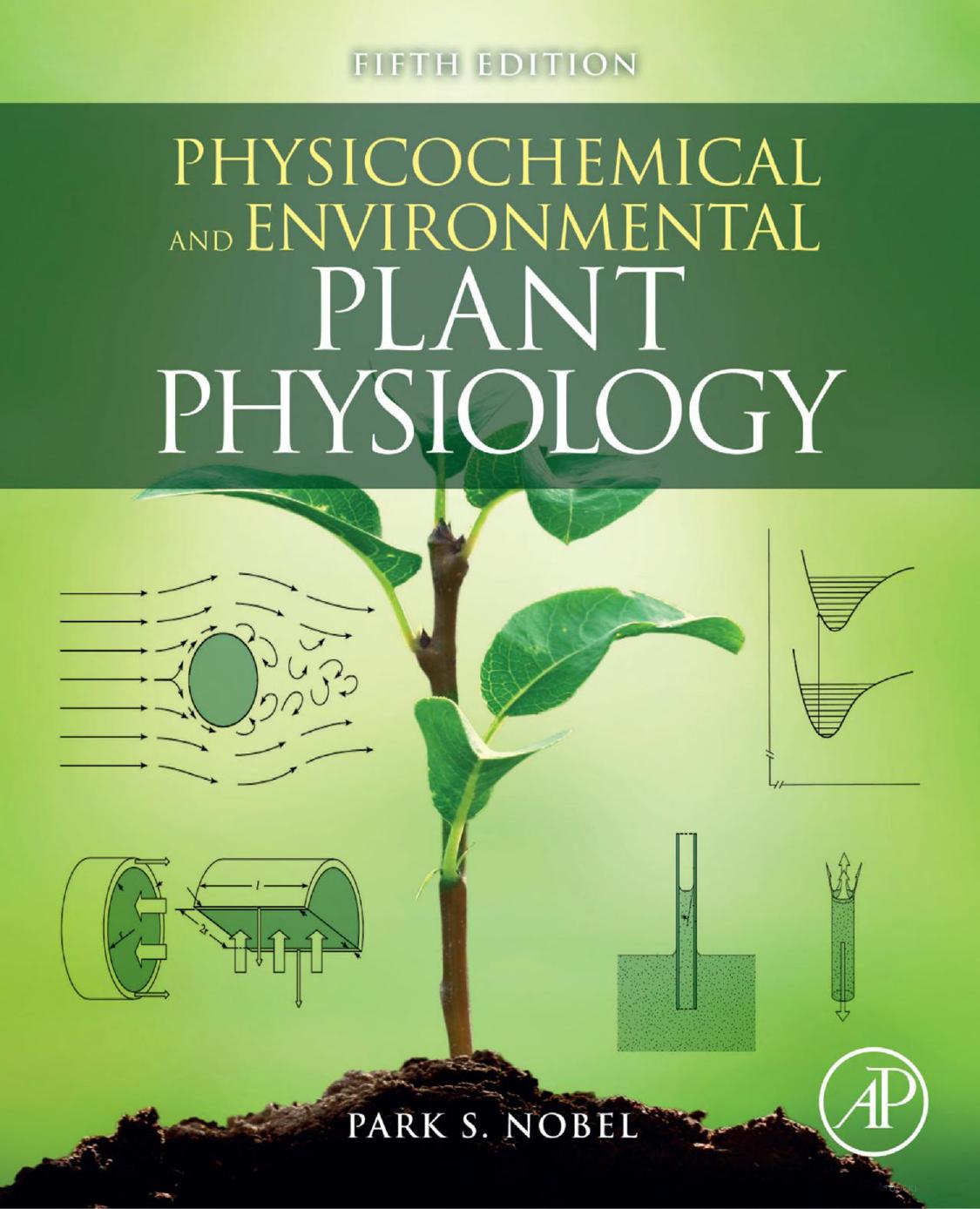
Product details:
ISBN 10: 0128191465
ISBN 13: 978-0128191460
Author: Park Nobel
Physicochemical and Environmental Plant Physiology, Fifth Edition, is the updated version of an established and successful text and reference for plant scientists. This work represents the seventh book in a 50-year series by Park Nobel beginning in 1970. The original structure and philosophy of the book continue in this new edition, providing a genuine synthesis of modern physicochemical and physiological thinking, while updating the content. Key concepts in plant physiology are developed with the use of chemistry, physics, and mathematics fundamentals.The book contains plant physiology basics while also including many equations and often their derivation to quantify the processes and explain why certain effects and pathways occur, helping readers to broaden their knowledge base. New topics included in this edition are advances in plant hydraulics, other plant–water relations, and the effects of climate change on plants. This series continues to be the gold standard in environmental plant physiology.
- Describes the chemical and the physical principles behind plant physiological processes
- Provides key equations for each chapter and solutions for the problems on each topic
- Includes features that enhances the utility of the book for self-study such as problems after each chapter and the 45-page section “Solution to Problems” at the end of the book
- Includes appendices with conversation factors, constants/coefficients, abbreviations, and symbols
New to this edition:
- The scientific fields and the nationalities of the more than 115 scientists mentioned in the book, providing a nice personal touch
- While adding over 100 new or updated references, reference of special importance historically are retained, showing how science has advanced over the ages
- The often challenging problems at the end of each chapter provide an important test of the mastery of the topics covered. Moreover, the solutions to the problems are presented in detail at the end of the book. The book can thus be used in courses but also especially useful for students or other persons studying this often difficult material on their own
- Finally and most important, the fifth edition continues the emphasis of a quantitative approach begun fifty years ago by Park Nobel (1970) with the publication of his first book in the series. Over the next fifty years from 1970 to 2020, the author has gained considerable experience on how to present quantitative and often abstract material to students. This edition is most likely the final version in the series, which not only covers some of his unique contributions but also has helped countless students and colleagues appreciate the power and insight gained into biology from calculations!
Physicochemical and Environmental Plant Physiology 5th Table of contents:
1. Cells and Diffusion
1.1. Cell Structure
1.2. Diffusion
1.3. Membrane Structure
1.4. Membrane Permeability
1.5. Cell Walls
1.6. Summary
1.7. Problems
Major Equations
2. Water
2.1. Physical Properties
2.2. Chemical Potential
2.3. Central Vacuole and Chloroplasts
2.4. Water Potential and Plant Cells
2.5. Summary
2.6. Problems
Major Equations
3. Solutes
3.1. Chemical Potential of Ions
3.2. Fluxes and Diffusion Potentials
3.3. Characteristics of Crossing Membranes
3.4. Mechanisms for Crossing Membranes
3.5. Principles of Irreversible Thermodynamics
3.6. Solute Movement Across Membranes
3.7. Summary
3.8. Problems
Major Equations
4. Light
4.1. Wavelength and Energy
4.2. Absorption of Light by Molecules
4.3. Deexcitation
4.4. Absorption Spectra and Action Spectra
4.5. Summary
4.6. Problems
Major Equations
5. Photochemistry of Photosynthesis
5.1. Chlorophyll—Chemistry and Spectra
5.2. Other Photosynthetic Pigments
5.3. Excitation Transfers Among Photosynthetic Pigments
5.4. Groupings of Photosynthetic Pigments
5.5. Electron Flow
5.6. Summary
5.7. Problems
Major Equations
6. Bioenergetics
6.1. Gibbs Free Energy
6.2. Biological Energy Currencies
6.3. Chloroplast Bioenergetics
6.4. Mitochondrial Bioenergetics
6.5. Energy Flow in the Biosphere
6.6. Summary
6.7. Problems
Major Equations
7. Temperature and Energy Budgets
7.1. Energy Budget—Radiation
7.2. Heat Conduction and Convection
7.3. Latent Heat—Transpiration
7.4. Further Examples of Energy Budgets
7.5. Soil
7.6. Summary
7.7. Problems
Major Equations
8. Leaves and Fluxes
8.1. Resistances and Conductances—Transpiration
8.2. Water Vapor Fluxes Accompanying Transpiration
8.3. CO2 Conductances and Resistances
8.4. CO2 Fluxes Accompanying Photosynthesis
8.5. Water-Use Efficiency
8.6. Summary
8.7. Problems
Major Equations
9. Plants and Fluxes
9.1. Gas Fluxes Above Plant Canopy
9.2. Gas Fluxes Within Plant Communities
9.3. Water Movement in Soil
9.4. Water Movement in the Xylem and the Phloem
9.5. Soil–Plant–Atmosphere Continuum
9.6. Global Climate Change
9.7. Summary
9.8. Problems
Solutions To Problems
Appendix I. Numerical Values of Constants and Coefficients
Appendix II. Conversion Factors and Definitions
Appendix III. Mathematical Relations
Appendix IV. Gibbs Free Energy and Chemical Potential
Index
People also search for Physicochemical and Environmental Plant Physiology 5th:
nobel ps 2009 physicochemical and environmental plant physiology
physicochemical and environmental plant physiology park s. nobel
physicochemical properties of plants
what is environment physiology
physicochemical examples
Tags: Park Nobel, Plant Physiology, Physicochemical and Environmental