


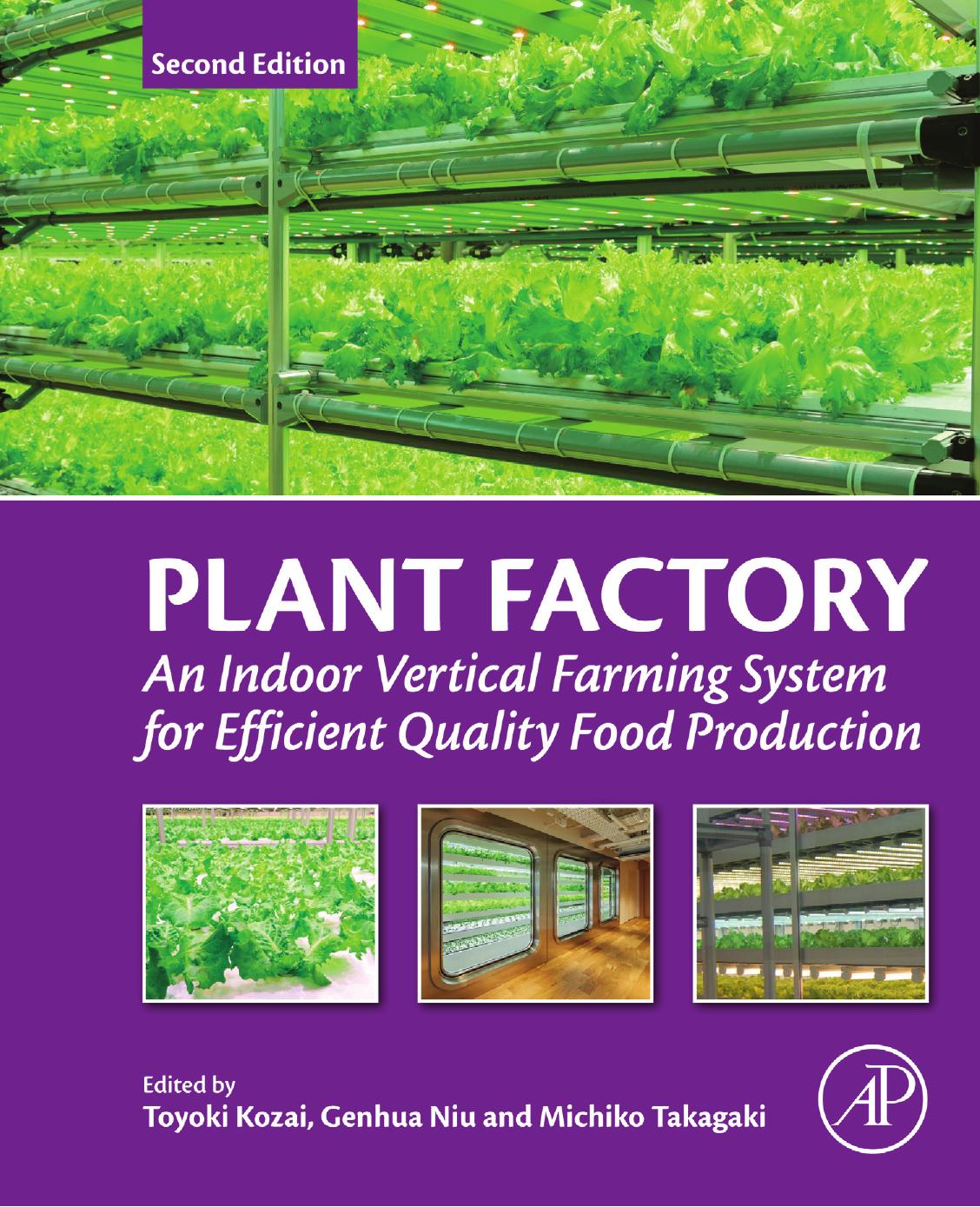
Plant Factory 2nd edition by Toyoki Kozai, Genhua Niu, Michiko Takagaki ISBN 0128166925 9780128166925
Original price was: $70.00.$35.00Current price is: $35.00.
Instant download Plant Factory An Indoor Vertical Farming System for Efficient Food Production Toyoki Kozai & Genhua Niu & Michiko Takagaki after payment
Plant Factory 2nd edition by Toyoki Kozai, Genhua Niu, Michiko Takagaki – Ebook PDF Instant Download/Delivery: 0128166925 , 9780128166925
Full download Plant Factory 2nd edition after payment
Product details:
ISBN 10: 0128166925
ISBN 13: 9780128166925
Author: Toyoki Kozai, Genhua Niu, Michiko Takagaki
Plant Factory: An Indoor Vertical Farming System for Efficient Quality Food Production, Second Edition presents a comprehensive look at the implementation of plant factory (PF) practices to yield food crops for both improved food security and environmental sustainability. Edited and authored by leading experts in PF and controlled environment agriculture (CEA), the book is divided into five sections, including an Overview and the Concept of Closed Plant Production Systems (CPPS), the Basics of Physics and Physiology – Environments and Their Effects, System Design, Construction, Cultivation and Management and Plant Factories in Operation.
In addition to new coverage on the rapid advancement of LED technology and its application in indoor vertical farming, other revisions to the new edition include updated information on the status of business R&D and selected commercial PFALs (plant factory with artificial lighting). Additional updates include those focused on micro and mini-PFALs for improving the quality of life in urban areas, the physics and physiology of light, the impact of PFAL on the medicinal components of plants, and the system design, construction, cultivation and management issues related to transplant production within closed systems, photoautotrophic micro-propagation and education, training and intensive business forums on PFs.
Plant Factory 2nd Table of contents:
Part 1. Overview and concept of closed plant production system (CPPS)
Chapter 1. Introduction
Chapter 2. Role of the plant factory with artificial lighting (PFAL) in urban areas
2.1. Introduction
2.2. Interrelated global issues to be solved concurrently
2.3. Resource inflow and waste outflow in urban areas
2.4. Energy and material balance in Urban ecosystems
2.5. Growing social needs and interest in PFALs
2.6. Criticisms of PFALs and responses to them
2.7. Toward a sustainable PFAL
2.8. Conclusion
Chapter 3. PFAL business and R&D in Asia and North America: Status and perspectives
3.1. Introduction
3.2. Japan
3.3. Taiwan
3.4. Korea
3.5. China
3.6. Thailand
3.7. North America
Chapter 4. Vertical farming in Europe: Present status and outlook
4.1. Introduction
4.2. Vertical farming nonprofit sector associations
4.3. The entrepreneurial landscape
4.4. Final remarks and conclusions
Chapter 5. Plant factory as a resource-efficient closed plant production system
5.1. Introduction
5.2. Definition and principal components of PFAL
5.3. Definition of resource use efficiency
5.4. Representative values of resource use efficiency
5.5. Electricity consumption and cost
5.6. Improving light energy use efficiency
5.7. Estimation of rates of photosynthesis, transpiration, and water and nutrient uptake
5.8. Coefficient of performance of heat pump
Chapter 6. Micro- and mini-PFALs for improving the quality of life in urban areas
6.1. Introduction
6.2. Characteristics and types of m-PFALs
6.3. m-PFALs in various scenes
6.4. Design concept of m-PFALs
6.5. m-PFALs connected by the internet
6.6. Advanced usage of m-PFAL
6.7. m-PFALs connected with other biosystems as a model ecosystem
6.8. Light source and lighting system design
Chapter 7. Rooftop plant production systems in urban areas
7.1. Introduction
7.2. Rooftop plant production
7.3. Building integration
Part 2. Basics of physics and physiology — Environments and their effects
Chapter 8. Light sources
8.1. Introduction
8.2. Classification of light sources
8.3. Light-emitting diodes
8.4. Fluorescent lamps
Chapter 9. Plant responses to light
9.1. Physical properties of light and its measurement
9.2. Plant responses to light environments
9.3. Conclusion
Chapter 10. LED advancements for plant-factory artificial lighting
10.1. Need for CEA of all kinds
10.2. All-important energy costs
10.3. Pre-LED era
10.4. Enter light-emitting diodes (LEDs)
10.5. History of LED use for plant lighting
10.6. First LED/plant-growth tests
10.7. NASA spinoff
10.8. Sorting out the spectral contributions of LED wavebands
10.9. Red light
10.10. Blue light
10.11. Green light
10.12. Far-red light
10.13. White light from LEDs
10.14. UV radiation from LEDs
10.15. Advances in LEDs for PFAL
10.16. Intrinsic LED efficiency
10.17. Advances in LED utilization
10.18. Distribution of light from LEDs
10.19. Leveraging the unique properties of LEDs
10.20. Phasic co-optimization of LED lighting with the aerial environment
10.21. Multiple light/growth prescriptions simultaneously in a warehouse
10.22. Summary
Chapter 11. Physical environmental factors and their properties
11.1. Introduction
11.2. Temperature, energy, and heat
11.3. Water vapor
11.4. Moist air properties
11.5. CO2 concentration
11.6. Air current speed
11.7. Number of air exchanges per hour
Chapter 12. Photosynthesis and respiration
12.1. Introduction
12.2. Photosynthesis
12.3. C3, C4, and CAM photosynthesis
12.4. Respiration
12.5. Photorespiration
12.6. Leaf area index (LAI) and light penetration
12.7. Single leaf and canopy
Chapter 13. Growth, development, transpiration, and translocation as affected by abiotic environmental factors
13.1. Introduction
13.2. Shoot and root growth
13.3. Environmental factors affecting plant growth and development
13.4. Development (photoperiodism and temperature affecting flower development)
13.5. Transpiration
13.6. Translocation
Chapter 14. Nutrition and nutrient uptake in soilless culture systems
14.1. Introduction
14.2. Essential elements
14.3. Beneficial elements
14.4. Nutrient uptake and movement
14.5. Nutrient solution
14.6. Solution pH and nutrient uptake
14.7. Nitrogen form
14.8. New concept: quantitative management
14.9. Can individual ion concentrations be managed automatically?
Chapter 15. Tipburn
15.1. Introduction
15.2. Cause of tipburn
15.3. Countermeasure
Chapter 16. Functional components in leafy vegetables
16.1. Introduction
16.2. Low-potassium vegetables
16.3. Low-nitrate vegetables
16.4. Improving the quality of leafy vegetables by controlling light quality
16.5. Conclusion
Chapter 17. Medicinal components
17.1. Introduction
17.2. Growing medicinal plants under controlled environments: medicinal components and environmental factors
17.3. Conclusion
Chapter 18. Production of pharmaceuticals in a specially designed plant factory
18.1. Introduction
18.2. Candidate crops for PMPs
18.3. Construction of GM plant factories
18.4. Optimization of environment conditions for plant growth
18.5. Concluding remarks
Part 3. System design, construction, cultivation and management
Chapter 19. Plant production process, floor plan, and layout of PFAL
19.1. Introduction
19.2. Motion economy and PDCA cycle
19.3. Plant production process
19.4. Layout
19.5. Sanitation control
Chapter 20. Hydroponic systems
20.1. Introduction
20.2. Hydroponic systems
20.3. Sensors and controllers
20.4. Nutrient management systems
20.5. Ion-specific nutrient management
20.6. Sterilization systems
Chapter 21. Seeding, seedling production and transplanting
21.1. Introduction
21.2. Preparation
21.3. Seeding
21.4. Seedling production and transplanting
Chapter 22. Transplant production in closed systems
22.1. Introduction
22.2. Main components and their functions
22.3. Ecophysiology of transplant production
22.4. Photosynthetic characteristics of vegetable and medicinal transplants as affected by the light environment
22.5. Blueberry
22.6. Propagation and production of strawberry transplants
Chapter 23. Photoautotrophic micropropagation
23.1. Introduction
23.2. Development of PAM
23.3. Advantages and disadvantages of PAM for growth enhancement of in vitro plants
23.4. Natural ventilation system using different types of small culture vessels
23.5. Forced ventilation system for large culture vessels
23.6. Potential for secondary metabolite production of in vitro medicinal plants using photoautotrophic micropropagation
23.7. Conclusion
Chapter 24. Biological factor management
24.1. Introduction
24.2. Controlling algae
24.3. Microorganism management
24.4. Concluding remarks
Chapter 25. Design and management of PFALs
25.1. Introduction
25.2. Structure and function of the PFAL-D&M system
25.3. PFAL-D (design) subsystem
25.4. PFAL-M subsystem
25.5. Design of the lighting system
25.6. Electricity consumption and its reduction
25.7. Three-dimensional distribution of air temperature
25.8. Plant growth measurement, analysis, and control
25.9. Conclusions
Chapter 26. Automated technology in plant factories with artificial lighting
26.1. Introduction
26.2. Seeding device
26.3. Seedling selection robot system
26.4. Shuttle-type transfer robot
26.5. Cultivation panel washer
Chapter 27. Life cycle assessment
27.1. Standard of life cycle assessment (LCA)
27.2. General remarks for the assessment of PFALs
27.3. A case study of LCA on plant factories (Kikuchi et al., 2018)
27.4. Summary and outlook
Chapter 28. Education, training, and business workshops and forums on plant factories
28.1. Introduction
28.2. JPFA business workshops
28.3. Business forums
Part 4. PFALs in operation and its perspectives
Chapter 29. Selected PFALs in the United States, the Netherlands, and China
29.1. Introduction
29.2. AeroFarms in the United States
29.3. Signify facility in the Netherlands—GrowWise center
29.4. BrightBox in the Netherlands
29.5. Fujian Sanan Sino-Science photobiotech in China
Chapter 30. Selected PFALs in Japan
30.1. Introduction
30.2. New PFAL built in 2017 in Japan—808 factory
30.3. New PFAL built in 2018 in Japan—Spread
30.4. New PFAL system developed in Japan—PlantX
30.5. Conclusion
Chapter 31. Representative plant factories in Taiwan
31.1. Introduction
31.2. Representative PFALs in Taiwan
31.3. The largest PF in Taiwan
Chapter 32. Challenges for the next-generation PFALs
32.1. Introduction
32.2. Lighting system
32.3. Breeding and seed propagation
32.4. Cultivation
32.5. PFALs with solar cells
Chapter 33. Conclusions: Resource-saving and resource-consuming characteristics of PFALs
33.1. Roles of PFALs in urban areas
33.2. Benefits of producing fresh vegetables using PFALs in urban areas
33.3. Resource-saving characteristics of PFALs
33.4. Possible reductions in electricity consumption and initial investment
33.5. Electricity consumption
33.6. Initial resource investment
33.7. Increasing the productivity and quality
33.8. Dealing with power cuts
33.9. Challenges
Index
People also search for Plant Factory 2nd:
indoor vertical farming companies
indoor vertical farming system
industrial indoor farming
industrial vertical farming
indoor vertical farming technology
Tags: Toyoki Kozai, Genhua Niu, Michiko Takagaki, Plant Factory