


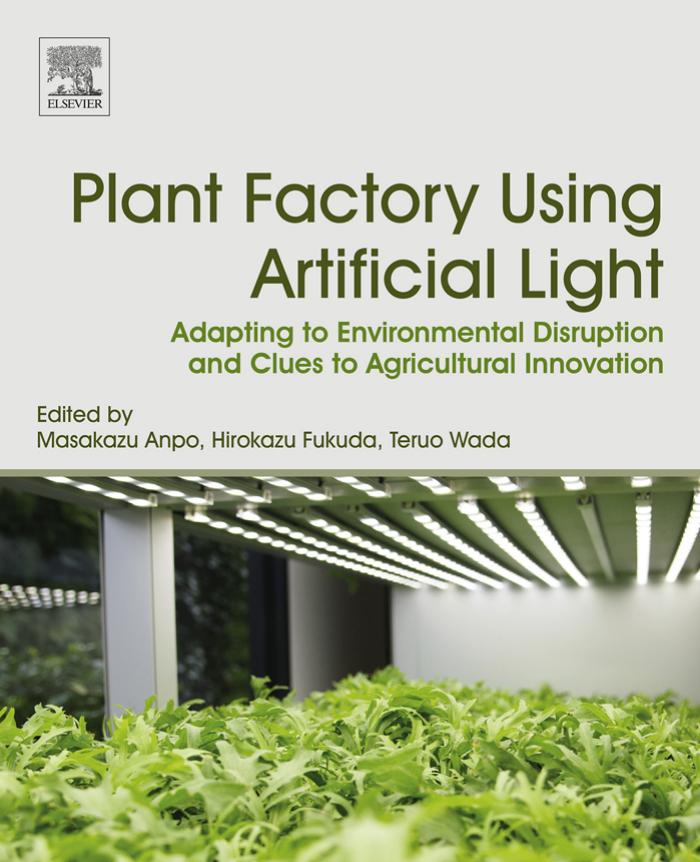
Plant Factory Using Artificial Light 1st edition by Masakazu Anpo, Hirokazu Fukuda, Teruo Wada – Ebook PDF Instant Download/Delivery: 0128139749, 9780128139745
Full download Plant Factory Using Artificial Light 1st edition after payment
Product details:
ISBN 10: 0128139749
ISBN 13: 9780128139745
Author: Masakazu Anpo, Hirokazu Fukuda, Teruo Wada
Plant Factory Using Artificial Light: Adapting to Environmental Disruption and Clues to Agricultural Innovation features interdisciplinary scientific advances as well as cutting-edge technologies applicable to plant growth in plant factories using artificial light. The book details the implementation of photocatalytic methods that ensure the safe and sustainable production of vegetables at low cost and on a commercial scale, regardless of adverse natural or manmade influences such as global warming, climate change, pollution, or other potentially damaging circumstances. Plant Factory Using Artificial Light is an essential resource for academic and industry researchers in chemistry, chemical/mechanical/materials engineering, chemistry, agriculture, and life/environmental/food sciences concerned with plant factories.
- Presents an interdisciplinary approach to advanced plant growth technologies
- Features methods for reducing electric energy costs in plant factories and increasing LED efficiency
- Considers commercial scale operation
Plant Factory Using Artificial Light 1st Table of contents:
Introduction: Artificial Light-Type Plant Factories—Outline and a Vision for the Future
Part I: Efficient and Effective Vegetable Cultivation Technologies to Enhance Productivity and Quality
Section A: Fundamentals and Practices of Cultivation Technology
Chapter 1.1: Theory and Technology to Control the Nutrient Solution of Hydroponics
1.1.1. Introduction
1.1.2. Nutrient Solution-Control System
1.1.3. Calculating Nutrient Uptake by Plants
1.1.3.1. Principle of Yamazaki Formula in the Nutrient Solutions
1.1.3.2. Application of Yamazaki’s Method to Closed Hydroponic System
1.1.4. Management of Nutrient Concentration
1.1.5. Calculation Method for Adjusting the Nutrient Composition
1.1.6. Adjustment of pH
1.1.7. Conclusions and Prospects
References
Chapter 1.2: Cultivation Technology for Vegetable and Herb Production
1.2.1. Introduction
1.2.2. Cultivation Technique
1.2.2.1. Raising Seedling
1.2.2.2. Cultivation
1.2.2.3. Harvest
1.2.3. Expected Functionality of Vegetables and Herbs
1.2.3.1. Definition of Functionality
1.2.3.2. Nitrate Ion
1.2.3.3. Number of Viable Microorganisms on Plant Surface
1.2.3.4. Functional Ingredients of Plants
1.2.4. Technology to Increase the Content of Functional Ingredients
1.2.4.1. Promotion of Synthesis of Functional Ingredients by Stress
1.2.4.2. Technology to Increase the Content of Functional Components
1.2.5. Current Issues and Prospects for the Future
1.2.5.1. Current Issues
1.2.5.2. Future Prospects
References
Chapter 1.3: Characteristics of Vegetable Growing in Plant Factories and Technical Issues
1.3.1. Value of Plant Factory Vegetables
1.3.1.1. Color
1.3.1.2. Crisp Texture
1.3.1.3. Scent
1.3.1.4. Taste
1.3.1.5. Image
1.3.2. Safety
1.3.3. Technical Issues and R&D
1.3.3.1. Solving Problems Associated with the Use of LED Light Sources
1.3.3.2. Issues Associated with Air Conditioning
1.3.3.3. Technology to Enhance Taste and Safety
1.3.4. Conclusion
References
Chapter 1.4: Postharvest Quality of Leafy Greens Growing in a Plant Factory
1.4.1. Introduction
1.4.2. Materials and Methods
1.4.2.1. Plant Factory
1.4.2.2. Plant Analysis
1.4.3. Results
1.4.3.1. Anthocyanin Accumulation in Red Lettuce
1.4.3.2. Shelf Life of Products Grown in a Plant Factory
1.4.3.3. Taste of Vertical Farming Products
1.4.3.4. Nutrient Content of Vertical Farming Products
1.4.4. Discussions and Conclusions
Acknowledgments
References
Section B: Advanced Technologies for Control of Plant Growth
Chapter 2.1: Nature and Source of Light for Plant Factory
2.1.1. Introduction
2.1.2. General Concepts and Properties of Electromagnetic Radiation
2.1.3. Measurement of Light
2.1.3.1. The Photometric Method
2.1.3.2. The Quantum Method
2.1.4. Seven Dimensions of Light in Plant Lightings
2.1.4.1. Light Intensity
2.1.4.2. Light Quality
2.1.4.3. Patterns of Illumination
2.1.4.4. Uniformity of Illumination
2.1.4.5. Direction of Light
2.1.4.6. Polarization of Light
2.1.4.7. Coherence of Light
2.1.5. Sunlight and Attenuating Factors
2.1.6. Artificial Lights
2.1.6.1. Luminous Efficacy, Photon Efficacy, and Light Efficiency
2.1.6.2. Incandescent Light
2.1.6.3. Fluorescent Light
2.1.6.4. High Intensity Discharge (HID) Lights
2.1.6.5. Light-Emitting Diodes (LEDs)
2.1.6.6. Lasers
2.1.7. Conclusions
References
Chapter 2.2: Plant Growth and Physiological Responses to Light Conditions
2.2.1. Introduction
2.2.2. Signal Transduction from Photoreceptors Induces Floral Bud Formation
2.2.3. Photoperiod Can Modify Plant Growth and Timing of Flowering
2.2.4. Photoreceptors Have Major Roles in Plant Growth Regulation Modified by Phytohormones
2.2.5. Changes in Metabolites in the Plant Body Under Different Light Conditions
2.2.6. Conclusions
References
Chapter 2.3: Plant Circadian Rhythms and Vertical Agriculture
2.3.1. Circadian Rhythms in Plants
2.3.2. Generation of Circadian Rhythms
2.3.3. Interaction Between Circadian Regulation and Light Signaling
2.3.4. Coupling of the Circadian Oscillator to Circadian-Regulated Processes
2.3.5. Circadian Regulation of Physiology and Metabolism Within the Context of Vertical Agriculture
2.3.6. Conclusions
References
Chapter 2.4: Control Theory in the Metabolic Rhythms of Plants
2.4.1. Plant Circadian Rhythms
2.4.2. Detection of Circadian Rhythms Using Molecular Timetable Method
2.4.3. Synchronous Control of Circadian Rhythm
2.4.4. Mathematical Model of Cell Population and Regulation
2.4.5. Conclusion
References
Chapter 2.5: Nitrate Content Control in Green Vegetables Grown Under LED Lighting
2.5.1. Introduction
2.5.2. Materials and Methods
2.5.2.1. Plant Factory
2.5.2.2. Plant Analysis
2.5.3. Results
2.5.3.1. Total Light Sum Effect on Nitrate
2.5.3.2. Light Spectrum Effect on Nitrate
2.5.3.3. Dynamic Light Strategy to Control Nitrate
2.5.3.4. Irrigation and Light Strategy to Further Reduce Nitrate
2.5.3.5. Plant Density Effect on Nitrate Content
2.5.3.6. Comparing Greenhouse and Vertical Farming
2.5.4. Discussions and Conclusions
References
Chapter 2.6: Photoreceptor-Mediated Plant Development
2.6.1. Introduction
2.6.2. Properties, Function, and Signaling Mechanism of Photoreceptors
2.6.2.1. Phytochrome
2.6.2.2. Cryptochrome
2.6.2.3. Phototropin
2.6.2.4. UV Resistance Locus 8
2.6.3. Application of Photoreceptor Studies for PFAL
2.6.3.1. Applications for Leaf Vegetables
2.6.3.2. Applications for Flowering Plants
2.6.3.3. Growth Control for Commercial Purposes
2.6.4. Conclusion
References
People also search for Plant Factory Using Artificial Light 1st :
plant factory artificial light
plant factory using artificial light pdf
a factory makes light fixtures
plant factory with artificial light
k-planting
Tags:
Masakazu Anpo,Hirokazu Fukuda,Teruo Wada,Plant Factory,Artificial Light