


Plant Physiology Theory and Applications 2nd edition by Kochhar, Sukhbir Kaur Gujral – Ebook PDF Instant Download/Delivery: 1108963473, 9781108963473
Full download Plant Physiology Theory and Applications 2nd edition after payment
Product details:
ISBN 10: 1108963473
ISBN 13: 9781108963473
Author: Kochhar, Sukhbir Kaur Gujral
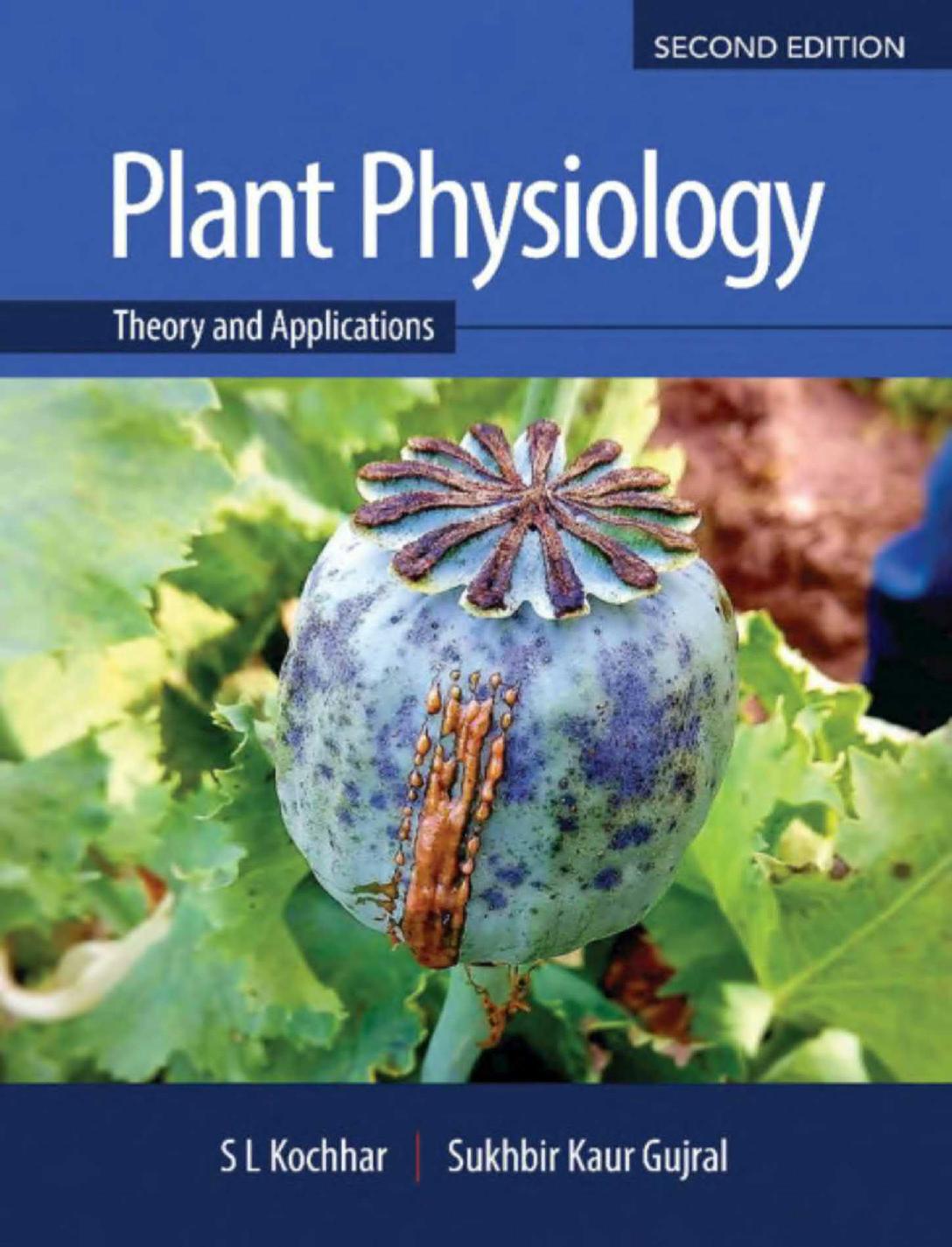
This thoroughly revised and updated edition provides an accessible overview of the rapidly advancing field of plant physiology. Key topics covered include absorption of water, ascent of sap, transpiration, mineral nutrition, fat metabolism, enzymes and plant hormones. Separate chapters are included on photosynthesis, respiration and nitrogen metabolism, and emphasis is placed on their contribution to food security, climate resilient farming (or climate-smart agriculture) and sustainable development. There is also a chapter on the seminal contributions of plant physiologists. Supported by the inclusion of laboratory experimental exercises and solved numerical problems, the text emphasises the conceptual framework, for example, in coverage of topics such as thermodynamics, water potential gradients and energy transformation during metabolic processes, water use efficiency (WUE) and nitrogen use efficiency (NUE). Bringing together the theoretical and practical details, this text is accessible, self-contained and student-friendly.
Plant Physiology Theory and Applications 2nd Table of contents:
Unit I: Water and Mineral Translocation in Plants
Chapter 1 Plant–Water Relations
1.1 Water – A Universal Solvent
1.1.1 Solution
1.1.2 Factors affecting solubility
1.1.3 Suspension
1.1.4 Emulsion
1.1.5 Acids, Bases and Salts
1.1.6 Electrolytes and Non-electrolytes
1.1.7 Polar and Non-polar Compounds
1.1.8 pH and Buffers
1.1.9 Colloids
1.1.9.1 Protoplasm as a colloidal system
1.2 Permeability
1.2.1 Cell membrane as permeability barrier
1.2.2 Factors affecting permeability
1.2.3 Cell wall as permeability barrier
1.2.4 Plant vacuoles—multifunctional compartments
1.2.5 Transport channels
1.2.5.1 Transport of molecules and ions across membranes
1.3 Diffusion, Imbibition, Osmosis and the Water Potential Concept
1.3.1 Imbibition
1.3.2 Diffusion
1.3.3 Osmosis
1.3.4 Plasmolysis
1.3.5 Water potential
Review Questions
Chapter 2 Absorption and Translocation of Water
2.1 Absorption of Water
2.1.1 Different types of water
2.1.2 Roots hairs facilitate water absorption by roots
2.1.3 Water movement in the roots – Apoplast, Transcellular and Symplast Pathways
2.1.4 Environmental factors influencing absorption of water by the roots
2.1.5 Methods of water absorption
2.1.5.1 Active absorption
2.1.5.2 Passive absorption
2.2 Translocation of Water
2.2.1 Pathway of the water stream
2.2.2 Vital theories
2.2.3 Physical theories
2.2.3.1 Capillarity theory (Boehm, 1809)
2.2.3.2 Imbibitional theory (Sachs, 1878)
2.2.3.3 Atmospheric pressure theory
2.2.3.4 Root pressure theory (Stocking, 1956)
2.2.3.5 Cohesion hypothesis
Review Questions
Chapter 3 Transpiration
3.1 Foliar Transpiration
3.2 Guttation
3.3 Bleeding
3.4 Stomata
3.4.1 Size and distribution
3.4.2 Morphology of stomata
3.5 Blue Light Responses
3.6 Transpiration: A Two-Stage Process
3.6.1 Mechanism of stomatal opening and closing
3.6.2 Starch–Sugar hypothesis (Classical hypothesis)
3.6.3 Modified classical theory
3.6.4 Accumulation of K+ ions in guard cells
3.6.5 Proton transport theory
3.6.6 Environmental factors affecting stomatal opening and closing
3.6.7 Midday stomatal closure
3.7 Plant Antitranspirants
3.8 Factors Affecting Transpiration
3.9 Significance of Transpiration
3.10 Transpiration Ratio and Water Use Efficiency
3.10.1 Transpiration ratio
3.10.2 Water use efficiency (WUE)
Review Questions
Chapter 4 Mineral Nutrition and Absorption
4.1 Techniques Used in Nutritional Studies
4.2 Criteria of Essentiality
4.3 Essential Elements
4.3.1 Mobile and immobile elements
4.3.2 Foliar spray
4.3.3 Physiological effects and deficiency symptoms associated with essential elements
4.3.4 Role of beneficial elements
4.4 Iron Stress
4.4.1 Chelating agents
4.4.2 Phytosiderophores
4.5 Mycorrhizae
4.6 Mechanism of Mineral Absorption
4.6.1 Passive transport
4.6.1.1 Movement of ions within the soil
4.6.1.2 Movement of ions between the soil solution and plant root cells
4.6.2 Active transport
4.6.2.1 Carrier concept
4.6.2.2 Pumps
4.7 Transmembrane Potential
4.8 Ion Antagonism
4.9 Radial Path of Ion Movement through Roots
4.10 Mineral Toxicity
4.10.1 Heavy metal homeostasis
Review Questions
Unit II: Metabolism and Bioenergetics
Chapter 5 Concepts of Metabolism
5.1 Metabolism
5.1.1 Metabolite pools in plants
5.1.1.1 The hexose phosphate pool: a major crossroads in plant metabolism
5.2 Concepts of Thermodynamics
5.3 Laws of Thermodynamics
5.4 Redox Reactions
5.5 ATP: The Energy Currency of the Cell
5.6 Coupled Reactions
Review Questions
Chapter 6 Enzymes
6.1 Historical Background
6.2 Characteristics of Enzyme-catalyzed Reactions
6.3 Cofactors
6.4 Enzyme Classification
6.5 Mechanism of Enzyme Action
6.5.1 Lock and Key hypothesis
6.5.2 Induced Fit hypothesis
6.6 Isozymes (Isoenzymes)
6.7 Multienzyme Complex
6.8 Enzyme Regulation
6.8.1 Substrate-level regulation
6.8.2 Allosteric regulation
6.8.3 Covalent modification
6.9 Michaelis Constant (Km )
6.9.1 The relationship between substrate concentration and reaction rate can be expressed quantitati
6.10 Enzyme Inhibition
6.10.1 Irreversible inhibitors
6.10.2 Reversible inhibitors
6.11 Factors Affecting Enzymatic Reactions
6.12 Uses of Enzymes
Review Questions
Chapter 7 Photosynthesis
7.1 Historical Perspective
7.2 Chloroplast as Solar Harvesting Enterprise
7.3 Absorption and Action Spectrum
7.4 The Light Reaction (Photochemical Phase)
7.4.1 The Emerson enhancement effect
7.4.2 The Z-scheme for photosynthetic phosphorylation
7.4.3 Chemiosmotic mechanism of phosphorylation
7.5 The Dark Reactions
7.5.1 Calvin–Benson pathway
7.5.2 Rubisco (Ribulose-1,5-bisphosphate carboxylase/oxygenase)
7.5.3 Regulation of the Calvin cycle
7.6 Photorespiration
7.6.1 Significance of photorespiration
7.7 Hatch–Slack Pathway (C4 Syndrome)
7.8 CAM Pathway (Crassulacean Acid Metabolism)
7.9 Factors Affecting Photosynthesis
Review Questions
Chapter 8 Carbohydrate Metabolism
8.1 Sucrose and Starch Metabolism
8.1.1 Sucrose biosynthesis
8.1.2 Sucrose catabolism
8.1.3 Starch biosynthesis
8.1.4 Starch catabolism
8.2 Cellulose Synthesis
8.3 Fructans
8.4 Carbohydrate Metabolism in Plants and Animals
Review Questions
Chapter 9 Respiration
9.1 Glycolysis
9.2 Oxidative Decarboxylation of Pyruvate to Acetyl CoA
9.3 Citric Acid Cycle (Krebs Cycle)
9.4 Electron Transport System and Oxidative Phosphorylation
9.5 Regulation of Respiratory Pathways
9.5.1 Regulation of the glycolytic pathway
9.5.2 Regulation of the pyruvate dehydrogenase complex
9.5.3 Regulation of the Krebs cycle (Citric acid cycle)
9.5.4 Regulation of oxidative phosphorylation
9.6 The Krebs Cycle as a Second Crossroad of Metabolic Pathways
9.7 Alternative Electron Transport Pathways in Plant Mitochondria
9.7.1 Cyanide-resistant respiration
9.8 Gluconeogenesis
9.9 Pentose Phosphate Pathway or Oxidative Pentose Phosphate Pathway
9.10 Anaerobic Respiration
9.11 Alcoholic Fermentation
9.12 Lactic Acid Fermentation
9.13 A Summarized Overview of the Various Sites of Cellular Respiration alongside Diagrammatic Repre
9.14 Other Substrates for Respiration
9.15 Respiratory Quotient
9.16 Factors Affecting Respiration
Review Questions
Chapter 10 Nitrogen Metabolism
10.1 Nitrate Assimilation
10.2 Ammonium Assimilation
10.2.1 GDH (reductive amination) pathway
10.2.2 Transamination
10.2.3 GS-GOGAT pathway
10.2.4 Amidation
10.3 Amino Acids and Their Structure
10.4 Proteins
10.4.1 Protein structure
10.4.2 Protein classification
10.4.3 Protein synthesis
10.5 Nucleic Acids
10.6 Molecular (Biological) Nitrogen Fixation
10.6.1 Asymbiotic N2 fixation
10.6.2 Symbiotic N2 fixation
10.6.3 Genetics of nif genes and nod factors
10.6.4 Strategies for regulation of oxygen level
10.7 Nitrogen Cycle
10.8 Nitrogen Use Efficiency (NUE)
10.9 Carnivorous Plants
Review Questions
Chapter 11 Lipid Metabolism
11.1 Fatty Acids: Structure and Properties
11.2 Fatty Acid Oxidation
11.2.1 β-Oxidation
11.2.1.1 Peroxisomes – alternative site of β-oxidation
11.2.2 α-Oxidation
11.3 Fatty Acid Synthesis
11.4 Lipid–Sugar Conversion: The Glyoxylate Pathway
11.5 Genetic Engineering of Lipids5
Review Questions
Chapter 12 Sulphur, Phosphorus and Iron Assimilation in Plants
12.1 Sulphur Metabolism
12.1.1 Sulphate uptake and transport
12.1.2 Role of sulphur in plants
12.1.3 Biogeochemical sulphur cycle
12.1.4 Sulphur assimilation pathways
12.1.5 Sulphate assimilation is closely linked with carbon and nitrogen metabolism
12.2 Phosphorus Metabolism
12.2.1 Biogeochemical phosphorus cycle
12.2.2 Role of phosphorus in plants
12.2.3 Phosphate is actively accumulated by root cells
12.3 Iron Metabolism
12.3.1 Biogeochemical Iron Cycle
12.3.2 Role of iron in plants
12.3.3 Iron uptake and transport in plants
Review Questions
Chapter 13 Phloem Transport
13.1 Evidences in Support of Phloem Transport
13.2 Composition of the Photoassimilates Translocated in the Phloem
13.3 Anatomy of Phloem Tissue
13.4 Mechanism of Phloem Transport
13.4.1 Protoplasmic streaming
13.4.2 Münch mass or pressure flow hypothesis
13.4.3 Historical hypothesis
13.5 Phloem Loading and Unloading
13.5.1 Phloem loading
13.5.2 Phloem unloading
13.6 Photoassimilate Distribution: Allocation and Partitioning
Review Questions
Unit III: Growth and Development
Chapter 14 Dormancy, Germination and Flowering
14.1 Growth Curve
14.2 Seed Germination
14.2.1 Mobilization of food reserves
14.2.2 Factors affecting germination
14.2.3 Germination inhibitors and promoters
14.3 Dormancy
14.3.1 Seed dormancy
14.3.1.1 The relationship between embryo immaturity and capacity to germinate is influenced by ABA
14.3.1.2 Role of light and chemicals in dormancy
14.3.2 Bud dormancy
14.3.3 Biological significance of dormancy
14.3.4 Regulation of development and dormancy of resting organs
14.3.5 Adaptive and evolutionary significance of the resting phase
14.4 Photoperiodism
14.4.1 Critical photoperiod
14.4.2 Photoperiodic induction
14.4.3 Site of photoperiodic stimulus perception
14.4.4 Florigen: flowering stimulus
14.4.5 Biological significance of photoperiodism
14.4.6 Floral meristems and floral organ development
14.4.7 Floral organ specification
14.5 Vernalization
14.5.1 Epigenetic changes in gene expression during vernalization
14.5.2 Biological significance of vernalization
14.6 Biological Clock and Circadian Rhythms
14.6.1 Components of a circadian system
14.7 Photomorphogenesis
14.7.1 Etiolation
14.7.2 Plant movements
14.7.2.1 Tropic movements
14.7.2.1.1 Gravitropism
14.7.2.1.2 Phototropism
14.7.2.1.3 Thigmotropism
14.7.2.1.4 Hydrotropism
14.7.2.2 Nastic movements
14.7.2.2.1 Nyctinastic movements
14.7.2.2.2 Seismonastic movements
14.7.2.2.3 Solar tracking
14.7.2.2.4 Water conservation movements
14.7.2.2.5 Taxic movements
Review Questions
Chapter 15 Plant Photoreceptors
15.1 Phytochrome
15.1.1 Important phytochrome-mediated responses
15.1.1.1 Calmodulin and cell wall stiffening
15.1.1.2 Chloroplast rotation in Mougeotia
15.1.1.3 Tanada effect
15.2 Cryptochromes
15.3 Phototropins
15.4 UV Resistance Locus 8 (UVR8)
Review Questions
Chapter 16 Plant Hormones and Signal Transduction
16.1 Auxin: The Growth Hormone
16.1.1 Historical background
16.1.2 Bioassays
16.1.3 Distribution and transport
16.1.4 Biosynthesis and catabolism
16.1.5 Mode of action
16.1.6 Physiological roles
16.2 Gibberellins: Regulators of Plant Height
16.2.1 Historical background
16.2.2 Bioassays
16.2.3 Distribution and transport
16.2.4 Biosynthesis and catabolism
16.2.5 Mode of action
16.2.6 Physiological roles
16.3 Cytokinins: Regulators of Cell Division
16.3.1 Historical background
16.3.2 Bioassays
16.3.3 Distribution and transport
16.3.4 Biosynthesis and catabolism
16.3.5 Mode of action
16.3.6 Physiological roles
16.4 Abscisic Acid: A Seed Maturation and Anti-stress Signal
16.4.1 Historical background
16.4.2 Bioassays
16.4.3 Distribution and transport
16.4.4 Biosynthesis and catabolism
16.4.5 Mode of action
16.4.6 Physiological roles
16.5 Ethylene: The Gaseous Hormone
16.5.1 Historical background
16.5.2 Bioassay
16.5.3 Distribution and transport
16.5.4 Biosynthesis and catabolism
16.5.5 Mode of action
16.5.6 Physiological roles
16.6 Polyamines
16.6.1 Biosynthesis and catabolism
16.6.2 Physiological roles
16.7 Salicylic Acid
16.7.1 Biosynthesis
16.7.2 Physiological roles
16.8 Nitric Oxide
16.8.1 Biosynthesis
16.8.2 Physiological roles
16.9 Strigolactones
16.9.1 Biosynthesis
16.9.2 Physiological roles
16.10 Jasmonates
16.10.1 Biosynthesis
16.10.2 Mode of action
16.10.3 Physiological roles
16.11 Brassinosteroids
16.11.1 Bioassay
16.11.2 Biosynthesis
16.11.3 Mode of action
16.11.4 Physiological roles
16.12 Signal Perception and Transduction
16.12.1 Signal perception
16.12.2 Signal transduction
6.12.3 Crosstalk among signal pathways
Review Questions
Chapter 17 Ripening, Senescence and Cell Death
17.1 Fruit Ripening
17.1.1 Morphological changes during ripening
17.1.2 Fruit ripening through genetic and hormonal regulation
17.2 Plant Senescence
17.2.1 Programmed cell death
17.2.1.1 Development and survival of plants
17.2.1.2 Cell viability is maintained during the developmental program leading to death
17.2.1.3 Autolysis: a common form of cell death
17.2.1.4 Cell death during growth and morphogenesis
17.2.2 Whole plant senescence
17.2.3 Organ senescence
17.2.3.1 Leaf senescence
17.2.3.2 Effect of environmental conditions on senescence and death
Review Questions
Unit IV: Physiological Stress and Secondary Metabolites – Their Role in Metabolism
Chapter 18 Abiotic and Biotic Stress
18.1 Abiotic Stress
18.1.1 Water stress
18.1.1.1 Water deficit
18.1.1.2 Flooding
18.1.1.3 Reactive oxygen species (ROS)
18.1.2 Temperature stress
18.1.2.1 Low temperature stress (chilling and freezing)
18.1.2.2 High Temperature Stress
18.1.3 Light stress
18.1.4 Salt stress
18.1.5 Heavy metal stress
18.1.6 Mineral nutrient deficiencies
18.1.7 Ozone and ultraviolet (UV) stress
18.1.8 Developmental and physiological mechanisms that protect plants against abiotic stress
18.1.9 Stress-sensing mechanisms and activation of signalling pathways in response to abiotic stress
18.2 Biotic Stress
18.2.1 Beneficial interactions between host plants and microorganisms
18.2.2 Harmful interactions between plants, pathogens and herbivores
18.2.3 Responses to pathogen invasion or plant defences against pathogens
18.2.4 Plant defences against other organisms
Review Questions
Chapter 19 Secondary Plant Metabolites
19.1 Terpenes (Terpenoids)
19.2 Phenolic Compounds
19.2.1 Lignin
19.2.2 Flavonoids
19.2.3 Coumarins
19.2.4 Tannins
19.3 Alkaloids
19.4 Glycosides
19.4.1 Cardiac glycosides or cardenolides
19.4.2 Thioglycosides
19.4.3 Cyanogenic glycosides
19.4.4 Saponin glycosides
19.5 Role of Secondary Metabolites in Plant Defences
19.5.1 Plant defences against pathogens
19.5.2 Induced plant defences against insect herbivores
Review Questions
Unit V: Crop Physiology – An Innovative Approach
Chapter 20 Agricultural Implications of Plant Physiology
20.1 Role of Plant Hormones
20.2 Photoperiodism, Vernalization and Dormancy
20.3 Phloem Transport
20.4 Mineral Nutrition
20.5 Reproductive Development
20.6 Fruit Preservation
20.7 Nitrate Assimilation
20.8 Plant Secondary Metabolites (Natural Products)
20.9 Strategies Employed by Plant Breeders to Eradicate Weeds in Crop Fields
20.10 Genetic Engineering of Crops
20.11 Developing Crops with Increased Tolerance to Stress (Biotic and Abiotic)
20.12 Biofortification for Selecting and Developing Crop Cultivars Denser in Micronutrients
20.13 Genetic Engineering of Lipids
20.14 Engineering Cell Wall-degrading Enzymes into Growing Plants to Deliver Cost-effective Bioethan
Unit VI: Breakthroughs in Plant Physiology
Chapter 21 Seminal Contributions of Plant Physiologists
Thomas Graham
Ernst Münch
Paul J. Kramer
H. F. Thut
Dennis R. Hoagland
A. Hemantaranjan
Emanuel Epstein
J. D. Sayre
G. W. Scarth
F. C. Steward
Jacob Levitt
Franz Knoop
Hugo De Vries
J. C. Bose
Stephen Hales
Otto Renner
Frederick Sanger
Emil Fischer
D. Koshland
C. B. van Niel
Otto Warburg
F. F. Blackman
Daniel I. Arnon
Bessel Kok
N. E. Tolbert
André Jagendorf
Robert Emerson
R. G. Govindjee
Fay Bendall
Louis Duysens
Melvin Calvin
Albert Szent-Györgyi
Hans A. Krebs
Harry Beevers
Frits W. Went
F. Kögl
R. Gane
K. V. Thimann
Gottlieb Haberlandt
Johannes van Overbeek
Folke Skoog
D. S. Letham
F. T. Addicott
P. F. Wareing
J. E. Varner
L. G. Paleg
L. H. Flint
Michael H. Chailakhyan
H. A. Borthwick
W. W. Garner and H. A. Allard
Hans Möhr
Chapter 22 The Status and Development of Plant Physiology in India
S. M. SIRCAR (1908–1978)
R. D. ASANA (1908–1999)
G. S. SIROHI (1928– )
J. J. CHINOY (1909–1978)
K. K. NANDA (1918–1983)
S. K. SINHA (1934–2002)
S. C. AGARWALA (1909–1983)
S. C. MAHESHWARI (1933–2019)
H. Y. MOHAN RAM (1930–2018)
R. C. SACHAR (1929–)
Unit VII Some Experimental Exercises
Chapter 23 Experimental Exercises
1. Plant–Water Relations
2. Absorption and Translocation of Water
3. Transpiration
4. Mineral Nutrition
5. Enzymes
6. Photosynthesis
7. Respiration
8. Nitrogen Metabolism
9. Lipid Metabolism
10. Phloem Transport
11. Dormancy, Germination and Flowering
12. Plant Hormones and Signal Transduction
13. Ripening, Senescence and Cell Death
14. Abiotic and Biotic Stress
15. Secondary Plant Metabolites
Glossary
References
Index
People also search for Plant Physiology Theory and Applications 2nd :
plant physiology exam 2
plant physiology exam 2 quizlet
plant physiology and development 6th edition pdf
plant physiology and development pdf free
plant physiology theory and applications