


A Practical Approach to Effective Litigation 8th Edition By Susan Blake – Ebook PDF Instant Download/Delivery: 0198715943 , 978-0198715948
Full download A Practical Approach to Effective Litigation 8th edition after payment
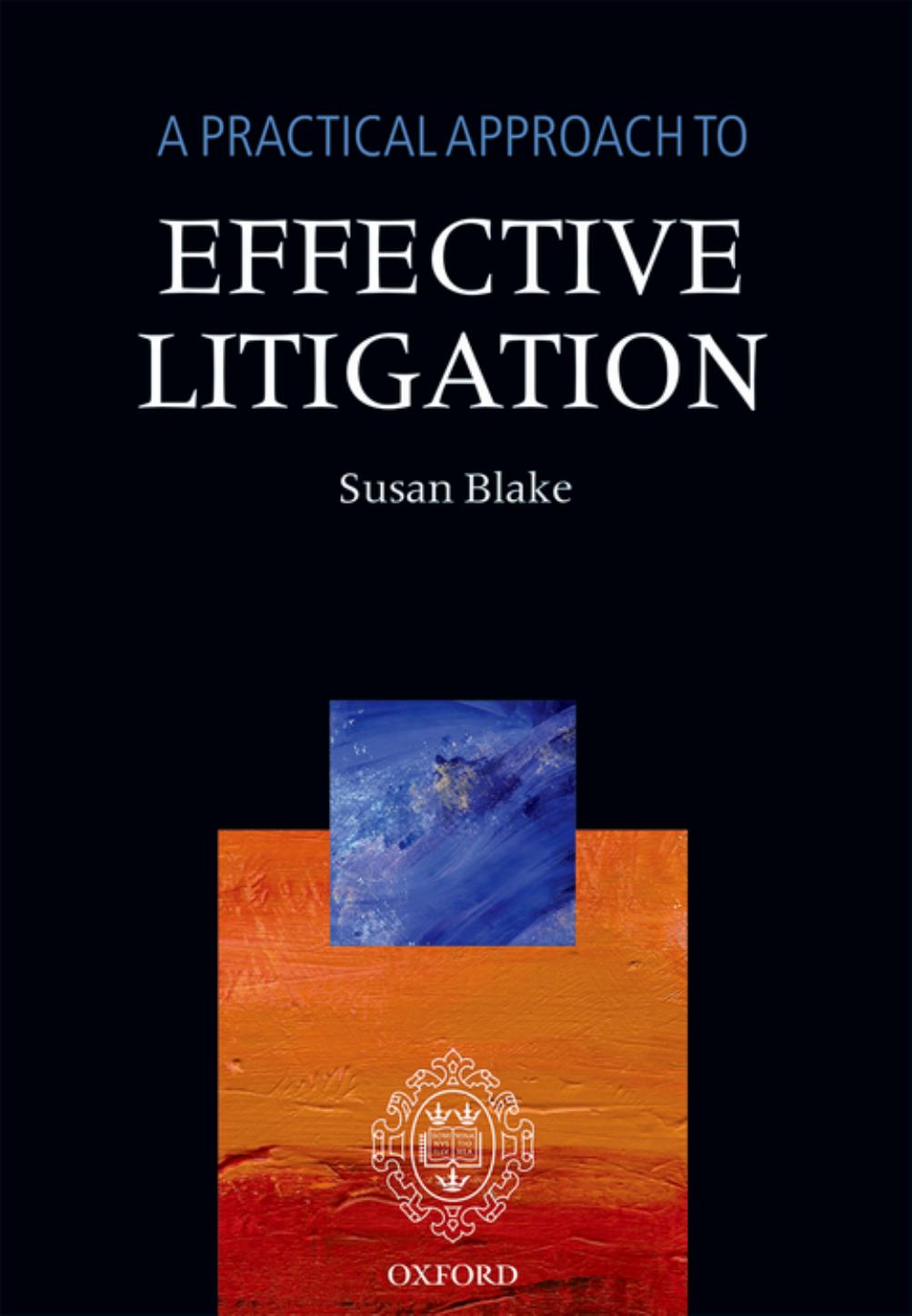
Product details:
ISBN 10: 0198715943
ISBN 13: 978-0198715948
Author: Susan Blake
This book analyses the key skills that a lawyer needs to handle a case effectively, a topic that is not covered coherently in any other book. At a time of rapid and wide-ranging change in the delivery of legal services, the current edition involves a complete reworking of the last edition of the book to take into account the implications of the implementation of the Jackson Review, and to see effective litigation clearly in the context of concerns about funding, case management by the court, costs, and the growing use of alternative dispute resolution.
The book has a strong focus on the needs of the legal practitioner, the decisions to be taken at each stage of a case, and the criteria to apply in making those decisions. This is all securely based in references to relevant Civil Procedure Rules and decided cases, with checklists and commentary to assist in the project management of a case.
The book also focuses on the skills a lawyer needs to work effectively. This includes skills in dealing with a client, drafting legal documents, and presenting a case in court. Throughout the work the emphasis is on demonstrating how to use law effectively, how to develop a case, and how to present persuasive arguments.
Lawyers operate in an increasingly complex environment, faced with challenges in funding a case, in managing a case to avoid sanctions, and in using complex rules to best effect. The author addresses the use of legal knowledge and skills within this rapidly changing context, bearing in mind not least that the pace of change is likely to continue with the developing use of IT, and the widening use of alternative business structures.
In putting together skills and law in a fully up-to-date context, A Practical Approach to Effective Litigation brings together the sound knowledge of the law and the legal skills an experienced litigator will use to get the best results for clients in a real-world context. It will be of use to anyone in the early years of legal practice, experienced solicitors who have had limited involvement with civil litigation, and those training to be a barrister or solicitor.
A Practical Approach to Effective Litigation 8th Table of contents:
1 The Growing Focus on ‘Effective’ Litigation
A Introduction
B The Post-Jackson World
C What is ‘Effective’ Litigation?
D The Overriding Objective of Litigation
E The Changing Legal Environment
F The Time Dimension
G The Money Dimension
2 An Overview of the Litigation Process
A The Litigation Process
B The Pre-Action Stage
C Starting an Action
D Statements of Case
E Interim Stages and Case Management
F Options for Interrupting or Ending Litigation
G Preparations for Trial
H Trial and Judgment
I After Judgment
J Cases with an International Element
3 Dispute Management, Project Management, and Risk Management
A Dispute Management
B Case Evaluation
C Proportionality
D Risk Management
4 Adr, Settlement, and Part 36 Offers
A Adr—Litigation’S Invaluable Twin
B The Main Types of Adr and their Fit with Litigation
C Framing an Attempt to Settle
D Drawing Up Terms of Settlement
E Part 36 Offers
5 Legal Practitioners and the Developing Professional Context
A The Range of Legal Practitioners
B Professional Codes of Conduct
C Professional Privilege and Confidentiality
D Professional Negligence
E Where Work Falls Short of Professional Standards
F Alternative Business Structures
6 Financing Litigation
A The Potential Expense
B Options for the Funding of Litigation
C Options for Funding Adr
7 Defining Objectives, Advising a Client, and Taking Instructions
A The Relationship with the Client
B The Interface with a Client
C Identifying Client Objectives
D Advising a Client
E Advising on Options
F Taking Instructions
G Dealing with Difficult Clients
8 Establishing and Analysing Facts
A Focusing on Facts
B The Elusiveness of Truth
C Establishing Facts
D The Staged Availability of Factual Information
E Managing Factual Information
F Analysing Facts
G Theories, Deduction, and Logic
H The Interaction of Facts and Law
I Building a Factual Framework for a Case
9 Making Best Use of Law to Define Issues
A Law In Practice
B Using Practitioner Sources
C Strategic Legal Research
D Planning Research
E Presenting Findings
F Using Law to Get Results
G Combining Law and Fact to Define a Case
H Taking A Systematic Approach
10 Legal Letters and Opinions
A Professional Legal Writing
B Purpose and Audience
C Content and Structure
D Professional Use of Language
E Notes
F Letters and E-Mails
G The Role of Opinions
H The Format and Structure of an Opinion
I The Content of an Opinion
11 Making Strategic Use of the Pre-Action Stage
A Initial Considerations
B The Practice Direction Pre-Action Conduct
C The Pre-Action Protocols
D Preparing a Case
E The Relationship with the Other Side
F Settlement Reached Without Issue of Proceedings
G Deciding When to Issue Proceedings
H Portal Claims
12 Drafting Statements of Case
A Statements of Case
B Drafting a Statement of Case
C Rules for Drafting
D Principles for Focusing on Issues
E Headings for Statements of Case
F Framework for Particulars of Claim
G Specifying Remedies and Relief
H Other Drafts for a Claimant
I Refining a Statement of Case
J Challenging a Statement of Case
13 Joining the Right Parties
A Introduction
B Selecting the Claimant(S)
C Selecting the Defendant(S)
D Other Types of Involvement
E A Business as a Party
F Rules for Specific Types of Parties
G Additional Claims (PART 20)
H Part 20 Procedure
I Drafting the Part 20 Claim
14 Pursuing Appropriate Remedies
A The Importance of Identifying Remedies
B Remedies a Court Can Order
C Remedies a Court Cannot Order
D Claims for Damages
E Quantification of Damages
F Claims for Interest
G a Proactive Approach to Damages
15 Issuing Proceedings, Track Allocation, and Directions
A Court Selection
B Issuing Proceedings
C Serving Proceedings
D Track Allocation
E Directions Questionnaires
16 Defending an Action
A Introduction
B The Main Types of Defence to an Action
C Before a Case Starts
D When Proceedings Are Issued
E Rules for Drafting a Defence
F Drafting a Defence
G Makingc a Counterclaim
H Caiming a Set-off
I General Framework for a Defence and Counterclaim
J Strategy and Tactics In Defending a Case
17 Active Case Management and the Use of Sanctions
A The Purpose of Active Case Management
B Case Management Powers
C Docketing
D Sanctions
18 Costs Management and Budgeting
A The Big Issues
B Costs Management
C Orders for Costs At Interim Hearings
D Protecting the Position on Costs
E Wasted Costs Orders
19 Evidence and Disclosure
A The Importance of Evidence
B The Key Rules of Admissibility
C Who Has to Prove What?
D Identifying What Needs to Be Proved
E Types of Evidence
F Collecting Evidence
G Disclosure of Evidence
H Electronic Disclosure
I Reviewing and Advising on Evidence
20 Witness Statements
A The Role of Witness Evidence
B Formal Requirements for Witness Statements
C Drafting a Witness Statement
D Drafting an Affidavit
E Exchange of Witness Statements
F Reviewing Witness Statements
21 The Potential Roles of Experts
A The Importance of Experts
B The Ways In Which Experts Can Be Involved
C The Procedure for Admitting Expert Evidence
D Expert Reports
22 Procedural Rules as Practical Tools
A Using Procedural Rules as Tools
B The General Procedure for Applications
C Making Applications Before a Case Starts
D Time Strategies—Cutting an Action Short
E Time Strategies—Deciding Issues Quickly
F People Strategies
G Information Strategies
H Money Strategies
23 Preparing a Case for Trial and Drafting Skeleton Arguments
A Completing the Preparation Stages
B The Pre-Trial Review
C Preparing for the Trial
D Skeleton Arguments
24 Presenting a Case In Court
A The Formalities of a Trial
B Overview of the Trial Process
C Winning a Case—Presentation and Advocacy
D The Judgment
E The Drawing Up of Orders
F Form of Orders
25 Costs Orders and Assessment
A The Powers of the Court
B Orders for Costs
C Quantifying Costs
26 Challenging a Judgment
A The Steps to Be Taken After Trial
B Deciding Whether to Appeal
C Jurisdiction for Appeals
D Appeals From Interim Decisions
E Grounds for Appeal
F Procedure for Appealing
G The Position of the Respondent to an Appeal
H Presenting an Appeal
I Powers on Appeal
J The Appeal Decision
K Costs on Appeal
27 Enforcing a Judgment
A The Importance of Enforcement
B Steps to Assist Enforcement
C Methods of Enforcing a Judgment
D International Enforcement of Judgments
Index
People also search for A Practical Approach to Effective Litigation 8th:
a practical approach to effective litigation pdf
practical approach to writing a good summary
practical guide to appellate advocacy
practical approach to ethical decision making
practical law affirmative defenses