


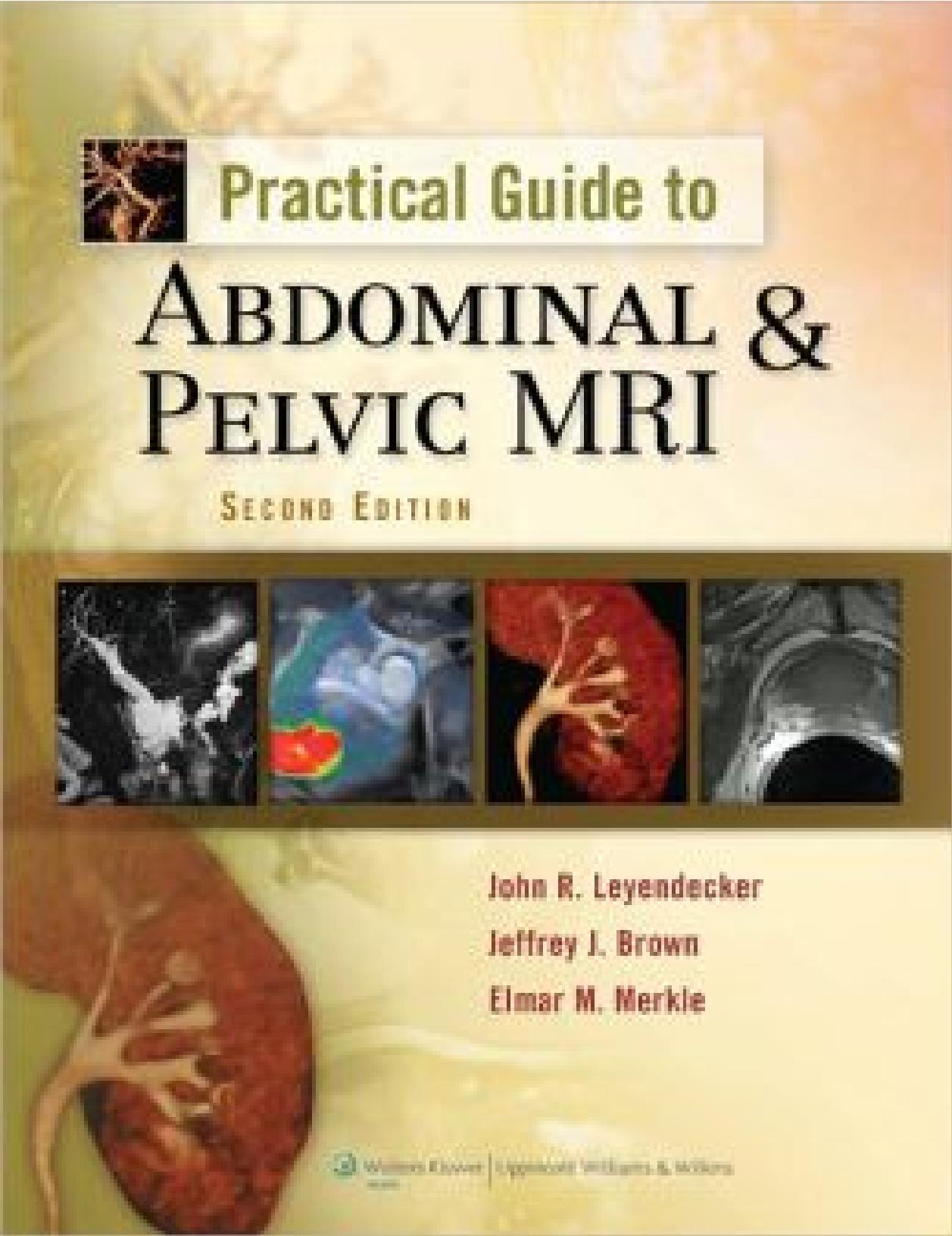
Practical Guide to Abdominal and Pelvic MRI 2nd Edition by John Leyendecker – Ebook PDF Instant Download/Delivery: 1451128185 , 9781451128185
Full download Practical Guide to Abdominal and Pelvic MRI 2nd edition after payment
Product details:
ISBN 10: 1451128185
ISBN 13: 9781451128185
Author: John Leyendecker
Now in its Second Edition, this thoroughly illustrated volume is a practical, problem-oriented how-to guide to performing and interpreting abdominal and pelvic MRI studies. Practical Guide to Abdominal and Pelvic MRI provides the necessary know-how for optimizing image quality and protocols and describes specific techniques, including MR angiography, MR cholangiopancreatography, MR urography, MRI of the gastrointestinal tract, and obstetrical MRI. A section on interpretation describes MRI appearances of 101 abdominal and pelvic abnormalities, presents differential diagnoses, and offers guidance on interpreting preoperative MRI studies. Additional chapters show normal MRI anatomy, answer frequently asked questions, and demystify MRI acronyms and terminology. This edition includes new imaging techniques and information on the liver, the kidney, and nephrogenic syndrome.
Practical Guide to Abdominal and Pelvic MRI 2nd Table of contents:
Part One: Fundamentals of MRI in Abdominal and Pelvic Imaging
Chapter 1: Introduction to MRI Techniques
-
T1 and T2 Relaxation: Understanding the time it takes for protons to return to equilibrium after being disturbed by an external magnetic field, essential for image contrast.
-
Imaging Sequences:
-
Spin Echo (SE): A classic sequence used for high-quality imaging, particularly useful in abdominal and pelvic studies.
-
Gradient Echo (GRE): A faster sequence offering benefits in dynamic imaging, often used for detecting certain types of lesions.
-
-
Key Parameters:
-
Repetition Time (TR): The time between consecutive pulses, affecting the image contrast.
-
Echo Time (TE): The time between the pulse and the signal acquisition, influencing the visibility of tissue details.
-
Chapter 2: Advanced MRI Techniques
-
Fat Suppression Methods: Techniques such as STIR (Short Tau Inversion Recovery) or fat-saturated sequences help suppress fat signals, improving the visualization of certain lesions and structures.
-
Diffusion Imaging: Employed to assess tissue cellularity and the movement of water molecules, often used in detecting tumors or evaluating inflammation.
-
Contrast Agents: Use of gadolinium-based agents to enhance the visibility of blood vessels and lesions, particularly in tumors or areas of infection.
Chapter 3: Imaging Protocols and Optimization
-
Tailored protocols for specific organs and conditions (liver, pancreas, kidneys, female reproductive organs) help achieve optimal diagnostic images.
-
Customizing parameters like TR, TE, and fat suppression can improve the accuracy of the scan depending on the clinical question or the suspected pathology.
Part Two: Interpreting MRI Findings
Chapter 4: Systematic Approach to Image Analysis
-
Systematic Approach: Emphasizes a structured method for evaluating abdominal and pelvic MRI images, focusing on identifying abnormalities.
-
Atlas of Normal Anatomy and Abnormalities: A reference guide to differentiate between normal anatomical structures and pathological findings, aiding in the accurate interpretation of images.
Chapter 5: Common Conditions and Pathologies
-
Benign and Malignant Tumors: Including liver, kidney, and pancreatic lesions.
-
Cysts and Abnormalities: Characterization of benign cystic lesions and their differentiation from more serious conditions.
-
Pseudotumors and Syndromes: Conditions that mimic tumors but are non-neoplastic, such as abscesses or inflammatory masses.
Part Three: Radiological Applications and Clinical Relevance
Chapter 6: MRI Applications in Male and Female Anatomy
-
Male and Female Pelvic Regions: The document highlights the differences in imaging strategies for male and female pelvic regions, including specific attention to the uterus, ovaries, prostate, and testes.
Chapter 7: Role of MRI in Diagnosis and Treatment Planning
-
Diagnostic Role: MRI’s crucial role in diagnosing abdominal and pelvic diseases.
-
Treatment Planning: How MRI informs treatment strategies, helping medical professionals in managing various conditions.
People also search for Practical Guide to Abdominal and Pelvic MRI 2nd :
practical guide to abdominal and pelvic mri pdf
practical guide to abdominal and pelvic mri
mri abdomen and pelvis preparation
abdominal mri preparation instructions
abdominal mri book
Tags: John Leyendecker, Practical Guide, Pelvic MRI