


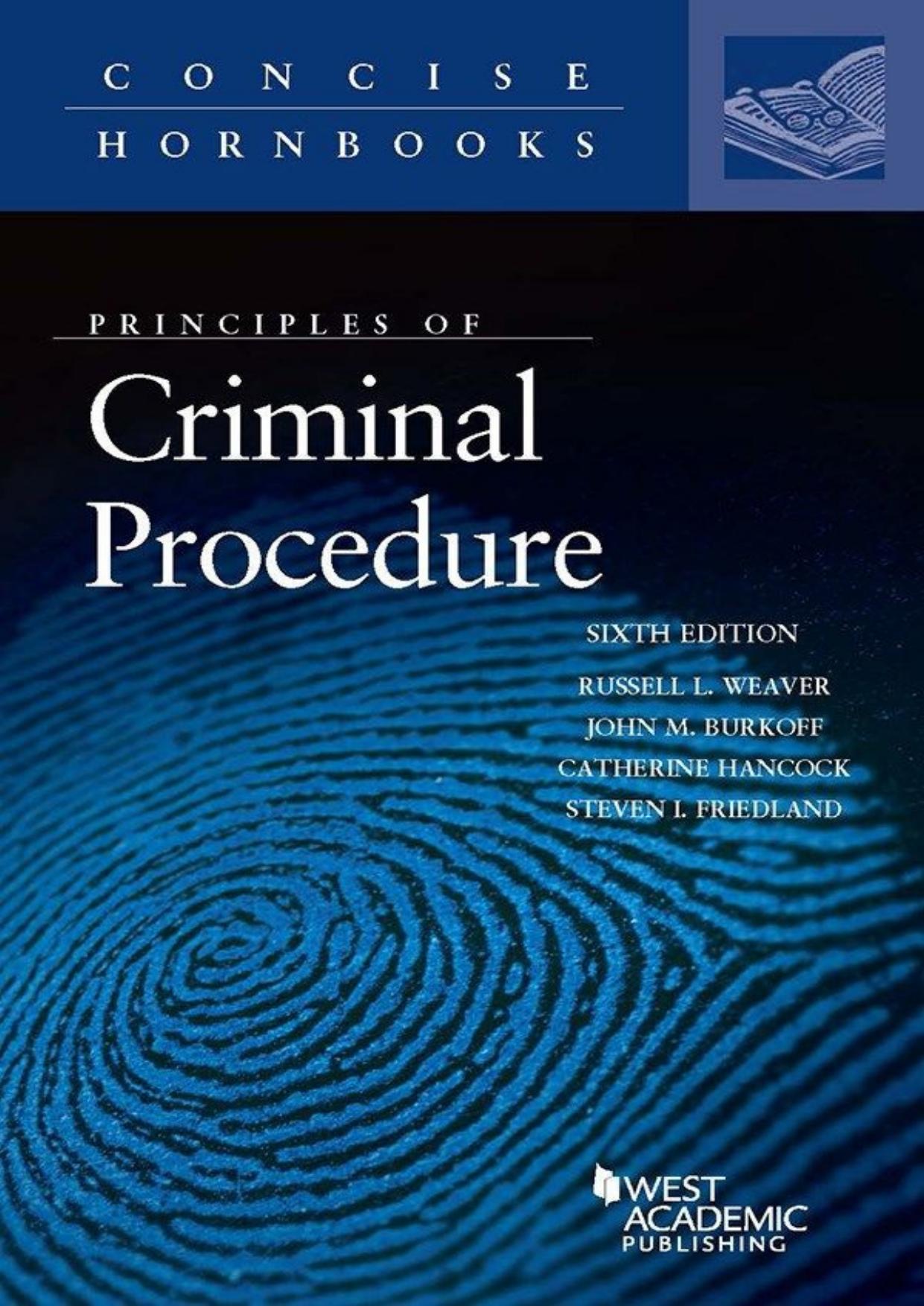
Principles of Criminal Procedure Concise Hornbook Series 6th edition by Russell Weaver, John Burkoff, Catherine Hancock, Steven Friedland ISBN 1640202676 978-1640202672
Original price was: $70.00.$35.00Current price is: $35.00.
Instant download Principles of Criminal Procedure (Concise Hornbook Series) 6th Russell L Weaver after payment
Principles of Criminal Procedure (Concise Hornbook Series) 6th edition by Russell Weaver, John Burkoff, Catherine Hancock, Steven Friedland – Ebook PDF Instant Download/Delivery: 1640202676 , 978-1640202672
Full download Principles of Criminal Procedure (Concise Hornbook Series) 6th edition after payment
Product details:
ISBN 10: 1640202676
ISBN 13: 978-1640202672
Author: Russell Weaver, John Burkoff, Catherine Hancock, Steven Friedland
This book gives you everything you need to know about basic criminal procedure principles, presented in a no-nonsense fashion. It includes references to recent, relevant decisions handed down by the United States Supreme Court. In addition, Principles of Criminal Procedure contains helpful study devices such as “focal points” at the beginning of each chapter, and “points to remember” at the end of each section. This is the only study aid you will need to help you understand basic criminal procedure principles in U.S. law.
Principles of Criminal Procedure (Concise Hornbook Series) 6th Table of contents:
Chapter 1 Introduction
A. Sources of Law That Create Legal Rights for Criminal Defendants and Regulate the Procedures of the Criminal Justice System
B. Prosecution Systems
1. Multiple Jurisdictions, Major and Minor Crimes
2. The Gap Between Law and Practice
C. The Roles of Prosecutors and Defense Counsel in Various Stages of a Criminal Prosecution
1. The Pre-Arrest Investigation Stage
2. The Arrest Stage
3. The Booking and Jailing Stage
4. The Post-Arrest Investigation Stage
5. The Decision to Bring a Formal Charge by Filing a Complaint
6. The Defendant’s First Appearance in Court
7. The Preliminary Hearing or Grand Jury Stage
8. The Arraignment Stage
9. The Pre-Trial Motions Stage
10. The Trial Stage
11. The Sentencing Stage
12. The Appeal Stage
13. The Post-Appeal Stage of “Post-Conviction” Remedies
Chapter 2 Incorporation & Retroactivity
A. Incorporation
1. Fundamental Rights
2. Total Incorporation & Total Incorporation Plus
3. Selective Incorporation
4. “Bag and Baggage”
B. Retroactivity
1. Case-by-Case Analysis
2. Cases Pending & Not Yet Final
a. Rejection of the “Clear Break” Exception
b. “New Rules”
3. Collateral Review
a. Forbidden Punishment Exception
b. Watershed Rules of Criminal Procedure Exception
c. The Retroactivity Inquiry Process
Chapter 3 Right to Counsel
A. Scope of the Constitutional Right
1. Appointed Counsel for Indigents
a. Source of the Constitutional Right
b. The Meaning & Consequences of “Indigency”
c. Choice of Appointed Counsel
d. When the Right Attaches
e. “Day in Jail” Rule
2. Retained Counsel
B. Waiver of the Right to Counsel
1. Knowing & Intelligent Waivers
2. Representing Oneself
a. Right to Proceed Pro Se
b. Standby Counsel
C. Ineffective Assistance of Counsel
1. Extrinsic Ineffectiveness
2. Actual Ineffectiveness
a. The Performance Prong
b. The Prejudice Prong
3. Structural Error and Ineffectiveness
4. Ineffective Assistance Analysis in Federal Habeas Corpus Proceedings
5. When Ineffective Assistance Claims Can Be Brought
D. Conflicts of Interest
1. Constitutional Right
2. Conflicts Raised Prior to or During Trial
3. Conflicts Raised After Trial
4. Waiver
E. The Griffin-Douglas Doctrine
Chapter 4 Search and Seizure
A. Search Warrants
1. The Significance of Using a Search Warrant
a. Warrant History
b. The “Warrant Preference”
c. The “Warrant Requirement”
2. Probable Cause
a. Constitutional Requirement
b. Probable Cause Test
c. Informant Information & Probable Cause
d. Informer’s Privilege
e. Staleness
f. Anticipatory Warrants
g. Drug-Sniffing Dogs
3. Obtaining Warrants
a. Affidavits
b. Challenging Affidavits
c. Review of Probable-Cause Determinations
d. Issuing Magistrates
4. The Particularity Requirement
a. Constitutional Requirement
b. Particularity & Search Premises
c. Particularity & Things to Be Seized
d. Minor or Partial Errors Irrelevant
e. “All Persons” Warrants
5. Execution of Search Warrants
a. Who May Execute?
b. Time Limits
c. Nighttime Searches
d. Knock-and-Announce Doctrine
e. Post-Execution Requirements
6. Seizures Pursuant to Warrant
a. What Can Be Seized?
b. Where Can Seizures Be Made?
c. Intensity of Search
d. Property Damage or Destruction
e. Duration of Search
f. Persons & Their Property on or near Search Premises
B. Protected Fourth Amendment Interests
C. Warrantless Searches and Seizures
1. Plain View Exception
2. Search Incident to Legal Arrest
3. Booking Searches
4. Automobile Exception
5. Inventory Exception
6. Consent
7. Administrative Inspections
8. Stop and Frisk
a. Other Investigatory Searches and Seizures
b. Investigatory Seizures of Property
9. Exigent Circumstances
10. Special Needs Cases
11. Special Rules for School-Age Children
Chapter 5 Police Interrogations & Confessions
A. Pre-Miranda Doctrines
1. Pre-Miranda Due Process
2. The McNabb-Mallory Rule
3. The Pre-Miranda Sixth Amendment Massiah Right to Counsel
B. The Fifth Amendment and Miranda
C. Miranda’s Application
1. Miranda Custody
2. Miranda Interrogation
3. Adequate Miranda Warnings
a. Warnings That Convey Rights
b. Midstream Warnings
4. Waiver of Miranda Rights
5. Invocation of Miranda Rights
6. Uses of Miranda-Defective Evidence
a. When Defective Evidence Leads Police to Other Evidence
b. Impeachment Based on Defective Statements or Silence During Interrogation
D. Post-Miranda Sixth Amendment Massiah Right to Counsel
1. Massiah Reliance on Counsel and Waiver
2. Massiah Deliberate Elicitation
3. Massiah Warnings, Waivers, and Invocations
E. Post-Miranda Due Process
Chapter 6 Entrapment
A. The Entrapment Defense
1. Debate over Subjective Test vs. Objective Test
2. The Modern Subjective Test
B. Due Process and “Outrageous Government Conduct”
Chapter 7 Identification Procedures
A. Constitutional Issues with Lineups and Other Identification Processes
B. The Sixth Amendment
C. Due Process Considerations
Chapter 8 Exclusionary Rule
A. Suppression of Evidence as an Exclusionary Remedy
1. Constitutional Origins
2. State and Statutory Exclusionary Rules
3. Alternatives to the Exclusionary Rule
a. Public Opinion
b. Criminal Prosecution
c. Disciplinary Proceedings and Review Boards
d. Civil Actions
e. Special Forums
f. Exclusion and the Vienna Convention
B. Limits on the Exclusionary Rule’s Application
1. Private Actors
2. Unconstitutional vs. Illegal Actions
3. Non-Criminal Proceedings: Incremental Deterrence
a. Forfeiture Proceedings
b. Grand Jury Proceedings
c. Civil Proceedings
d. Different Sovereigns
e. Federal Habeas Corpus
f. Deportation Proceedings
g. Suppression of the Defendant
h. Violations of International Agreements
4. Good-Faith Exception
5. “Knock and Announce” Violations
C. Standing
1. Constitutional Limitation
a. Reasonable Expectation of Privacy
b. Target Standing
2. Automatic Standing
D. Derivative Evidence: The “Fruits” Doctrine
1. Constitutional Test
2. Independent Source
3. Inevitable Discovery
4. Attenuation
E. Harmless Error
1. Non-Constitutional Errors
2. Constitutional Trial Errors
3. Constitutional Structural Defects
4. Federal Habeas Corpus Proceedings
Chapter 9 Initial Appearance and Pretrial Release
A. Initial Appearance
B. Pretrial Release
1. Release Determinations
2. The Bail Reform Act of 1984
3. Pretrial Detention
Chapter 10 Prosecutorial Discretion
A. Prosecutorial Discretion in Charging
B. Prosecutorial Discretion in Plea Bargaining
C. Pretrial Diversion for Defendants
D. Selective Prosecution
E. Vindictive Prosecution
Chapter 11 Case Screening: Preliminary Hearings and Grand Juries
A. Introduction
B. Preliminary Hearings
1. Screening
2. Pretrial Discovery
3. Future Impeachment
4. Perpetuation of Testimony
5. Pretrial Release
6. Plea Bargaining
7. Waiver
C. Grand Juries
1. Selection of the Grand Jury
2. Scope of Grand Jury Investigation
3. Grand Jury Secrecy
4. The Grand Jury as a Shield
5. The Grand Jury as a Sword
a. Fifth Amendment Rights Applicable to Testimony
b. Fifth Amendment Rights Applicable to Compliance with a Subpoena Duces Tecum
c. The Use of “Compelled” Disclosures in Subsequent Proceedings
Chapter 12 Discovery and Disclosure
A. Notice and Motion for Bill of Particulars
B. Discovery of Exculpatory Evidence
C. Preservation of Evidence
D. Discovery Under Rules and Statutes
E. Discovery by the Prosecution
F. Regulation of Discovery
Chapter 13 Joinder and Severance
A. Joinder and Severance of Offenses
B. Joinder and Severance of Defendants
Chapter 14 Pre-Charge Delay and Speedy Trial
A. Constitutional Speedy Trial
B. Statutory Prompt Disposition Provisions
Chapter 15 Guilty Pleas
A. Introduction
B. The Legal Requirements of a Valid Guilty Plea
C. Withdrawing a Guilty Plea
Chapter 16 Jury Trials
A. Right to Jury Trial
B. Jury Size and Unanimity
C. Selecting Prospective Jurors
1. The Fair Cross-Section Requirement
2. Jury Selection Process
3. Constitutional Limits on Peremptory Challenges
D. The No Impeachment Rule
Chapter 17 The Rights to Confrontation and Compulsory Process
A. Modern Confrontation Clause Analysis
B. Distinguishing Testimonial Statements from Statements Made for the Purpose of Resolving an On-Going Emergency
C. Implied Waiver of Confrontation Clause Rights: Forfeiture by Wrongdoing
D. Expert Reports and Confrontation
E. Violent Crime and Confrontation
F. Confrontation in Sexual Assault Cases
G. The Right to Compulsory Process
Chapter 18 Freedom of the Press and Fair Trials
A. Failing to Control the Press
B. Pretrial Publicity and Defendant’s Right to a Fair Trial
1. Change of Venue
2. Due Process and Pretrial Publicity
C. Gagging the Press
D. Press Access to Judicial Proceedings
E. Broadcasting Legal Proceedings
Chapter 19 Sentencing
A. Sentencing Procedures
B. Proportionality of Punishment
C. The Right to a Jury Trial Meets Sentencing: Apprendi’s Sea Change
Chapter 20 Double Jeopardy
A. Double Jeopardy and the Joinder of Offenses
B. Collateral Estoppel (Issue Preclusion) and the Joinder of Offenses
C. Termination of the Case by Dismissal or Acquittal
D. Termination of the Case by Conviction
E. Retrials and Increased Penalties
Chapter 21 Post-Trial Motions and Direct Appeals
A. Review by the Trial Court
1. Trial De Novo
2. Motions for New Trial and to Set Aside the Verdict
B. Direct Appeal in the State Courts
1. The Right to Appeal
2. Standards of Review
a. Structural Errors and Harmless Error Review
b. Plain Error Review
c. Review for Sufficiency of the Evidence
3. Waiver of the Right to Appeal
4. Ethics and the Frivolous Appeal
5. Appeals of Last Resort
Chapter 22 Collateral Remedies
A. Introduction
1. Time Considerations
2. Exhaustion of State Remedies
3. Custody Requirement
4. Evidentiary Hearings
B. Violations of Federal Law
C. Abuse of the Writ and Procedural Default
1. Successive Petitions as an Abuse of the Writ
2. Procedural Default
D. Claims of Actual Innocence as “Gateways” to Federal Habeas Corpus Review
Table of Cases
Table of Statutes
Table of Rules
People also search for Principles of Criminal Procedure (Concise Hornbook Series) 6th :
general principles of criminal procedure
fundamental principles of criminal procedure
fundamental principles of criminal procedure in bnss
general principles of criminal procedure philippines
principles of criminal procedure pdf
Tags: Russell Weaver, John Burkoff, Catherine Hancock, Steven Friedland, Criminal Procedure, Concise Hornbook