


Principles of Synthetic Aperture Radar Imaging 1st edition by Kun Shan Chen – Ebook PDF Instant Download/Delivery: 0367267513 , 9780367267513
Full download Principles of Synthetic Aperture Radar Imaging 1st edition after payment
Product details:
ISBN 10: 0367267513
ISBN 13: 9780367267513
Author: Kun Shan Chen
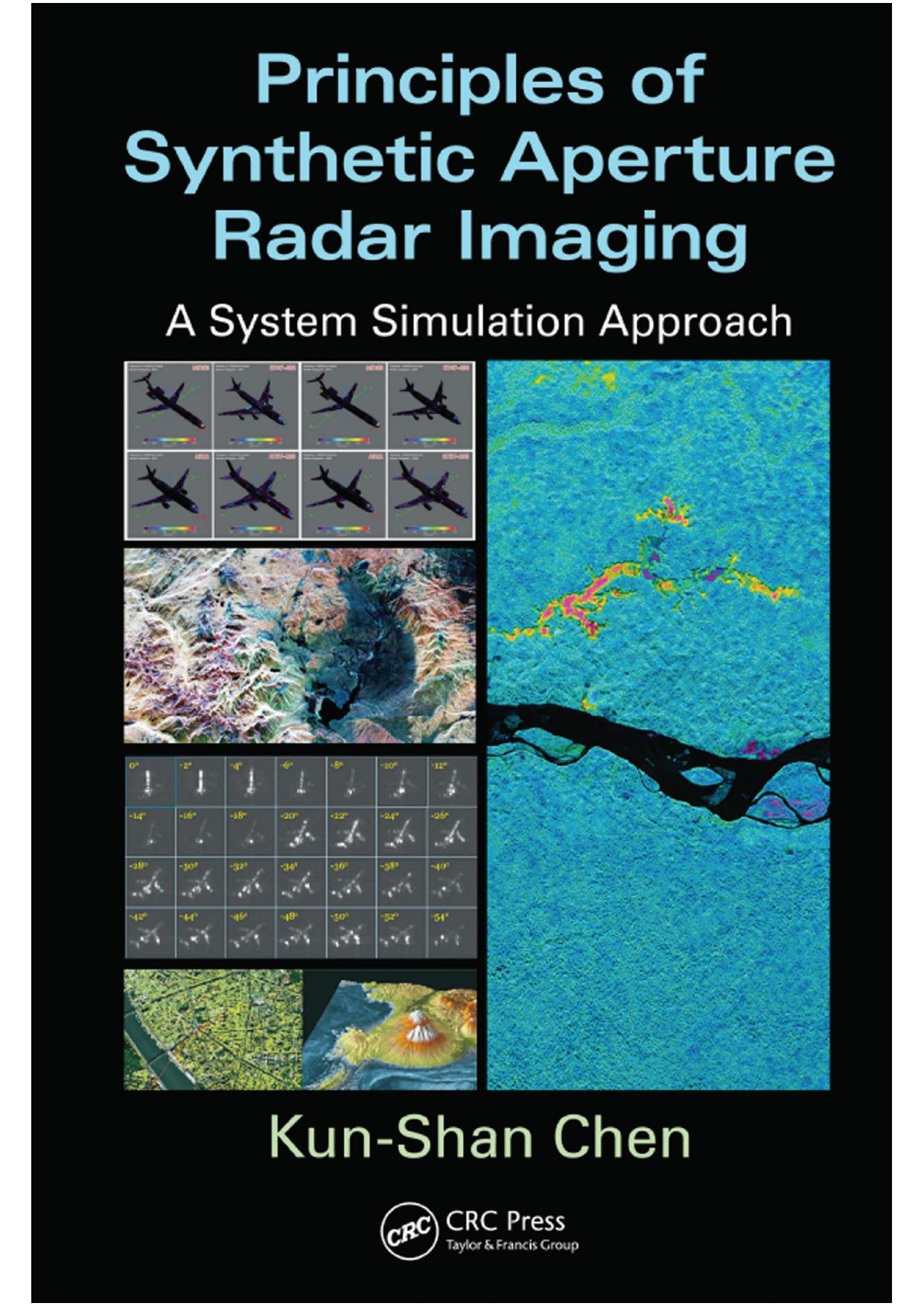
Principles of Synthetic Aperture Radar Imaging: A System Simulation Approach demonstrates the use of image simulation for SAR. It covers the various applications of SAR (including feature extraction, target classification, and change detection), provides a complete understanding of SAR principles, and illustrates the complete chain of a SAR operati
Principles of Synthetic Aperture Radar Imaging 1st Table of contents:
Chapter 1 Preliminary Background
1.1 Signals and Linear System
1.1.1 Analytic Signal
1.2 Basics of Radar Signal
1.2.1 Single Pulse
1.2.2 Pulse Train
1.2.3 Frequency-Modulated Continuous Wave
1.3 Concept of Synthetic Aperture Radar
Appendix: Useful Fourier Transform Pairs and Properties
References
Chapter 2 SAR Models
2.1 Introduction
2.2 Physical Model
2.2.1 Radar Scattering Power and Scattering Coefficient
2.2.2 Antenna Iluminated Area
2.2.3 Scattering Effects
2.2.4 Radar Speckles
2.3 Target Rcs Models
2.3.1 Deterministic Target
2.3.2 Distributed Target
2.3.2.1 Single Scattering
2.3.2.2 Double Scattering
2.4 System Model
2.4.1 Slant Range Projection
2.4.2 Point Target Model
Appendix: Derivation of Multi-Look Amplitude Distribution
References
Chapter 3 SAR Data and Signal
3.1 Introduction
3.2 Chirp Signal
3.2.1 Echo Signal in Two Dimensions
3.2.2 Demodulated Echo Signal
3.2.3 Range Cell Migration
3.3 Properties of Doppler Frequency
3.3.1 Squint Effects
3.3.2 FM Signal Aliasing
3.3.3 Platform Velocity
3.4 FM Continuous Wave
3.4.1 Signal Parameters
3.4.2 Object to Data Mapping
References
Chapter 4 SAR Path Trajectory
4.1 Introduction
4.2 Time Coordinate System
4.3 Spatial Coordinate System
4.3.1 Orbital Parameters
4.3.2 Geocentric and Geodetic Systems and Their Transformation
4.3.3 Conversion between ECR and ECI Coordinates
4.4 Satellite Position, Velocity, and Their Estimations
4.4.1 Orbital State Vector
4.4.2 Radar Beam-Pointing Vector
4.4.3 Target Position on Earth
4.5 Coordinates for Aircraft Platform
4.5.1 ENU AND NED Coordinates
4.5.2 RPY Coordinate and Flight Path Angle
4.5.3 Simulation Example
References
Chapter 5 SAR Image Focusing
5.1 Introduction
5.2 Generic Range–Doppler Algorithm
5.2.1 Range Cell Migration Correction
5.2.2 Doppler Centroid Estimation
5.2.3 Doppler Rate Estimation
5.3 Chirp Scaling Algorithm
5.3.1 Range Cell Migration
5.3.2 Chirp Scaling Functions
5.3.3 Numerical Examples
Appendix: Stationary Phase Approximation
References
Chapter 6 Motion Compensation
6.1 Introduction
6.2 Parameters and Their Conversions
6.2.1 Airborne System
6.2.2 Spaceborne System
6.3 Signal Model for Motion Compensation
6.4 Numerical Simulation
References
Chapter 7 Stationary FMCW SAR
7.1 Introduction
7.2 Sfmcw Signal Model
7.3 Image Focusing of Sfmcw System
7.3.1 Focusing by RDA
7.3.2 Focusing by CSA
7.4 Motion Compensation
7.5 Experimental Measurements
7.5.1 Measurement Setup
7.5.2 Image Focusing
References
Chapter 8 System Simulations and Applications
8.1 Introduction
8.2 Simulation Demonstration
8.2.1 Point Target Response
8.2.2 Target Location
8.3 Computation Complexity
8.4 Contrast Enhancement by Nonquadratic Optimization
8.4.1 Algorithm for Stripmap Mode SAR by Nonquadratic Regularization
8.4.2 Performance Check
8.5 Feature Vectors and Extraction
8.6 Applications to Target Identification
8.6.1 Test-Simulated SAR Images
8.6.2 Test on Real SAR Images
References
Index
People also search for Principles of Synthetic Aperture Radar Imaging 1st:
principles of synthetic aperture radar imaging a system simulation approach
principles of synthetic aperture radar imaging
synthetic aperture radar explained
synthetic aperture radar theory
synthetic aperture radar basics
Tags: Kun Shan Chen, Synthetic Aperture, Radar Imaging