


Psychodynamic Diagnostic Manual PDM 2 2nd edition by Vittorio Lingiardi, Nancy McWilliams – Ebook PDF Instant Download/Delivery: 1462530540 , 978-1462530540
Full download Psychodynamic Diagnostic Manual PDM 2 2nd edition after payment
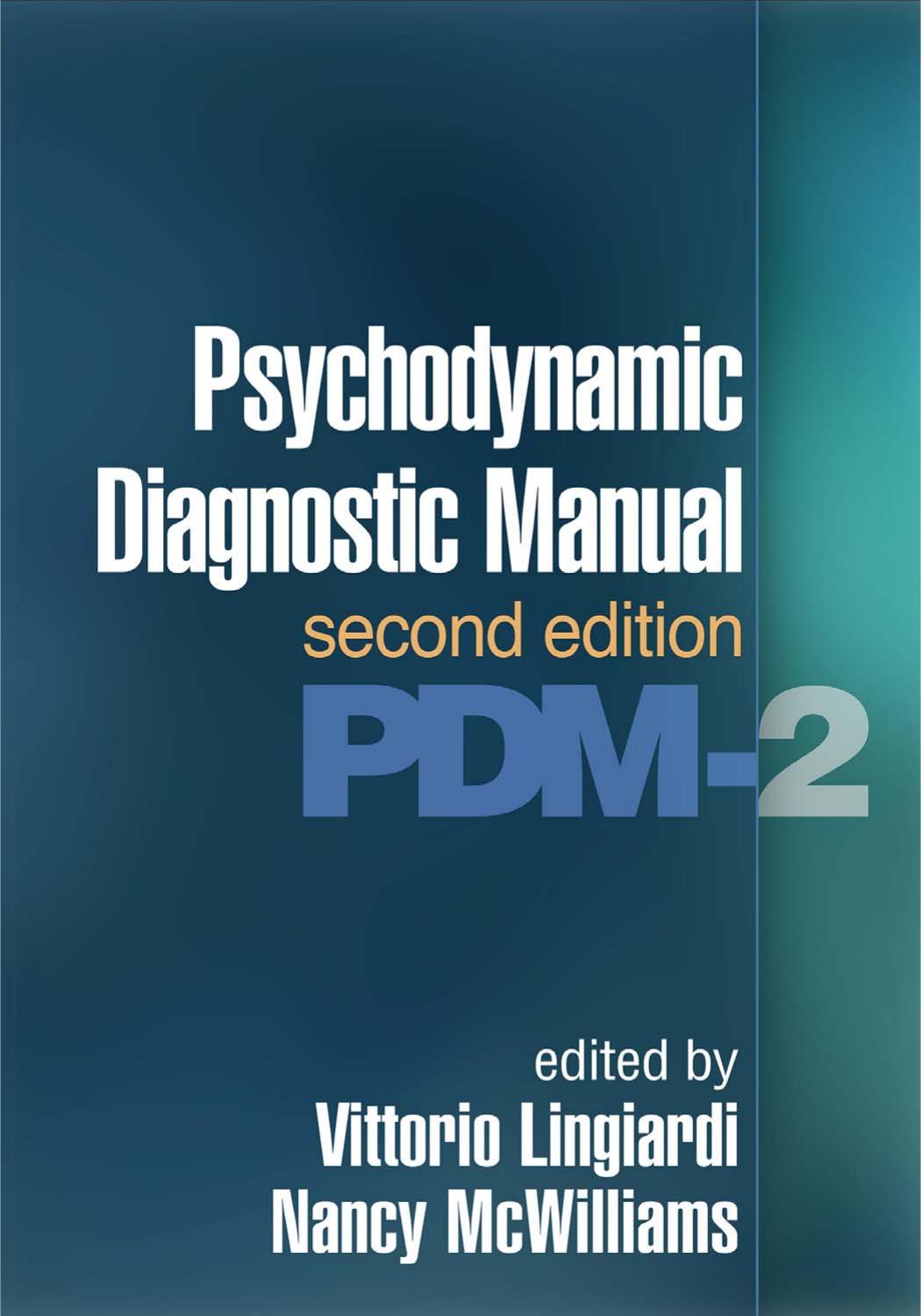
Product details:
ISBN 10: 1462530540
ISBN 13: 978-1462530540
Author: Vittorio Lingiardi, Nancy McWilliams
Now completely revised (over 90% new), this is the authoritative diagnostic manual grounded in psychodynamic clinical models and theories. Explicitly oriented toward case formulation and treatment planning, PDM-2 offers practitioners an empirically based, clinically useful alternative or supplement to DSM and ICD categorical diagnoses. Leading international authorities systematically address personality functioning and psychological problems of infancy, childhood, adolescence, adulthood, and old age, including clear conceptualizations and illustrative case examples. Purchasers get access to a companion website where they can find additional case illustrations and download and print five reproducible PDM-derived rating scales in a convenient 8 1/2″ x 11″ size.
New to This Edition
- Significant revisions to all chapters, reflecting a decade of clinical, empirical, and methodological advances.
- Chapter with extended case illustrations, including complete PDM profiles.
- Separate section on older adults (the first classification system with a geriatric section).
- Extensive treatment of psychotic conditions and the psychotic level of personality organization.
- Greater attention to issues of culture and diversity, and to both the clinician’s and patient’s subjectivity.
- Chapter on recommended assessment instruments, plus reproducible/downloadable diagnostic tools.
- In-depth comparisons to DSM-5 and ICD-10-CM throughout.
Sponsoring associations include the International Psychoanalytical Association, Division 39 of the American Psychological Association, the American Psychoanalytic Association, the International Association for Relational Psychoanalysis & Psychotherapy, the American Association for Psychoanalysis in Clinical Social Work, and five other organizations.
Winner–American Board and Academy of Psychoanalysis Book Prize (Clinical Category)
Psychodynamic Diagnostic Manual PDM 2 2nd Table of contents:
Part I. Adulthood
1. Personality Syndromes—P Axis
Introduction
Level of Personality Organization (Severity of Disturbance)
P-Axis Personality Syndromes
Appendix 1.1. Comparison of PDM-2 with Other Diagnostic Systems
Appendix 1.2. Definitions of Relevant Terms and Concepts
2. Profile of Mental Functioning—M Axis
Introduction
Definitions of the 12 M-Axis Capacities
Empirically Grounded Assessment of M-Axis Capacities
1. Capacity for Regulation, Attention, and Learning
2. Capacity for Affective Range, Communication, and Understanding
3. Capacity for Mentalization and Reflective Functioning
4. Capacity for Differentiation and Integration (Identity)
5. Capacity for Relationships and Intimacy
6. Capacity for Self-Esteem Regulation and Quality of Internal Experience
7. Capacity for Impulse Control and Regulation
8. Capacity for Defensive Functioning
9. Capacity for Adaptation, Resiliency, and Strength
10. Self-Observing Capacities (Psychological Mindedness)
11. Capacity to Construct and Use Internal Standards and Ideals
12. Capacity for Meaning and Purpose
Summary of Basic Mental Functioning
3. Symptom Patterns: The Subjective Experience—S Axis
Introduction
International and North American Taxonomies
Differential Diagnosis of Certain Subjective Experiences
Context of Subjective Experience: Time
Comorbidity
Psychological Experiences That May Require Clinical Attention
S1 Predominantly Psychotic Disorders
S11 Brief Psychotic Disorder (Hysterical Psychosis, Bouffée Délirante Polymorphe Aigüe)
S12 Delusional Disorder (“Pure Paranoia”)
S13 Schizotypal Disorder (Simple Schizophrenia, Residual Schizophrenia)
S14 Schizophrenia and Schizoaffective Disorder
S2 Mood Disorders
S21 Persistent Depressive Disorder (Dysthymia)
S22 Major Depressive Disorder
S23 Cyclothymic Disorder
S24 Bipolar Disorders
S25 Maternal Affective Disorders
S3 Disorders Related Primarily to Anxiety
S31 Anxiety Disorders
S31.1 Specific Phobias
S31.2 Social Phobia
S31.3 Agoraphobia and Panic Disorder
S31.4 Generalized Anxiety Disorder
S32 Obsessive–Compulsive and Related Disorders
S32.1 Obsessive–Compulsive Disorder
S32.2 Body Dysmorphic Disorder (Dysmorphophobia)
S32.3 Hoarding Disorder
S32.4 Trichotillomania and Excoriation Disorder
S4 Event- and Stressor-Related Disorders
S41 Trauma- and Stressor-Related Disorders
S41.1 Adjustment Disorders
S41.2 Acute and Posttraumatic Stress Disorders
S41.3 Complex Posttraumatic Stress Disorder
S42 Dissociative Disorders
S42.1 Depersonalization/Derealization Disorder
S42.2 Dissociative Amnesia ± Fugue
S42.3 Dissociative Identity Disorder and Other Specified Dissociative Disorder–1
S43 Conversion Disorder
S5 Somatic Symptom and Related Disorders
S51 Somatic Symptom Disorder
S52 Illness Anxiety Disorder (Hypochondriasis)
S53 Factitious Disorders
S6 Specific Symptom Disorders
S61 Feeding and Eating Disorders
S62 Sleep–Wake Disorders
S63 Sexual Dysfunctions
S64 Paraphilic Disorders
S65 Disruptive, Impulse-Control, and Conduct Disorders
S7 Disorders Related to Addiction and to Other Medical Conditions
S71 Addictions
S71.1 Substance-Related Disorders
S71.2 Behavioral Addictions (Gambling, Internet Addiction, Sex Addiction)
S72 Mental Disorders Due to Another Medical Condition
S72.1 HIV-Related Neurocognitive Disorder
SApp Appendix: Psychological Experiences That May Require Clinical Attention
SApp1 Demographic Minority Populations (Ethnic, Cultural, Linguistic, Religious, Political)
SApp1.1 Ethnic and Cultural Minorities
SApp1.2 Linguistic Minorities
SApp1.3 Religious Minorities
SApp1.4 Political Minorities
SApp2 Lesbian, Gay, and Bisexual Populations
SApp3 Gender Incongruence
Part II. Adolescence
4. Profile of Mental Functioning for Adolescents—MA Axis
Introduction
Empirically Grounded Assessment of MA-Axis Capacities
1. Capacity for Regulation, Attention, and Learning
2. Capacity for Affective Range, Communication, and Understanding
3. Capacity for Mentalization and Reflective Functioning
4. Capacity for Differentiation and Integration (Identity)
5. Capacity for Relationships and Intimacy
6. Capacity for Self-Esteem Regulation and Quality of Internal Experience
7. Capacity for Impulse Control and Regulation
8. Capacity for Defensive Functioning
9. Capacity for Adaptation, Resiliency, and Strength
10. Self-Observing Capacities (Psychological Mindedness)
11. Capacity to Construct and Use Internal Standards and Ideals
12. Capacity for Meaning and Purpose
Summary of Basic Mental Functioning
5. Emerging Personality Patterns and Syndromes in Adolescence—PA Axis
Introduction
Adolescents and Emerging Personality: Background and Significance
Developmental Aspects of Adolescent Emerging Personality Patterns
Significant Contextual Factors in the Treatment of Adolescents
Clinical Issues Arising in the Treatment of Adolescents
Personality Assessment in Adolescence
Self-Report Measures of Personality Functioning in Adolescence
Interview-Based or Clinician-Reported Measures of Adolescent Personality Functioning
Performance-Based Methods of Measuring Personality Functioning in Adolescence
Storytelling Techniques
The PA-Axis Diagnostic Approach
PA-Axis Personality Syndromes
6. Adolescent Symptom Patterns: The Subjective Experience—SA Axis
Introduction
SA0 Healthy Responses
SA01 Developmental and Situational Crises
SA1 Predominantly Psychotic Disorders
SA11 Brief Psychotic Disorder
SA14 Schizophrenia and Schizoaffective Disorder
SA2 Mood Disorders
SA22 Depressive Disorders
SA24 Bipolar Disorders
SA26 Disruptive Mood Dysregulation Disorder
SA27 Suicidality
SA28 Nonsuicidal Self-lnjury
SA3 Disorders Related Primarily to Anxiety
SA31 Anxiety Disorders
SA31.1 Specific Phobias
SA31.2 Social Phobia
SA31.3 Agoraphobia and Panic Disorder
SA31.4 Generalized Anxiety Disorder
SA32 Obsessive–Compulsive and Related Disorders
SA32.1 Obsessive–Compulsive Disorder
SA32.2 Body Dysmorphic Disorder (Dysmorphophobia)
SA4 Event- and Stressor-Related Disorders
SA41 Trauma- and Stressor-Related Disorders
SA41.1 Adjustment Disorders
SA41.2 Acute and Posttraumatic Stress Disorders
SA41.3 Complex Posttraumatic Stress Disorder
SA42 Dissociative Disorders
SA43 Conversion Disorder
SA5 Somatic Symptom and Related Disorders
SA51 Somatic Symptom Disorder
SA52 Illness Anxiety Disorder
SA53 Factitious Disorders
SA8 Psychophysiological Disorders
SA81 Feeding and Eating Disorders
SA9 Disruptive Behavior Disorders
SA91 Conduct Disorder
SA92 Oppositional Defiant Disorder
SA93 Substance-Related Disorders
SA94 Internet Addiction Disorder
SA10 Patterns in Adolescence of Infancy/Childhood-Onset Disorders
SA101 Autism Spectrum Disorder
SA102 Attention-Deficit/Hyperactivity Disorder
SA103 Specific Learning Disorders
SAApp Appendix: Psychological Experiences That May Require Clinical Attention
SAApp1 Demographic Minority Populations (Ethnic, Cultural, Linguistic, Religious, Political)
SAApp2 Lesbian, Gay, and Bisexual Populations
SAApp3 Gender Incongruence
Part III. Childhood
7. Profile of Mental Functioning for Children—MC Axis
Introduction
Empirically Grounded Assessment of MC-Axis Capacities
1. Capacity for Regulation, Attention, and Learning
2. Capacity for Affective Range, Communication, and Understanding
3. Capacity for Mentalization and Reflective Functioning
4. Capacity for Differentiation and Integration (Identity)
5. Capacity for Relationships and Intimacy
6. Capacity for Self-Esteem Regulation and Quality of Internal Experience
7. Capacity for Impulse Control and Regulation
8. Capacity for Defensive Functioning
9. Capacity for Adaptation, Resiliency, and Strength
10. Self-Observing Capacities (Psychological Mindedness)
11. Capacity to Construct and Use Internal Standards and Ideals
Summary of Basic Mental Functioning
8. Emerging Personality Patterns and Difficulties in Childhood—PC Axis
Introduction
Developing a Profile of Emerging Personality Patterns and Difficulties
Factors Influencing Emerging Personality Patterns and Difficulties
Personality Assessment Instruments
Levels of Emerging Personality Organization for Children Ages 4–11
Sample Profile of a Child at a Healthy Level of Personality Functioning
Other Levels of Personality Functioning: Descriptions, Clinical Illustrations, and Evaluations
9. Child Symptom Patterns: The Subjective Experience—SC Axis
Introduction
SC0 Healthy Responses
SC01 Developmental Crises
SC02 Situational Crises
SC2 Mood Disorders
SC22 Depressive Disorders
SC24 Bipolar Disorder
SC27 Suicidality
SC29 Prolonged Mourning/Grief Reaction
SC3 Disorders Related Primarily to Anxiety
SC31 Anxiety Disorders
SC31.1 Phobias
SC32 Obsessive–Compulsive and Related Disorders
SC32.1 Obsessive–Compulsive Disorder
SC4 Event- and Stressor-Related Disorders
SC41 Trauma- and Stressor-Related Disorders
SC41.1 Adjustment Disorders (Other Than Developmental)
SC5 Somatic Symptom and Related Disorders
SC51 Somatic Symptom Disorder
SC8 Psychophysiological Disorders
SC81 Feeding and Eating Disorders
SC81.1 Anorexia Nervosa
SC81.2 Bulimia Nervosa
SC9 Disruptive Behavior Disorders
SC91 Conduct Disorder
SC92 Oppositional Defiant Disorder
SC93 Substance-Related Disorders
SC11 Disorders of Mental Functioning
SC112 Tic Disorders
SC113 Psychotic Disorders
SC114 Neuropsychological Disorders
SC114.1 Motor Skills Disorders
SC114.2 Visual–Spatial Processing Disorders
SC114.3 Language and Auditory Processing Disorders
SC114.4 Memory Impairments
SC114.5 Attention-Deficit/Hyperactivity Disorder
SC114.6 Executive Function Difficulties
SC114.7 Severe Cognitive Deficits
SC115 Learning Disorders
SC115.1 Reading Disorders
SC115.2 Mathematics Disorders
SC115.3 Disorders of Written Expression
SC115.4 Nonverbal Learning Disabilities
SC115.5 Social-Emotional Learning Disabilities
SC12 Developmental Disorders
SC121 Regulatory Disorders
SC122 Feeding Problems of Childhood
SC123 Elimination Disorders
SC123.1 Encopresis
SC123.2 Enuresis
SC124 Sleep–Wake Disorders
SC125 Attachment Disorders
SC126 Autism Spectrum Disorders
SC126.1 Autism
SC126.2 Asperger Syndrome
SCApp Appendix: Psychological Experiences That May Require Clinical Attention
SCApp3 Gender Incongruence
Part IV. Infancy and Early Childhood
10. Mental Health and Developmental Disorders in Infancy and Early Childhood—IEC 0–3
Introduction
Overview of the Multiaxial System
A Comprehensive Approach to Clinical Evaluation
Axis I: Primary Diagnoses
IEC01 Sleep Disorders
IEC02 Feeding and Eating Disorders
IEC03 Elimination Disorders
IEC04 Anxiety Disorders
IEC05 Disorders of Emotional Range and Stability
IEC06 Depressive Disorders
IEC07 Mood Dysregulation: A Unique Type of Interactive and Mixed Regulatory–Sensory Processing Dis
IEC08 Prolonged Grief Reaction
IEC09 Adjustment Disorders
IEC10 Traumatic Stress Disorders
IEC11 Reactive Attachment Disorders
IEC12 Disruptive Behavior and Oppositional Disorders
IEC13 Gender Incongruence
IEC14 Regulatory–Sensory Processing Disorders
IEC14.01 Hypersensitive or Overresponsive Disorder
IEC14.01.1 Hypersensitive or Overresponsive: Fearful, Anxious Pattern
IEC14.01.2 Hypersensitive or Overresponsive: Negative, Stubborn Pattern
IEC14.02 Hyposensitive or Underresponsive: Self-Absorbed Pattern
IEC14.02.1 Pattern A: Self-Absorbed and Difficult-to-Engage Type
IEC14.02.2 Pattern B: Self-Absorbed and Creative Type
IEC14.03 Active, Sensory-Seeking Pattern
IEC14.04 Inattentive, Disorganized Pattern
IEC14.04.1 With Sensory Discrimination Difficulties
IEC14.04.2 With Postural Control Difficulties
IEC14.04.3 With Dyspraxia
IEC14.04.4 With Combinations of All Three
IEC14.05 Compromised School and/or Academic Performance Pattern
IEC14.05.1 With Sensory Discrimination Difficulties
IEC14.05.2 With Postural Control Difficulties
IEC14.05.3 With Dyspraxia
IEC14.05.4 With Combinations of All Three
IEC14.06 Mixed Regulatory–Sensory Processing Patterns
IEC14.06.1 Mixed Regulatory–Sensory Processing Patterns with Evidence of Somatic Complaints and At
IEC14.06.2 Mixed Regulatory–Sensory Processing Patterns without Evidence of Behavioral or Emotiona
IEC15 Neurodevelopmental Disorders of Relating and Communicating
IEC15.01 Type I: Early Symbolic, with Constrictions
IEC15.02 Type II: Purposeful Problem Solving, with Constrictions
IEC15.03 Type III: Intermittently Engaged and Purposeful
IEC15.04 Type IV: Aimless and Unpurposeful
Axis II: Functional Emotional Developmental Capacities
Axis III: Regulatory–Sensory Processing Capacities
Axis IV: Relational Patterns and Disorders
Axis V: Other Medical and Neurological Diagnoses
Part V. Later Life
11. Introduction to Part V
12. Profile of Mental Functioning for the Elderly—ME Axis
Introduction
1. Capacity for Regulation, Attention, and Learning
2. Capacity for Affective Range, Communication, and Understanding
3. Capacity for Mentalization and Reflective Functioning
4. Capacity for Differentiation and Integration (Identity)
5. Capacity for Relationships and Intimacy
6. Capacity for Self-Esteem Regulation and Quality of Internal Experience
7. Capacity for Impulse Control and Regulation
8. Capacity for Defensive Functioning
9. Capacity for Adaptation, Resiliency, and Strength
10. Self-Observing Capacities (Psychological Mindedness)
11. Capacity to Construct and Use Internal Standards and Ideals
12. Capacity for Meaning and Purpose
Summary of Basic Mental Functioning
13. Personality Patterns and Syndromes in the Elderly—PE Axis
Introduction
PE-Axis Personality Syndromes
14. Symptom Patterns in the Elderly: The Subjective Experience—SE Axis
Introduction
SE1 Predominantly Psychotic Disorders
SE15 Late-Onset Psychosis
SE2 Mood Disorders
SE22 Depressive Disorders
SE23 Cyclothymic Disorder
SE24 Bipolar Disorders
SE3 Disorders Related Primarily to Anxiety
SE31 Anxiety Disorders
SE32 Obsessive–Compulsive and Related Disorders
SE32.1 Obsessive–Compulsive Disorder
SE32.2 Body Dysmorphic Disorder
SE32.3 Hoarding Disorder
SE32.4 Trichotillomania and Excoriation Disorder
SE4 Event- and Stressor-Related Disorders
SE41 Trauma- and Stressor-Related Disorders
SE41.2 Acute and Posttraumatic Stress Disorders
SE42 Dissociative Disorders
SE43 Conversion Disorder
SE45 Persistent Complex Bereavement Disorder (Complicated Grief)
SE5 Somatic Symptom and Related Disorders
SE51 Somatic Symptom Disorder
SE52 Illness Anxiety Disorder
SE53 Factitious Disorders
SE54 Psychological Factors Affecting Other Medical Conditions
SE6 Specific Symptom Disorders
SE61 Feeding and Eating Disorders
SE62 Sleep–Wake Disorders
SE63 Sexual Dysfunctions
SE64 Paraphilic Disorders
SE7 Disorders Related to Addiction
SE71 Addictions
SE71.1 Substance-Related Disorders
SE71.2 Behavioral Addictions
SE71.2.1 Gambling Disorder
SE71.2.2 Sexual Addiction
SE13 Neurocognitive Disorders
SE131 Delirium
SE132 Mild Neurocognitive Disorder (Mild Cognitive Impairment)
SE133 Major Neurocognitive Disorder (Dementia)
SEApp Appendix: Psychological Experiences That May Require Clinical Attention
SEApp1 Demographic Minority Populations (Ethnic, Cultural, Linguistic, Religious, Political)
SEApp2 Lesbian, Gay, and Bisexual Populations
SEApp3 Gender Incongruence
Part VI. Assessment and Clinical Illustrations
15. Assessment within the PDM-2 Framework
Introduction
General Considerations
Part One. Instruments for PDM-2 Diagnostic Formulations
Part Two. Additional Instruments Useful for the PDM-2 Evaluation Process
Part Three. A Clinical Illustration: Tool-Based Assessment
Psychodiagnostic Chart–2 (PDC-2)
16. Clinical Illustrations and PDM-2 Profiles
Introduction
Adulthood
Adolescence
Psychodiagnostic Chart–2 (PDC-2)
Childhood
Psychodiagnostic Chart—Adolescent (PDC-A)
Psychodiagnostic Chart—Child (PDC-C)
Infancy and Early Childhood
Psychodiagnostic Chart—Infancy and Early Childhood (PDC-IEC)
Later Life
Psychodiagnostic Chart—Elderly (PDC-E)
Index
People also search for Psychodynamic Diagnostic Manual PDM 2 2nd:
the psychodynamic diagnostic manual provides information about
borrow psychodynamic diagnostic manual
pdm psychodynamic diagnostic manual pdf
psychodynamic diagnostic manual pdf
borrow psychodynamic diagnostic manual pdm 2
Tags: Vittorio Lingiardi, Nancy McWilliams, Psychodynamic Diagnostic