


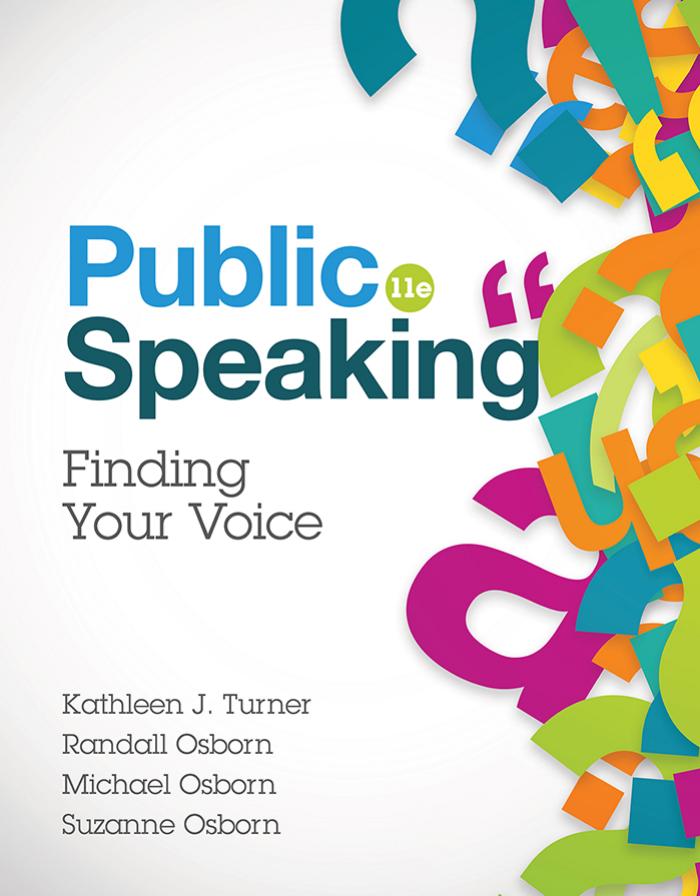
Public Speaking Finding Your Voice 11th Edition by Kathleen Turner, Randall Osborn, Michael Osborn, Suzanne Osborn ISBN 0134401352 9780134401355
Original price was: $70.00.$35.00Current price is: $35.00.
Instant download Public Speaking Finding Your Voice 11th Edition Kathleen J. Turner after payment
Public Speaking Finding Your Voice 11th Edition by Kathleen Turner, Randall Osborn, Michael Osborn, Suzanne Osborn – Ebook PDF Instant Download/Delivery: 0134401352 , 9780134401355
Full download Public Speaking Finding Your Voice 11th edition after payment
Product details:
ISBN 10: 0134401352
ISBN 13: 9780134401355
Author: Kathleen Turner, Randall Osborn, Michael Osborn, Suzanne Osborn
This is the eBook of the printed book and may not include any media, website access codes, or print supplements that may come packaged with the bound book. For courses in Public Speaking Helps students become better speakers in their classrooms, workplaces, and communities Public Speaking: Finding Your Voice helps students develop into effective speakers while emphasizing the ethical significance of public speaking and its importance in our increasingly diverse society. Authors Kathleen J. Turner, Randall Osborn, Michael Osborn, and Suzanne Osborn guide students to become better, more thoughtful consumers as well as producers of messages — all the more important in an age when we are daily bombarded with “fake news” and other forms of deceptive communication. The 11th Edition includes fully updated examples as well as revised learning outcomes that help keep students on track in the course. Public Speaking: Finding Your Voice, 11th Edition is also available via Revel™, an interactive learning environment that enables students to read, practice, and study in one continuous experience.
Public Speaking Finding Your Voice 11th Table of contents:
Part One: The Foundations of Public Speaking
-
Chapter 1: Finding Your Voice
-
Learning Objectives
-
The Benefits of Public Speaking
-
Personal Benefits
-
Social Benefits
-
Cultural Benefits
-
-
Introduction to Public Speaking
-
Historical Roots of Public Speaking
-
Contemporary Approaches to Public Speaking
-
Public Speaking as a Transactional Process
-
Speaker
-
Audience
-
Message
-
Channel
-
Interference
-
Setting
-
Feedback
-
-
Communication as a Dynamic Process
-
-
Finding Your Ethical Voice
-
Respect for the Integrity of Ideas and Information
-
Speak from Responsible Knowledge
-
Use Communication Techniques Carefully
-
Avoid Academic Dishonesty
-
Demonstrate a Genuine Concern for Consequences
-
-
The Shared Responsibilities of Listeners
-
Final Reflections: A Quest That Deserves Commitment
-
Chapter 1 Study Questions
-
Content Mastery
-
Critical Explorations
-
-
-
Chapter 2: Building Your Confidence as a Speaker
-
Learning Objectives
-
Understanding Communication Apprehension
-
External Factors
-
An Unfamiliar Situation
-
The Importance of the Occasion
-
-
Internal Factors
-
Perfectionism
-
Misconceptions about the Audience
-
Self-Sabotage
-
-
-
Managing Your Communication Apprehension
-
Developing a Communication Orientation
-
Cognitive Restructuring
-
Visualization
-
Selective Relaxation
-
Education, Preparation, and Practice
-
Putting It All Together
-
-
How You Can Help Your Classmates
-
Final Reflections: Marshaling Your Butterflies
-
Chapter 2 Study Questions
-
Content Mastery
-
Critical Explorations
-
-
-
Chapter 3: Your First Speech: An Overview of Speech Preparation
-
Learning Objectives
-
Preparing and Presenting Your First Speech
-
Step 1: Find and Focus Your Topic
-
Step 2: Gather Supporting Material
-
Facts and Statistics
-
Testimony
-
Examples
-
Narratives
-
-
Step 3: Organize the Body of Your Speech
-
Step 4: Add an Introduction, Transitions, and a Conclusion
-
Step 5: Prepare a Formal Outline
-
Step 6: Practice, Practice, Practice!
-
Step 7: Present Your Speech
-
-
Influencing the Impressions You Make
-
Competence
-
Integrity
-
Good Will
-
Dynamism
-
-
Speeches of Introduction
-
Final Reflections: Taking the First Steps
-
Chapter 3 Study Questions
-
Content Mastery
-
Critical Explorations
-
A Little Chocolate
-
-
-
Chapter 4: Becoming a Better Listener
-
Learning Objectives
-
Your Power as a Listener
-
Overcoming Barriers to Effective Listening
-
Noise
-
Inattention
-
Bad Listening Habits
-
Biases and Trigger Words
-
-
Becoming a Better Listener
-
Functions of Listening
-
Appreciative Listening
-
Empathic Listening
-
Comprehensive Listening
-
Critical Listening
-
-
Questions for Critical Listening
-
Does the Speaker Provide Adequate Support for Claims?
-
Does the Speaker Cite Credible Sources?
-
Does the Speaker Use Words to Clarify Rather Than Obscure?
-
Does the Speaker Use Emotional Appeals Appropriately?
-
What Constructive Applications Can I Derive from the Speaker’s Message?
-
-
Guidelines for Listening to Speeches
-
Your Ethical Responsibilities as a Listener
-
-
Final Reflections: The Golden Rule of Listening
-
Chapter 4 Study Questions
-
Content Mastery
-
Critical Explorations
-
-
Part Two: Preparation for Public Speaking
-
Chapter 5: Adapting to Your Audience and Situation
-
Learning Objectives
-
Understanding Audience Demographics
-
Age
-
Gender
-
Sexual Orientation
-
Education
-
Race and Cultural Background
-
Socioeconomic Status
-
Group Affiliations
-
Occupational Groups
-
Political Groups
-
Religious Groups
-
Social Groups
-
Some Words of Caution
-
-
Understanding Audience Psychographics
-
Beliefs
-
Attitudes
-
Values
-
Motives
-
Physical Well-Being
-
Safety and Security
-
Knowledge
-
Relationships
-
Achievement and Recognition
-
Personal Growth and Satisfaction
-
Pleasure and Recreation
-
Tradition
-
Altruism
-
-
Gathering Information about Your Audience
-
The Rewards and Challenges of Audience Diversity
-
Become Familiar with the Audiences’ Cultural Affiliations
-
Speak from Shared Values
-
Use Supporting Materials Thoughtfully
-
Choose Your Words Carefully
-
Adjusting to the Speaking Situation
-
The Occasion
-
The Physical Setting
-
Place
-
Time
-
Audience Size
-
-
The Psychological Setting
-
Recent Events
-
Recent Speeches
-
-
-
Bringing It All Together
-
Final Reflections: Looking Beyond Yourself
-
Chapter 5 Study Questions
-
Content Mastery
-
Critical Explorations
-
-
-
Chapter 6: Finding Your Topic
-
Learning Objectives
-
What Is a Good Topic?
-
A Good Topic Involves You
-
A Good Topic Engages Your Listeners
-
A Good Topic Is One You Can Manage
-
-
Discovering Your Topic Area
-
Brainstorming
-
Interest Charts
-
Mediated Prompts
-
-
Exploring Your Topic Area
-
Mind Mapping
-
Topic Analysis
-
-
Refining Your Topic
-
General Purpose
-
Specific Purpose
-
Testing Your Specific Purpose Statement
-
Improving Your Specific Purpose Statement
-
Thesis Statement
-
-
Final Reflections: The Great Chain of Communication
-
Chapter 6 Study Questions
-
Content Mastery
-
Critical Explorations
-
Pulling a Cat Out of a Hat
-
-
-
Chapter 7: Building Responsible Knowledge
-
Learning Objectives
-
Getting Started
-
Assess Your Prior Knowledge and Experiences
-
Set Your Research Objectives
-
Evaluate What You Discover
-
Record Your Findings
-
-
Researching on the Internet
-
Useful Websites
-
Social Media
-
Evaluating Online Resources
-
Determining What Kind of Website You Are Viewing
-
Evaluating Online Information
-
-
-
Researching in the Library
-
Evaluating Information from the Library
-
-
Conducting Personal Interviews
-
Evaluating Information from Personal Interviews
-
-
Final Reflections: Empowering Your Voice
-
Chapter 7 Study Questions
-
Content Mastery
-
Critical Explorations
-
-
-
Chapter 8: Supporting Your Ideas
-
Learning Objectives
-
Facts and Statistics
-
Using Facts and Statistics
-
Applying the Four Rs
-
Distinguish Facts from Inferences and Opinions
-
-
Testimony
-
Types of Testimony
-
Expert Testimony
-
Lay Testimony
-
Prestige Testimony
-
-
Using Testimony Effectively
-
-
Examples
-
Using Examples Effectively
-
-
Narratives
-
Types of Narratives
-
Using Narratives
-
-
Selecting and Combining Supporting Materials
-
Final Reflections: Developing a Well-Supported Voice
-
Chapter 8 Study Questions
-
Content Mastery
-
Critical Explorations
-
-
-
Chapter 9: Structuring and Outlining Your Speech
-
Learning Objectives
-
Principles of a Well-Structured Speech
-
Simplicity
-
Limit the Number of Main Points
-
Phrase Main Points Clearly
-
Repeat Key Points for Emphasis
-
Order
-
Balance
-
-
Structuring the Body of Your Speech
-
Selecting Your Main Points
-
Arranging Your Main Points
-
Categorical
-
Comparative
-
Spatial
-
Sequential
-
Chronological
-
Causation
-
Problem-Solution
-
Refutative
-
Narrative
-
-
Developing Your Main Points
-
-
Developing a Working Outline
-
Adding Transitions
-
-
Introducing and Concluding Your Speech
-
Introducing Your Speech
-
Capturing Attention
-
Acknowledging the audience, location, or occasion
-
Invoking shared interests and values
-
Urging audience participation
-
Using appropriate humor
-
Opening with a narrative
-
Opening with a quotation
-
Startling the audience
-
-
Establishing Your Credibility
-
Previewing Your Message
-
Concluding Your Speech
-
Summarizing Your Message
-
Providing Concluding Remarks
-
Echoing your introduction
-
Restating the relevance of your message to your audience
-
Issuing a call to action
-
Asking rhetorical questions
-
Closing with a story
-
Closing with a quotation
-
Closing with a metaphor
-
Using strategic repetition
-
-
-
Selecting and Using Introductory and Concluding Techniques
-
Preparing Your Formal Outline
-
Heading
-
A Clearly Structured Body
-
The Introduction, Conclusion, Transitions, and Presentation Aids
-
Oral Citations and Source Citations
-
Works Cited or Consulted
-
Formal Outlines: A Few Precautions
-
-
Final Reflections: Deep Roots of Structuring and Outlining
-
Chapter 9 Study Questions
-
Content Mastery
-
Critical Explorations
-
-
People also search for Public Speaking Finding Your Voice 11th :
public speaking finding your voice 11th edition
public speaking finding your voice 11th edition pdf
public speaking finding your voice 11th edition free
public speaking finding your voice 11th edition pdf free
how to find your speaking voice
Tags: Kathleen Turner, Randall Osborn, Michael Osborn, Suzanne Osborn, Public Speaking, Your Voice