


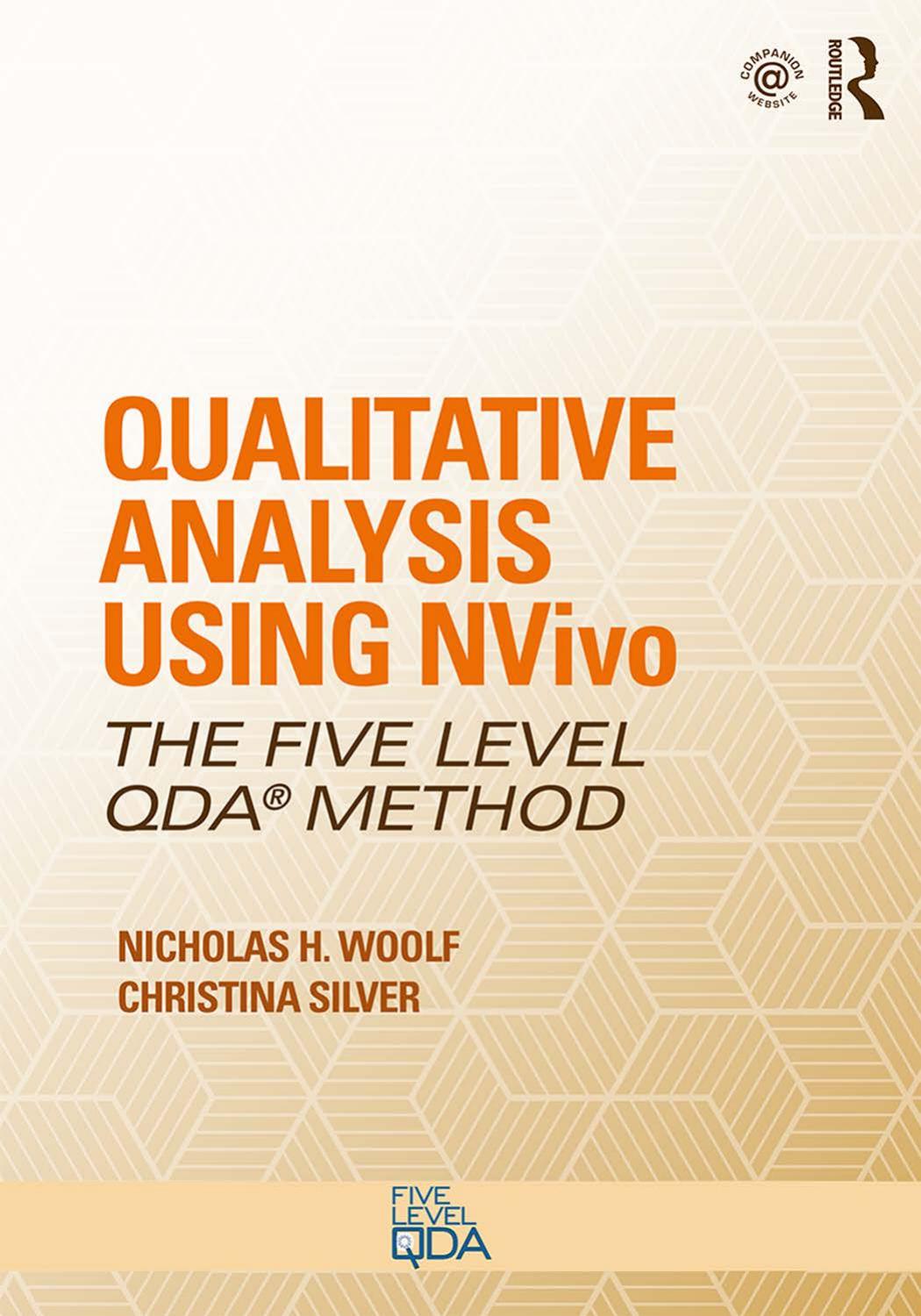
Qualitative analysis using NVivo the five level QDA r method 1st edition by Nicholas Woolf, Christina Silver ISBN 1351722865 9781351722865
Original price was: $70.00.$35.00Current price is: $35.00.
Instant download Qualitative analysis using NVivo the five level QDA(r) method Woolf Nicholas H.; Silver Christina; after payment
Qualitative analysis using NVivo the five level QDA(r) method 1st edition by Nicholas Woolf, Christina Silver – Ebook PDF Instant Download/Delivery: 1351722865, 9781351722865
Full download Qualitative analysis using NVivo the five level QDA(r) method 1st edition after payment
Product details:
ISBN 10: 1351722865
ISBN 13: 9781351722865
Author: Nicholas Woolf, Christina Silver
Software is cut and dried – every button you press has a predictable effect – but qualitative analysis is open ended and unfolds in unpredictable ways. This contradiction is best resolved by separating analytic strategies – what you plan to do – from software tactics – how you plan to do it. Expert NVivo users have unconsciously learned to do this. The Five-Level QDA® method unpacks the process so that you can learn it consciously and efficiently. The first part of the book explains how the contradiction between analytic strategies and software tactics is reconciled by “translating” between them. The second part provides both an in-depth description of how NVivo works and comprehensive instruction in the five steps of “translation”. These steps are illustrated with examples from a variety of research projects. The third part contains real-world qualitative research projects from a variety of disciplines, methodologies, and kinds of qualitative analysis, all illustrated in NVivo using the Five-Level QDA method. The book is accompanied by three sets of video demonstrations on the companion website. The book and accompanying videos illustrate the Windows version of NVivo. As there are some differences in screen and interface design between the Mac and Windows versions please watch the video ‘The NVivo Mac Interface’ in the Component Orientation series of videos (available on the companion website). The Five-Level QDA method is based on the authors’ combined 40 years of experience teaching NVivo and other software packages used as platforms for conducting qualitative analysis. After many years observing their students’ challenges they developed the Five-Level QDA method to describe the process that long-time NVivo experts unconsciously adopt. The Five-Level QDA method is independent of software program or methodology, and the principles apply to any type of qualitative project. Please see the following URL to access the accompanying materials for this book: https://www.qdaservices.co.uk/five-level-qda
Qualitative analysis using NVivo the five level QDA(r) method 1st Table of contents:
PART I The Principles of the Five-Level QDA Method
1 Strategies and Tactics
The Contradictions Between Strategies and Tactics
Different Ways to Reconcile Contradictions
One-Level QDA
Three-Level QDA
Five-Level QDA
References
2 Developing Objectives and Analytic Plans (Levels 1 and 2)
Level 1: Objectives
Clear Objectives
Adopting a Methodology
An Everyday Illustration
Level 2: Analytic Plan
The Conceptual Framework
Analytic Tasks
Knowing What You Plan to Do Next
References
3 Translating Analytic Tasks Into Software Tools (Levels 3, 4, and 5)
Level 3: Translation
The Framing of Analytic Tasks
The Framing of Software Features
The Process of Translation
Level 4: Selected-Tools
Level 5: Constructed-Tools
The Sequence of Tasks
References
PART II The Five-Level QDA Method in Practice
4 Orientation to NVivo
The Different Versions and Editions of NVivo
Working in Teams
Delegation
Leadership Style
Constraints
Frequency of Integration When Working With the Single-User Versions of NVivo
Using NVivo for Teams
5 The Architecture of NVivo
The Different Versions of NVivo
Component Orientation Videos
The Organization of the Program
Components
Components Are Not the Same as Project Items
Actions
Tools
The NVivo Interface
The NVivo Project
Importing Data to an NVIVO-PROJECT
Backing Up an NVIVO-PROJECT
One NVIVO-PROJECT per Research Project
Providing Data
Sources
Folders
Cases
Attribute-Values
Conceptualizing Data
References
Nodes
Coded-References
Query-Results
Sets & Search-Folders
Writing
Annotations
Memos
Visualizing
Maps
Charts
The NVIVO-PROJECT as a Whole
Interrogating
Outputting
Keeping Up to Date
Backing Up and Moving Projects
Working in Teams Using NVivo
Everyone on the Same Cycle
What Happens When You Merge
Principles of the Foolproof Method
Procedures of the Foolproof Method
Inter-rater Reliability
References
6 Mastering the Process of Translation
Translation as a Heuristic Process
Writing Analytic Tasks
The Analytic Planning Worksheet
The Format of the Analytic Planning Worksheet
Analytic Planning Worksheet for the Sample Analytic Task
The Five Steps of Translation
Step 1: Identifying Units
Units of Analysis
Units of Data
Units of Meaning
The Rule of Thumb of Two Units
Step 2: Describing Purposes
The Difference Between a Purpose and an Action
The Rule of Thumb of One Purpose
Step 3: Identifying Possible Components
Possible Components for the First Unit
Possible Components for the Second Unit
Additional Possible Components When Purposes Require Writing or Visualizing
Step 4: Choosing Appropriate Components
Illustrations for Steps 4 and 5
Actions That Can Be Taken on Components
The Context of Analytic Tasks
Step 5: Finalizing Selected- or Constructed-Tools
The Distinction Between Selected- and Constructed-Tools
When to Use a Selected-Tool
When to Use Constructed-Tools
References
PART III Case Illustrations
7 Orientation to Case Illustrations
Learning From Case Illustrations
Learning by Analogy
Authentic Learning
Learning From Multiple Illustrations
Video Demonstrations of Case Illustrations
Case Illustration Videos
Harnessing Components Videos
Accessing Video Demonstrations
The Two Full-Case Illustrations
Case Illustration 1: A Literature Review
Case Illustration 2: A Program Evaluation
References
8 Case Illustration — An Exploratory Literature Review: Exploring the Literature on Interfaith Dia
Analytic Strategies
Background
Focus of This Case Illustration
Guiding Methodology
Stages of the Analysis
First Stage: Preliminary Partial Literature Review
Second Stage: Review and Rationalize the First Stage
Third Stage: Expand the Scope of the Literature Review
Fourth Stage: Identify Major Themes in the Literature
Fifth Stage: Rewrite the Literature Review
Sixth Stage: Ongoing Expansion of the Literature Review
Acknowledgments
References
9 Case Illustration — A Program Evaluation: Violence Prevention Initiative
Project In Brief
Analytic Strategies
Overall Project Objectives
Focus of This Case Illustration
Guiding Methodology
Stages of the Analysis
First Stage: Planning the Analysis of First-Round Interviews
Second Stage: Descriptive Thematic Analysis of First-Round Interviews and First Report
Third Stage: Concept Sensitizing and Descriptive Thematic Analysis of Second-Round Interviews and Se
Fourth Stage: Critical Incident Analysis of Third-Round Interviews and Third Report
Fifth Stage: Discourse Analysis on Fourth-Round Interviews and Integration of All Stages
Sixth Stage: Synthesis of All Stages and Final Report
Stakeholders, Published Works, and Funders
Appendices
Appendix 1: Three Levels of Detail of Analytic Tasks
Appendix 2: Five Analytic Activities
Appendix 3: Examples of Units in Analytic Tasks
Appendix 4: Identifying the Units of Analytic Tasks
Appendix 5: Identifying the Purpose of Analytic Tasks
Index
People also search for Qualitative analysis using NVivo the five level QDA(r) method 1st :
qualitative analysis using nvivo the five level qda method
using nvivo for qualitative data analysis
using nvivo for data analysis in qualitative research
beyond constant comparison qualitative data analysis using nvivo
what is nvivo analysis
Tags: Nicholas Woolf, Christina Silver, Qualitative analysis, five level