


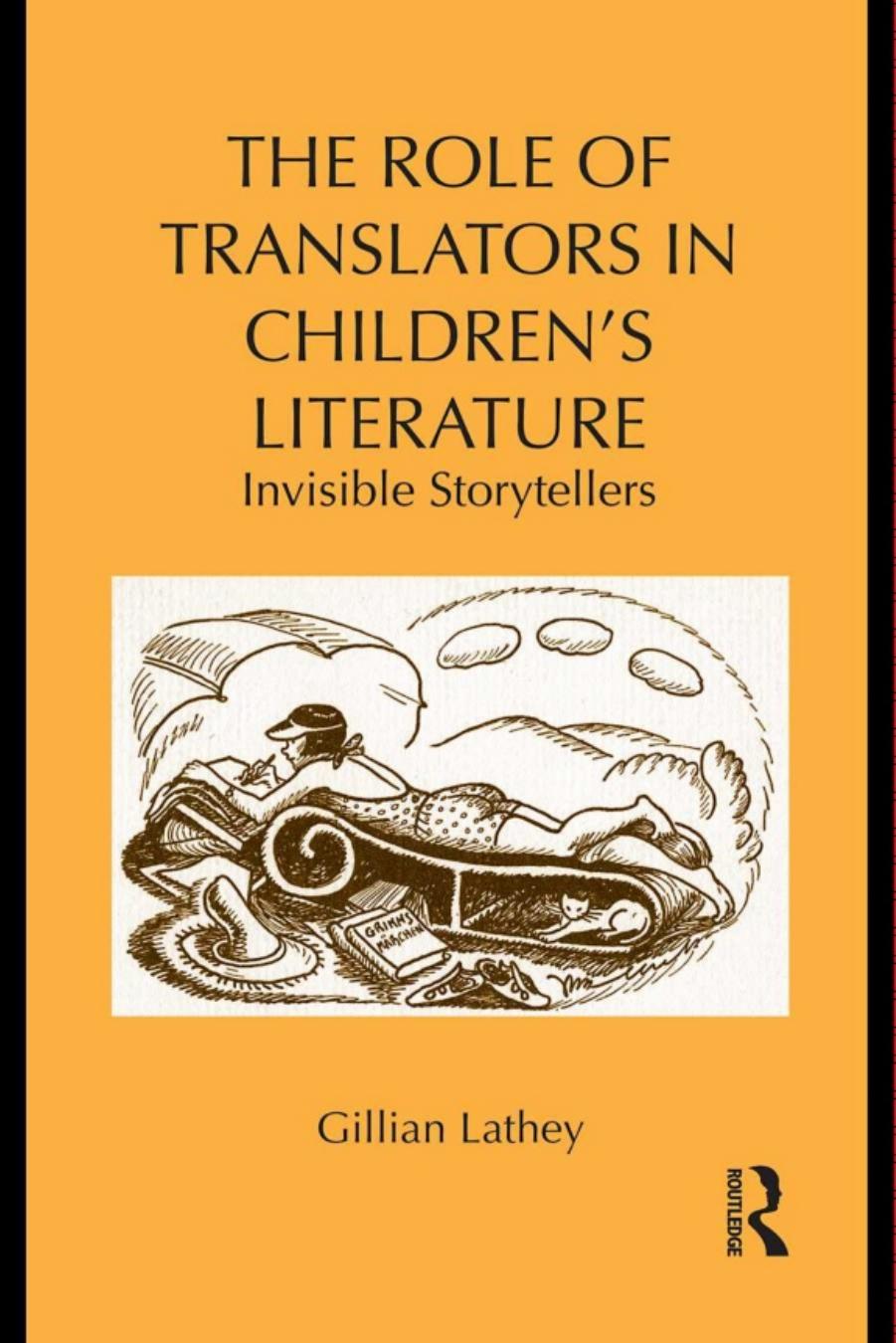
The Role of Translators in Children’s Literature Invisible Storytellers 1st edition by GILLIAN LATHEY ISBN 1136925740 9781136925740
Original price was: $70.00.$35.00Current price is: $35.00.
Instant download Role of Translators in Children’s Literature Invisible Storytellers (Children’s Literature and Culture) The GILLIAN LATHEY after payment
The Role of Translators in Children’s Literature Invisible Storytellers 1st edition by GILLIAN LATHEY – Ebook PDF Instant Download/Delivery: 1136925740, 9781136925740
Full download The Role of Translators in Children’s Literature Invisible Storytellers 1st edition after payment
Product details:
ISBN 10: 1136925740
ISBN 13: 9781136925740
Author: GILLIAN LATHEY
This book offers a historical analysis of key classical translated works for children, such as writings by Hans Christian Andersen and Grimms’ tales. Translations dominate the earliest history of texts written for children in English, and stories translated from other languages have continued to shape its course to the present day. Lathey traces the role of the translator and the impact of translations on the history of English-language children’s literature from the ninth century onwards. Discussions of popular texts in each era reveal fluctuations in the reception of translated children’s texts, as well as instances of cultural mediation by translators and editors. Abridgement, adaptation, and alteration by translators have often been viewed in a negative light, yet a closer examination of historical translators’ prefaces reveals a far more varied picture than that of faceless conduits or wilful censors. From William Caxton’s dedication of his translated History of Jason to young Prince Edward in 1477 (‘to thentent/he may begynne to lerne read Englissh’), to Edgar Taylor’s justification of the first translation into English of Grimms’ tales as a means of promoting children’s imaginations in an age of reason, translators have recorded in prefaces and other writings their didactic, religious, aesthetic, financial, and even political purposes for translating children’s texts.
The Role of Translators in Children’s Literature Invisible Storytellers 1st Table of contents:
Introduction
Invisible Storytellers
Translating for Children
Part One
Chapter One Didactic Translation: Religious Texts, Courtesy Books, Schoolbooks, and Political Persuasion
William Caxton as Translator
Translating Schoolmasters: Grammarians William Bullokar and John Brinsley, and the ‘Orbis Pictus’ of Charles Hoole
Sir Roger L’Estrange and Samuel Croxall: Polemical Translations of Aesop
Chapter Two Popular Fiction in Translation: The Child as Consumer of Romances and Fables in the Medieval and Early Modern Periods
The Child Reader of Translated Romances
Chapter Three Tales of the Marvellous 1690–1760: The Arabian Nights and the French Fairy Tale
The Arabian Nights
French Fairy Tales
Chapter Four Imagination, Reason, and Mapping the World 1750–1820
Arnaud Berquin’s ‘The Children’s Friend’: the Impact of English Versions
Mme de Genlis: Influential Educator
Mary Wollstonecraft: Ideological Translation
Chapter Five Religious Stories and the Artful Fairy Tale in the Nineteenth Century
Edgar Taylor: First Translator of Grimms’ Tales into English
Taylor and the Grimms: The ‘Kleine Ausgabe’
Later Translations of Grimms’ Tales
Chapter Six The Translating Woman: Assertive Professional or Invisible Storyteller
Mary Howitt, Translator of Hans Christian Andersen
Andrew Lang’s Invisible Storytellers
The Legacy of Folk- and Fairy-tale Translators
Chapter Seven Summary of Part One: Translation Practices and the Child Audience
Anonymity, Self-presentation, and Professional Translation
Relay Translation
Translation Strategies in Early Translations
Faithfulness, Fluency, and Contextual Adaptation
The Translator as Mediator
Part Two
Part Two Introduction
Chapter Eight Into the Twentieth Century: Classics, the Folk Tale, and Internationalism 1870–1940
The Late Nineteenth Century: International Classics
Arthur Ransome: The Mediation of Russian Folk Tales for the Child Reader
The 1930s: Internationalism and Translation Practices in the UK and US
Chapter Nine Rewarding Translation for Children: Landmark Translations from 1940 and the Batchelder and Marsh Awards
Publishing Policies and Landmarks in Translated Children’s Fiction
The Batchelder and Marsh Awards
Publishers’ Responses
Chapter Ten Retranslation in the Twentieth and Twenty-First Centuries: For Children or Adults?
Child-friendly Retranslation: Wanda Gág’s Versions of Grimms’ Tales
The Tales of Hans Christian Andersen: New Translations for Old
‘Pinocchio’ and Audience Ambivalence: A Case Study
The Retranslation of Children’s Classics: An Erratic Phenomenon
Chapter Eleven Translators’ Voices
Wordsmiths and Performers: Patricia Crampton, Anthea Bell, and Sarah Ardizzone
Working Methods and Translation Strategies
Chapter Twelve From Anonymity to Global Marketing: The Role of Translators in Children’s Literature
TheTranslator as Mediator
Invisibility, Fluency, and the Child Reader
Future Research
Translation for Children—A Professional Specialism in the Global Future?
Notes
Bibliography
Translations and Other Primary Sources
Secondary Sources
Index
People also search for The Role of Translators in Children’s Literature Invisible Storytellers 1st:
the role of translators in children’s literature invisible storytellers
the role of translators in children’s literature invisible storytellers pdf
the role of translators in children’s literature
importance of children’s literature in english language teaching
what is the purpose of children’s literature
Tags: GILLIAN LATHEY, The Role, Children’s Literature, Invisible Storytellers